
Add ₹999 more to unlock FREE SHIPPING!
Your sacred cart is currently empty.
Shop Photo FramesOn the banks of the Pravara River in the village of Kumbhephal, located in the Akole taluka of Ahilyanagar district, stands the ancient temple of Shri Sheshnarayan. Devotees believe that temples dedicated to Sheshnarayan are rare in the country, and after the Sheshnarayan temple in Kashi, this temple in the state holds great significance. For this reason, this place is also known as ‘Prati-Kashi’. The three-day fair held here starting from Akshaya Tritiya is famous.
According to references in the Puranas, Sheshnag was the eldest son of Sage Kashyap and a supreme devotee of Vishnu. He was also the king of the Nagas; however, he renounced his kingdom and took a vow to serve Vishnu. Since then, he began to serve as a coiled seat and a canopy of hoods for Vishnu. As Sheshnag was dear to Vishnu, He often incarnated on Earth along with Sheshnag. In the Treta Yuga, during the Rama avatar, Sheshnag was Lakshmana, and in the Krishna avatar, he was Balarama. When Vasudeva was crossing the river carrying baby Krishna in a basket, Sheshnag protected Him from the rain with his hoods. According to the Narayan Sukta in the Yajurveda, Vishnu, or Narayan, is the Lord of the universe and is self-sovereign; He is supreme. Accordingly, Sheshnag among the Nagas and Vishnu or Narayan among the gods are considered the greatest. It is said that after the war between the gods and demons over the distribution of the nectar obtained from the churning of the ocean, Shri Vishnu came to reside at Kumbhephal. At that time, Sheshnag also came here to serve Vishnu. Since then, this pilgrimage site has been named the Sheshnarayan Temple.
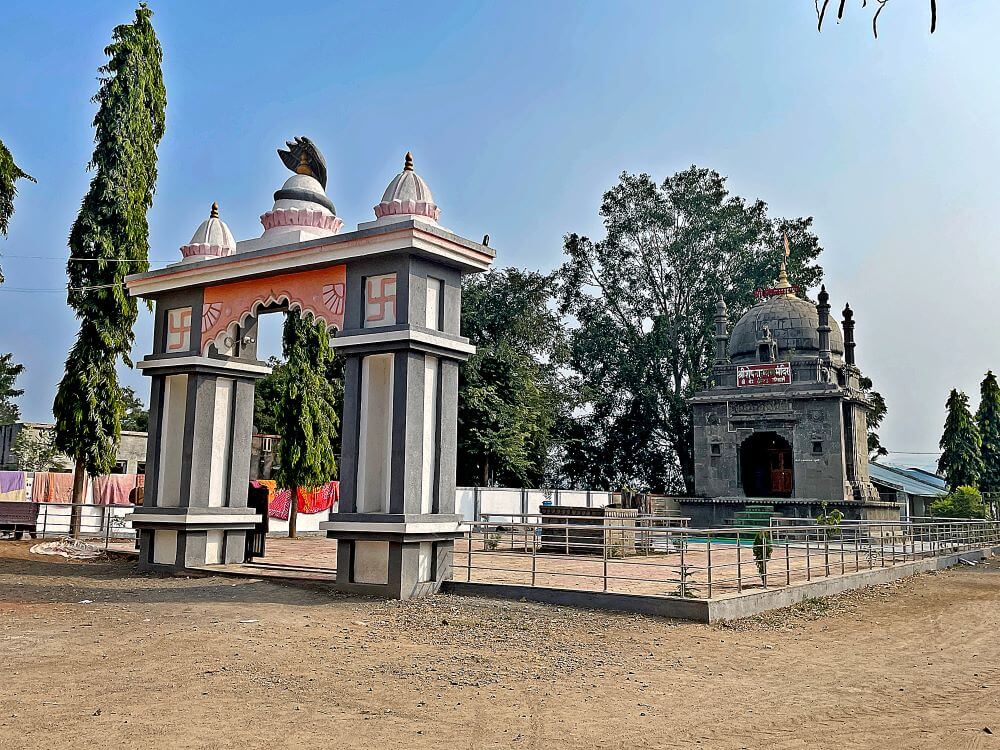
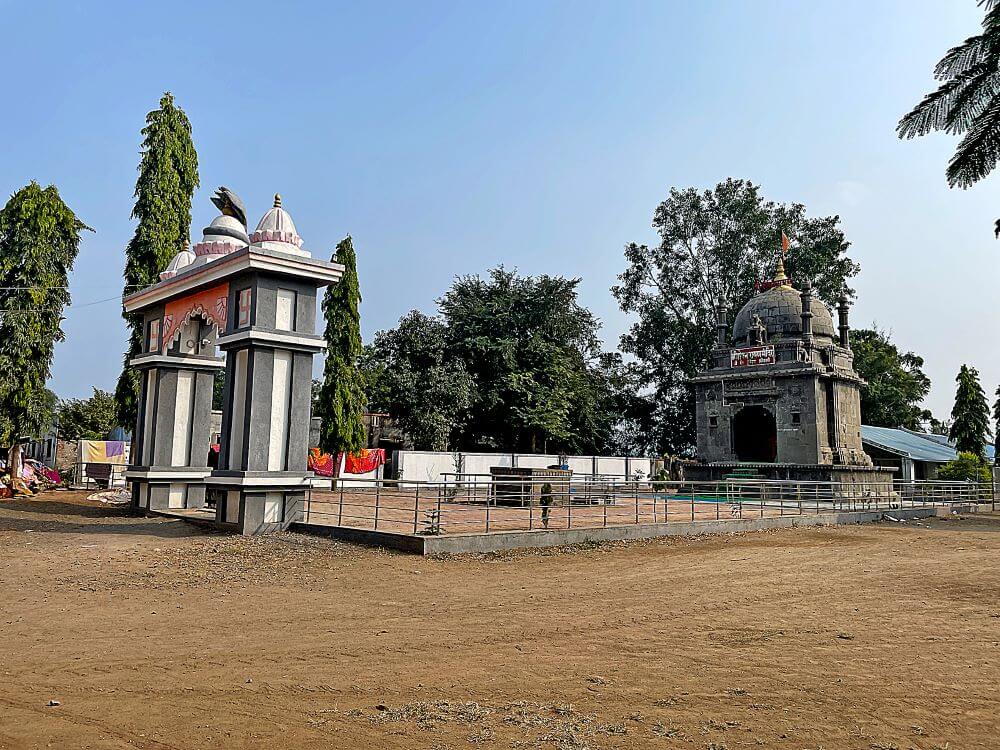
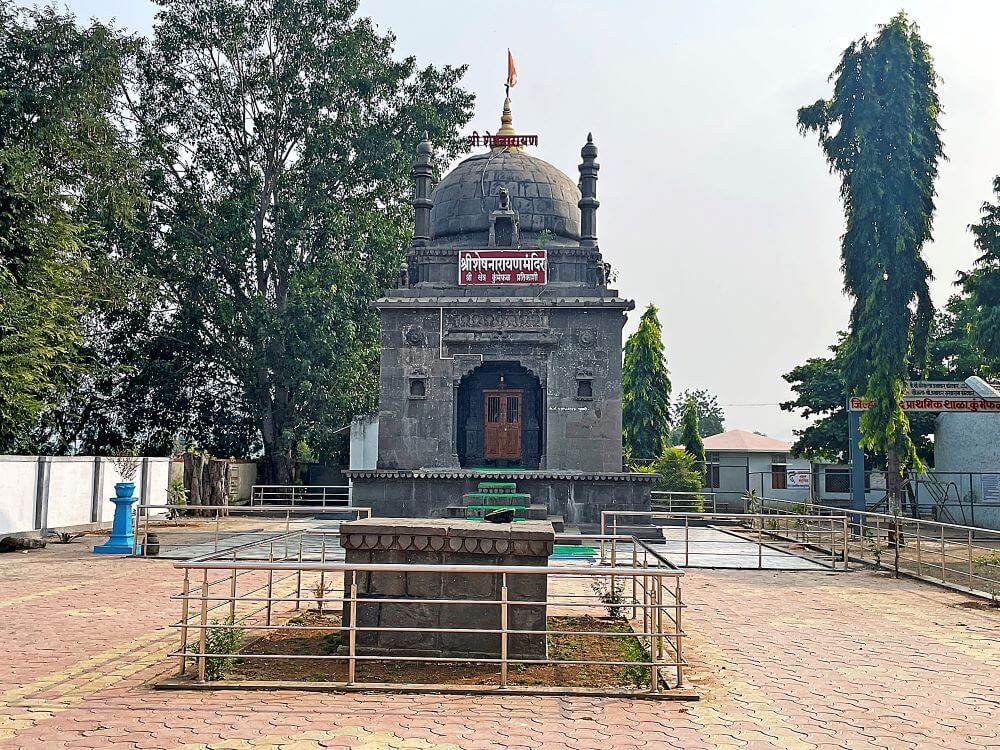
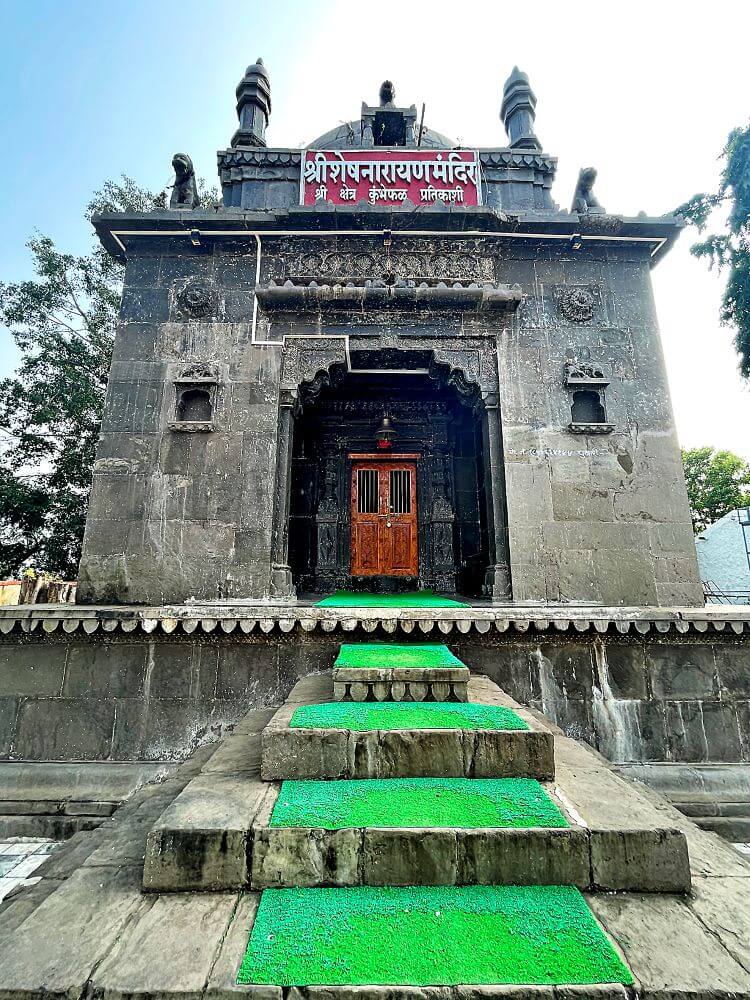
This famous temple of Sheshnarayan is located right by the road while entering Kumbhephal village from Akole. The temple is constructed entirely of stone, and there are records indicating that Ahilyadevi Holkar renovated it. After passing through the temple archway on the road, one enters the temple courtyard. The courtyard is paved, and the premises are enclosed by a wire fence. On a stone platform in front of the temple, the padukas (footprints) of Shri Rama are installed.
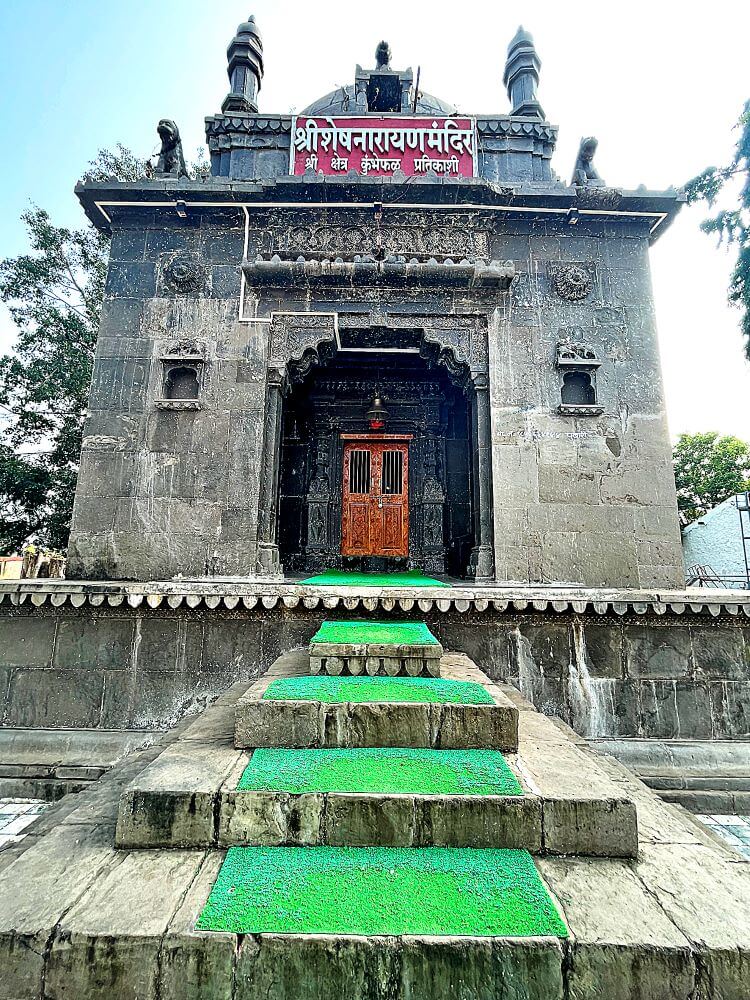
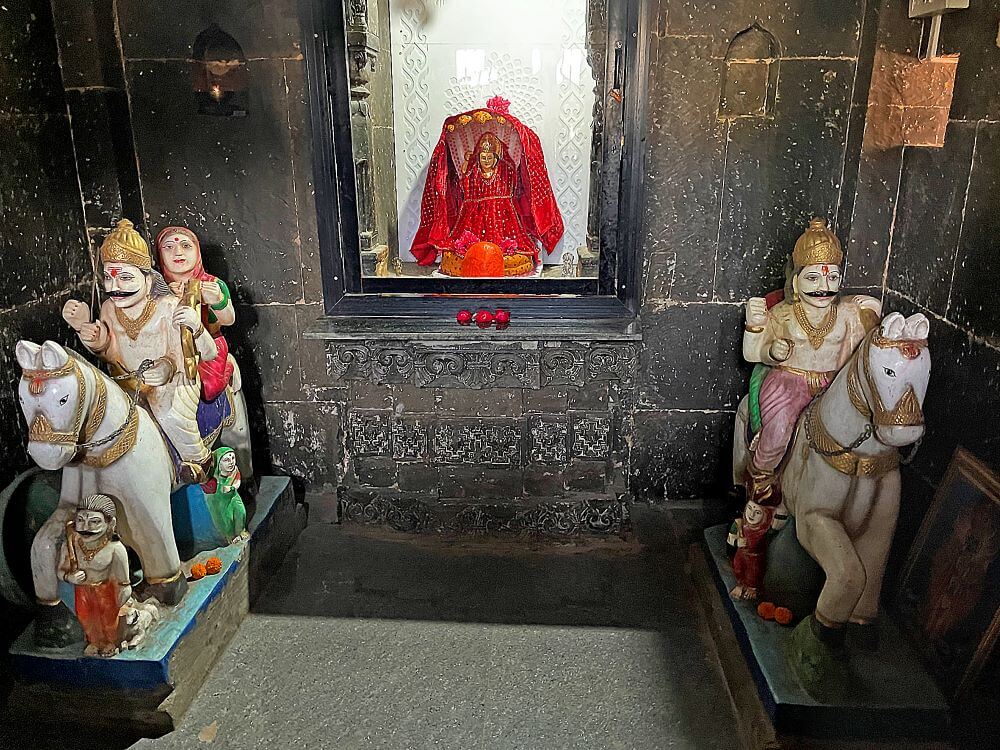
The Sheshnarayan Temple stands on a high jagati (foundation). The temple structure consists of a Darshan Mandap (viewing hall), a Sabha Mandap (assembly hall), and a Garbhagriha (sanctum sanctorum). One enters the Darshan Mandap by climbing 5 steps. There are unique carved sculptures on the walls of the entrance to the Sabha Mandap. The Sabha Mandap is relatively small, and the idol of Vishnu is in the sanctum. Shesha is depicted with his hoods spread over this idol. On both sides of the Vishnu idol in the sanctum are the idols of Khandoba and Mhalasa riding horses.
Every year, the Sheshnarayan fair is held for 3 days starting from Akshaya Tritiya. During this time, a procession of the deity’s staff (kathi) is taken out. Thousands of devotees participate in this procession, which moves to the sound of drums and cymbals. Apart from this, festivals like Diwali and Dev-Diwali are also celebrated in the temple. The daily Aarti in the temple takes place at 7 o’clock in the morning. Devotees can have the darshan of Sheshnarayan from 7 o’clock in the morning until 10 o’clock at night.
Kumbhephal village is considered historically and religiously significant. There are many temples in this village. These include the Sheshnarayan Temple, which is the center of the village’s faith, as well as the Veerabhadra, Kashai, Shambhu Mahadev, and Maruti temples. Another feature of this village is the barav (stone stepwell) built by Ahilyadevi Holkar, located near the Sheshnarayan Temple. Many tourists and devotees who come here for darshan make it a point to visit this unique stepwell.
Queen Ahilyadevi Holkar used to travel along this route while going from Pune to Indore. Therefore, she built stepwells at many places on this route, but over time, they were destroyed. However, every stone of this stepwell remains intact even today. The depth of this stepwell is 58 feet (10 men deep), and there are about 47 steps to reach the bottom. The specialty of this stepwell is that it has 2 arches, and an idol of Shri Ganesha was installed in it by Ahilyadevi herself. Wherever Ahilyadevi built stepwells in Maharashtra, she made sure to install idols of deities within them, which would maintain the sanctity of the place. Warkari Dindis traveling from Alandi to Trimbakeshwar for the darshan of Nivruttinath often stop near this stepwell.
This sacred temple stands as a testament to deep spiritual devotion, ancient architectural grandeur, and rich local cultural traditions.
The sanctum sanctorum houses the divine idol consecrated according to ancient Vedic traditions, surrounded by serene courtyards and traditional temple architecture.
Navratri, Maha Shivratri, Annual Temple Jatra & Deepotsav
Compare and book flights, secure top-rated local hotels near the temple, hire reliable guides, and rent cars instantly.
Extend your pilgrimage by visiting other highly sacred temples located nearby.


Add ₹999 more to unlock FREE SHIPPING!
Your sacred cart is currently empty.
Shop Photo FramesFill in your delivery details below to place your order.
Add comment