
Add ₹999 more to unlock FREE SHIPPING!
Your sacred cart is currently empty.
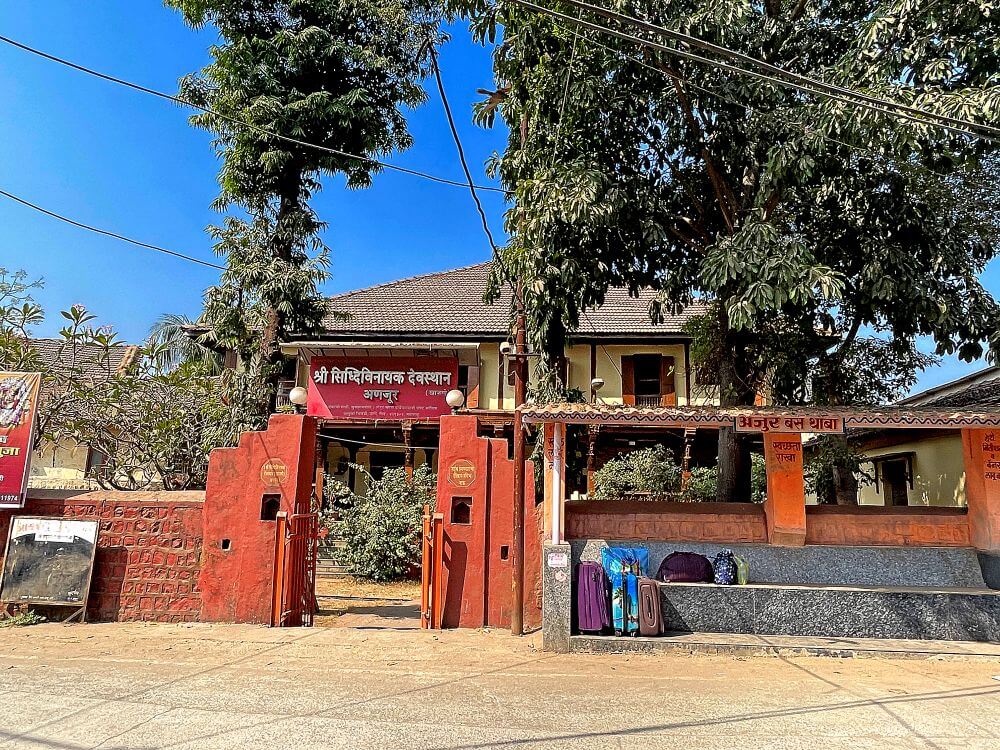
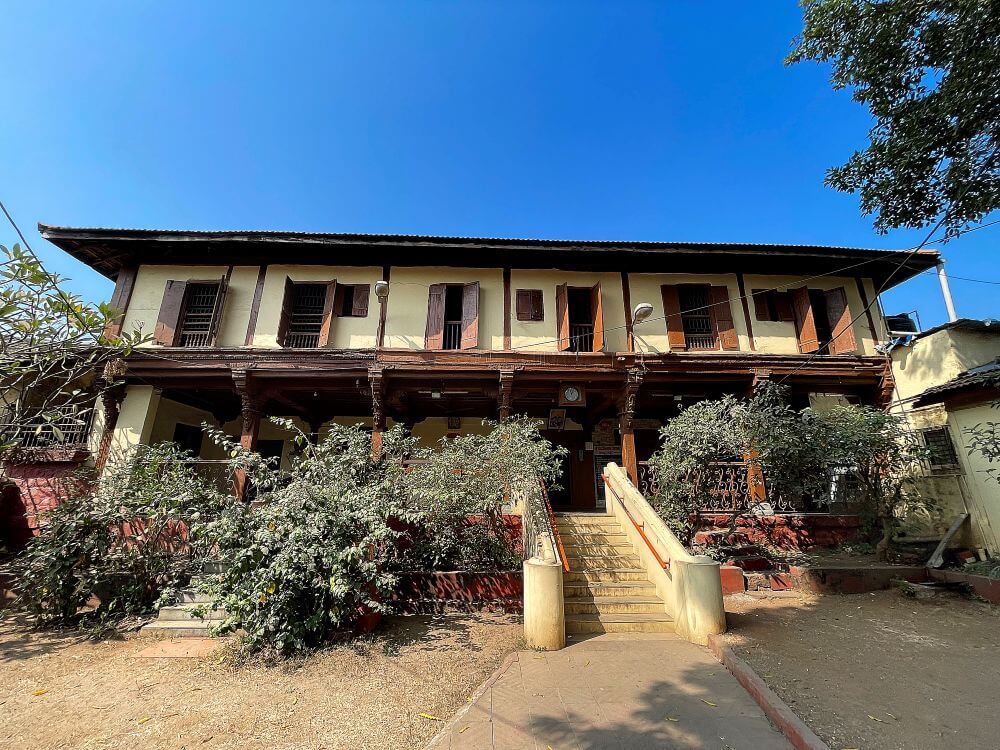
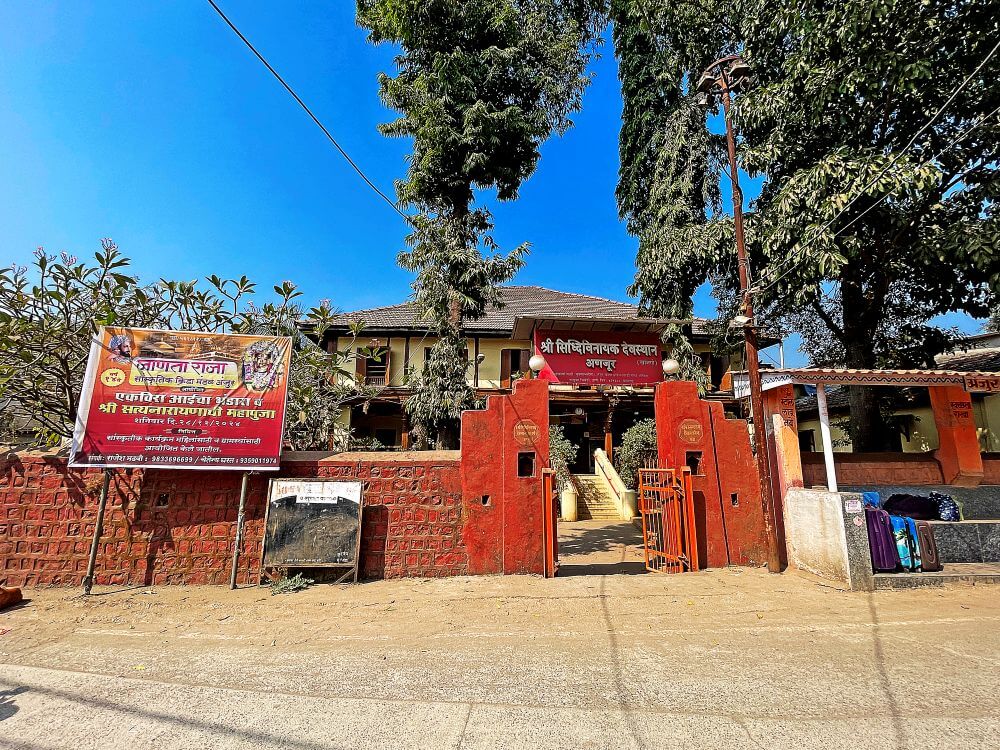
Shop Photo FramesAnjur (Anjur) is a small village in the Bhiwandi taluka. It is considered the headland of Bhiwandi, nestled within the confluence of the Kalyan and Thane creeks. The abode of Siddhivinayak is situated here in a Peshwa-era mansion. Famous as the ‘Anjurkar Naik’s Wada’, the Ganesha in this structure is renowned as the ‘Deity who grants wishes’. Devotees believe that by worshipping this Ganesha with a pure heart, one is blessed with progeny. Hundreds of devotees visit daily to seek the blessings of this wish-fulfilling Ganesha.
According to historical records, a chieftain named Gangaji Naik established this temple in the year 1718. As per the editorial notes in the ‘Sashtichi Bakhar’, the original surname of the Naik family was ‘Rane’. In the 12th and 13th centuries, the Bimb dynasty ruled over Mumbai and the island of Sashti. Their capital was at Mahim, also known as Bimbasthan. In the year 1212, after the death of King Mahibimb, a man from the Rane family, with the help of Harad Puro of Mahim, saved the king’s wife Kamai and son Keshavdev from a crisis. Following this, the prestigious title of ‘Naik’ was bestowed upon this family. Regarding this crisis, the ‘Mahikavatichi Bakhar’ states that the minister of Mahibimb had evil intentions towards Kamai. At that time, Kamai ‘called the officer of Mahim and narrated the incident.
Even if the minister is evil-minded, what effort should be made? Harad Puro, the officer, said, “If you are our mother, who dares to look at you?”’ After this, ‘as soon as the sun set, they surrounded the minister’s mansion. A battle ensued there. The minister was killed in the sight of all.’ Later, between 1580 and 1590, brothers Bal Naik, Bhiv Naik, and Tan Naik of this family moved from Bandra to Kalwa and then settled in Anjur due to the atrocities of the Portuguese.
From the year 1533, the Portuguese held dominance over Vasai, Kalyan, Thane, Mumbai, and Revdanda. In the years 1661-62, the Portuguese gave Mumbai to the British as a dowry for the marriage of King Charles II of England and Infanta Catherine of Portugal. However, the Portuguese rule remained intact over the Thane, Kalyan, Vasai, and Revdanda regions. At that time, the Portuguese committed unspeakable atrocities against the locals, confiscated many hereditary lands, and forced religious conversions. Against this backdrop, Nimbaji Naik of the Naik family declared war against the Portuguese. To seek help in this struggle, he sent a person named Pralhad Joshi to Chhatrapati Sambhaji Maharaj. However, due to the calamities faced by Sambhaji Maharaj, Nimbaji could not receive his assistance.
After the death of Nimbaji, Gangaji, one of the six children from his second wife, took up his father’s unfinished task. The Sashti Bakhar states in this regard, ‘That wicked king (the Portuguese) does not allow the religion and culture of Maharashtra to continue; he has ruined the subjects and converted our homes.’ This sorrow weighed heavily on his heart. His sentiment was, ‘What my father started should continue; our temples, holy places, and regions should be liberated; there should be a Maratha King and Maratha Dharma.’ To seek the blessings of his family deity, Mayureshwar of Morgaon, for this mission, he went to Morgaon in the year 1718. He set out with only an old shawl, a dhoti, a turban, and half a rupee. While walking the distance of about 230 kilometers from Anjur to Morgaon, he was robbed by the Berads of the chieftain Damaji Thorat, though they did not physically harm him. His seven-day journey to Morgaon was spent without food. In Morgaon, he observed a fourteen-day fast. After this twenty-one-day penance, Ganesha appeared to him in a vision and suggested he go to Chinchwad. Accordingly, he went to Chinchwad. There, Narayan Dev, the grandson of Morya Gosavi, granted him grace through his son Chintamani (the Second). At that time, Chintamani said, ‘Since you are born into a Kshatriya lineage and are striving to protect your own religion, I give you this sword; take it, and I give you this Ganesha with a trunk turned to the right. He will ensure the success of your mission.’ Saying this, he took a stone from the water and gave it to him; it appeared to be a Ganesha with a trunk turned to the right. Upon returning to Anjur, Gangaji installed this idol in his mansion on the auspicious occasion of Champashasthi in the year 1718. Later, in the year 1739, the brave Chimaji Appa defeated the Portuguese and conquered the Vasai Fort and the surrounding province. After the success of the Vasai campaign, the faith of the local people in the Siddhivinayak of the Naik mansion became firmly established, which continues to this day. Locals refer to this mansion as ‘Inamdarchi Madi’ and the Ganesha here as ‘Maditla Ganpati’.
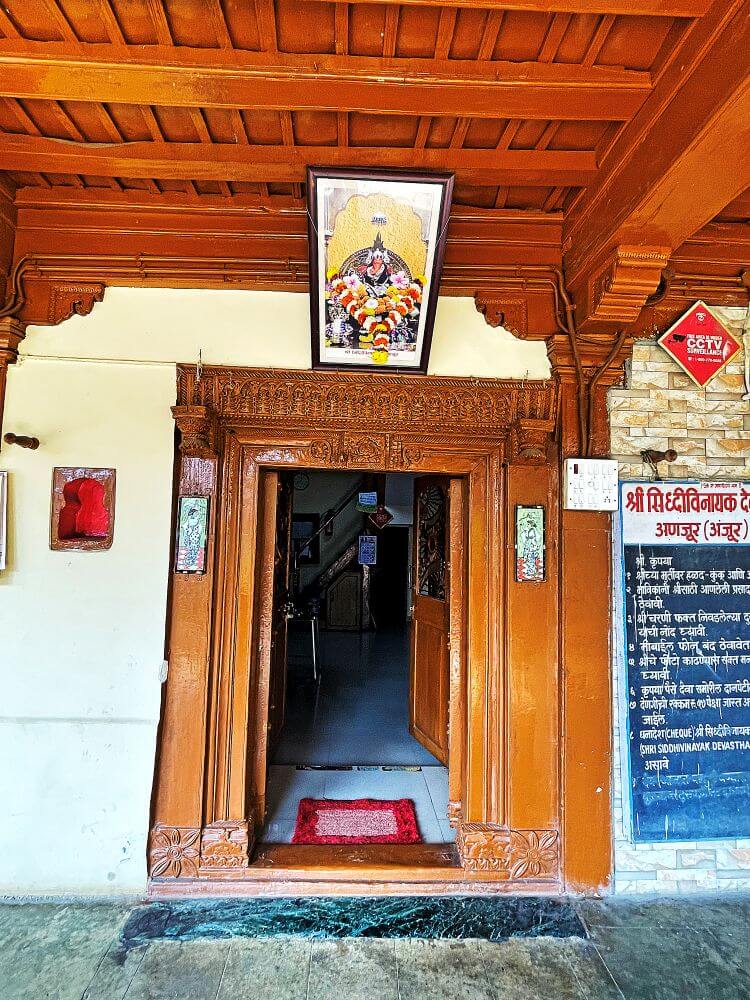
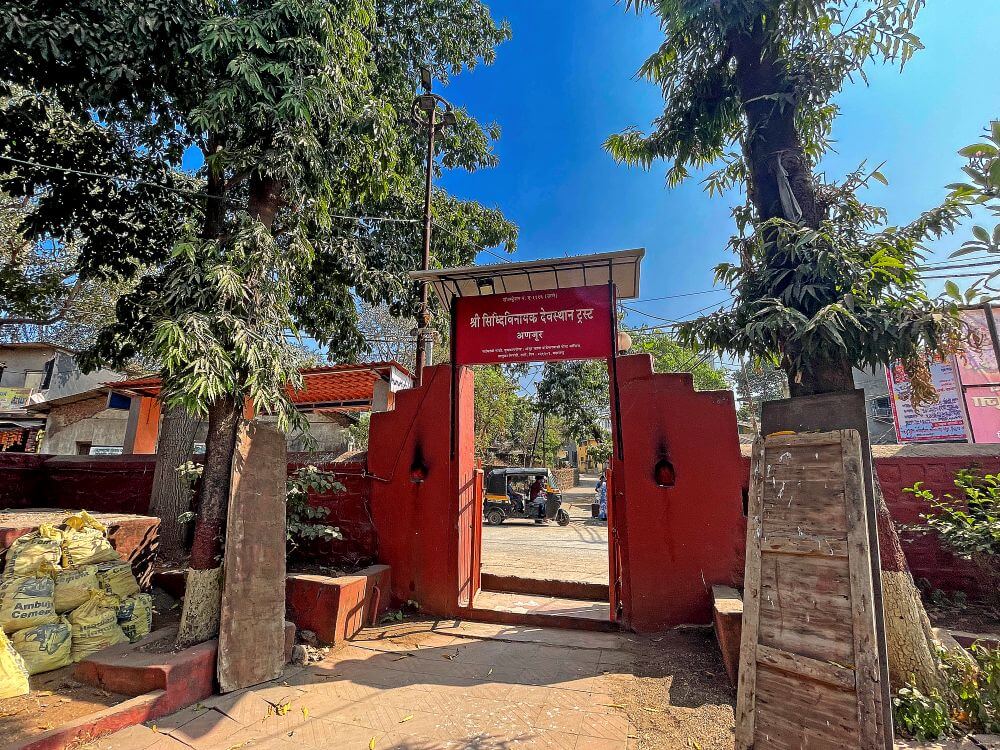
This mansion in Anjur village, located near the Thane-Nashik road, is an excellent example of Peshwa-era architecture. Built using lime and stone, the mansion is surrounded by a stone wall. Behind the mansion is a stepped stone tank (Pushkarani). The mansion, which has an earthen courtyard, has two staircases. The construction of the tiled-roof mansion uses wood extensively, including wooden pillars, beams, and planks. One can see the pegs, niches, alcoves, and wooden staircases used in the olden days. The door, its frame, and the pillars feature attractive carvings. On the lintel of the door, there is a Ganesha idol carved in wood. Above it is a large image of Siddhivinayak Ganesha.
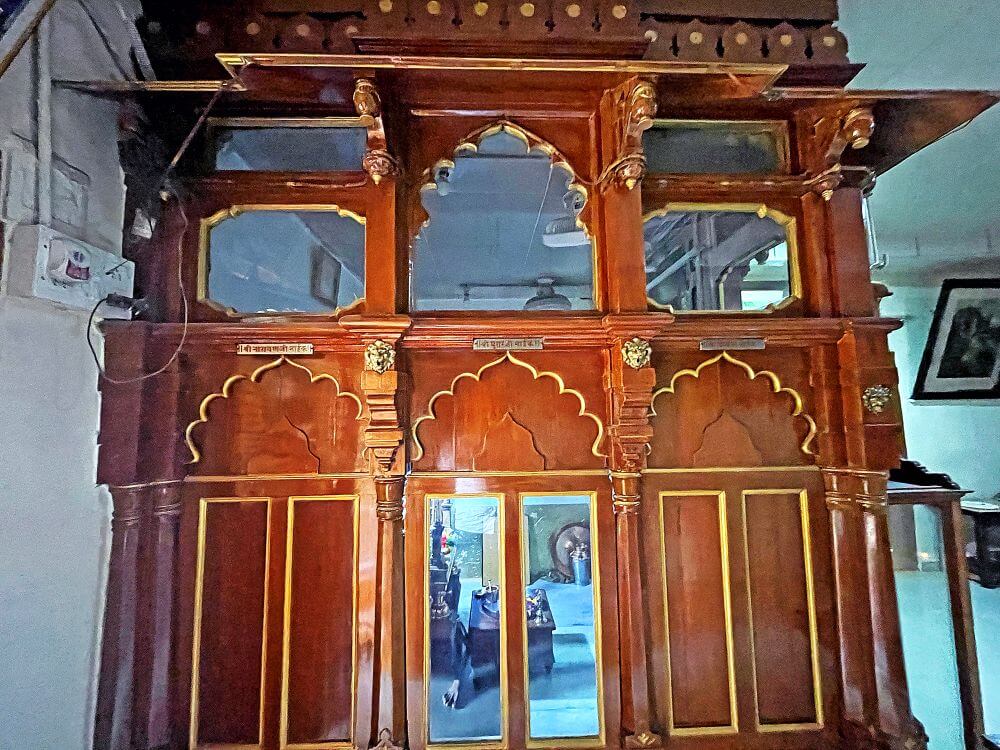
The inner room contains images of many gods and goddesses. The genealogy of the Naik (Anjurkar) family is kept here. The idol of Siddhivinayak is housed in a large wooden canopy and an attractive brass shrine. The brass shrine has a dome supported by four pillars. This stone idol of the right-trunked Ganesha is 8 inches tall. The forehead of this vermilion-smeared idol protrudes slightly. There is a crown on the head of the idol. As the idol was smeared with vermilion from time to time for about 275 years, its size had increased. Consequently, devotees came to believe that the size of the idol grows every year. In 1977, the outer layer of vermilion on the idol cracked, revealing the idol in its original form. After religious rituals, a thin layer of vermilion was applied to the idol, and it was re-consecrated with due rites. The idol wears pearl necklaces. In front of the idol are the statues of Riddhi and Siddhi. There are other idols in the shrine as well. Since the idol has a trunk turned to the right, strict purity must be maintained; therefore, only the priests are allowed to enter the sanctum sanctorum. Devotees must stand outside to have darshan.
Every morning, Abhisheka is performed on the idol. Aarti takes place at 8:15 in the morning and 7 in the evening. In the afternoon, a delicious Naivedya is offered to Lord Ganesha. A Maha Aarti is held here on every Vinayaki and Sankashti Chaturthi. A large crowd gathers for the darshan of Ganesha on Angarki Chaturthi. The installation of the Ganesha idol takes place on Bhadrapada Chaturthi. During the seven-day Ganeshotsav festival held here, a large number of devotees come for darshan. A grand festival of Ganesha Jayanti is celebrated here in the month of Magh. Recitations of the Ganpati Atharvashirsha are performed for a week before Ganesha Jayanti. Laghurudra Abhisheka is performed on Maghi Chaturthi. That night, the idol of Siddhivinayak is laid to rest on a bed. In the morning, the deity is awakened after performing the Kakad Aarti. Devotees can have darshan of this Siddhivinayak every day from 6 in the morning until 9 at night.
This sacred temple stands as a testament to deep spiritual devotion, ancient architectural grandeur, and rich local cultural traditions.
The sanctum sanctorum houses the divine idol consecrated according to ancient Vedic traditions, surrounded by serene courtyards and traditional temple architecture.
Navratri, Maha Shivratri, Annual Temple Jatra & Deepotsav
Compare and book flights, secure top-rated local hotels near the temple, hire reliable guides, and rent cars instantly.
Extend your pilgrimage by visiting other highly sacred temples located nearby.


Add ₹999 more to unlock FREE SHIPPING!
Your sacred cart is currently empty.
Shop Photo FramesFill in your delivery details below to place your order.
Add comment