
Add ₹999 more to unlock FREE SHIPPING!
Your sacred cart is currently empty.
Shop Photo FramesSituated in the suburb of Borivali, Mumbai, the Vazira Swayambhu Ganesh Temple is a place of faith for millions of devotees. The temple is located near the junction of Vazira village, one of the ancient villages on Salsette Island. Devotees believe that the Ganesh idol here is Swayambhu (self-manifested) and Jagrut (spiritually awakened). This temple is as historically significant as it is important in the geological history of Mumbai. The reason for this is that the temple preserves the memory of a massive volcanic eruption that occurred approximately 6.6 crore years ago in the form of the Ganesh rock.
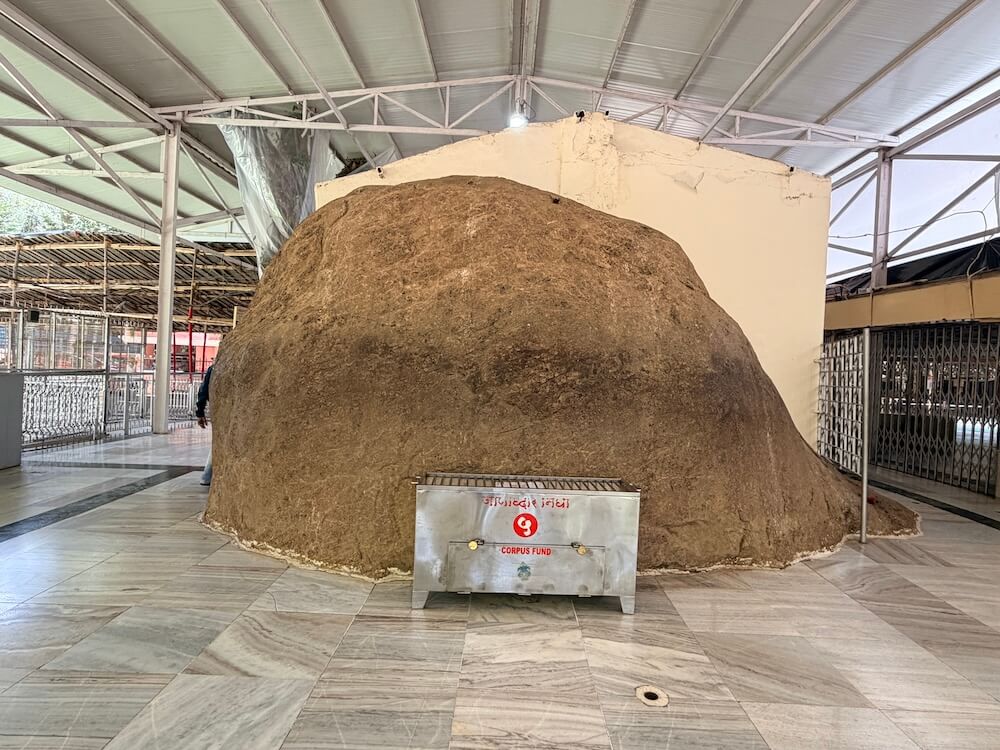
According to geology, about 6.6 crore years ago, at the end of the Cretaceous period, a volcanic eruption occurred through large fissures in the ground (fissure eruption). A massive amount of lava flowed out slowly from the depths of the earth, spreading over several kilometers. Layers of lava accumulated one upon another to form the ‘Deccan Traps’ or the ‘Deccan Volcanic Province’. A large part of Maharashtra is made of basalt rock formed from this volcanic eruption. The islands of Mumbai are also a product of this eruption. The mouth of this volcano was on the Kanheri hills of Salsette Island. The ash that erupted from it slowly turned into rock. The Ganesh rock fragment here is a remnant of that natural phenomenon. Because the shape of this rock fragment somewhat resembles an elephant’s head, it began to be worshipped as Swayambhu Ganesh in ancient times.
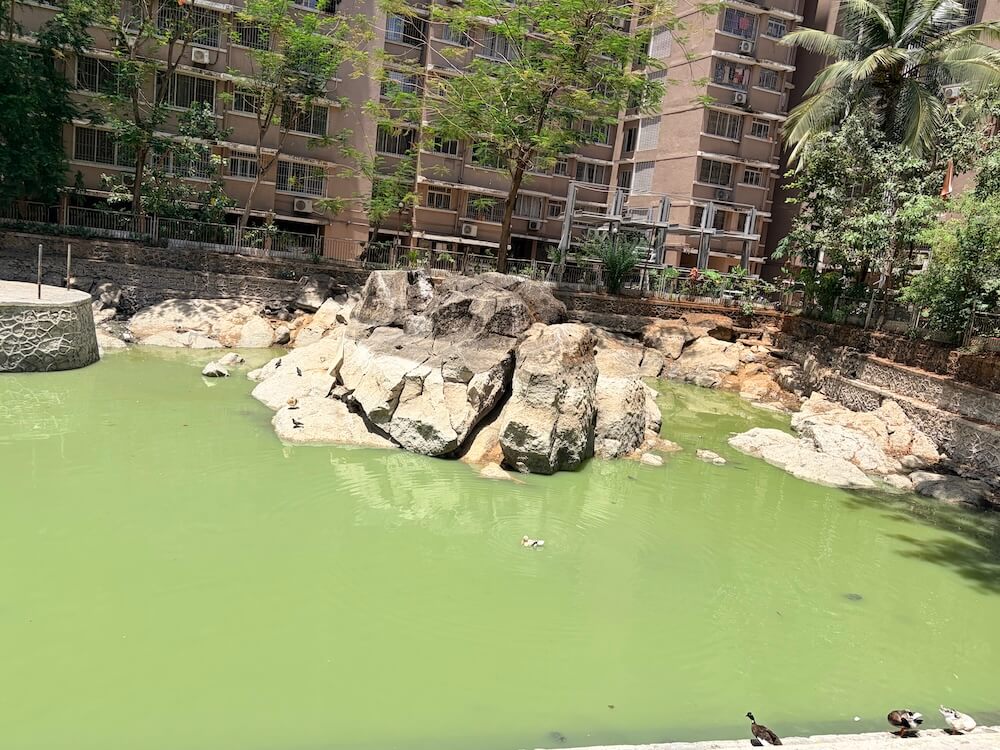
During that period, this part of Borivali was a cluster of small villages such as Eksar, Poisar, Shimpoli, Magathane, and Vazira. The history of King Pratap Bimb, the first king of Mumbai who established his capital at Mahim in the year 1142, and subsequently Bimbdev Yadav, the son of the Yadava King Ramdevray who came to power in the year 1295, is found in the text ‘Mahikavatichi Bakhar’. In this text, this area is referred to as ‘Boravali’. According to folklore, this area, situated between the Poisar and Dahisar rivers, was previously abundant with Bor (jujube) trees. From this, the area got the name ‘Boravali’, which later became ‘Borivali’. The Vazira village settlement, once surrounded by dense forests and hills, has now become a part of Borivali. In the past, stones were excavated from this area on a large scale for construction purposes. Many ponds were created due to those stone quarries. The pond adjacent to the Ganesh temple is one of them.
According to local legend, many years ago, stone quarrying work was underway at this site. A worker was trying to blast a large rock there by setting explosives. At that time, it was time for the afternoon lunch break. He ate his meal and lay down there for a short rest. While sleeping, he had a vision in a dream. The Ganpati who appeared in the dream told him, “My abode is within the rock you are about to blast.” He woke up instantly and told this to the concerned contractor. When the contractor inspected it, they saw the shape of Ganesh in that rock. After this, everyone together worshipped this Ganesh rock. After this story spread in the surrounding area, devotees from the Koli community and the Panchkalshi community began coming here with devotion to worship Ganesh. Over time, a small temple was built here. The exact date of the establishment of this temple is unavailable. However, according to local oral tradition, the history of this place is many generations old. Until about three-quarters of a century ago, this Ganpati was known as the ‘Ganpati of the Quarry Pond’. The renovation of this temple, which is considered the village deity of Vazira and the neighboring Babhai village, as well as the beautification of the temple premises, has been done in recent times.
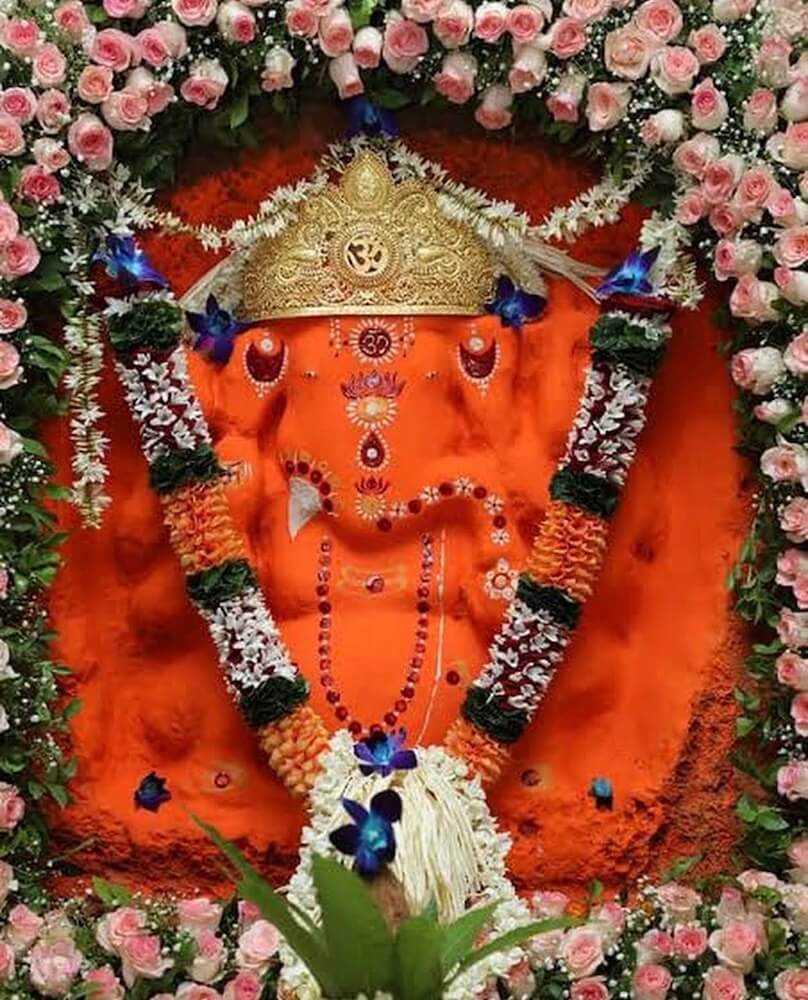
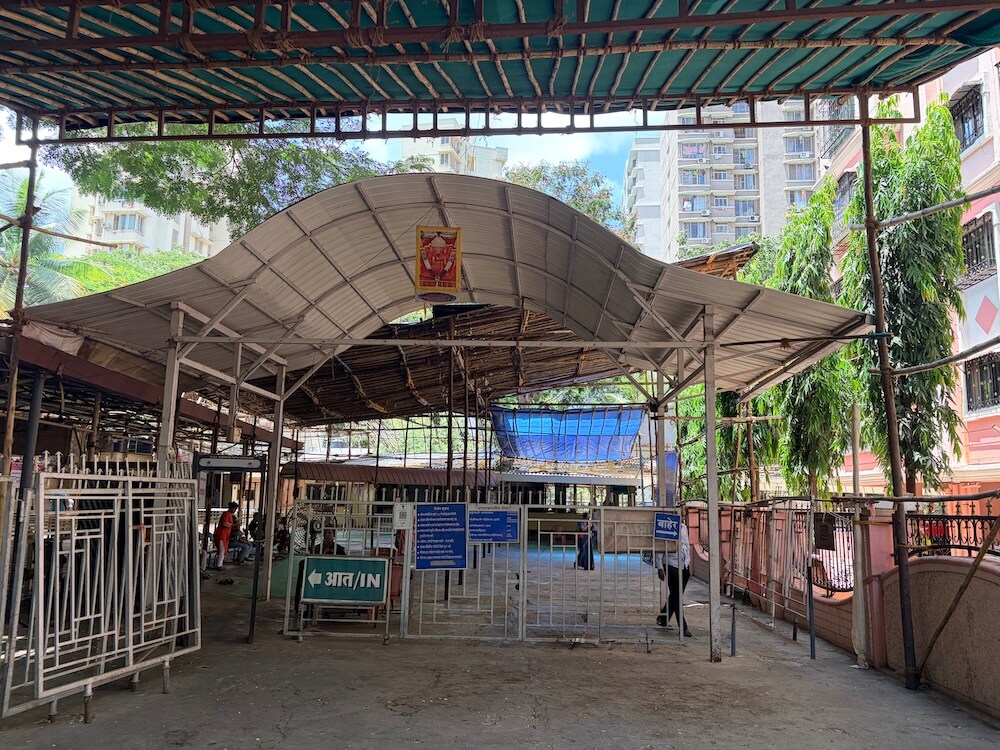
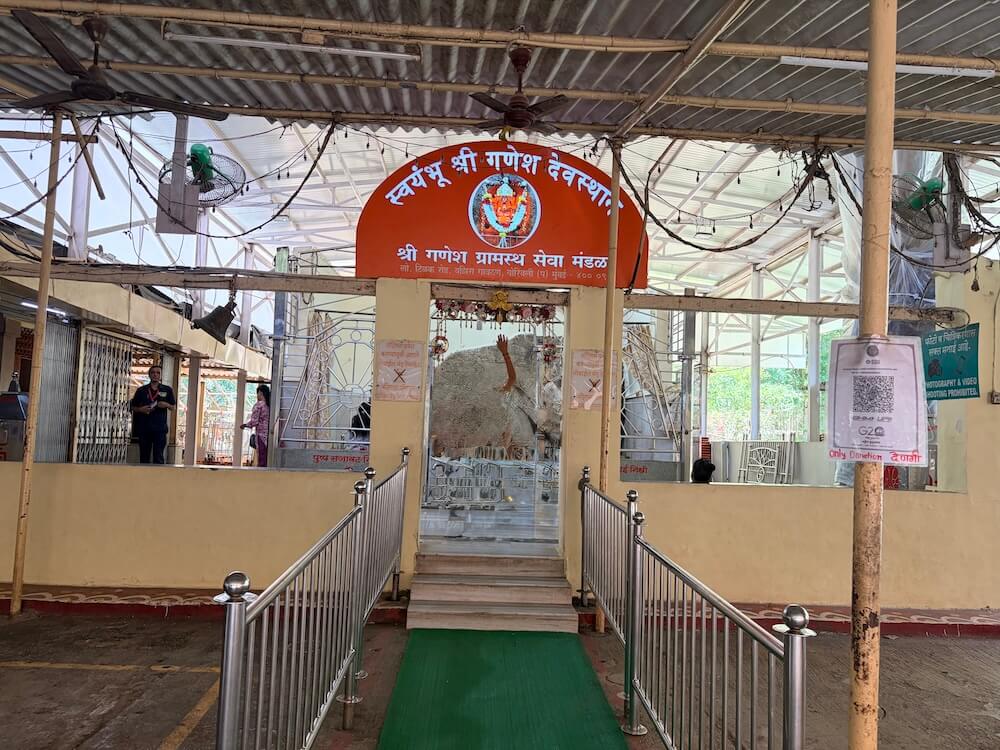
This temple is situated in a spacious enclosure at Vazira Naka. A large tin shed has been erected in the open courtyard in front of the temple for devotees. The queue for temple darshan begins from here. The temple here is in a modern architectural style. The structure of this temple consists of a Sabhamandap (assembly hall) and a Garbhagriha (sanctum sanctorum). The Sabhamandap of the temple is semi-open. In the simple yet beautiful Garbhagriha decorated with marble tiles, there is a large Ganesh rock fragment. On that rock is a vermilion-smeared carved idol of Ganesh. This idol is adorned with garlands of flowers and has a golden crown on its head. On the marble altar built in front of this rock, a golden-colored idol of Mushaka, the vehicle of Ganesh, is seated. The specialty of this Garbhagriha is that half of the Ganesh rock fragment is inside the Garbhagriha and the other half is outside. Devotees get a view of it while performing Pradakshina (circumambulation) of the Garbhagriha. At this point, the elephant-headed part of the Ganesh rock becomes clear. To the right of this temple is a Hanuman temple.
In this Swayambhu Ganesh temple, devotees can avail the benefit of Ganesh darshan from 5.30 AM to 9.30 PM. Throughout the year, many religious festivals are celebrated with great enthusiasm according to the lunar calendar. Bhadrapad Shukla Chaturthi, i.e., ‘Ganesh Chaturthi’, is the main and largest festival here. During the ten days of the Ganesh festival, various religious rituals, bhajans, kirtans, and cultural programs are organized in the temple. Apart from this, ‘Ganesh Jayanti’ is celebrated here on Magh Shukla Chaturthi. On this day, the idol is adorned with special ornaments, and Mahapuja and Annadan (offering of food) are performed. On Diwali, New Year, and Tripuri Purnima, the entire temple is decorated with attractive lamps and lighting. Due to the fame of this Swayambhu Ganesh as the ‘Siddhivinayak’ of the Borivali area, there is a large crowd of devotees here every day. During Sankashti, Angarki Chaturthi, and the Ganesh festival, the temple premises take on the form of a fair. Photography is strictly prohibited in this temple. Similarly, images of other deities are not installed here.
This sacred temple stands as a testament to deep spiritual devotion, ancient architectural grandeur, and rich local cultural traditions.
The sanctum sanctorum houses the divine idol consecrated according to ancient Vedic traditions, surrounded by serene courtyards and traditional temple architecture.
Navratri, Maha Shivratri, Annual Temple Jatra & Deepotsav
Compare and book flights, secure top-rated local hotels near the temple, hire reliable guides, and rent cars instantly.
Extend your pilgrimage by visiting other highly sacred temples located nearby.


Add ₹999 more to unlock FREE SHIPPING!
Your sacred cart is currently empty.
Shop Photo FramesFill in your delivery details below to place your order.
Add comment