
Add ₹999 more to unlock FREE SHIPPING!
Your sacred cart is currently empty.
Shop Photo FramesThe glory of Hingladevi has reached every household through the song, “Hinglay Devi go Hinglay Devi, tu ubhi hayas Vesave gavanu, tujhe punvela jamlay bagh lok sara devlanu…” (O Hinglay Devi, you stand in the village of Versova; look, all the people have gathered at the temple for your full moon festival). This temple is situated in the Gaothan (traditional village) of Versova in the western part of Andheri. The Goddess is the presiding deity of the Koli community in this region and is considered the Gram-Devata (village deity) of Versova. She is a manifestation of Hinglaj Mata from Pakistan. The villagers believe that her arrival brought prosperity to this region. Consequently, the Navratri festival is celebrated here with great fervor in the presence of thousands of Koli brethren.
The original seat of Hinglaj Devi is located in Hingol National Park, in the Lasbela district of the Balochistan province in Pakistan. The Goddess resides there in a cave on a hill on the banks of the Hingol or Hingula River. The temple is surrounded by sacred sites such as Ganesh, Kali Mata, Guru Gorakhnath Dhuni, Brahmakund, and Ramjharoka Baithak. In the ‘Mahapitha Nirupana’ chapter of the Shakta text ‘Tantra Chudamani’, a total of 43 Shakti Peethas are mentioned. Over time, this number increased to 51. According to ‘Tantra Chudamani’, the Hinglaj temple is listed as the first among these Shakti Peethas. According to mythological legends, the Brahmarandhra (crown of the head) of Sati Mata fell at this spot. Just like the Hindus in Pakistan, the local Zikri Muslim community also reveres this Goddess. The Zikri Muslims refer to this temple as ‘Nani Mandir’ and call the pilgrimage to the Goddess ‘Nani ki Haj’. It is said that, like the Hindus, the local Muslim community has also, from time to time, repelled attacks on this temple by religious extremists.
A legend regarding this Goddess is found in the ‘Linga Purana’. According to it, once, fearing Ravana, Lord Shiva left Kailash and went to the Balhika forest. Parvati did not know where he had gone. When he did not return for many days, Parvati set out in search of him. Wandering in disguise, she arrived at this place. There, she saw Shiva sporting with the Ganga. Later, a temple of Parvati was established at this site. Since this place is on the banks of the Hingol or Hingula River, the Goddess was named ‘Hingula’. Later, this name evolved into ‘Hinglaj’. It is this same form of Sati Mata that is enshrined in the Hingladevi temple in Versova.
A legend is told about this temple. During the British colonial era, a fisherman family named Dighe lived in the Versova Koliwada. Once, when a man from the family went fishing in the sea, a stone got caught in his net. He threw it back into the sea. However, for several days, the same stone kept appearing in his net. He then brought the stone to the village and placed it in a spot. One day, a young girl appeared there. Adorned in rich garments and gold ornaments, the girl gave darshan to Dighe and then vanished. Following this, he had a divine vision. The vision revealed that the stone was the idol of Hinglaj Mata. Thereafter, the Koli community began worshipping the idol. In time, a temple was built for the Goddess. The villagers believe that her arrival brought good fortune to the village and prosperity to every home. Driven by this faith, the Versova Koli community has renovated the temple from time to time. The Versova Koli Samaj Trust manages all the temples in the Gaothan. The temple attained its current form after a recent renovation by this Trust.
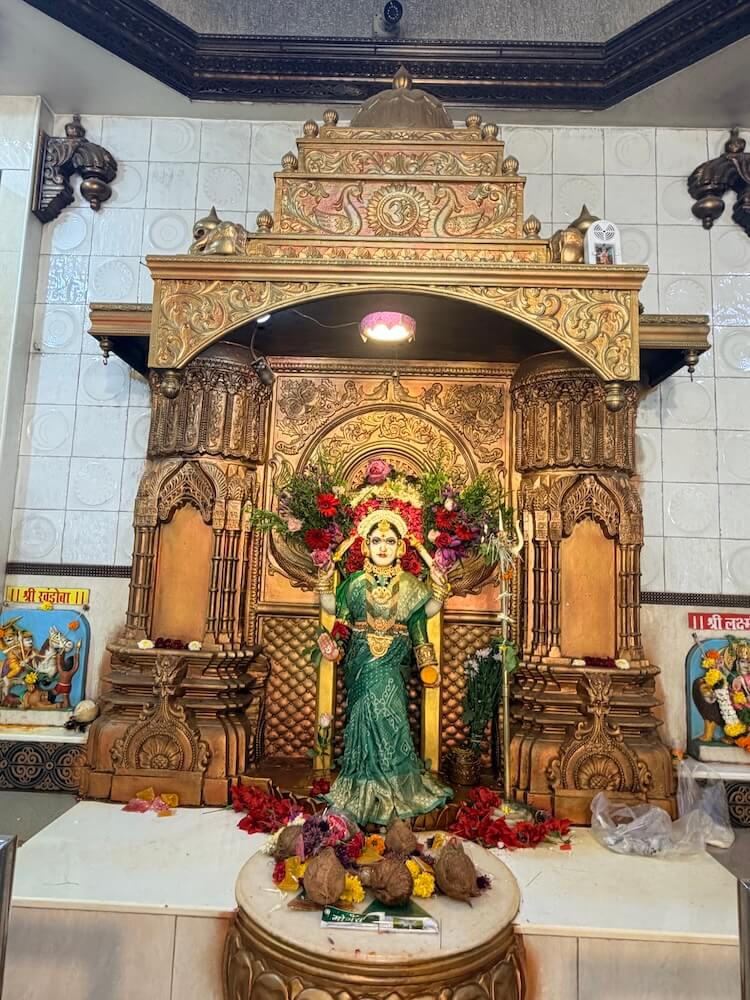
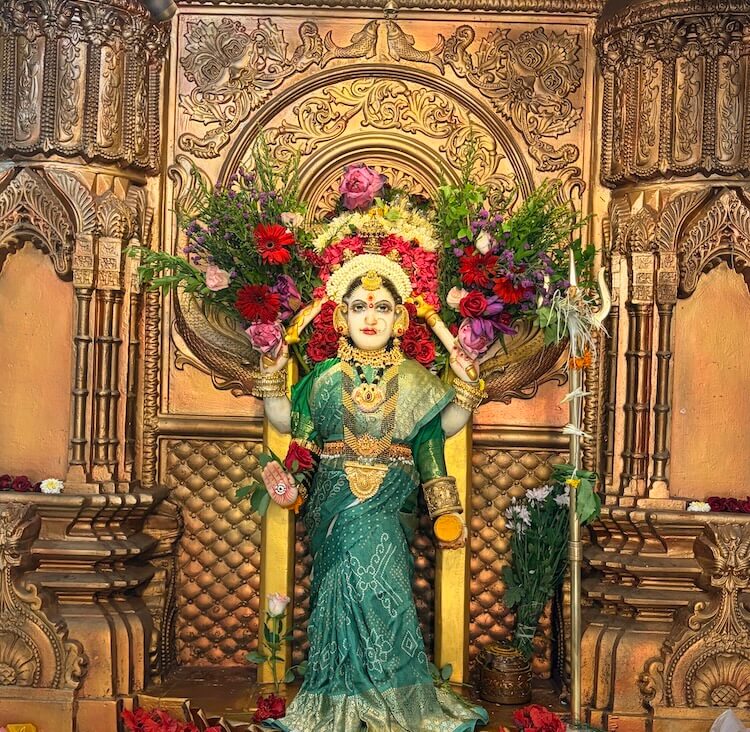
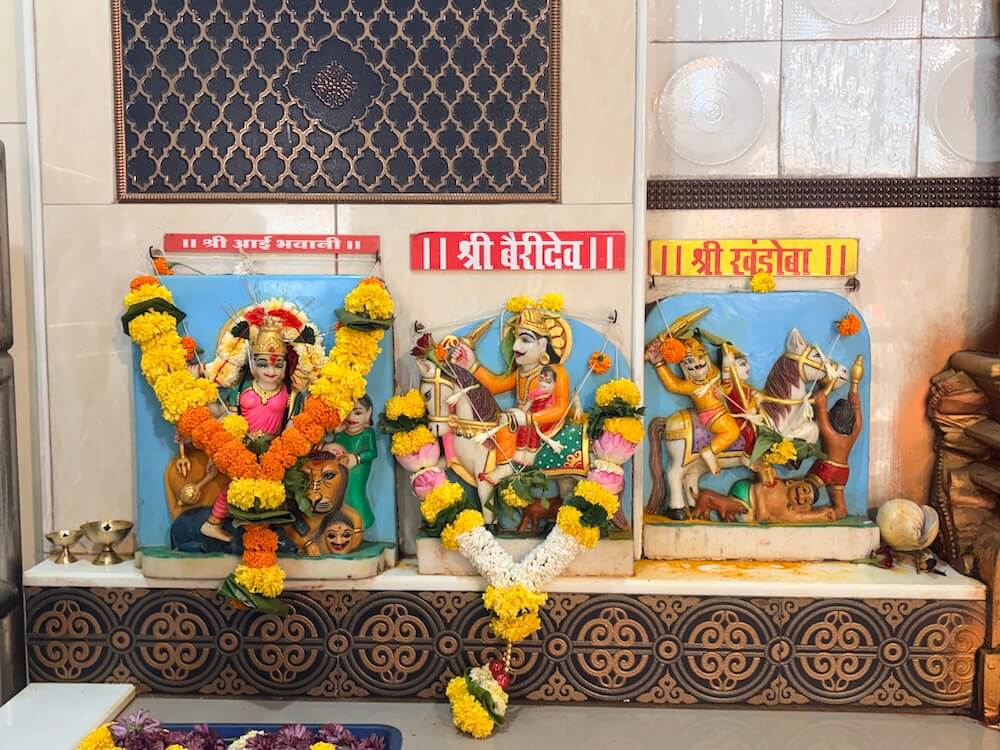
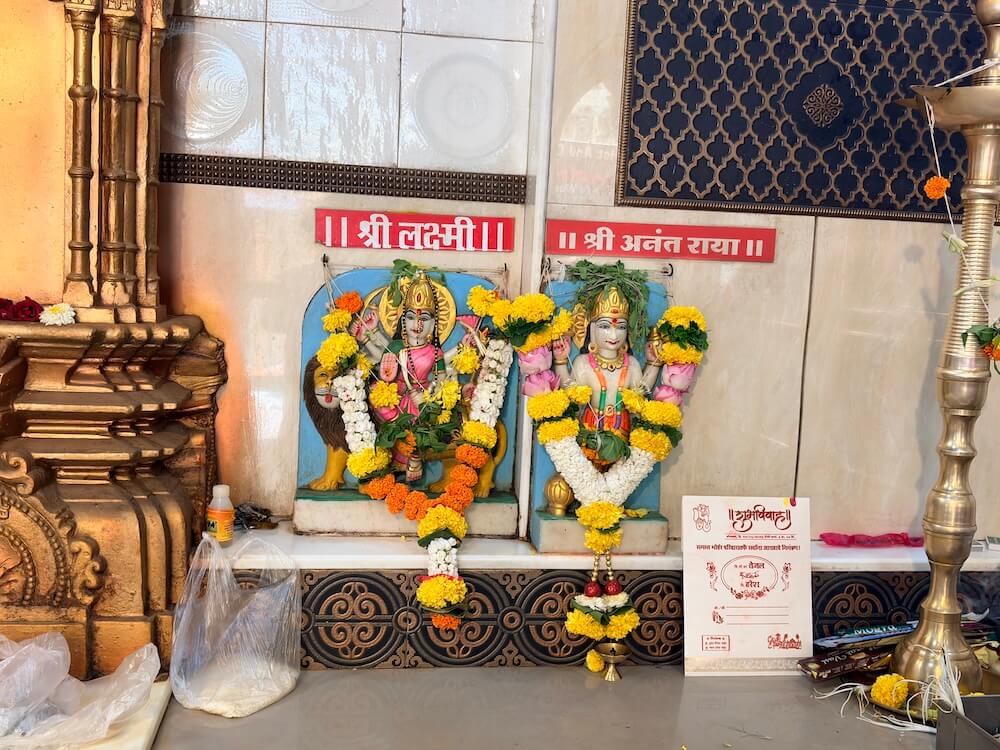
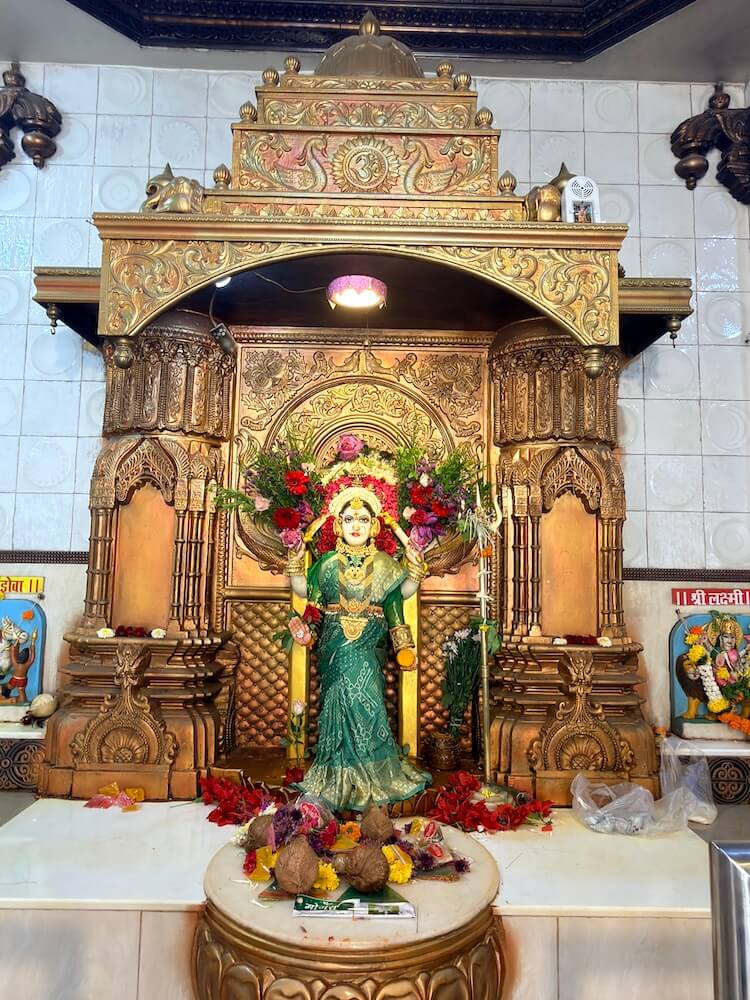
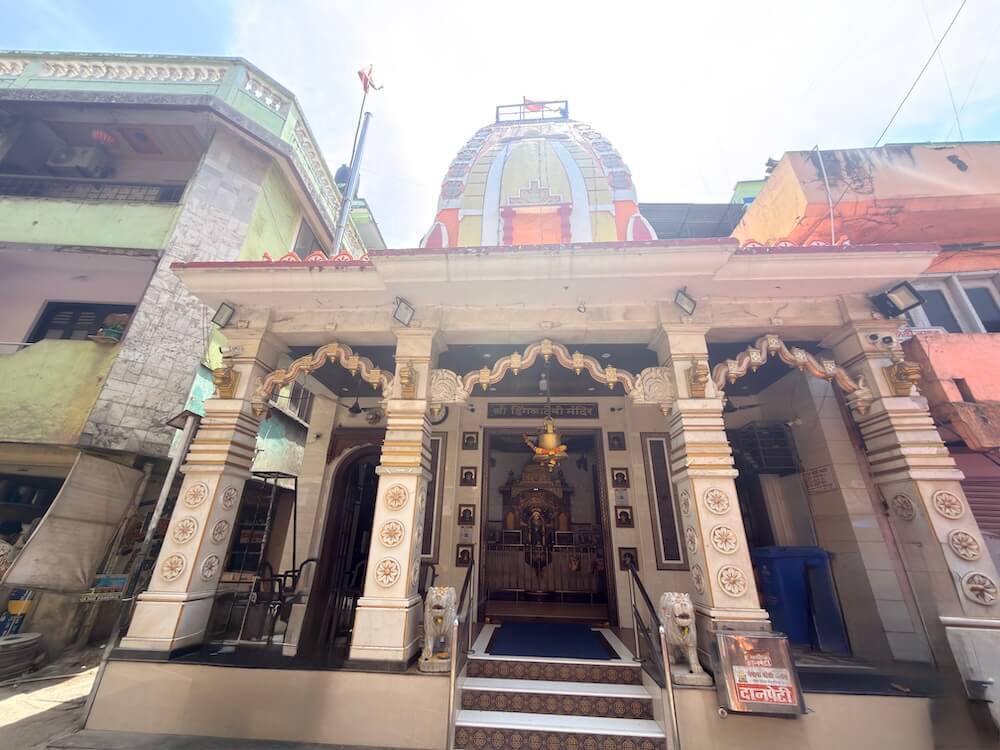
This beautiful temple stands along a road in the Versova Gaothan, characterized by narrow streets, alleys, tall buildings on both sides, and crowded shops. The temple is built on a high plinth. It consists of a small porch, a Sabha Mandap (assembly hall), and a Garbhagriha (sanctum sanctorum). The porch-like platform has square pillars adorned with ornate Makara-toranas (archways). There are two lion statues flanking the steps of the platform. In the small niches on the sides of the Sabha Mandap entrance, the eight forms of the Goddess—Aishwarya Lakshmi, Santan Lakshmi, Dhana Lakshmi, Dhanya Lakshmi, Gaja Lakshmi, Adi Lakshmi, Veera Lakshmi, and Vijaya Lakshmi—are enshrined. The Garbhagriha is open in style. Here, on a high marble altar, is a golden shrine for the Goddess. The metal sheets covering the shrine are engraved with floral patterns and religious symbols. There is a shikhara (spire) in the center of the shrine’s roof, flanked by kalashas (urns) and elephant heads. The marble idol of Hingladevi is installed within this shrine. The Goddess is seated in a Samapada (balanced) posture with four arms. She holds weapons and an Akshaya Patra (inexhaustible vessel) and is in the Abhaya Mudra (gesture of fearlessness). Following the traditions of the Koli community, the Goddess is adorned with rich garments and jewelry, and a floral braid is placed on her head. A large trident stands beside the Goddess. Additionally, on the left side of the altar are small idols of Bhavani Mata, Bhairidev, and Khandoba, while on the right are idols of Lakshmi Mata and Anantaraya. Above the Garbhagriha stands a large shikhara carved with various kalasha shapes, topped with a kalasha and a Dharma-dhwaja (religious flag).
Devotees can seek the blessings of the Goddess at this temple, which is the center of faith for Versova Koliwada, from 6:00 AM to 2:00 PM and from 4:00 PM to 10:00 PM. Devotees from far and wide flock to this temple with great devotion. Every morning, women gather in the temple for the Aarti with deep devotion, and the Goddess is decorated with beautiful garlands and flowers. Every Tuesday, a special concluding Aarti, known as the ‘Sanj Aarti’, is performed here. Preparations for the annual traditional ‘Gondhal’ festival of Hingladevi begin with great enthusiasm a week in advance. During this time, an atmosphere of joy permeates the entire village and every household. There is an old tradition of offering special honors to the Goddess on the Sunday of this festival, after which all the Koli brethren of the village gather to partake in the ‘Mana cha Bhat’ (the honored rice), which is the Mahaprasad.
The most significant festival celebrated at this temple is Navratri. During this period, programs such as Ghatasthapana, Gondhal, and Jagaran are organized in the presence of thousands of devotees. It is the firm belief of the devotees that Hinglaj Mata is a wish-fulfilling Goddess. Many women visit the temple during Navratri to fulfill the vows (navas) made to the Goddess. To fulfill these vows, traditional practices—such as wearing shackles on the feet, carrying a fire pot (agni kund) on the head, and walking on a special pyre in an open field at night—are still observed with the same devotion today.
In all these traditional festivals of the Koliwada, folk songs and Koli songs composed in honor of Hingladevi form an integral part of the devotion. Through songs from highly popular music albums like ‘Vesavchi Sontikli’ and ‘Vesavchi Paru’, the Goddess is invoked by various reverent names such as ‘Adimaya Shivshakti’ and ‘Krishnabai’. These folk songs beautifully describe the immense faith of the people of Vesava in the Goddess, her steadfast protection while they venture into the deep sea for fishing, and the unique characteristics of the Koli culture.
This sacred temple stands as a testament to deep spiritual devotion, ancient architectural grandeur, and rich local cultural traditions.
The sanctum sanctorum houses the divine idol consecrated according to ancient Vedic traditions, surrounded by serene courtyards and traditional temple architecture.
Navratri, Maha Shivratri, Annual Temple Jatra & Deepotsav
Compare and book flights, secure top-rated local hotels near the temple, hire reliable guides, and rent cars instantly.
Extend your pilgrimage by visiting other highly sacred temples located nearby.


Add ₹999 more to unlock FREE SHIPPING!
Your sacred cart is currently empty.
Shop Photo FramesFill in your delivery details below to place your order.
Add comment