
Add ₹999 more to unlock FREE SHIPPING!
Your sacred cart is currently empty.
Shop Photo FramesThe ancient Rameshwar Mahadev Temple is located in Akroli, a short distance from the Vajreshwari Devi Temple in the Bhiwandi taluka, situated near Mumbai and Thane. In front of this temple, which was sanctified by the touch of Lord Rama’s feet, are three hot water springs created by Lord Rama by shooting arrows into the ground. Devotees believe that bathing in these springs, which are among the hot water springs in the Vajreshwari area, can cure skin diseases. Consequently, thousands of devotees visit here to bathe in these springs and seek the blessings of the awakened Rameshwar deity in this temple.
Rameshwar is one of the names of Lord Shiva. The mythological story behind this name is that after Lord Rama killed Ravana, he was afflicted with the sin of killing a Brahmin, as Ravana was a Brahmin. Sages advised Lord Rama to establish and worship a Shiva Linga to cleanse himself of this sin. Sita then prepared a sand Linga on the seashore, which became known as Rameshwaram. The sages requested Lord Rama to explain the meaning of the name Rameshwar. Lord Rama replied, “Ramasy Eshwarah sah yah Rameshwarah,” meaning “He who is the Lord of Rama is Rameshwar.” Shiva-Shankar is my Lord; therefore, Rameshwar means Shankar.
The legend of the Rameshwar Temple in Akroli aligns with this mythological tale. It is said that during the Ramayana era, this region was part of Dandakaranya, which stretched from the Vindhya Mountains to the Godavari River. During their exile, Lord Rama, Lakshmana, and Sita lived in the forest for at least ten years. They likely visited the northern Konkan region as well. This is supported by a mention in the Aranya Kanda of the Valmiki Ramayana, where Lord Rama observes a ‘Panasa’ (jackfruit) tree during his stay in Dandakaranya—a tree primarily found in the Konkan region of Maharashtra. While in this area, near the Vajreshwari Devi temple complex, Lord Rama established a Shiva Linga for worship. He created springs by shooting arrows into the ground for water. After bathing in these springs and worshipping the Linga with devotion, he continued his journey. Because it was established by Lord Rama, this Shiva Linga is called Rameshwar. The springs here are also named after Lord Rama, Sita, and Lakshmana. In the nearby village of Akroli, on the banks of the Tansa River, there are seven more hot water springs. Devotees believe that bathing in these waters also cures skin diseases, drawing many to visit.
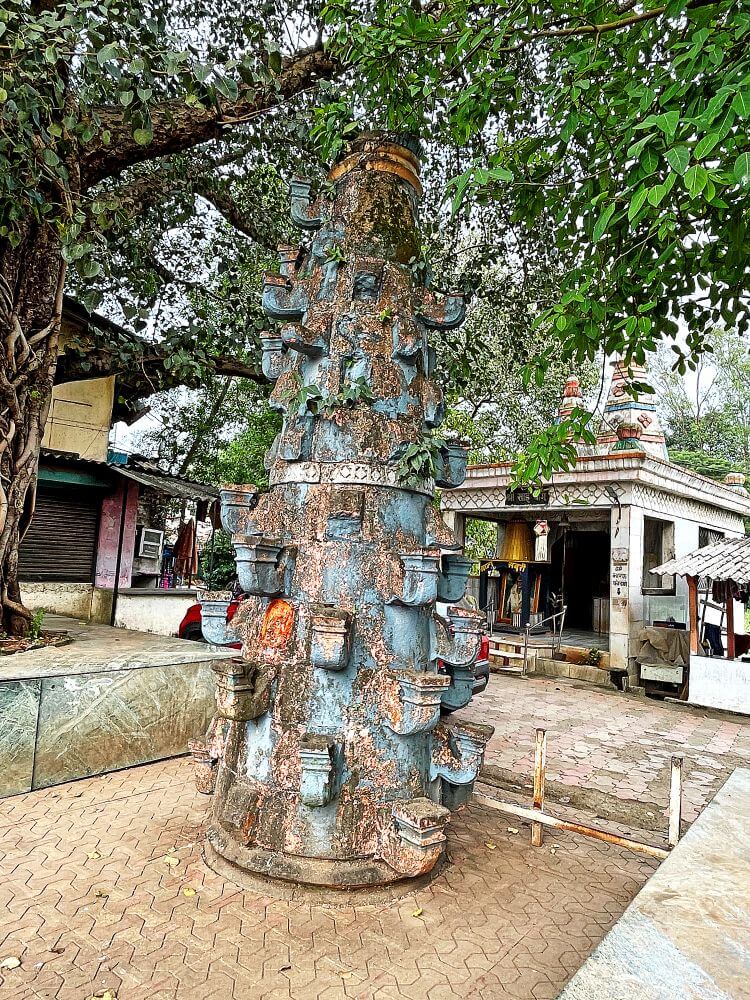
There are ancient trees in the courtyard of the Rameshwar Temple. Near one of these trees and in front of the temple entrance stands an ancient stone lamp pillar (Deepmal). To the right of this pillar is the Sai Dham Temple, built by Sai devotee Vasubhai Nambiar from Mira-Bhayandar. The three springs are located in front of the Rameshwar Temple. The water in the Sita Kund is relatively less hot. The water in the Rama Kund is hotter than that in the Sita Kund, and the water in the Lakshmana Kund is hotter than that in the Rama Kund. There are steps on all four sides to descend into these springs. This hot water contains sulfur and other minerals. Due to these medicinal properties, it is believed that bathing in these springs cures skin diseases. The rocks are heated by subterranean lava, which in turn heats the water that comes into contact with them. In some places, this water rises from the depths of the earth. The Deccan Plateau was formed millions of years ago due to volcanic eruptions, which is why such springs are found in many places in this region.
Within the temple complex is the room where Swami Nityanand resided for eight years. Swami Nityanand was originally from the Kozhikode district of Kerala. People recognized his divinity from his childhood. In his youth, he traveled to places like the Himalayas, Varanasi, Rameshwaram, Udupi, and Mangaluru. Wherever he went, he alleviated the suffering of people with his divine powers. For some years, he lived at Guruvan near Kanhangad in South Karnataka, where he meditated in a cave. After traveling across the country, he arrived in 1937 in the Akroli and Vajreshwari area, situated in the Tansa River valley near Mumbai. He spent about eight years in meditation within the temple complex at Akroli. During this time, he also continued his work of preaching to the people. His statue is placed on a platform in the room where he lived, and his sandals (Padukas) are kept in front of it. The walls of this room are adorned with many portraits of Swami Nityanand.
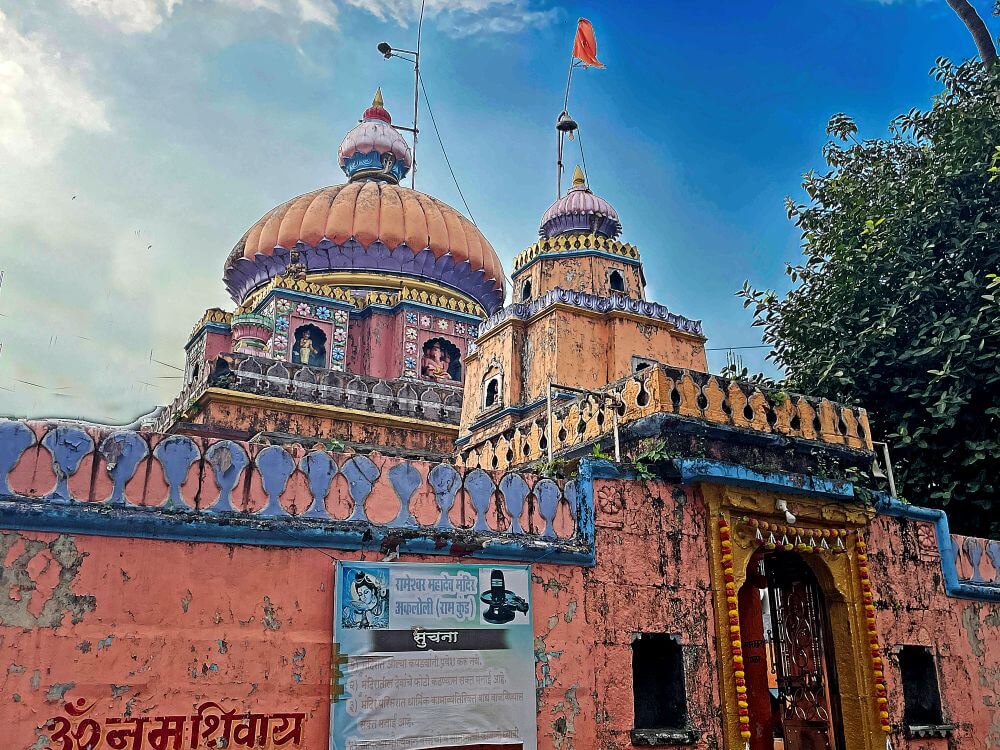
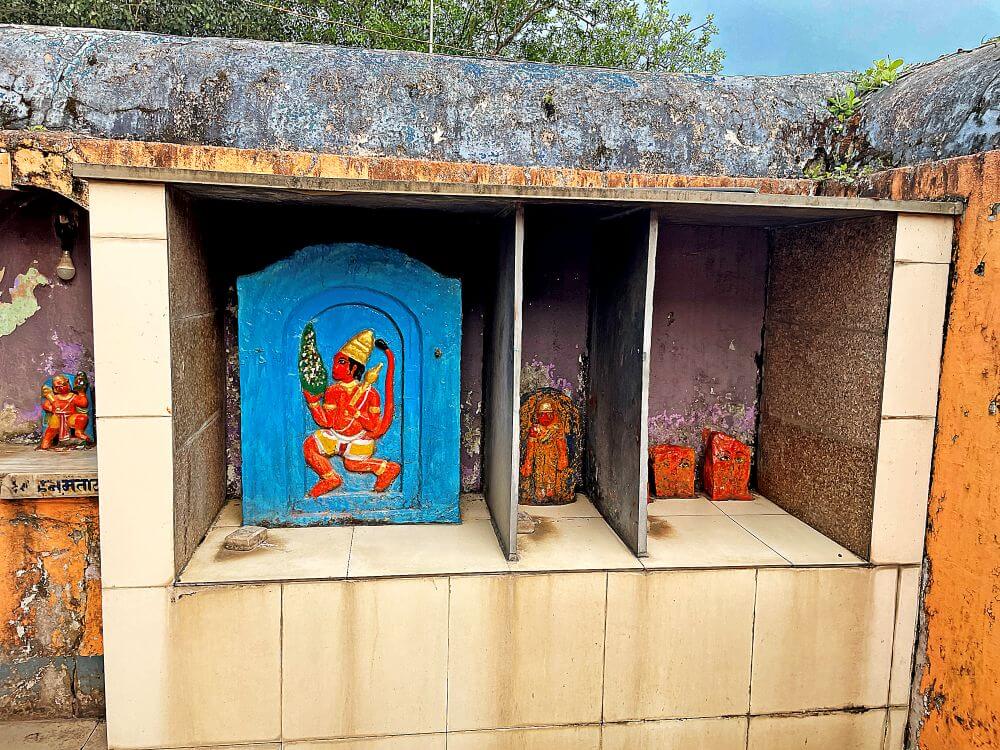
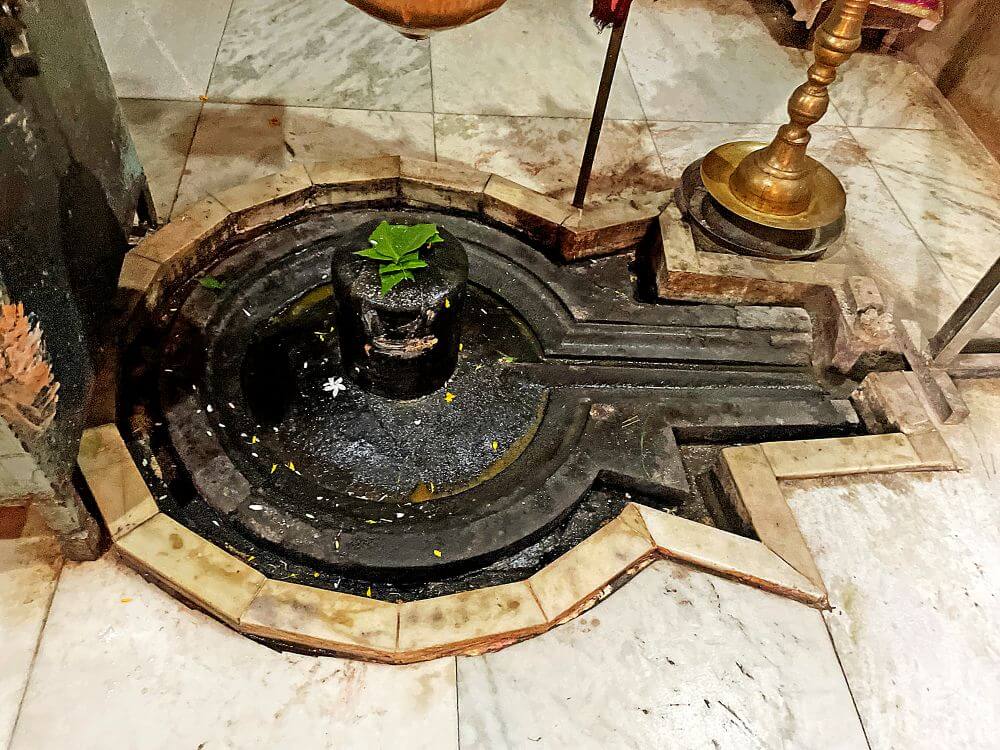
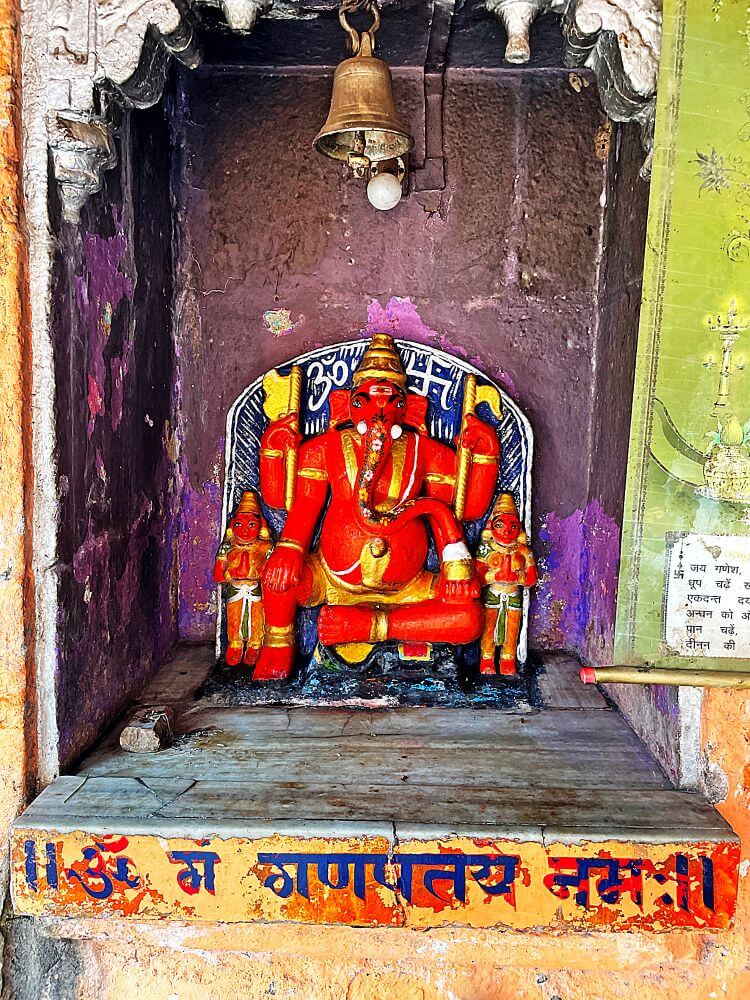
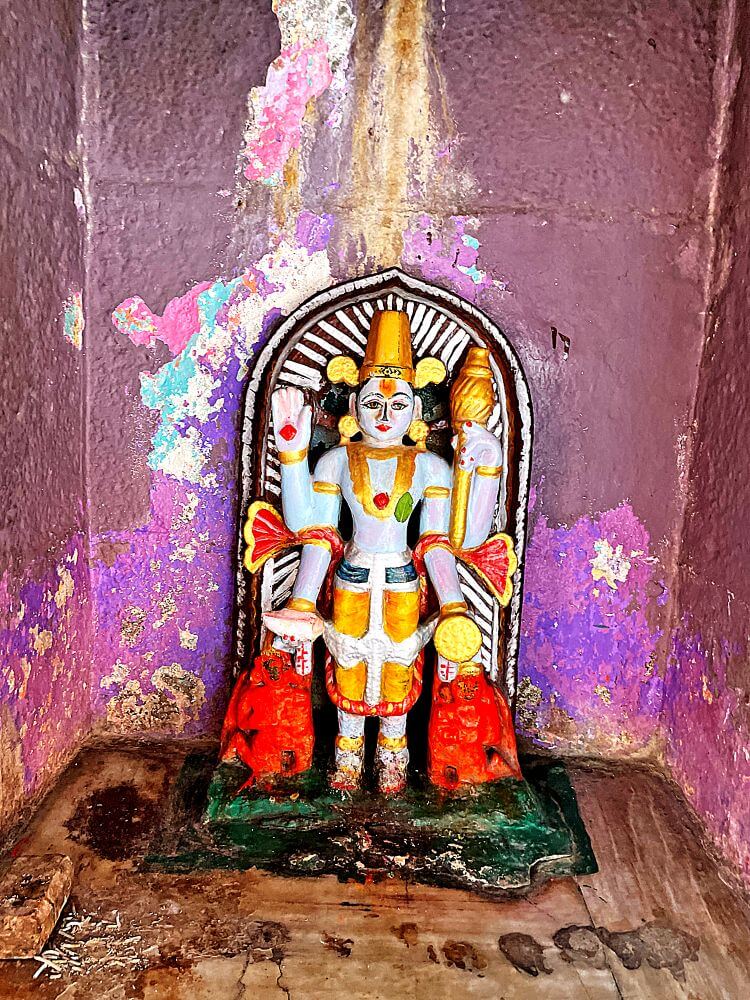
The entrance to the Rameshwar Temple is in front of the springs. The temple consists of a Darshan Mandap (viewing hall) and a Garbhagriha (sanctum sanctorum). The temple is surrounded by a solid wall like a fortification. The niches on the temple’s dome-shaped spire contain statues of various deities. There are also statues of sages on the temple structure. In the Darshan Mandap, on a platform in front of the sanctum, there is a Nandi statue carved from a single stone, with a tortoise statue carved in front of it. Near the entrance of the sanctum, there is a statue of Ganesha in the left niche and a statue of Vishnu in the right niche. There are gatekeepers (Dwarapals) at the base of the entrance. A Ganesha statue is carved in the center of the lintel above the sanctum doorway. One must descend four or five steps to enter the sanctum, which houses the ancient Shiva Linga. A serpent hood is carved above it as a canopy. On the wall behind the Shiva Linga, there is a statue of Mother Parvati. In a niche near the statue, there is an idol of Krishna. Above the statue of Mother Parvati is an image of Shiva-Shankar. There are also shrines for Hanuman and Dattatreya in the temple complex.
Major festivals are celebrated at this temple on Holi, Mahashivratri, and Datta Jayanti. On Mahashivratri, the temple complex takes on the atmosphere of a fair. On this day, hundreds of devotees line up for the darshan of Rameshwar after bathing in the nearby springs. After the Abhishek and Maha Aarti are performed on the Linga, the devotees are given Sabudana Khichdi as Prasad. In the evening, a procession (Palkhi) leaves the temple. On the day of this festival, the temple complex is illuminated with lights. Near the temple, there are seven hot water springs on the Tansa River. Of these, four springs—Surya, Chandra, Shri, and Subhash Kund—are on the riverbank. The other three springs are in the riverbed. Many devotees also come to bathe in these springs.
Near Kelthan village, situated opposite the riverbed, stands a temple that is a replica of the Sai Baba temple in Shirdi. Known as ‘Prati-Shirdi’ in the region, this temple is visited by many devotees. Yashwant Kangane, a native of Shirdi, purchased land in Kelthan ten years ago and established the Shri Ishwardham Trust. Later, this temple was constructed here. The design, architecture, and sanctum sanctorum of this temple are identical to the Sai temple in Shirdi. Upon entering the spacious courtyard of the temple, one sees the Gurusthan directly ahead. To the left is ‘Gunjabai Ki Rasoi’, where devotees can receive meals at a nominal cost. In front of the temple, to the left, is a magnificent idol of Lord Shiva in a meditative posture. Within the temple premises, there are also a Shani temple, a Shiva temple, and a Ganesha temple. Additionally, idols of the Navagraha, Saint Jalaram Bapa, Saint Dnyaneshwar, and Saint Tukaram have been consecrated.
This sacred temple stands as a testament to deep spiritual devotion, ancient architectural grandeur, and rich local cultural traditions.
The sanctum sanctorum houses the divine idol consecrated according to ancient Vedic traditions, surrounded by serene courtyards and traditional temple architecture.
Navratri, Maha Shivratri, Annual Temple Jatra & Deepotsav
Compare and book flights, secure top-rated local hotels near the temple, hire reliable guides, and rent cars instantly.
Extend your pilgrimage by visiting other highly sacred temples located nearby.


Add ₹999 more to unlock FREE SHIPPING!
Your sacred cart is currently empty.
Shop Photo FramesFill in your delivery details below to place your order.
Add comment