
Add ₹999 more to unlock FREE SHIPPING!
Your sacred cart is currently empty.
Shop Photo FramesNestled in the lap of nature at Ganeshpuri in Bhiwandi Taluka, a short distance from Mumbai and Thane, the Nityananda Samadhi Temple is a place of faith for millions of devotees. Ganeshpuri, known as a sacred land since ancient times, features hot water springs similar to those in the nearby Vajreshwari temple complex. Devotees believe that bathing in these springs cures skin diseases. Consequently, thousands of devotees visit daily to bathe in these springs and seek the blessings of the Swami.
Ganeshpuri has been considered a holy region since ancient times. There are mythological references stating that many sages and saints performed penance on the Mandagni or Mandakini mountain located in this area. Legend has it that Sage Vashistha, the guru of the Ikshvaku dynasty kings and Lord Shriram, performed a yajna here. Just as Sage Vashistha had established the Varadvinayak temple at Kelzar near Wardha, he also established a Ganesha temple here. It is because of this temple that the region came to be known as Ganeshpuri. Swami Nityananda arrived in this sacred region to perform penance and engage in religious and social work.
Regarding Swami Nityananda, it is said that a poor couple, Chatunair and Unni Amma, from Tuneri village in the Kozhikode district of Kerala, once found a baby during a torrential downpour. A hooded cobra was protecting the child from the rain. Chatunair worked as a laborer for a man named Ishwar Iyer in the village. They brought the baby to Iyer, who named the child ‘Raman’ and raised him. The villagers called the boy ‘Ram’. The words spoken by this Ram would always come true, leading the villagers to realize that he was no ordinary child. Even without formal lessons in the Vedas and scriptures, he would share knowledge about them with the villagers.
Once, when the boy placed his hand on the head of a patient, the person was immediately cured. From then on, many patients began coming to him. Sensing that his own death was approaching, Ishwar Iyer requested the boy to reveal the form of the Sun to him. Afterward, Iyer said to him, “You possess divine power. You always bring joy to everyone. Therefore, people will know you by the name Nityananda.” From that day on, the boy became known as ‘Nityananda’. Swami Nityananda later performed penance for several years. In his youth, he traveled to places like the Himalayas, Varanasi, Rameswaram, Udupi, and Mangaluru. Wherever he went, he relieved people of their suffering through his divine power. For some years, he resided in Guruvan, near Kanhangad in South Karnataka. He planted many trees in Guruvan and meditated in a cave there. He created a water spring in this area, which is still flowing today and is known as ‘Papanashini Ganga’.
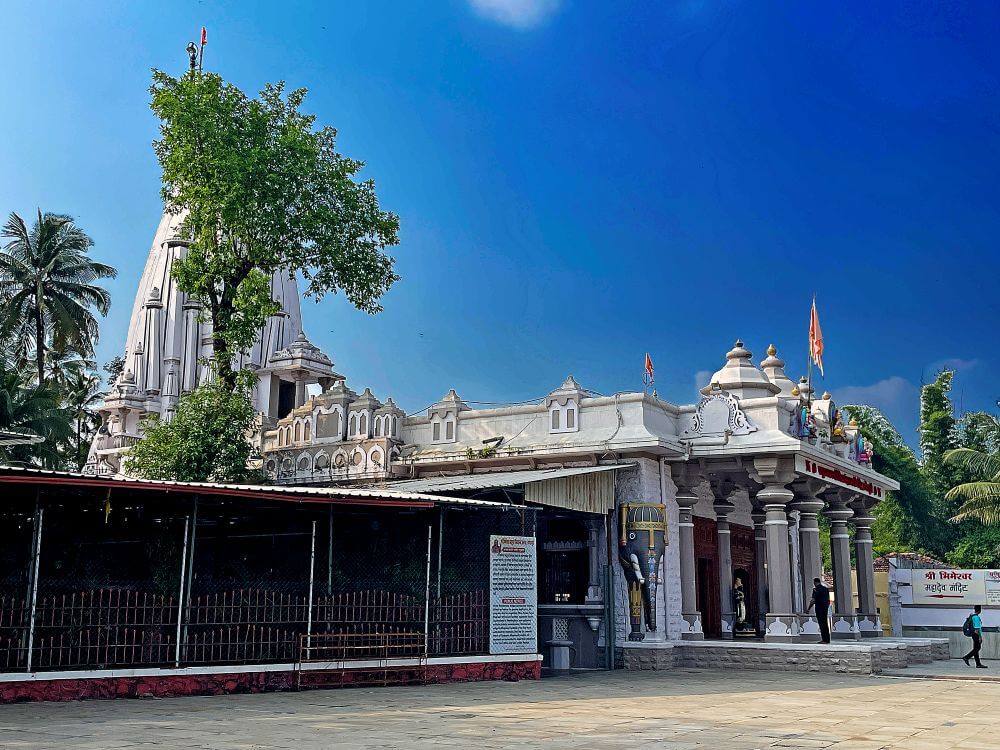
After traveling across the country, he arrived in 1937 in the Akloli and Vajreshwari areas, situated in the Tansa river valley near Mumbai. Here too, he started schools and dispensaries and renovated many temples in the vicinity. Along with meditation, he continued his work of preaching to the people. After some time, he arrived in Ganeshpuri. He resided in the ancient Bhimeshwar Mahadev temple here. Rising early in the morning, he would bathe in the nearby natural hot water springs and then meditate near the Bhimeshwar temple by the river. As his fame spread far and wide, devotees began arriving here for his darshan. Due to the increasing number of devotees, he moved to the nearby Kailas Niwas after a few years. He built roads and schools in this tribal-dominated area and also started food distribution centers (Annachhatra). Providing healthcare facilities to the people of the region, the Swami also trained the villagers in making medicines from medicinal plants found in the forest. He built the Bhadrakali Devi temple in the Ganeshpuri area and renovated the Anusuya temple, which is famous for performing rituals. Before taking Samadhi, he resided in the ‘Bengaluruwala’ building, which had been built by a devotee. Twelve days before taking Samadhi, starting from the day of Guru Purnima, he gave up food and water. He left his mortal body on 8 August 1961.
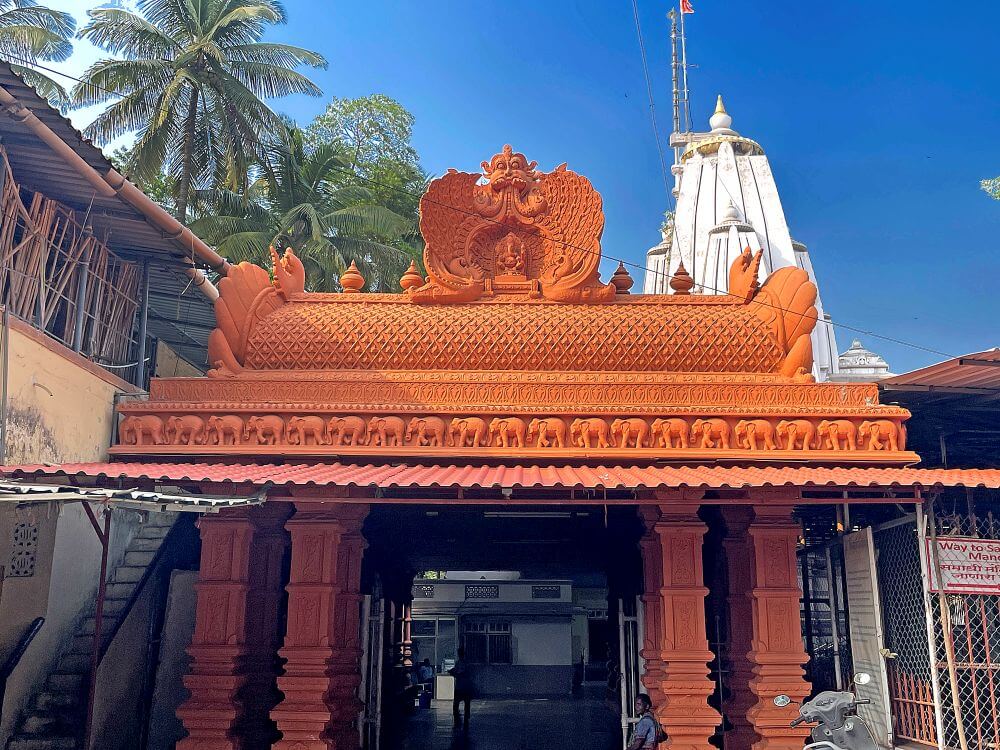
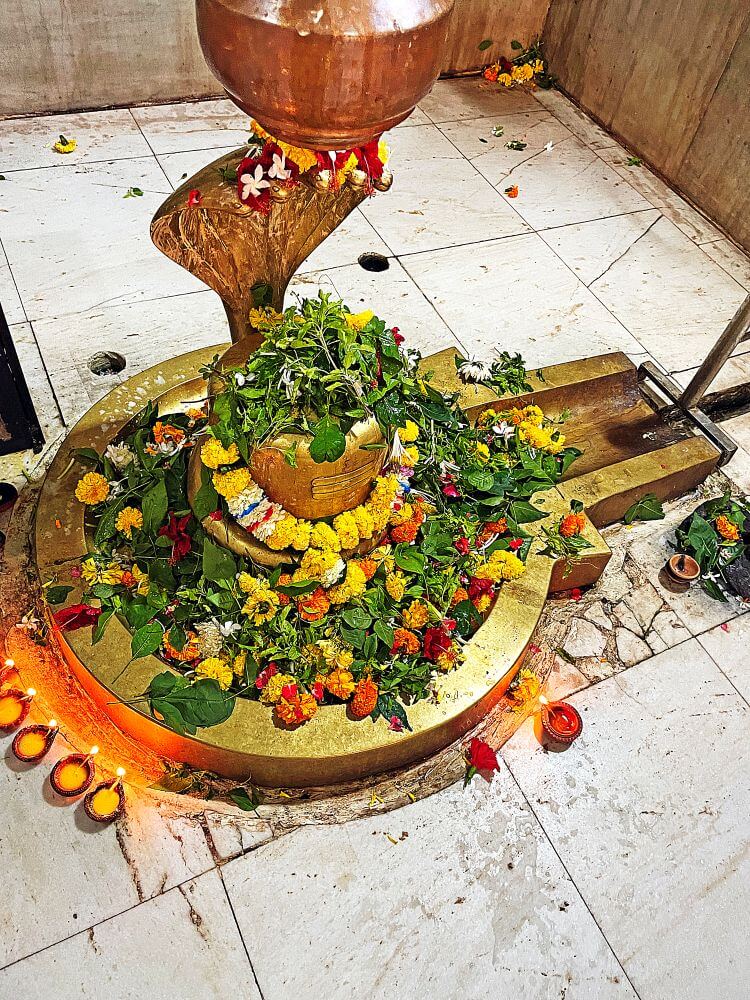
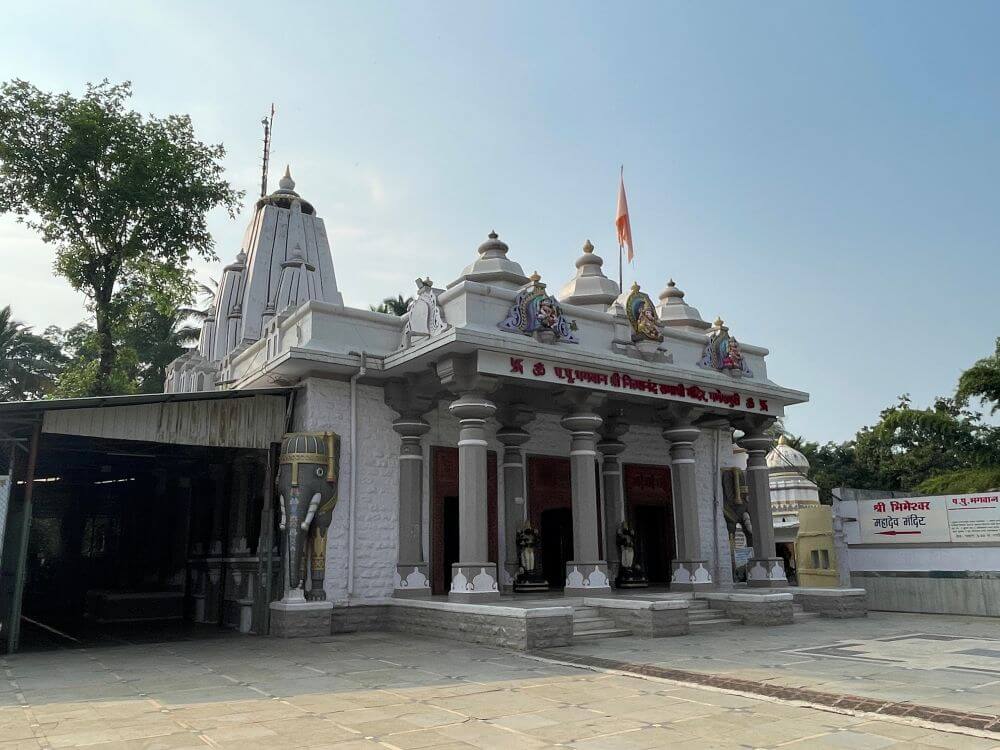
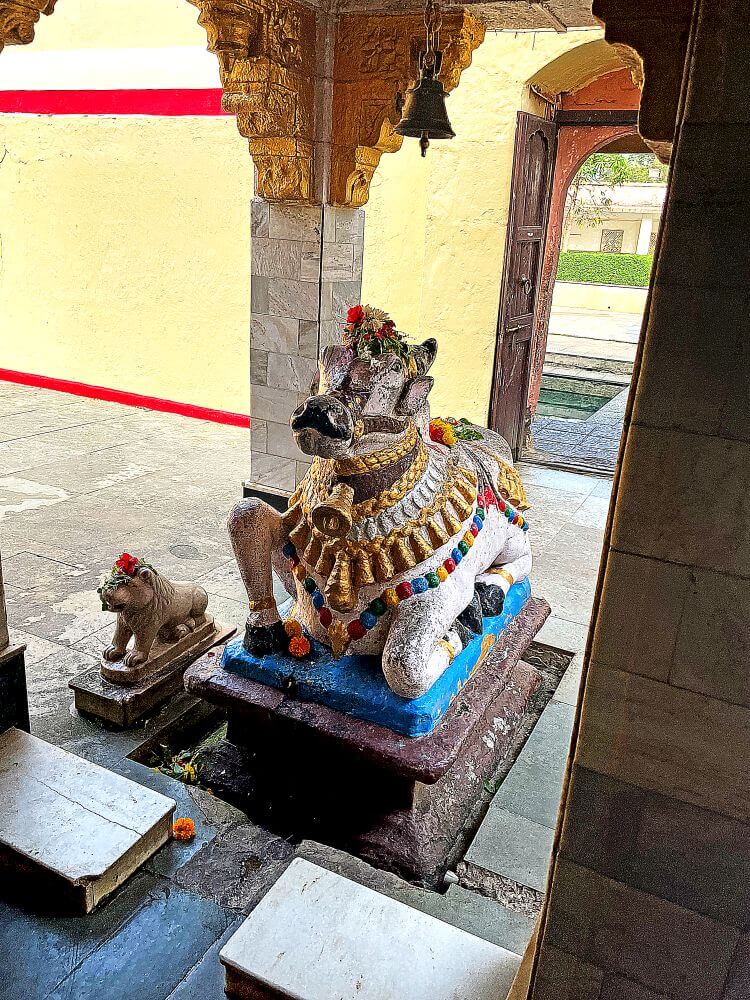
His Samadhi temple is located in a picturesque area. There are many flower and prasad shops on the path leading to the temple. The structure of the Samadhi temple and its attractive spires immediately catch the eye. Behind the temple is a Krishna temple. Adjacent to the Samadhi temple is the Bhimeshwar Mahadev temple. Near the entrance of the temple, in niches, there is an idol of Dattatreya on the left and Hanuman on the right. Upon entering, one sees an attractive white idol of Nandi in front, with a small lion idol beside it. Near the entrance of the sanctum sanctorum, there is an idol of Ganesha on the left and Vishnu on the right. There are gatekeepers (Dwarpal) on both sides of the entrance. The door frame features exquisite craftsmanship, and there is a sculpture of Ganesha on the lintel. One must descend two or three steps to enter the sanctum sanctorum. The Shiva Linga in the sanctum is sheltered by a cobra. On the wall behind the Shiva Linga is an idol of Parvati. Above this idol is an image of Shankara. Nearby is an image of Swami Nityananda. In the corner to the right of the Parvati idol is a silver idol of Shiv-Shankar.
There are about 21 hot water springs in the villages within a five-kilometer radius of this area, including Vajreshwari, Akloli, and Dativali. Three of these springs are located very close to this temple. Although these three springs are near each other, the temperature of the water in each is different. Since the water in these springs is hot, they are called ‘Unhali’. This hot water contains sulfur and other minerals. Due to their medicinal properties, it is believed that bathing in these springs cures skin diseases. The Deccan Plateau was formed millions of years ago due to volcanic eruptions. Therefore, such springs are found in some places in this region. The rocks heat up due to the magma beneath the earth’s surface, and the water that comes into contact with them gets heated. In some places, it rises from underground. There are steps to descend into these springs. Steam is constantly rising from this water. Devotees can bathe in these springs from 3:00 in the morning until 10:30 at night. There is a small lamp tower (Deepmal) near the springs.
Within the temple premises, there is the Bhadrakali Temple, the Navagraha Temple, the Yajna Mandap, and the Dantu-la. The Annapurna Prasadalaya building is also located in this area, where devotees can receive snacks and meals for a nominal fee. Near the beautiful garden nearby, there is a railway coach. The legend regarding this coach is that once, Swami Nityanand was traveling by train. As he did not have a ticket, railway officials made him get off at Kannur railway station. However, the train engine subsequently failed to start. Numerous efforts made to restart it proved futile. At that moment, the railway officials realized that the person they had asked to disembark was no ordinary individual. The train started only after they respectfully seated the Swami back in the coach. The office-bearers of the Sadanand Maharaj Siddha Vanaspati Treatment Center in Ganeshpuri obtained this coach from Indian Railways and gifted it to the Bhimeshwar Sadguru Nityanand Sanstha.
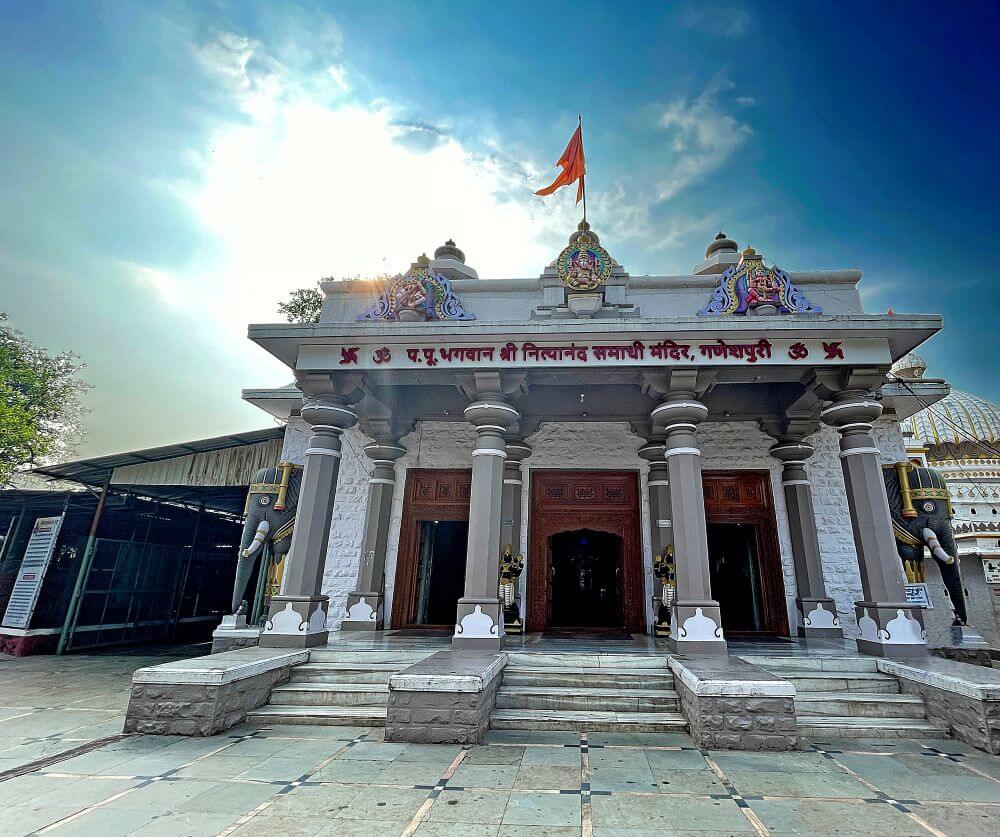
In the Kailas Niwas located within the temple premises, there is a bust of the Swami along with some of his portraits. The bathtub in which Swami used to bathe is also preserved here. On both sides of the entrance to the Samadhi Temple of Nityanand Swami, there are sculptures of elephants. In the upper part of the temple entrance, there is an idol of Lord Ganesha in the center. To the left of this idol is the idol of Goddess Saraswati, and to the right is the idol of Goddess Lakshmi. There are three entrances to enter the temple. There are gatekeepers (Dwarapals) on both sides of the main entrance. A silver flag, donated by a devotee, has been installed on the temple dome. The temple doors, made of teak wood, feature attractive carvings. The temple has a spacious assembly hall (Sabhamandap). In the sanctum sanctorum, there is an attractive idol of Swami Nityanand in a seated posture. The idol of Nityanand Swami, seated with one hand resting on his knee, wears a golden crown. Above it is a canopy, and behind it is an attractive halo (Prabhaval).
Daily worship is performed in this temple. Sheera is distributed to devotees as Prasad. Various Pujas, Havans, and religious rituals are also conducted here. Hundreds of devotees come here for Darshan every day. The number of devotees is higher on Thursdays. On Guru Purnima, the place takes on the form of a pilgrimage site. During this time, special ST buses are operated from Thane and Kalyan depots for the convenience of devotees. Apart from this, festivals like Mahashivratri, Gudi Padwa, Gokulashtami, Navratri Utsav, and Deepavali are celebrated here.
This sacred temple stands as a testament to deep spiritual devotion, ancient architectural grandeur, and rich local cultural traditions.
The sanctum sanctorum houses the divine idol consecrated according to ancient Vedic traditions, surrounded by serene courtyards and traditional temple architecture.
Navratri, Maha Shivratri, Annual Temple Jatra & Deepotsav
Compare and book flights, secure top-rated local hotels near the temple, hire reliable guides, and rent cars instantly.
Extend your pilgrimage by visiting other highly sacred temples located nearby.


Add ₹999 more to unlock FREE SHIPPING!
Your sacred cart is currently empty.
Shop Photo FramesFill in your delivery details below to place your order.
Add comment