
Add ₹999 more to unlock FREE SHIPPING!
Your sacred cart is currently empty.
Shop Photo FramesThe ancient temple of Vajreshwari Yogini Devi, believed to be a manifestation of Mother Parvati, is situated at Vajreshwari in the Bhiwandi taluka of Thane district. Located near Mumbai and Thane, this abode of the Goddess is one of the most significant and spiritually awakened pilgrimage sites in the state. Built by Shrimant Chimaji Appa to fulfill a vow taken before conquering the Vasai Fort, this temple is a magnificent example of ancient and traditional architecture. Renowned as a Goddess who grants the wishes of her devotees, she is the family deity (Kulswamini) of many communities. The natural hot water springs located on the riverbank within the temple premises are the main attraction here. Devotees believe that bathing in these springs cures skin ailments.
There are many legends regarding the origin of Yogini Devi. According to one, in ancient times, a demon named Kalikala (Kalikut/Kali) began harassing the sages in the Vadvali area (the old name of Vajreshwari village). He even waged war against the gods. Distressed by this, the gods and sages, led by Sage Vashistha, performed a Trichandi Yajna to appease the Goddess. During this Yajna, Lord Indra, angered by the lack of an offering, hurled his Vajra (thunderbolt) into the sacrificial fire. Terrified, the gods and sages prayed to the Goddess. She manifested there, swallowed the Vajra, and slew the demons. Subsequently, Lord Rama requested the Goddess to reside in this region. Since then, she has been known here as Vajreshwari.
Located on a hill of the Mandakini mountain range, the Goddess’s temple was previously situated in Gunj village, eight kilometers away from Vajreshwari. It was relocated here after the Portuguese destroyed the original structure. In ancient times, the stone idol of the Goddess was situated under a tree. During the Peshwa era, many villages from Dharavi in Mumbai to Daman and Goa were under Portuguese control. During this period, the people were constantly oppressed by the Portuguese, and the local citizens faced severe religious persecution. To put an end to this, Shrimant Chimaji Appa launched the Vasai campaign. After capturing Tarapur in this campaign, the Marathas conquered the Asheri Fort on 3 February 1779. The ‘Sashtichi Bakhar’ records that Chimaji Appa then proceeded to Vajrayogini with his entire army. He stayed here for a few days. The historical book ‘Vasaichi Mohim’ by Yashwant Narsinh Kelkar records that ‘Regarding this campaign, Appasaheb (Chimaji Appa) had vowed to the Vajrayogini of Vajreshwari that he would build her a temple. Accordingly, he fulfilled a part of that vow later in August. The following entry is found in Appasaheb’s daily ledger dated 6-8-1739: ‘Expense 1283 Rupees 2 Annas for the vow to Shri Vajrajogini at Vadvali, regarding the gold vowed for Vasai etc., of which T. Ramchandragiri Gosavi weight G. Siuba Nai Thorat weight tolas (details).’ Appasaheb could not complete the vow of building the temple because he passed away shortly thereafter. That vow was fulfilled by Nanasaheb Peshwa. Records regarding this are found in Nanasaheb Peshwa’s daily ledgers.’ This clarifies that while Chimaji Appa fulfilled a part of the vow, the rest of the temple was constructed by Nanasaheb Peshwa. The assembly hall (Sabhamandap) of this temple was built by Shrimant Khanderao Maharaj Gaikwad of Baroda, while the steps and the lamp tower (Deepmal) were built by the famous moneylender Nanasaheb Chandwadkar of Nashik. The Peshwas had sanctioned an annual grant of 890 Rupees for this temple.
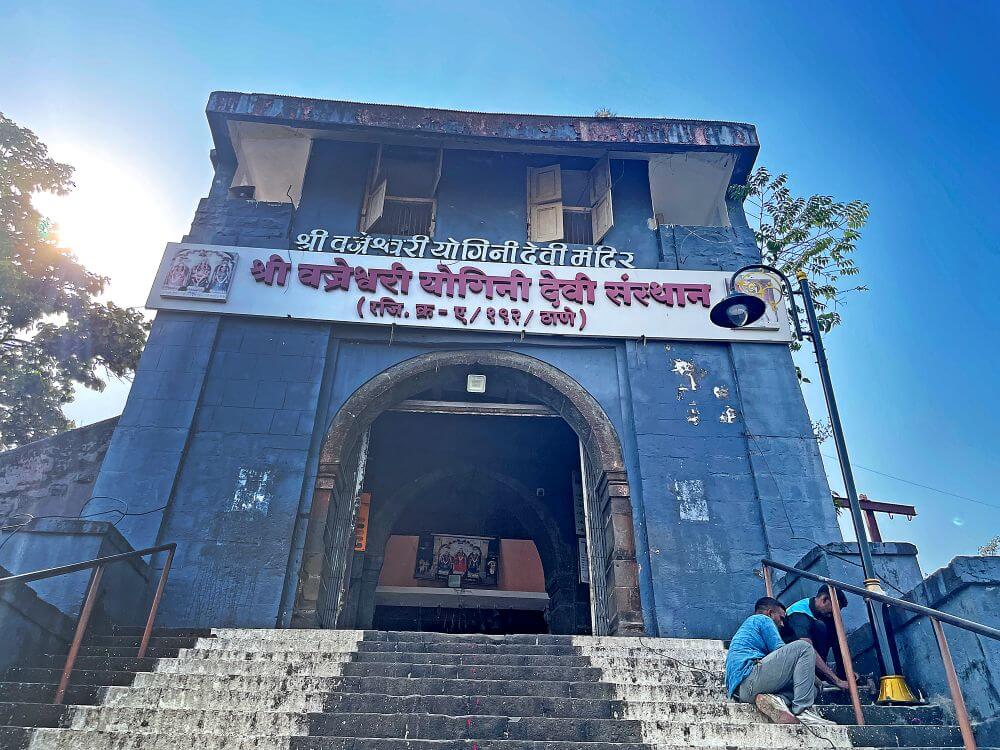
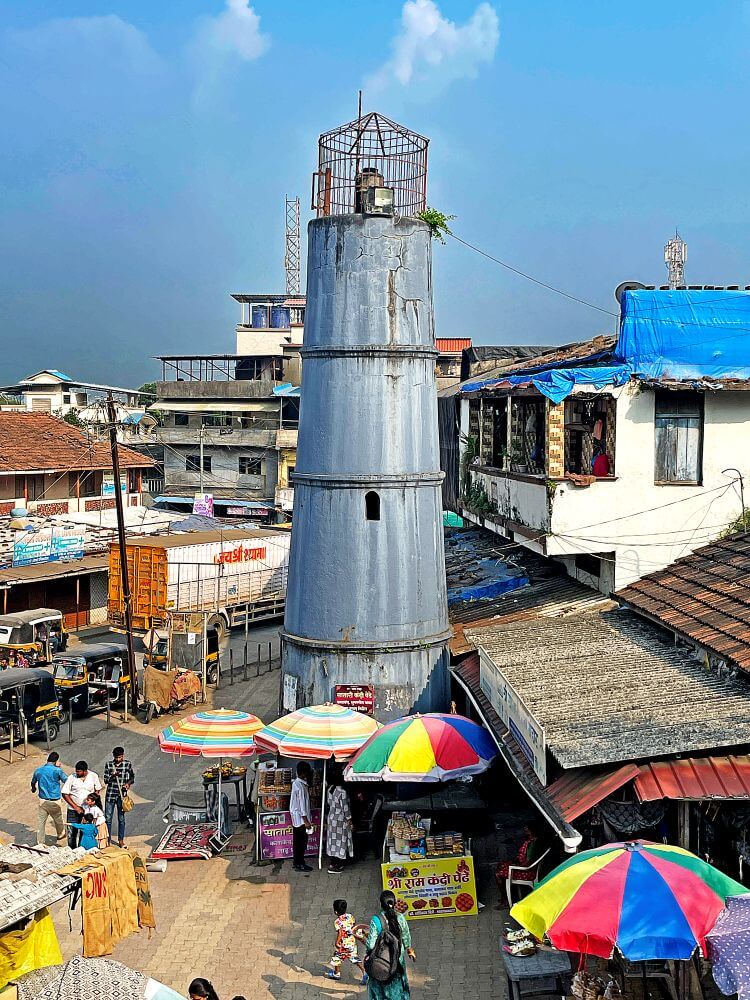
The original name of Vajreshwari village, situated on the banks of the Tansa River, was Vadvali. The village came to be called ‘Vajreshwari’ after the temple of Vajreshwari Devi. The temple is surrounded by hills on all four sides. There are hundreds of shops selling flowers and offerings in the temple premises. Directly in front stands a large lamp tower (Deepmal) approximately 60 feet tall. The architecture of the temple resembles a fort. Due to the surrounding fortifications and bastions, one feels as if they are approaching a fort while heading toward the temple. To reach the temple, one must climb 51 stone steps from the ground. After climbing some of these steps, there is an idol of a tortoise on one of the steps. Upon reaching the top, one encounters a large stone arch, which is the main entrance (Mahadwar) of the temple. Above this entrance is the Nagarkhana, with platforms on both sides for the traditional drums (Chaughada). There are also stone niches here for lighting lamps. The temple courtyard is paved with stone.
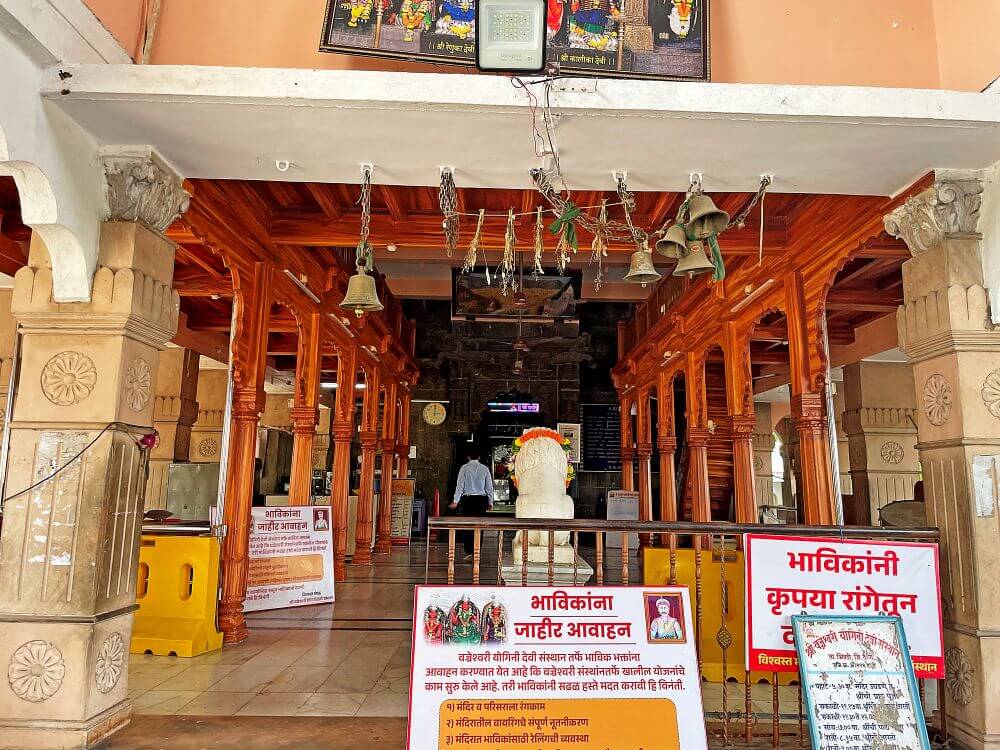
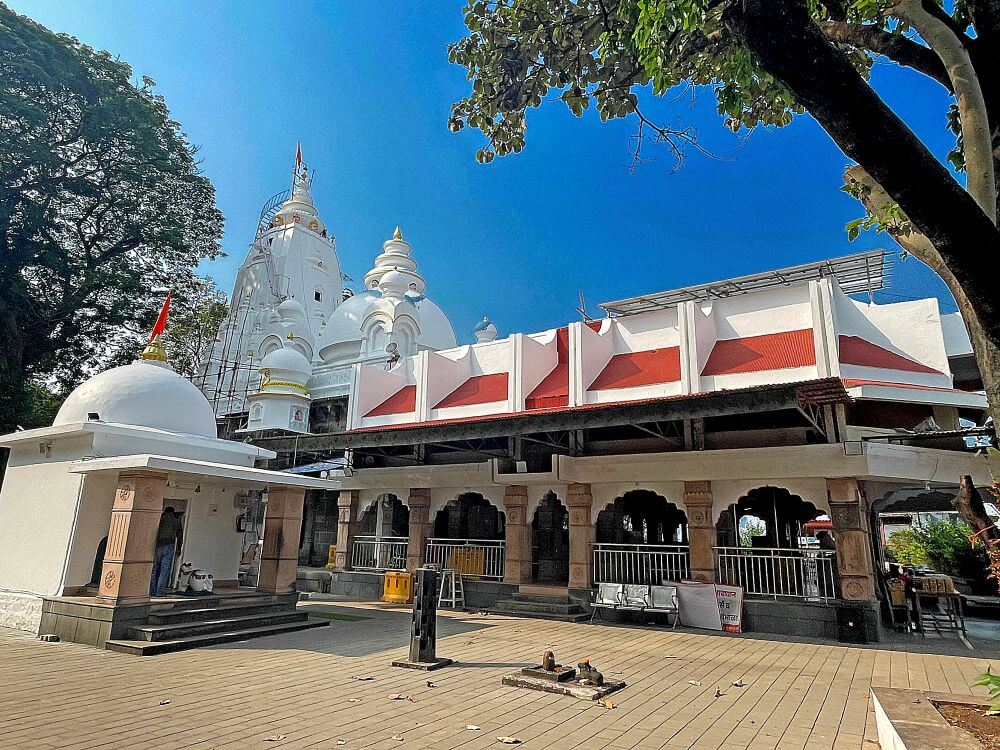
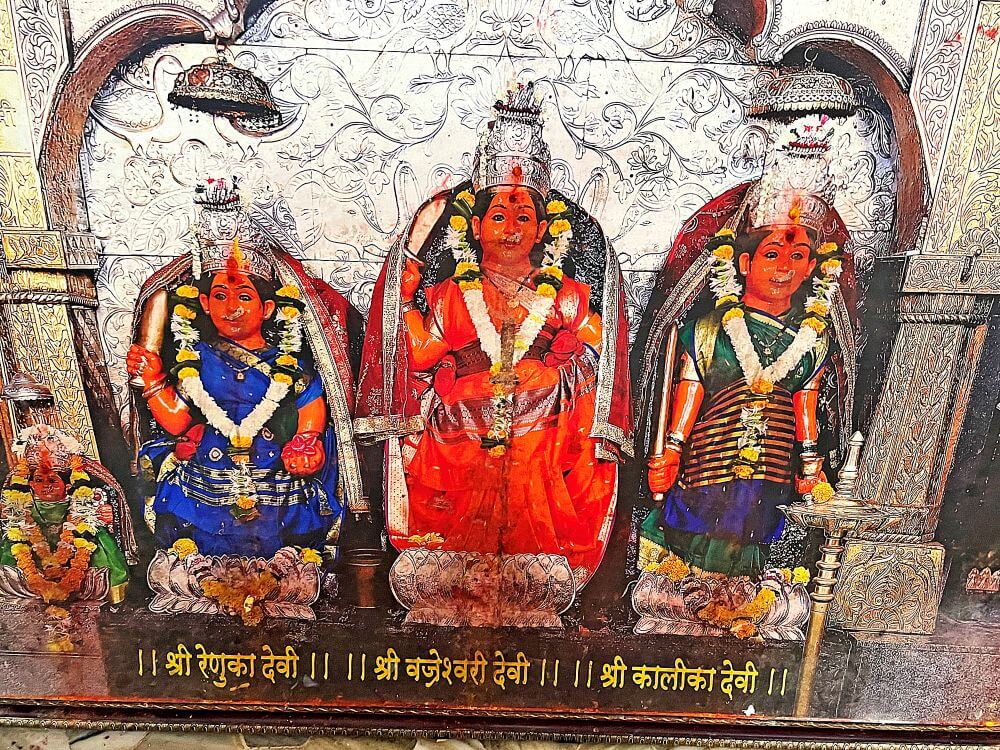
The plinth of the main Vajreshwari Devi temple is about one and a half feet high. The temple consists of an assembly hall (Sabhamandap) and two sanctum sanctorums. In the open assembly hall, there is an idol of a lion on a pedestal. The assembly hall features many wooden pillars. In the upper section, there is an image of Renuka-Vajreshwari-Kalika Mata. In the sub-sanctum outside the main sanctum, there are shrines for Lord Ganesha and Morba Devi. In the main sanctum, the Goddess is seated on a high Vajra-throne within a golden-plated arch (Makhar). In the center is the radiant, vermilion-anointed idol of the Goddess. This crowned Goddess holds a sword and a mace in her hands. To her left is Renuka Mata, and to her right is Kalika Mata. The halo behind the idols features exquisite craftsmanship. These three idols are considered to be the three forms of Prakriti (Nature), Sanskriti (Culture), and Vikriti (Distortion). Since the temple faces east, for a few days of the year, the morning sun rays fall directly on the idol of the Goddess in the sanctum. There are two spires (Shikharas) above the sanctum sanctorums of this temple. The smaller spire is dome-shaped, topped with three Amalakas and a pinnacle. The second, main spire is larger and adorned with replicas of multiple smaller spires.
Vajreshwari Devi is the family deity (Kulswamini) of many communities, including Daivadnya Brahmins (Sonars), Panchkalshi, Sutar, Wadval, and Suryavanshi Kshatriyas. The Goddess who grants the wishes of her devotees, Devotees flock to seek the blessings of this renowned Goddess throughout the year. The Goddess’s annual fair is held on the new moon day of the Chaitra month. On that night, a lamp worship ceremony is performed. The following day, on the first day of the Vaishakh month, a grand procession of the palanquin carrying the Goddess’s idol is taken out, attended by hundreds of devotees. Festivals such as Holi, Hanuman Jayanti, Dattatreya Jayanti, Kojagiri Purnima, and Godhadebuwa Jayanti are celebrated here. During the month of Shravan, Shiva worship is conducted. The Navratri festival is celebrated here with great devotion. After performing the Maha-abhishek to the Goddess, the lighting of lamps and the Kakad Aarti are performed, followed by the Ghatasthapana. During this festival, Gondhal, Bhajans, unbroken chanting of the holy name, and other religious programs are held. The palanquin procession on Vijayadashami is a special attraction here. During the festival, the temple is adorned with attractive lighting. Thousands of devotees from Mumbai, Thane, Raigad, and Nashik districts, as well as from the state of Gujarat, come to seek the Goddess’s blessings during this time.
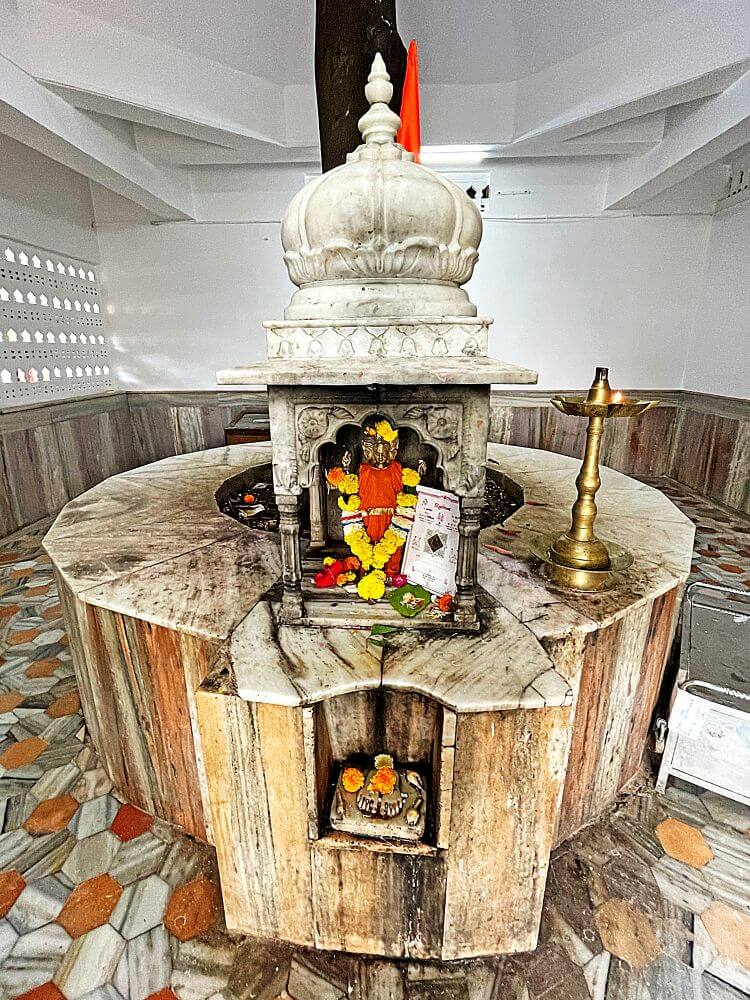
In the temple courtyard, to the left, there is a Shiva Linga and Nandi in front of a large tree. In front of them stands a small lamp pillar. Directly before the lamp pillar is the Kapileshwar Mahadev temple. Facing the entrance of this temple is a white-painted stone idol of Nandi. Near the temple entrance, to the left of Nandi, is a vermilion-anointed idol of Lord Ganesha. The sanctum sanctorum houses a Shiva Linga, with idols of Lord Ganesha and Mother Parvati behind it. The temple premises also include a Dattatreya temple and a Hanuman temple, where devotees offer prayers. The entrance of the Dattatreya temple is flanked by guardian deities on both sides. The idol of Lord Dattatreya is placed on a pedestal within the sanctum. Ascending the stairs near the Hanuman temple leads to the Samadhi temple of Giri Gosavi Mahant Chaitanya Godhade Baba. Behind the Samadhi of Godhade Baba in the temple, there are images of Renuka, Vajreshwari, and Kalika Mata on a pedestal. From the premises of this Samadhi temple, one can enjoy a panoramic view of the Tansa River below and the village of Vajreshwari.
Within a five-kilometer radius of the temple area, including Ganeshpur, Akroli, and Dativali, there are about 21 hot water springs. The springs near the Vajreshwari temple are named Agnikund, Suryakund, Chandrakund, Vayukund, Ramkund, Lakshmankund, and Sitakund. The water temperature in these springs ranges from 43 to 49 degrees Celsius. Because the water is hot, they are referred to as Unhali. This hot water contains sulfur and other minerals. It is believed that due to their medicinal properties, bathing in these springs cures skin diseases. A hot spring is a geothermal site. Rocks are heated by underground lava, and water coming into contact with them gets heated. In some places, it rises to the surface from underground. The Deccan Plateau was formed millions of years ago due to volcanic eruptions, which is why such springs are found in some parts of this region. The Goddess’s Aarti is performed in the temple at 5:00, 11:15, and 20:15. Devotees can have the Darshan of Vajreshwari Yogini Devi daily from 5:00 to 21:00.
This sacred temple stands as a testament to deep spiritual devotion, ancient architectural grandeur, and rich local cultural traditions.
The sanctum sanctorum houses the divine idol consecrated according to ancient Vedic traditions, surrounded by serene courtyards and traditional temple architecture.
Navratri, Maha Shivratri, Annual Temple Jatra & Deepotsav
Compare and book flights, secure top-rated local hotels near the temple, hire reliable guides, and rent cars instantly.
Extend your pilgrimage by visiting other highly sacred temples located nearby.


Add ₹999 more to unlock FREE SHIPPING!
Your sacred cart is currently empty.
Shop Photo FramesFill in your delivery details below to place your order.
Add comment