
Add ₹999 more to unlock FREE SHIPPING!
Your sacred cart is currently empty.
Shop Photo FramesThere is a deep-rooted bond between the Konkan region and the worship of Lord Ganesha. No matter where they are in the world, people from Konkan invariably return to their native villages during the Ganeshotsav festival. The faith of the Konkani people, who spend ten days immersed in the worship of Ganpati, is tethered to the lotus feet of the Lord. It is for this reason that there are numerous Ganesha temples in Konkan. While Pali and Mahad, two of the Ashtavinayaka temples, are located in Konkan, the shrine of Ganesha at Ganpatipule is also especially famous. In this same tradition, there is an approximately 300-year-old Peshwa-era Ganesha temple (Riddhi-Siddhi Ganpati Temple) in the village of Hurshi in Devgad Taluka. This temple is renowned in Konkan as a place where prayers are answered (Navsala Pavnara Ganpati).
Ganpati was the presiding deity of the Peshwas. They renovated many Ganesha temples in the Konkan and Pune regions, and built several new ones. Their chieftains also commissioned the construction of various Ganesha temples. One such temple is the Ganpati temple at Hurshi, which was built by the Peshwa chieftain Vishwanath Ramchandra Marathe. The Marathe family had a mansion (wada) in Hurshi. This temple holds a royal decree (Sanad) from the Peshwa era. According to this, the government still provides an annual grant of 60 rupees for the temple to this day. This historically significant temple is situated in a region rich in natural beauty. The original architectural style of the temple’s antarala (vestibule) and garbhagriha (sanctum sanctorum) follows the Bhumija style. The stone construction from the foundation to the pinnacle (kalash) testifies to its antiquity.
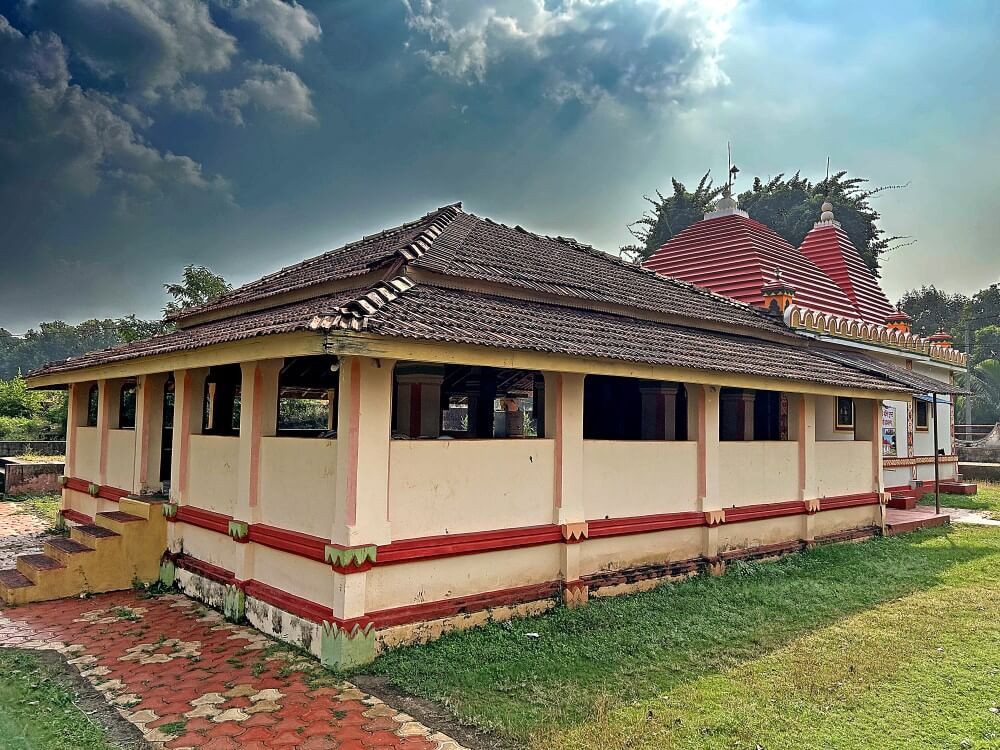
The Riddhi-Siddhi Ganpati Temple is located by the roadside, just outside Hurshi village. The temple was renovated a few years ago, and its ancient character is now hidden behind marble tiles and cement plaster. The temple is surrounded by a strong fortification wall made of laterite stones. The temple courtyard is situated at a slight elevation from the ground level. One enters the courtyard by climbing seven steps through the entrance in the perimeter wall. In the courtyard, the paths along the fortification and leading to the temple are decorated with paver blocks. In front of the temple, on a high platform within the courtyard, stands a Tulsi Vrindavan. Ancient Banyan and Peepal trees are also present here.
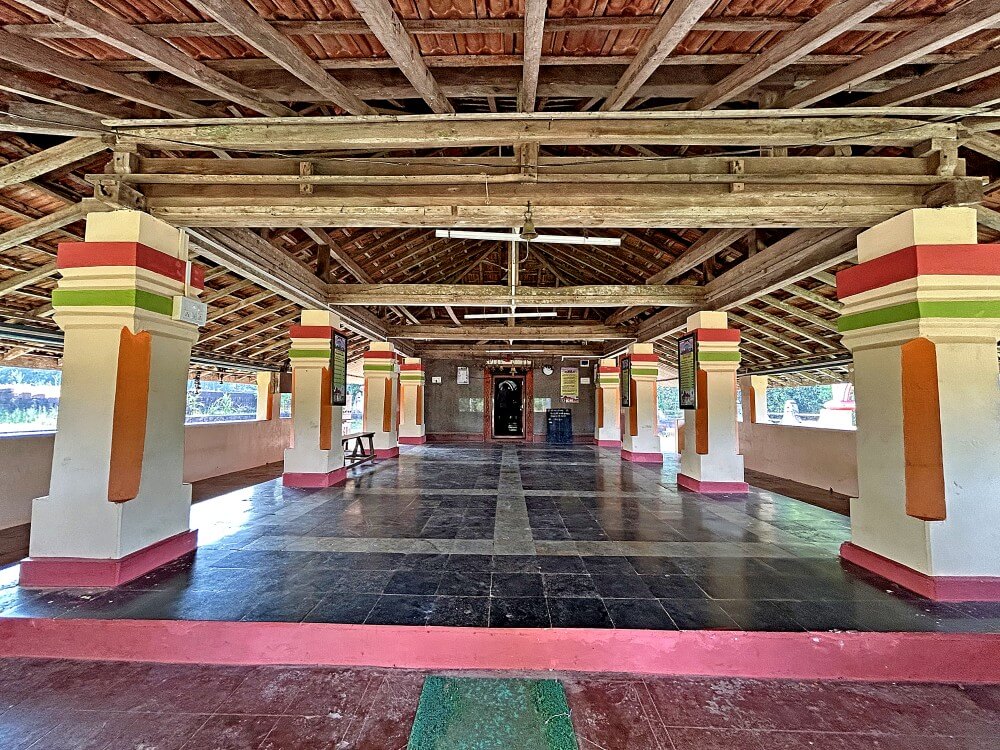
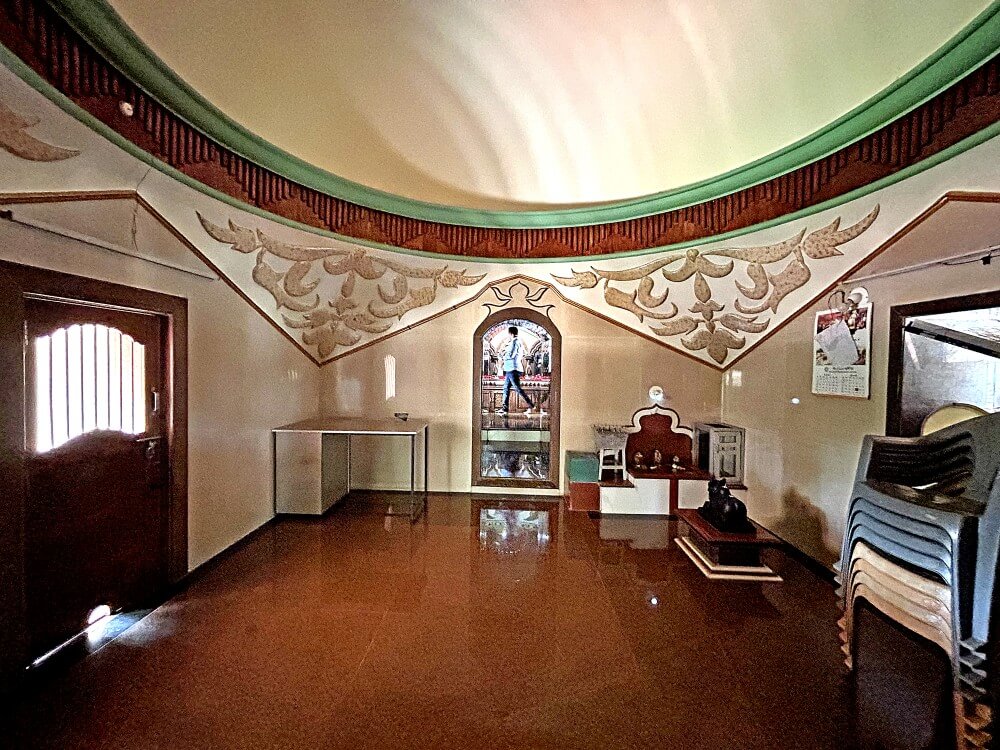
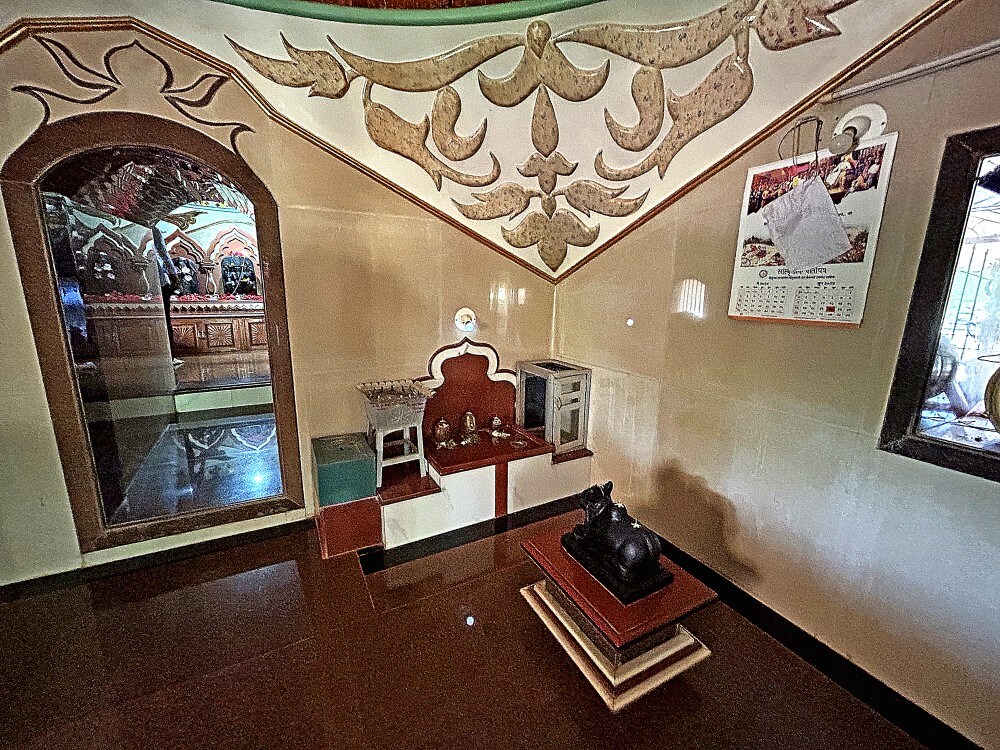
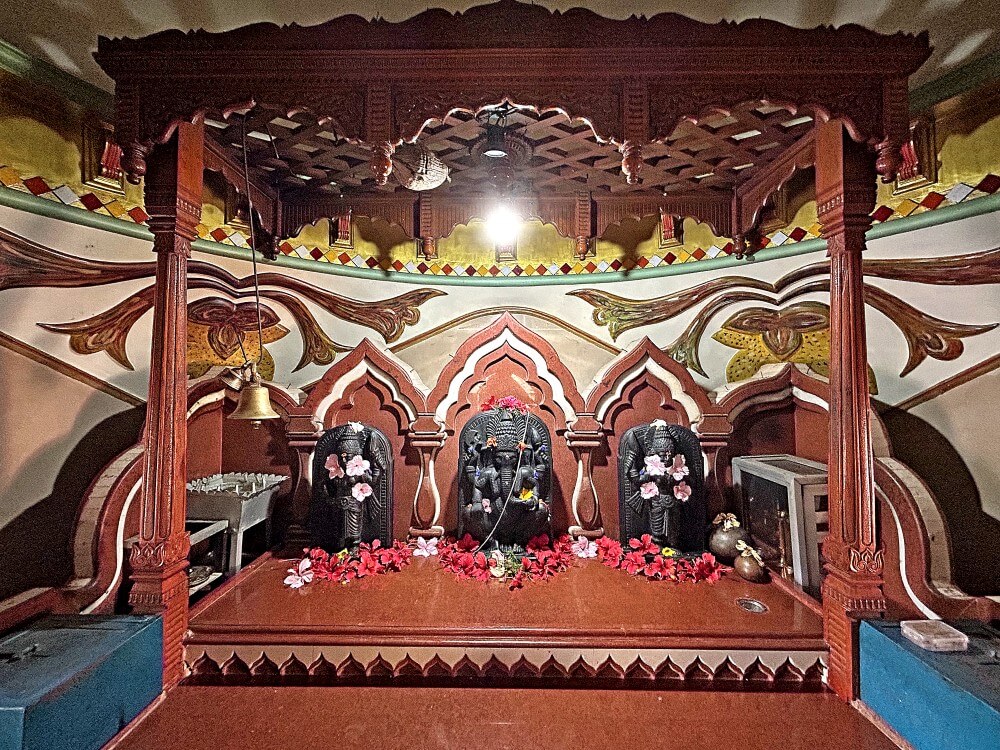
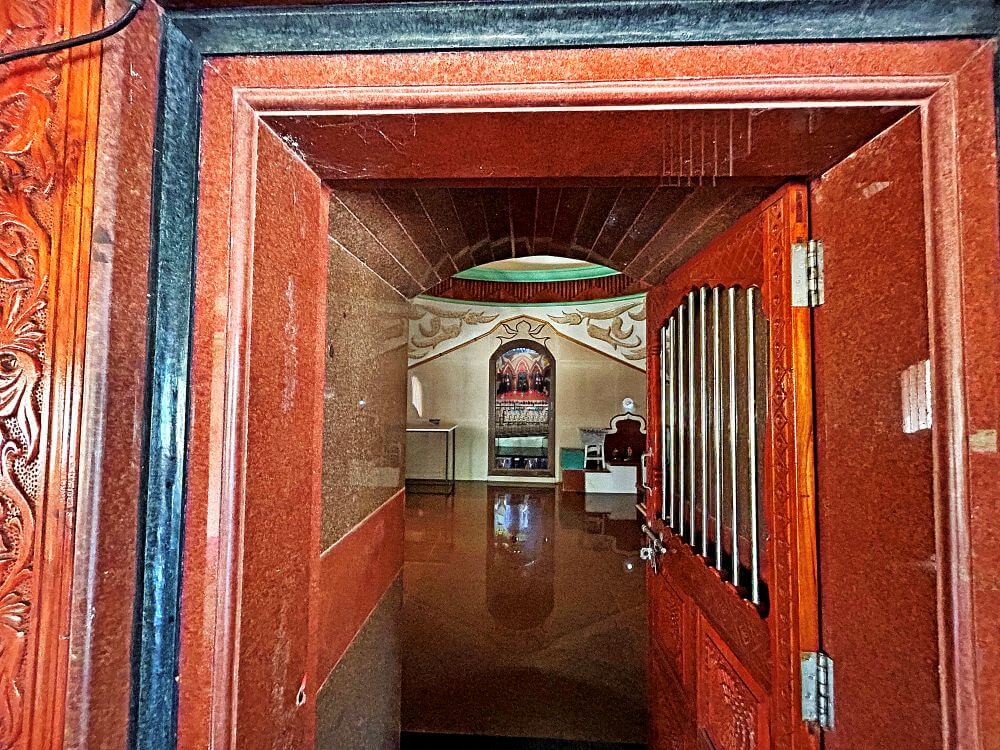
Situated on a high plinth (jagati), the temple is designed with a sabhamandap (assembly hall), antarala, and garbhagriha. The sabhamandap is of a semi-open type with a tiled roof. Originally, the sabhamandap had monolithic laterite pillars without any joints, which have now been covered with cement plaster. In every deity’s temple, there is an image or idol of their vehicle (vahana). In a Ganesha temple, the idol of his vehicle, the Mushaka (mouse), is always present. However, in the antarala of this temple, there is a monolithic black stone idol of Nandi, the vehicle of Lord Shiva, the father of Ganesha. In front of Nandi, on a Vajrapitha (pedestal), are the idols of Brahma, Vishnu, and Mahesh. This antarala is enclosed and features several windows to allow for light and ventilation. There is intricate carving on all four corners of the ceiling. The construction of the antarala and garbhagriha is originally of stone, with walls ranging from three to five feet in thickness. The door frame of the garbhagriha is made of wood and is intricately carved. In the center of the garbhagriha, on a Vajrapitha, is a four-armed (Chaturbhuj) idol of Ganpati. In one hand, Ganpati holds a parashu (axe), in the second a lotus flower, in the third a modak, and the fourth hand rests on his lap. On both sides of Ganpati are female figures waving chauris (fly-whisks). It is said that these are Riddhi and Siddhi, the consorts of Ganesha, which is why this temple is called the Riddhi-Siddhi Ganpati Temple. All these idols are made of black stone. The Vajrapitha has a decorative wooden canopy (makhar) resembling a shrine.
This Peshwa-era temple originally housed ancient idols of Riddhi-Siddhi and Ganpati. During the renovation of the temple, new idols were consecrated. The ancient idols are now kept on a lower ledge of the Vrindavan built outside the sabhamandap. There is a small glass window through which one can view these idols. Scholars of temple history state that there used to be an ancient idol of Nandi on the ledge of the Vrindavan in front of the sabhamandap. The upper part and horns of that Nandi were worn down. The three idols in the sanctum were also worn, which is why they were replaced.
Above the antarala of the temple is a square, pyramid-shaped shikhara (spire) topped with a kalash. The shikhara over the garbhagriha is taller and more tapered. To prevent water seepage, the shikharas are covered with laterite stone tiles. Ganesha Jayanti is the main annual festival celebrated in this temple with great enthusiasm and devotion. Additionally, festivals such as Sankashti Chaturthi, Tripurari Purnima, Dussehra, Diwali, Mahashivratri, and Holi are also celebrated. During all these festivals, Maha-abhisheka and Maha-puja of the deity are performed.
This sacred temple stands as a testament to deep spiritual devotion, ancient architectural grandeur, and rich local cultural traditions.
The sanctum sanctorum houses the divine idol consecrated according to ancient Vedic traditions, surrounded by serene courtyards and traditional temple architecture.
Navratri, Maha Shivratri, Annual Temple Jatra & Deepotsav
Compare and book flights, secure top-rated local hotels near the temple, hire reliable guides, and rent cars instantly.
Extend your pilgrimage by visiting other highly sacred temples located nearby.


Add ₹999 more to unlock FREE SHIPPING!
Your sacred cart is currently empty.
Shop Photo FramesFill in your delivery details below to place your order.
Add comment