
Add ₹999 more to unlock FREE SHIPPING!
Your sacred cart is currently empty.
Shop Photo Frames“One village, twelve hamlets, and twelve temples” is the identity of the village of Nadhavade, and it is also famous as the village of *Umalas*. *Umalas* refer to bubbles of water emerging from the earth. The Gothana River originates here precisely from these water seepages. This river is referred to here as the Ganga. The grand Mahadeva Temple located near its source holds a place of great significance for devotees for this very reason. This Mahadeva Temple is believed to be a *Jaagrut Sthan* (a spiritually vibrant and conscious place). This temple is also known as “Prati Kunkeshwar” (the counterpart of Kunkeshwar).
Nadhavade village is located on the road leading to Vaibhavwadi from the village of Talere in the Sindhudurg district on the Mumbai-Goa Highway. The village is nestled in a lush, fertile, and nature-blessed region of the Vaibhavwadi taluka. The magnificent Salwa Mountain situated on the southeastern side of the village is considered the pride of Nadhavade. It is said that some festival or celebration is always underway in this village because there are twelve temples of principal deities in it. Compared to other villages in the Konkan, Nadhavade is quite large in expanse. The distance from the beginning of the village to its boundary is five kilometers. One has to reach the Mahadeva Temple here by crossing a small bridge (*sakav*) built over the Gothana River. Near the entrance of this newly built temple, there is a ghat constructed on the river, with steps built on it to descend into the river.
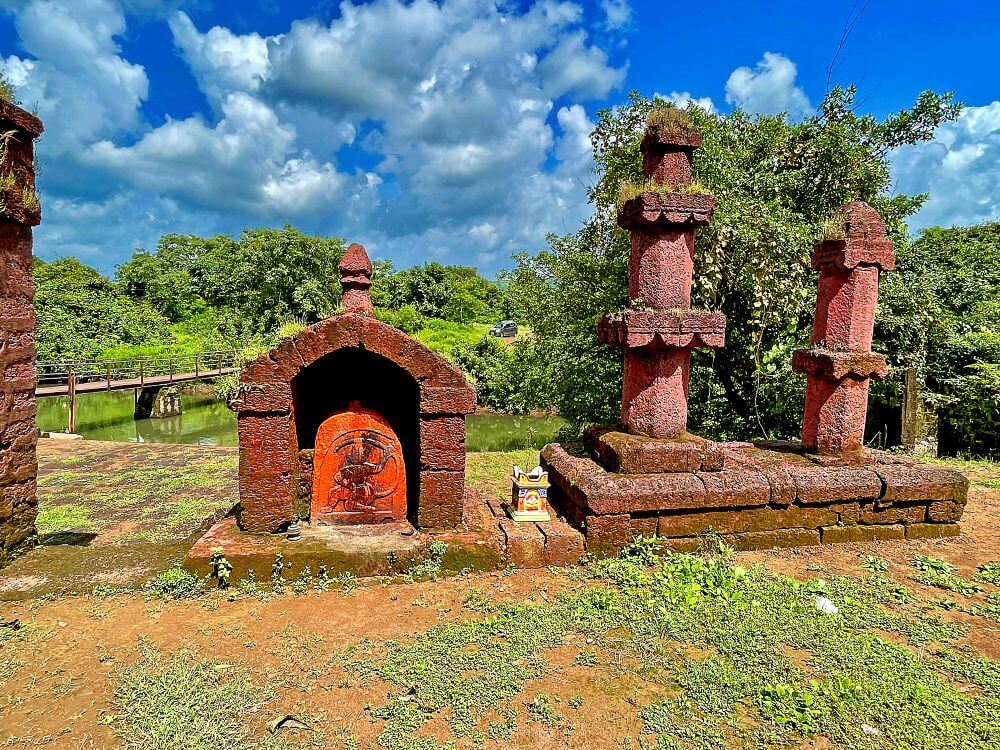
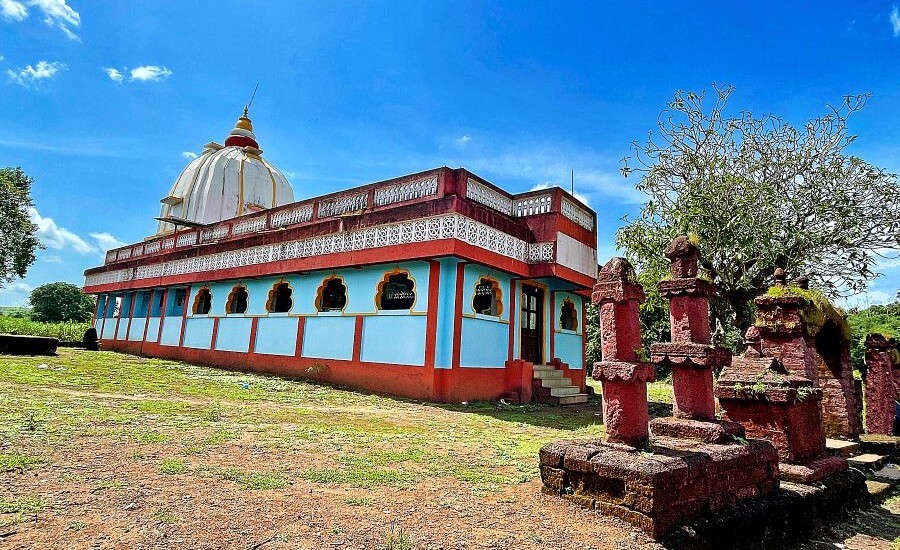
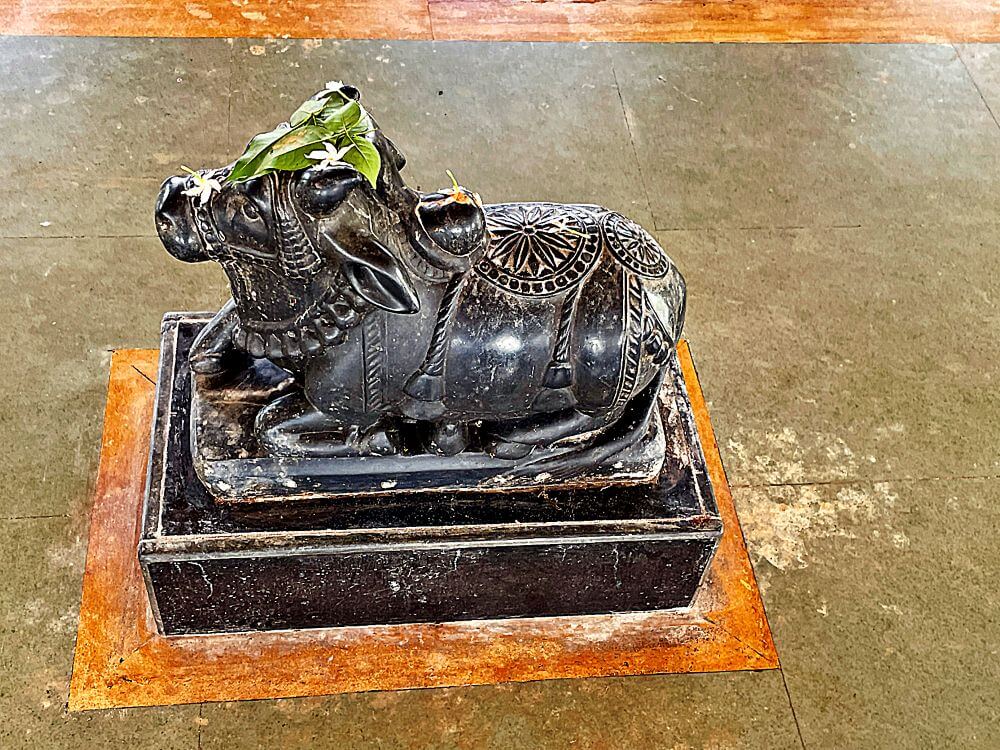
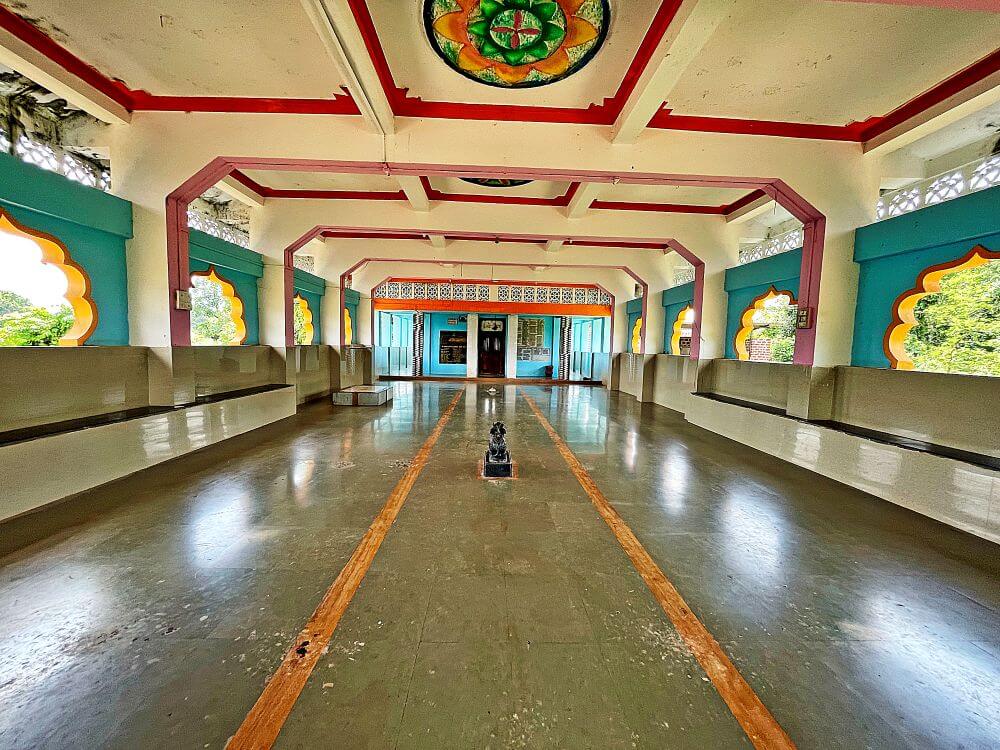
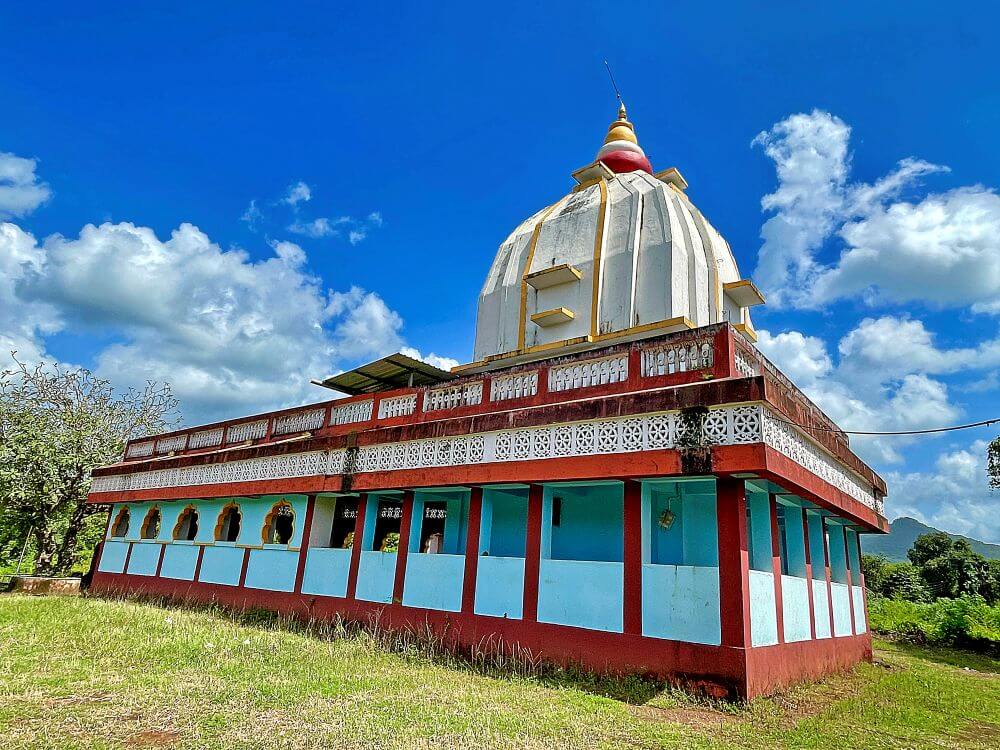
After crossing the bridge over the Gothana River and moving ahead, one encounters the small stone-built entrance gate of the temple, constructed from dressed laterite stones (*chira*). Through this, one enters the temple courtyard. On both sides of this entrance gate are two pairs of lamp pillars (*deepstambhas*). Right here is a small shrine of Lord Maruti. Facing east, the Mahadeva Temple stands on a high plinth above the ground level. One enters the temple assembly hall (*sabhamandapa*) by climbing five steps. As soon as one steps inside this hall, its spacious nature becomes apparent. This assembly hall is rectangular and semi-open in style. On the left and right sides of the assembly hall are seating benches for devotees. In the upper portion, between the square pillars, are large arched windows. In the middle of the assembly hall, on a small platform, is the idol of Nandi. Sculpted in smooth stone, this exquisite idol of Nandi has become remarkable due to its intricate carvings, including the garland of bells around its neck, the tassel dangling from its forehead, the tassels on the cloth draped over its back, and the circular patterns upon it.
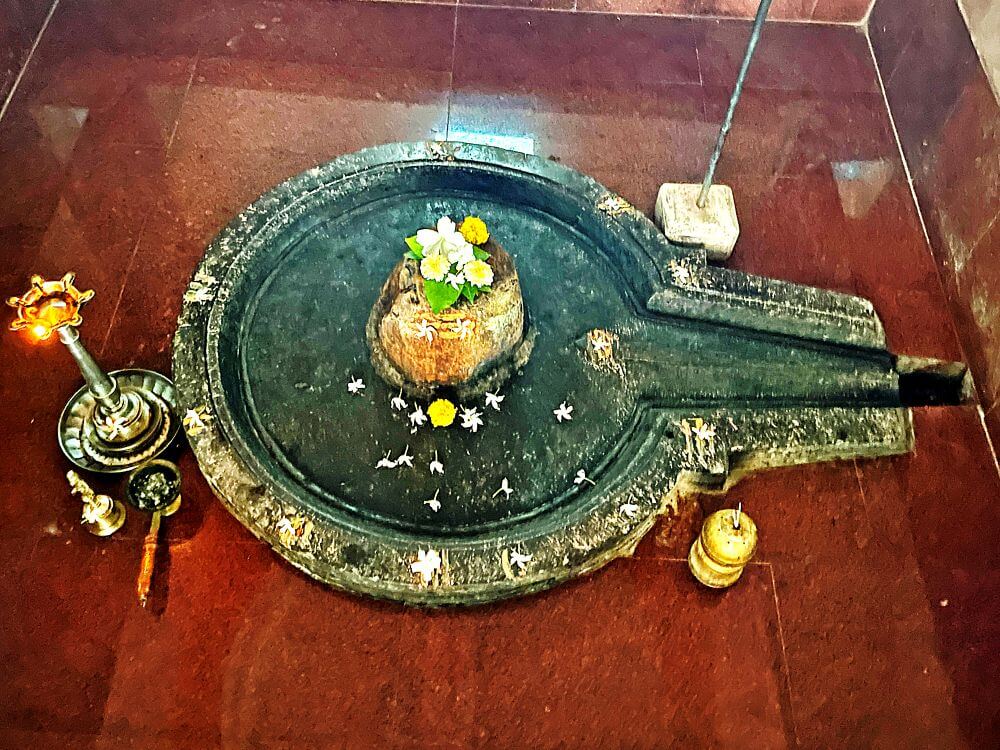
In the front part of the assembly hall, leaving aside the circumambulation path (*pradakshina marga*), lies the sanctum sanctorum (*garbhagriha*). Near the entrance of the sanctum sanctorum is a marble idol of a tortoise. Inside is a stone Shivling in the form of a *Patalalinga*, meaning it is installed in a sunken portion excavated below ground level. Around it is a square-shaped platform. Upon it is a pure white marble idol of Lord Ganesha seated in a marble shrine (*makhar*). The spire (*shikhara*) over the sanctum sanctorum is slightly dome-shaped, topped with a triple-tiered *amalaka* and a beautiful *kalasha* above it.
At the back of this temple is a stage. Many programs are organized here during festival times. The grand festival takes place here during Mahashivaratri, precisely during the same period when the *yatra* (annual pilgrimage festival) of Shri Kshetra Kunkeshwar in Devgad taluka is held. Much like Kunkeshwar, the festival here also lasts for three days. On the first day of this yatra—the day before Mahashivaratri—the palanquin (*palkhi*) of the Goddess is brought from the Navaladevi Temple in the village to the accompaniment of beating drums (*dhol-tasha*). During the yatra period, *aarti* is performed three times a day. At night, the privileged title-holders (*mankaris*), villagers, and devotees, along with the palanquin and ceremonial pillars (*khambkathas*), circumambulate the temple amidst the resounding chant of “Shiv Har Har Mahadev.” At this time, *gulal* (vermilion powder) and puffed rice (*churmure*) are showered here. Afterward, cultural programs are presented late into the night. At this time, the uninterrupted vigil (*jagar*) of the deity continues for seventy-two hours.
There are many scenic places in the vicinity of Nadhavade village; among them, the *Umala* (the villagers refer to this spot simply as *Umala*) is located very close to the Mahadeva Temple. The villagers have built a large water reservoir (*kund*) there. There are five to six *umalas* (springs) in the area from which water flows twelve months a year. The Gothana River originates right from here. A river originating on a flat plateau is a natural wonder of this place. Due to these *umalas*, Nadhavade and the surrounding villages never face a water shortage.
The water emerging from the *umala* flows right up to the border of Nadhavade and then plunges eighty feet down a mountain cliff. The spot where this waterfall cascades down is known among tourists as the Napane Waterfall. There are three perennial waterfalls in Maharashtra that flow year-round, and all three are located in the Konkan itself: one is Dabhose in Thane District, the second is the Dhodhavane Waterfall near Sangmeshwar, and the third is this Napane Waterfall in Vaibhavwadi Taluka. The water cascading from this waterfall never diminishes. This stream is so ferocious that it cannot be endured directly on one’s body; it has to be experienced from a distance. Because of this waterfall, tourists visit this region in large numbers as well.
This sacred temple stands as a testament to deep spiritual devotion, ancient architectural grandeur, and rich local cultural traditions.
The sanctum sanctorum houses the divine idol consecrated according to ancient Vedic traditions, surrounded by serene courtyards and traditional temple architecture.
Navratri, Maha Shivratri, Annual Temple Jatra & Deepotsav
Compare and book flights, secure top-rated local hotels near the temple, hire reliable guides, and rent cars instantly.
Extend your pilgrimage by visiting other highly sacred temples located nearby.


Add ₹999 more to unlock FREE SHIPPING!
Your sacred cart is currently empty.
Shop Photo FramesFill in your delivery details below to place your order.
Add comment