
Add ₹999 more to unlock FREE SHIPPING!
Your sacred cart is currently empty.
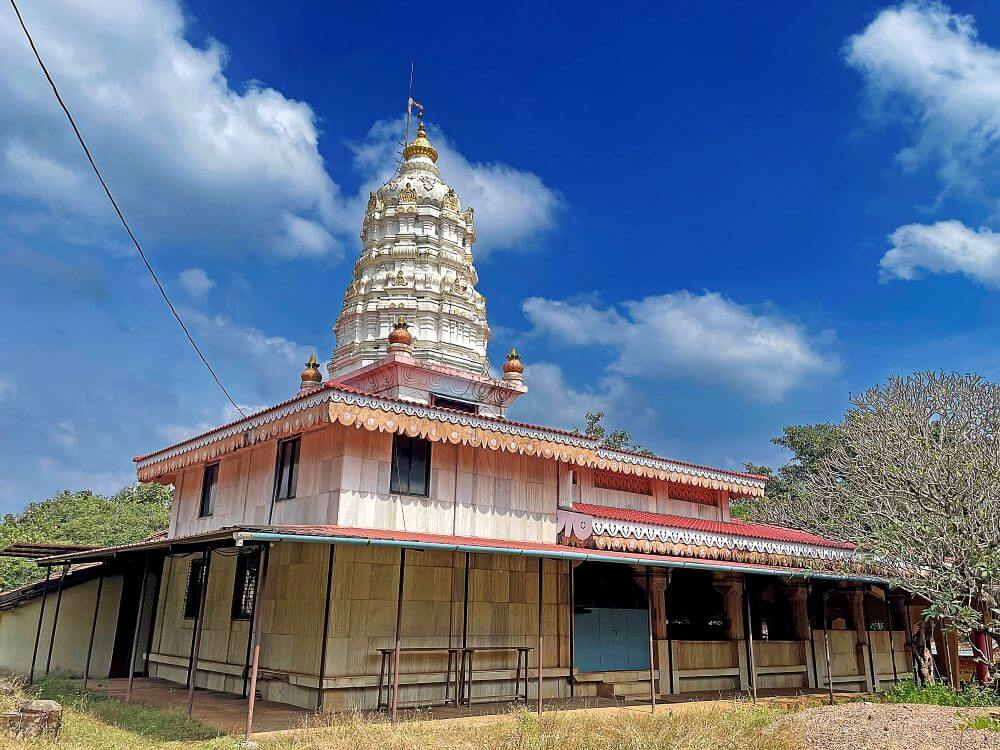
Shop Photo FramesIn Chinder village, nestled amidst the abundant natural beauty of Malvan Taluka in Sindhudurg District, lies the ancient abode of Devi Bhagavati. This Devi is the tutelary deity of Chinder village, which even today observes the unique Konkan tradition of Gavpalan. It is said that the Devi’s original dwelling was in the local hills, but a grand and beautiful temple has been built for Her here. Devotees firmly believe that this Devi grants wishes and rushes to answer the calls of Her devotees.
Bhagavati is considered a form of Adi Shakti Devi. The ‘Durga Saptashati’ scripture describes the greatness of this Devi. It narrates the story of the Devi’s origin, which goes thus: In ancient times, at the end of a Kalpa, the entire world was submerged in water. At that time, Vishnu lay asleep in yoganidra upon the Sheshashayya. From the wax in His ears, two Asuras, Madhu and Kaitabha, were born. Once, upon seeing Brahma, they rushed to kill him. Brahma then sought refuge with Vishnu, but He was asleep. To awaken Him, Brahma began to praise Devi Bhagavati. The Devi was pleased and, ‘from Vishnu’s mouth, eyes, and ears, from His abdomen, heart, and arms, She emerged and gave darshan to Brahma at that time.’ Thus, Vishnu was freed from yoganidra. The Devi bestowed strength upon Him and ‘enchanted those Asuras with Mahamaya,’ enabling Vishnu to slay them.
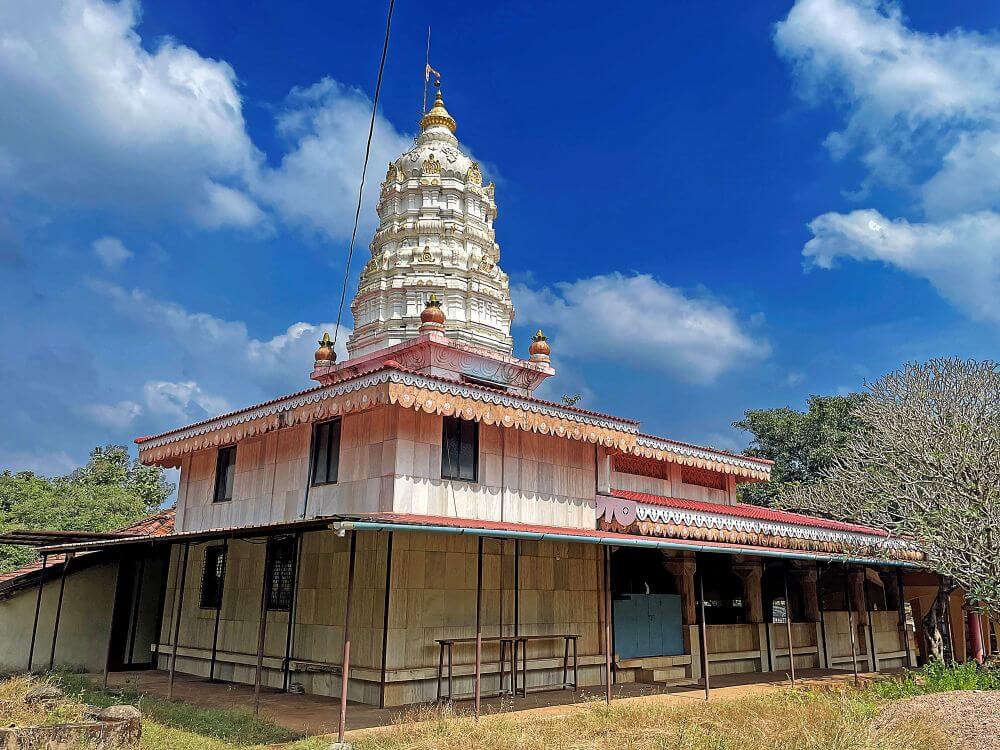
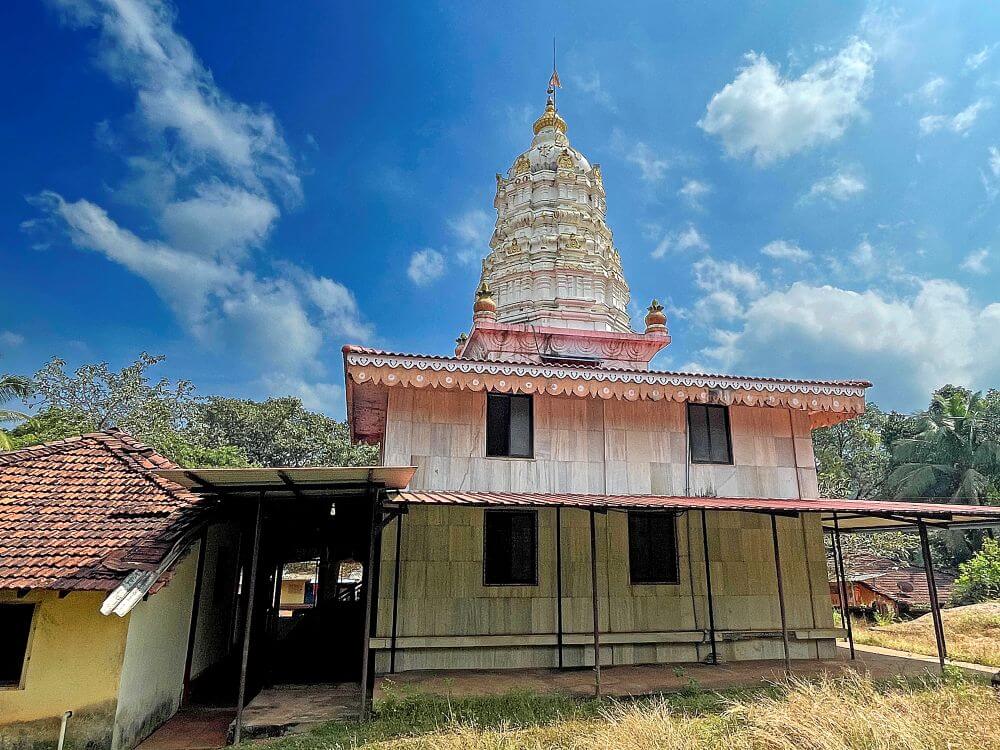
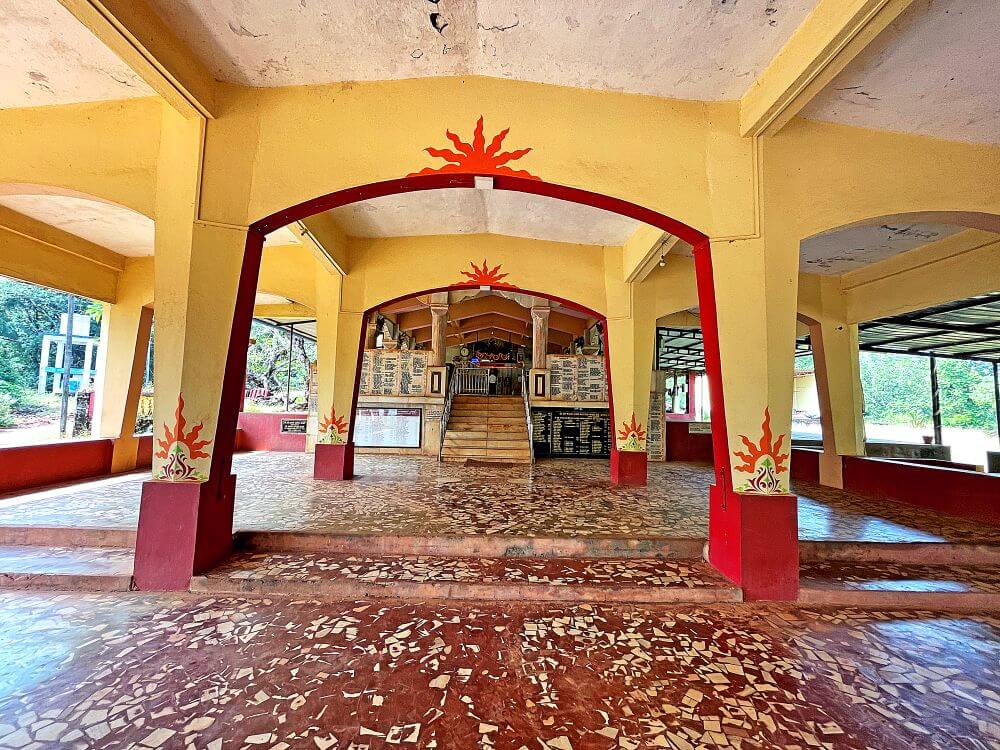
This Devi Bhagavati is revered as the sovereign power in the Bara-Pacha tradition of the Konkan village system. She is the principal deity of this place. The ancient original abode of this Devi is on the hill in Chinder village. However, hundreds of years ago, the villagers built a temple in the village and consecrated the Devi. There was an old-style Devi temple here, which has recently been renovated. Now, a grand and beautiful temple stands here. The temple’s structure includes a Sabhamandap (assembly hall), Antaral (vestibule), and Garbhagriha (sanctum sanctorum), with a tall Shikhara (spire) above the Garbhagriha.
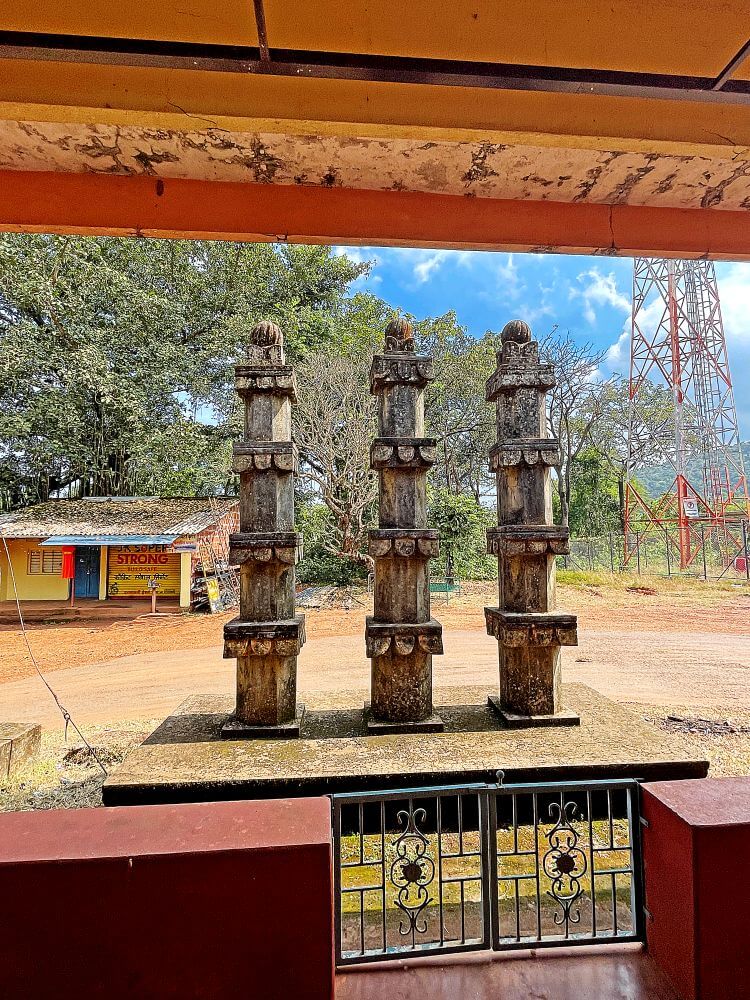
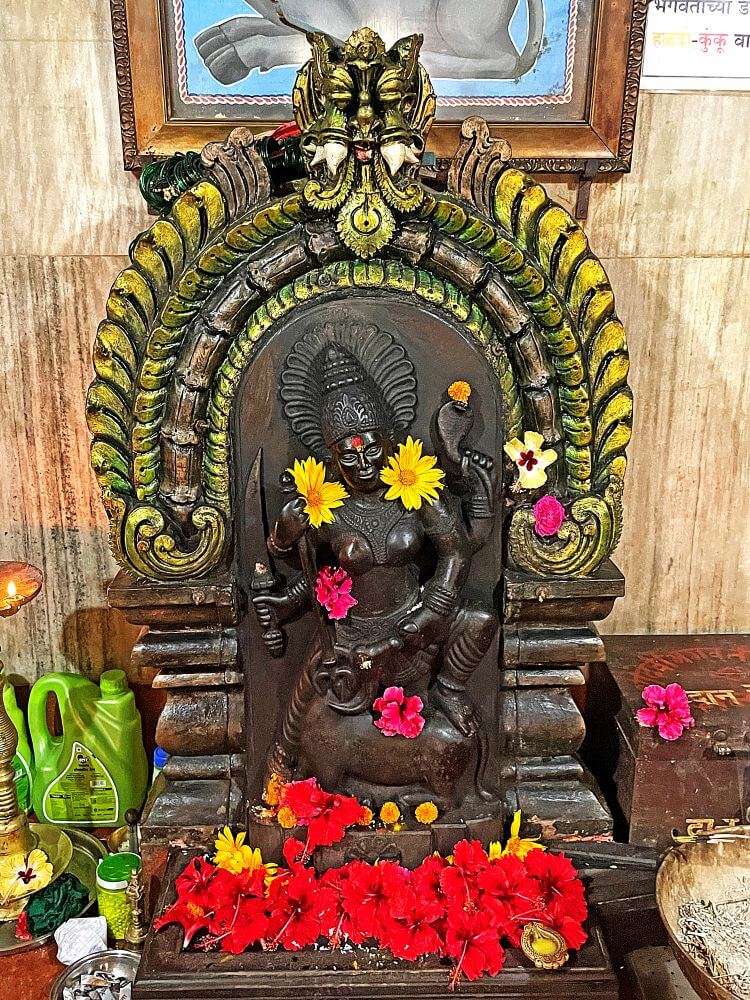
In the spacious area in front of the temple, on a raised platform, stand three ancient stone Deepastambhas (lamp towers). These four-tiered Deepastambhas are topped with a circular, fruit-like shape. A few feet above this, there is a large, open-style Sabhamandap of the temple. The Sabhamandap is adorned with shiny tiles throughout, making it appear even larger. From this Sabhamandap, nine steps lead up to the Antaral. The Antaral is semi-open and has seating arrangements for devotees. On one side of the Antaral are six Tarangakathya (wave staffs). From here, there is a circumambulation path around the Garbhagriha. The Garbhagriha is embellished with marble tiles. Above it, there is a large oil painting of Mahishasuramardini. Inside the Garbhagriha, on a Vajra Pitha (diamond pedestal), is the Devi’s serene idol. The Devi is in Her Mahishasuramardini avatar, holding a Trishul (trident), Naga (snake), and Khadga (sword) in Her hands. Behind this idol is a beautiful silver Mahirap (arch) adorned with leaf and flower motifs, as well as two peacock figures carved upon it.
Here, the Devi is worshipped daily with regular rituals. The biggest festival of the Devi in this temple is the Jatrotsav (fair festival) on Margashirsha Pournima. This five-day fair is called Dindichi Jatra. The legend associated with it is that when the villagers first had darshan of the Devi in the hills hundreds of years ago, the Devi was surrounded by plants called Dinde. In memory of this, on the day of the fair, torches are made from Dinde plant sticks, approximately half a foot long. Rags are tied to the ends of these sticks, dipped in oil, and lit. Hence, this Jatrotsav is called Dindejatra. Bhajan, Kirtan, and the Gondhal performed amidst the chants of ‘Ude G Ambe Ude’ are a major attraction of this festival.
Just as this fair of Chinder village is renowned in the surrounding region, the village is also famous for its Gavpalan tradition. Like the villages of Achare, Masure, Devgad in Sindhudurg, and Waghan in Lanja Taluka of Ratnagiri, the people of Chinder still observe the Gavpalan tradition today. Gavpalan means the entire village, including people and animals, moving out of the village boundaries to live on an open plain for a few days. Earlier, this stay would last for a month, but now it has been reduced to three, five, or seven days. The origin and rationale behind this tradition are unknown. In Chinder, Gavpalan takes place every three years. At that time, the day is decided after seeking the Devi’s counsel. For three days and three nights, the entire village stays outside the village boundaries. During this time, the villagers of Chinder close their homes, tie coconut fronds to their doors, draw a ring of ash around their houses, and go to live amidst nature outside the village limits.
This sacred temple stands as a testament to deep spiritual devotion, ancient architectural grandeur, and rich local cultural traditions.
The sanctum sanctorum houses the divine idol consecrated according to ancient Vedic traditions, surrounded by serene courtyards and traditional temple architecture.
Navratri, Maha Shivratri, Annual Temple Jatra & Deepotsav
Compare and book flights, secure top-rated local hotels near the temple, hire reliable guides, and rent cars instantly.
Extend your pilgrimage by visiting other highly sacred temples located nearby.


Add ₹999 more to unlock FREE SHIPPING!
Your sacred cart is currently empty.
Shop Photo FramesFill in your delivery details below to place your order.
Add comment