
Add ₹999 more to unlock FREE SHIPPING!
Your sacred cart is currently empty.
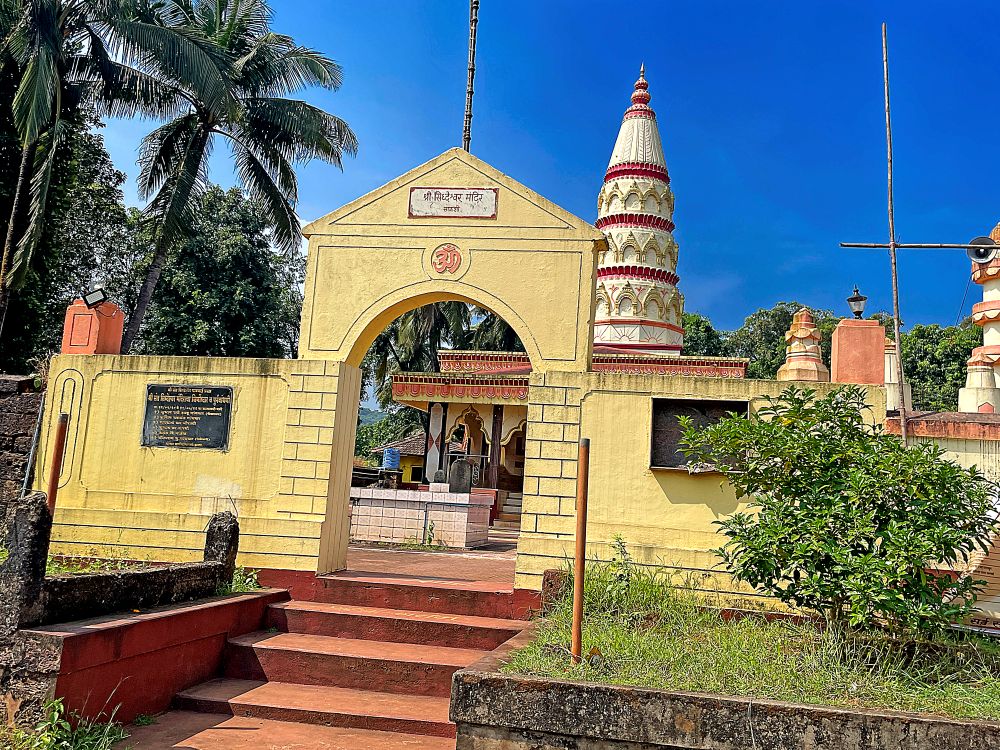
Shop Photo FramesIn the Konkan region, the presiding deity of every village is subordinate to the deities who hold authority over twelve, thirty-six, sixty-four, and eighty-four villages. Accordingly, customs of paying respects to these respective deities are observed throughout Konkan. The Siddheshwar Pavnai Temple, which holds authority over eighty-four such villages, is located in the village of Salshi in Devgad Taluka. During the princely era, this was the headquarters of the Mahal, or Taluka. It is one of the few village-endowed (Inami) temples in the Sindhudurg district.
Local villagers believe the Siddheshwar Pavnai Temple to be six hundred years old. It is said that in the fifteenth century, the Mirashi family from Paithan arrived here carrying their family deity (Kuldaivat). Since then, the village of Salshi and this temple have been established. Chhatrapati Shambhu Raje granted an Inam Sanad (royal decree) to this temple in the year 1722, which remained in effect until 1818. Later, the British recognized the Chhatrapati’s decree and issued their own Sanad on 30 August 1864. This document mentions that the temple was to collect agricultural revenue from Salshi village, deposit one-eighth of the share with the government, and manage the temple’s daily lighting and maintenance from the remaining funds. Even today, the temple’s administration is conducted according to this Sanad.
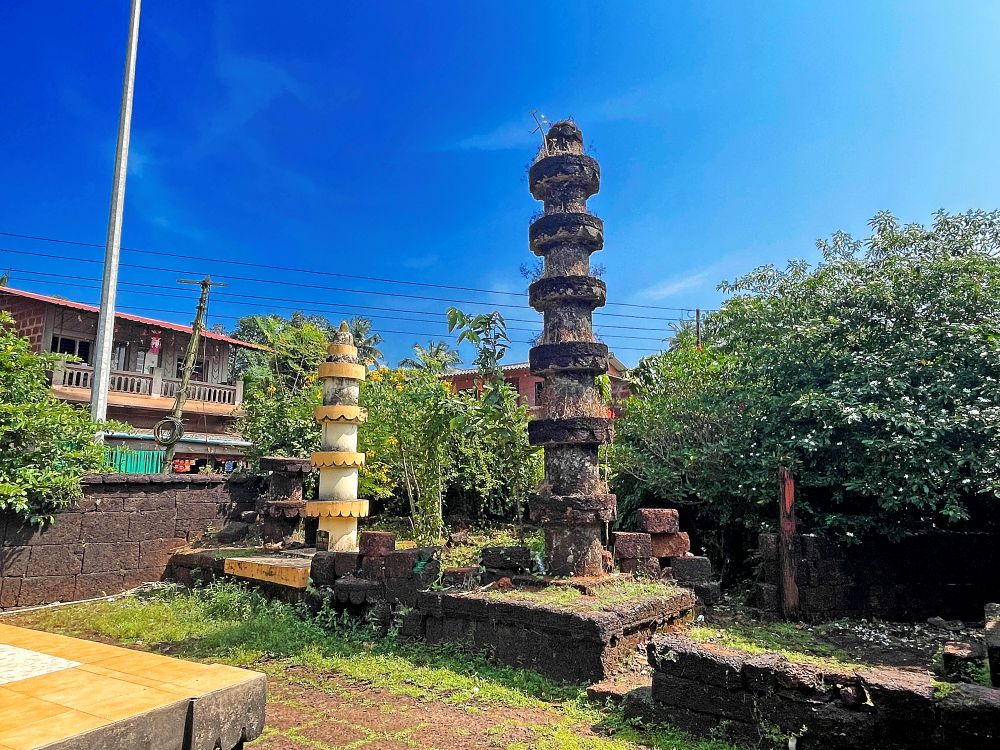
The Siddheshwar Temple, located by the roadside, is enclosed by a boundary wall made of laterite stone. One enters the temple courtyard through an arch in this wall. In the courtyard, facing the Siddheshwar Temple, stands an ancient Ganesha idol made of black stone on a large pedestal. Additionally, there are idols and stones of the Goddess on this same pedestal. On a smaller pedestal to the right of the entrance, there are five lamp pillars (Deepstambhas). Opposite this is a seven-tiered lamp pillar, where each tier is adorned with intricate lotus petal carvings. The top of this pillar features an Amalaka and a Kalash.
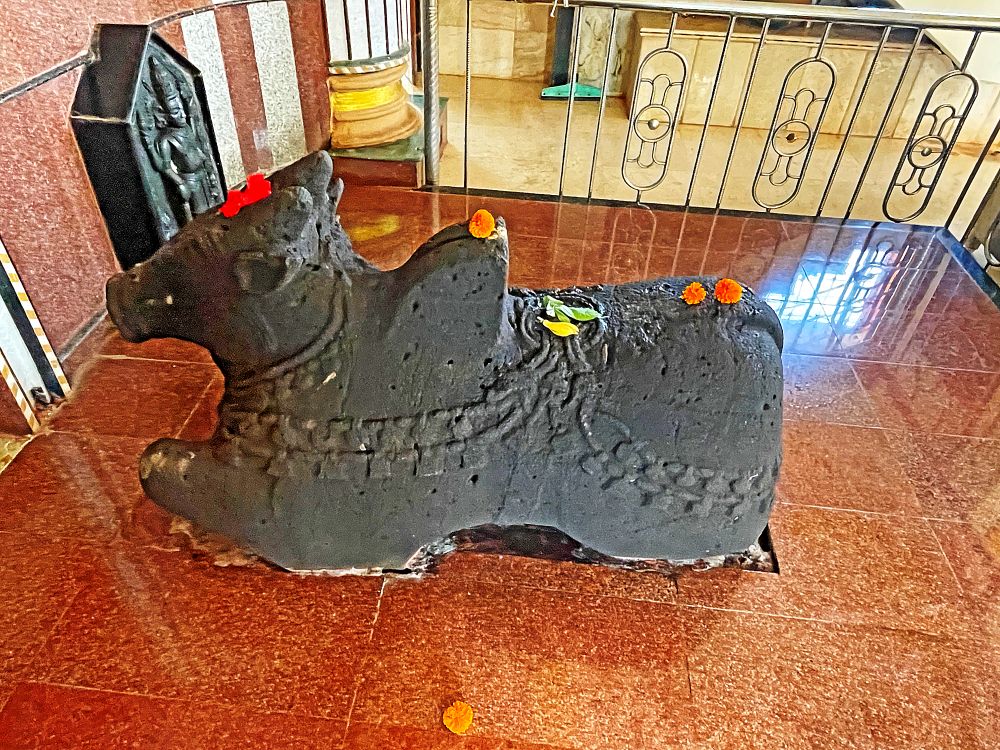
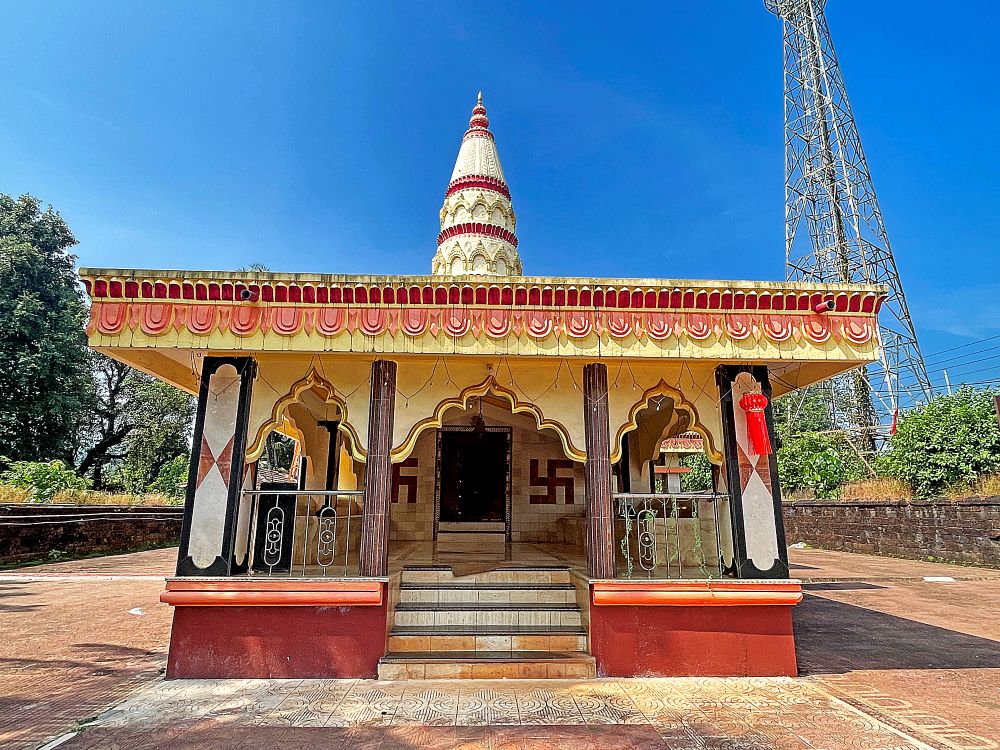
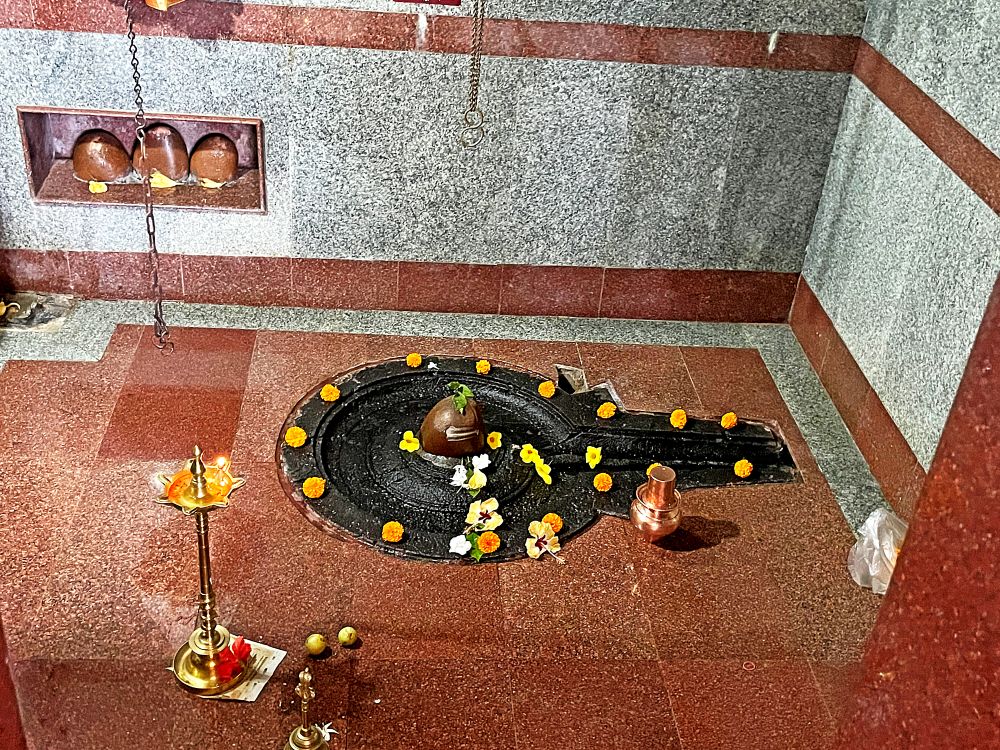
The temple stands on a high plinth (Jagati). There are five steps to enter the temple from the courtyard. The temple structure consists of a Sabhamandap (assembly hall), Antaral (vestibule), and Garbhagriha (sanctum sanctorum). The Sabhamandap is semi-open with stone benches (Kakshasanas) on both sides for devotees to sit. In the Antaral, facing the entrance of the sanctum, is a large Nandi idol carved from a single stone. On the front wall of the sanctum, there is a Ganesha idol on the left and a four-armed Vishnu idol holding a conch and mace on the right. In the center of the sanctum lies a Shiva Linga made of black stone. The sanctum is topped by a stepped-style Shikhara, and the main temple spire stands about 50 feet tall. The first, second, and third tiers of this Shikhara contain numerous niches (Devakoshthakas) carved with sculptures of various deities. Only men are permitted to enter this temple.
Adjacent to the Siddheshwar Temple is the temple of Goddess Pavnai. This temple also has a boundary wall with an entrance leading into its courtyard. There are five lamp pillars in front of the temple. The structure consists of two Sabhamandaps, an Antaral, and a Garbhagriha. While the Siddheshwar Mahadev temple is made of concrete, the Pavnai Devi temple is a tiled, Konkani-style structure. Wood has been used extensively throughout the construction. Both Sabhamandaps are semi-open with stone benches along the sides. The main Sabhamandap has six wooden pillars on the inside and six on the outside. The inner pillars are intricately carved. The arches between the two pillars also feature floral and leaf carvings, depicting relief sculptures of Hanuman, Garuda, Brahmadev, Vishnu, and Shrikrishna in the Maratha style. The Antaral is enclosed and has several windows for light and ventilation. The triple-arched entrance to the Antaral features carvings of the Dashavatara. The door frame is adorned with a Kirtimukh and several Naga images on its sides. Inside the Antaral, there are six octagonal wooden pillars, with their upper sections decorated with distinctive carvings.
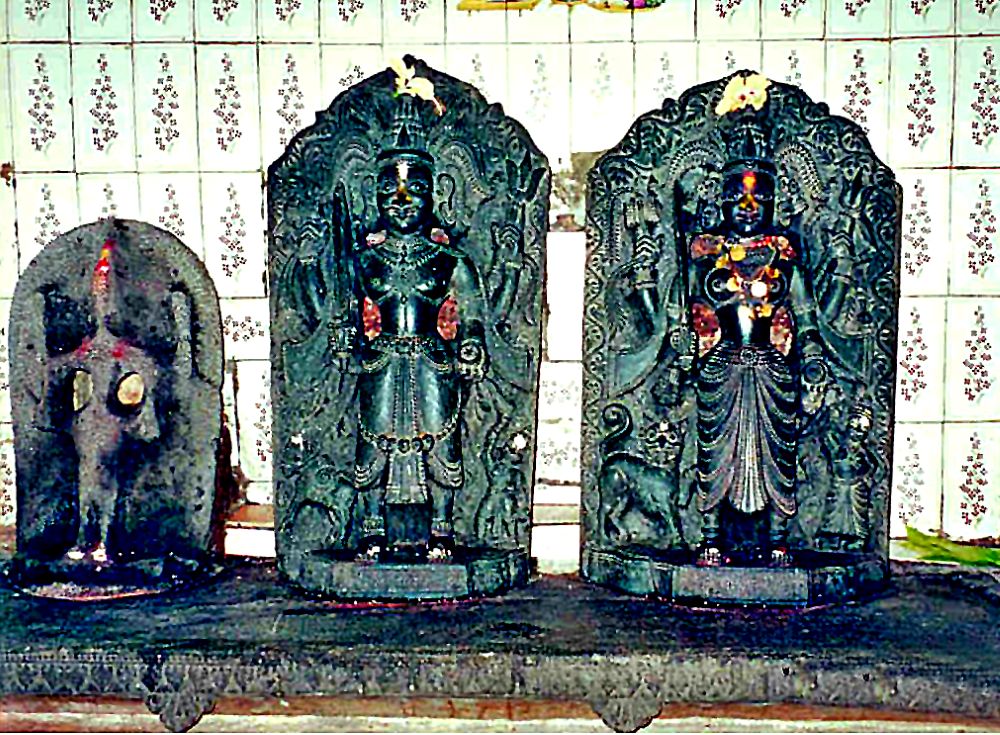
In the sanctum, there is a four-armed standing idol of Goddess Pavnai made of black stone. In her upper two hands, the Goddess holds a Damaru and a Trishul, while her lower hands hold a sword and a nectar vessel. Near the Goddess’s feet, there is a tiger on one side and a female-form Shakti on the other. She wears a crown, fine garments, and ornaments. Nearby are black stone idols of Shiva (Baba) and Kalkai (Kalika Mata). There is a striking resemblance in the craftsmanship of the idols of Ambabai of Kolhapur, Bhavani of Tuljapur, and Goddess Pavnai.
The temple courtyard houses several Jain idols. There are also shrines dedicated to Talkhamb Washik, Gango, Itlai, Banki Devi, Dhuri Brahman Dev, Banda Brahman Dev, Satpurush Sthan, as well as temples for Hanuman, Dattatreya, Vateshwar, Ravalnath, and Devnath. Two ancient cannons are located near the Dharmashala (pilgrim rest house) in the area. There are also several Samadhis (memorials) outside the temple.
The Dussehra festival is celebrated here with great enthusiasm. The festivities are marked by a royal grandeur, including the beating of drums, the use of ceremonial umbrellas (Chaurya), flags, and elaborate displays. Other festivals celebrated here include Gokulashtami, Shimga, Harinam Saptah, Diwali, Kartiki Ekadashi, Vaikuntha Chaturdashi, and Tripurari Purnima. The Nanda Deep (eternal lamp) in this temple burns continuously. Additionally, there is a tradition of seeking the Goddess’s guidance (Kaul) here. Villagers from the eighty-four villages under the jurisdiction of this temple offer coconut and betel nut to the Goddess to invite her presence during auspicious occasions in their homes.
According to historical records, when the princely rule existed, ‘Salas Mahal’ was the Taluka headquarters. At that time, Salshi was the main market village. Salas Mahal had twelve Balutedars (traditional village servants). Notably, the weights and measures known by the name of this Mahal are still used here today. Specifically, the ‘Salshi Payali’ measure is prevalent throughout the Sindhudurg district. In 2020, rock carvings were discovered on the plateau in Salshi, confirming that human settlements have existed in this region since prehistoric times.
This sacred temple stands as a testament to deep spiritual devotion, ancient architectural grandeur, and rich local cultural traditions.
The sanctum sanctorum houses the divine idol consecrated according to ancient Vedic traditions, surrounded by serene courtyards and traditional temple architecture.
Navratri, Maha Shivratri, Annual Temple Jatra & Deepotsav
Compare and book flights, secure top-rated local hotels near the temple, hire reliable guides, and rent cars instantly.
Extend your pilgrimage by visiting other highly sacred temples located nearby.


Add ₹999 more to unlock FREE SHIPPING!
Your sacred cart is currently empty.
Shop Photo FramesFill in your delivery details below to place your order.
Add comment