
Add ₹999 more to unlock FREE SHIPPING!
Your sacred cart is currently empty.
Shop Photo Framesfeatures a form of the Goddess where two elephants stand on either side of Her, holding two water-filled pitchers in their trunks and pouring the water over the Goddess’s head. This form of the Goddess is widely known across the country as Abhishekalakshmi or Gajalakshmi. However, in the Konkan region, such an idol is revered as Bhavai Devi. This ancient temple of Bhavai Devi is located in the village of Vareri in Devgad Taluka. Devotees believe that this Goddess is extremely powerful, fulfilling vows and responding to earnest calls.
Bhavai Devi is a form of Shri Devi Bhagavati. In the Konkan, especially in Sindhudurg district, idols of Lakshmi are often accompanied by elephant images. Gajalakshmi was the family deity of the Rashtrakuta dynasty. The Rashtrakuta period generally spans from circa ७५० to ९८३ CE. For many years, the Rashtrakutas also held sway over the Konkan region. In Shilpa Hadap’s research paper, ‘Cult Images of Konkan – A Study Through Traditions, Religious Beliefs and Iconography,’ it is stated that any village in the Konkan where an ancient idol of Gajalakshmi is found can be considered to date back to the Rashtrakuta period. The image of Gajalakshmi was worshipped from ancient times. After the decline of the Rashtrakuta power, this worship diminished or ceased. However, even today, in many villages, Gajalakshmi is worshipped in the form of Bhavai Devi. Vareri is one such village.
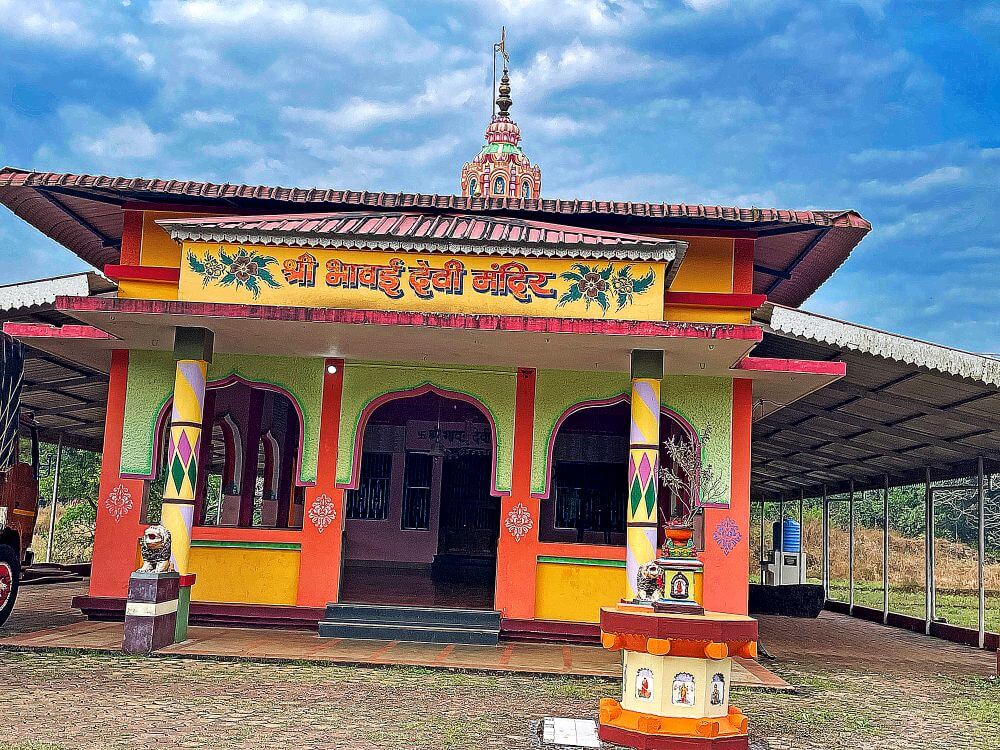
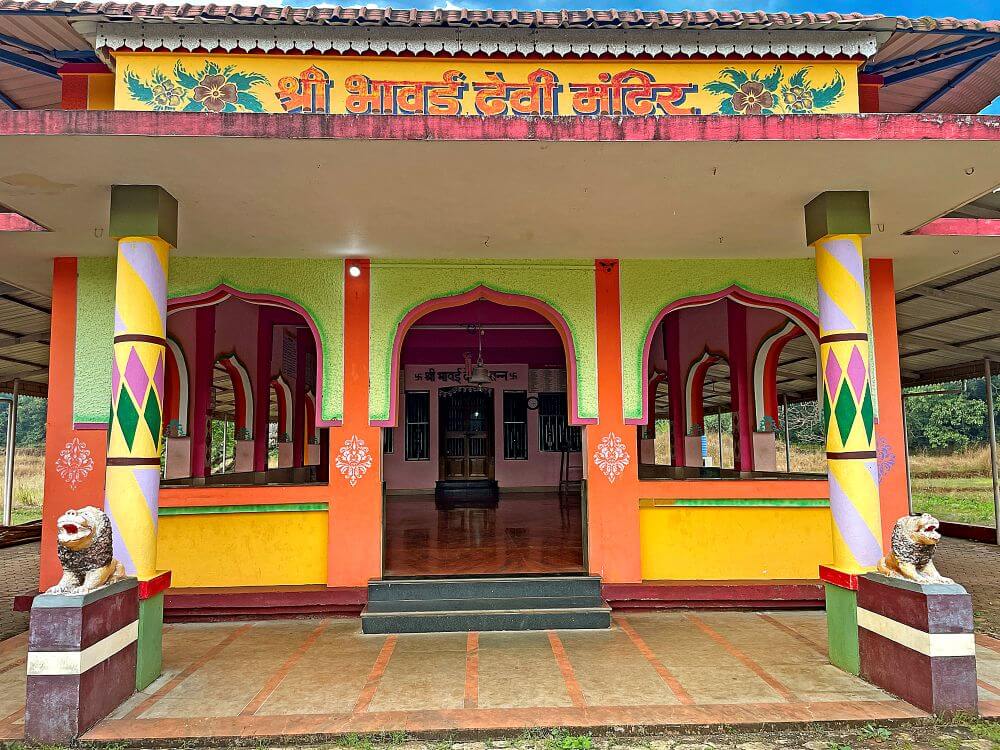
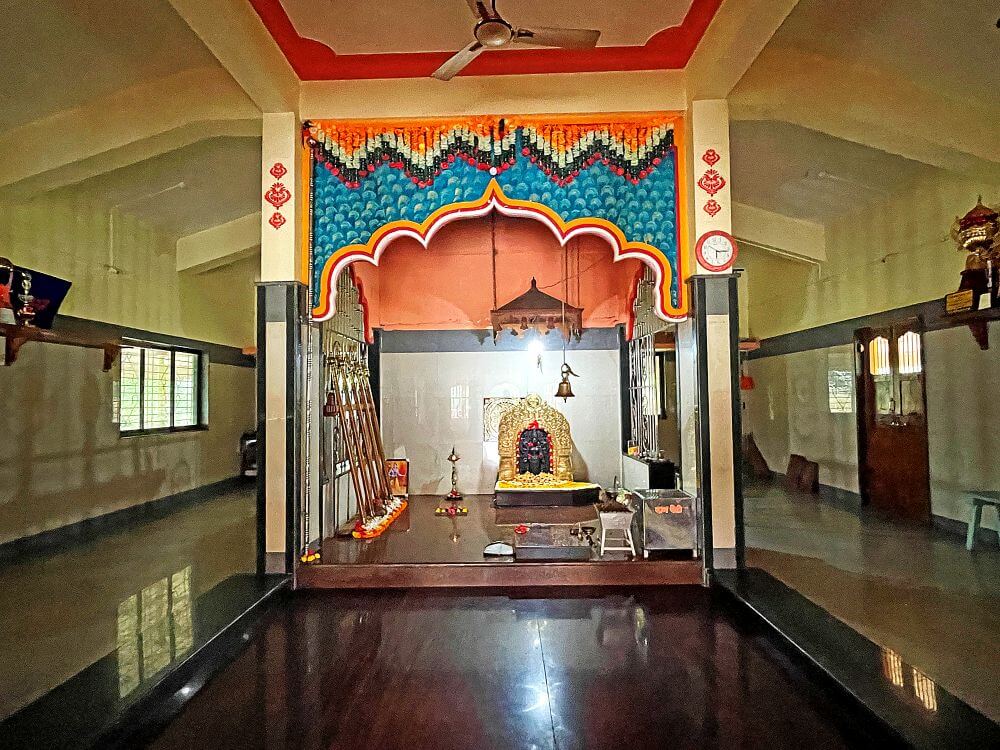
Bhavai Devi is the village deity of Vareri. Local villagers state that this temple is four hundred to five hundred years old. Rice fields surround the temple on all sides. Therefore, during the monsoon, the area around the temple appears to be covered with a green carpet. In the modest courtyard in front of the temple, there is an octagonal Tulsi Vrindavan on a platform. The temple’s structure includes a Mukhamandapa (front porch), Sabhamandapa (assembly hall), Antarala (vestibule), and Garbhagriha (sanctum sanctorum). On both sides of the Mukhamandapa, on platforms adjacent to the pillars, there are sculptures of the Goddess’s vehicle, the lion. The pillars in the Mukhamandapa are square at the bottom and cylindrical at the top. The Sabhamandapa here is open-plan, with seating arrangements for devotees along the sides. All the pillars in the Sabhamandapa are connected to each other by arched mihrabs.
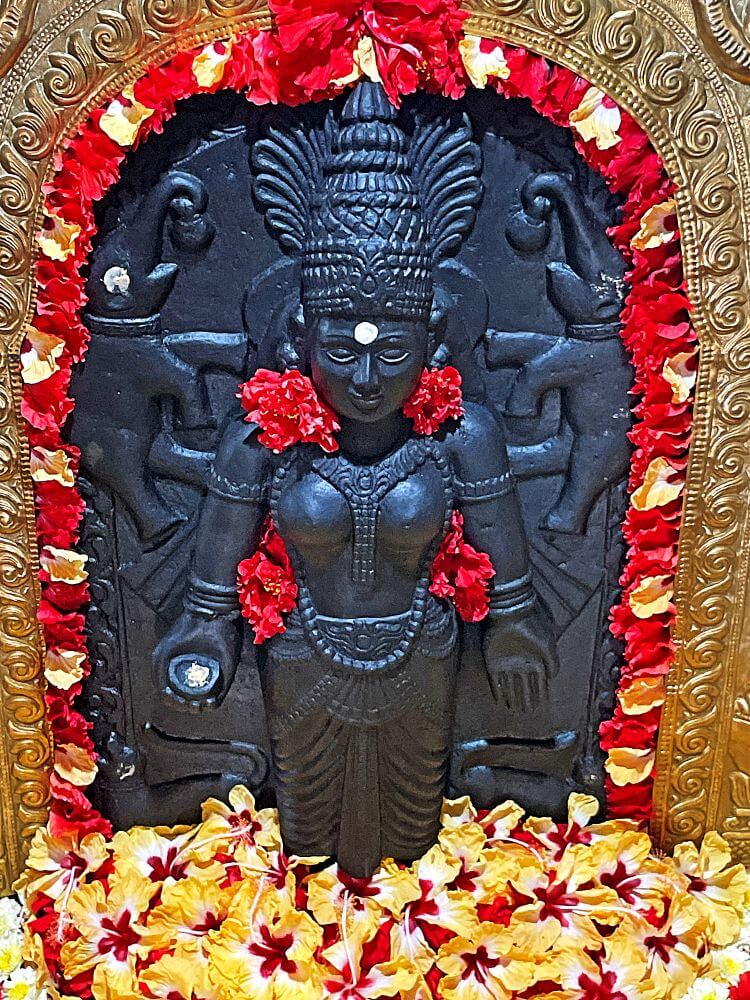
The wooden entrance to the Antarala is adorned with intricate carvings. The doorframes here are finely carved with leaf and flower motifs. Inside the Garbhagriha, on a Vajra Pitha (diamond pedestal), stands a two-armed idol of the Goddess, carved from black stone. In one hand, the Goddess holds a weapon, and in the other, a pot of nectar. She wears a crown on Her head and rich garments and ornaments on Her body. At the bottom of the back slab behind the Goddess are two lions. At the top, on either side of the Goddess’s head, are two elephants standing on two legs, raising their trunks and holding pitchers. Behind the idol is a golden prabhaval (halo) with leaf and flower designs. Lakshmi and elephants are considered symbols of wealth and prosperity in our culture. According to the Indian Culture Encyclopedia, Lakshmi is associated with the Earth, and elephants with clouds. Similarly, this idol depicts the water anointing (jalabhisheka) of the Earth by the clouds. In front of this idol are five Tarangahasta (waving hand gestures).
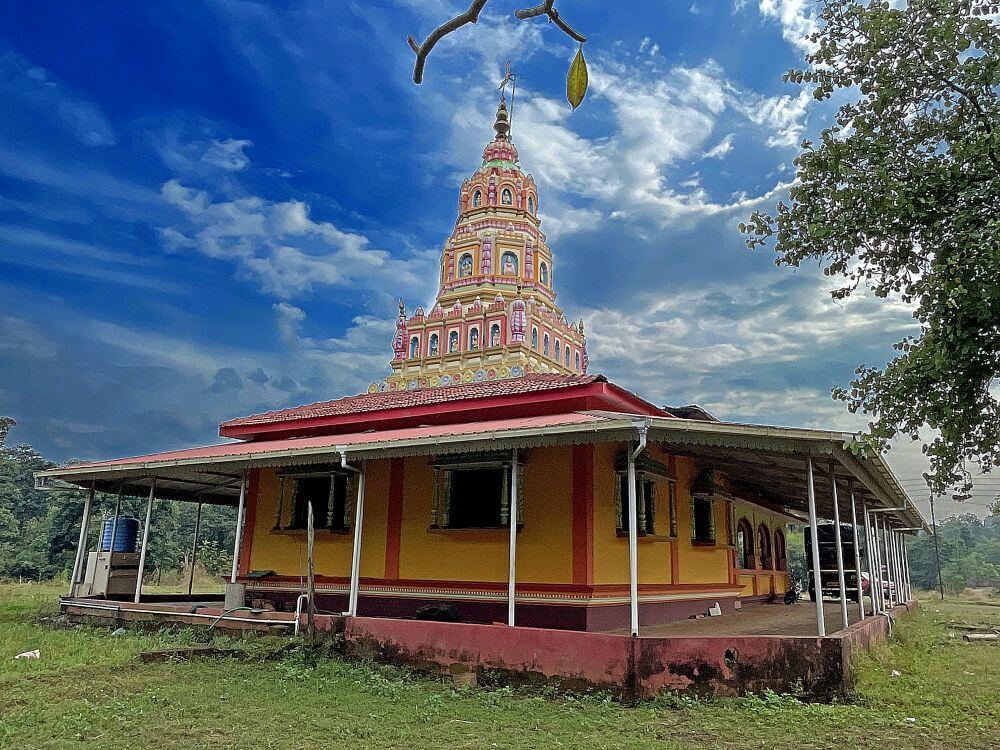
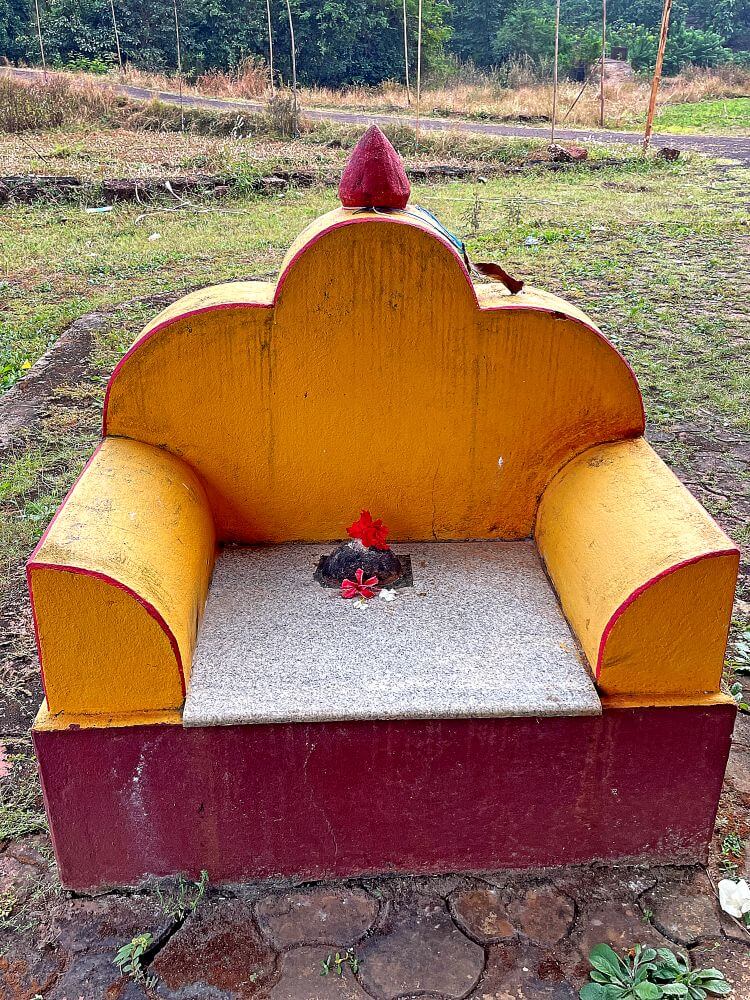
The Garbhagriha of this temple is topped with a three-tiered shikhara (spire). The lower square tier has carvings and small shikharas. The upper two octagonal tiers each have eight devakoshthakas (niches for deities) with sculptures of various deities. Above them is an amalaka (fluted stone disc) and a five-tiered kalasha (finial). A unique feature of this temple is a large horizontal slab outside. There is a legend associated with this slab that all the deities in the temple complex created it for themselves. At night, all these deities sit on this seat and deliberate. There is a Shiva temple in a cave within the temple complex. Additionally, there are stone idols of Anubhav Dev, Baracha Chala, and other local deities here.
Every year, a Harinam Saptah (week-long chanting of God’s name) is celebrated in the temple during Kartik Krishna Ekadashi. During this period, the temple complex takes on the appearance of a fair. Bhajan groups from many villages, as well as kirtankars (devotional singers) and pravachankars (discoursers), visit at this time. Festivals such as Navratri, Dussehra, Diwali, Mahashivratri, Holi, Vaikuntha Chaturdashi, Tripurari Pournima, and Dalap Swari are also celebrated in this temple. During these festivals, devotees from Mumbai, Pune, as well as Gujarat and Karnataka, come for the Goddess’s darshan.
This sacred temple stands as a testament to deep spiritual devotion, ancient architectural grandeur, and rich local cultural traditions.
The sanctum sanctorum houses the divine idol consecrated according to ancient Vedic traditions, surrounded by serene courtyards and traditional temple architecture.
Navratri, Maha Shivratri, Annual Temple Jatra & Deepotsav
Compare and book flights, secure top-rated local hotels near the temple, hire reliable guides, and rent cars instantly.
Extend your pilgrimage by visiting other highly sacred temples located nearby.


Add ₹999 more to unlock FREE SHIPPING!
Your sacred cart is currently empty.
Shop Photo FramesFill in your delivery details below to place your order.
Add comment