
Add ₹999 more to unlock FREE SHIPPING!
Your sacred cart is currently empty.
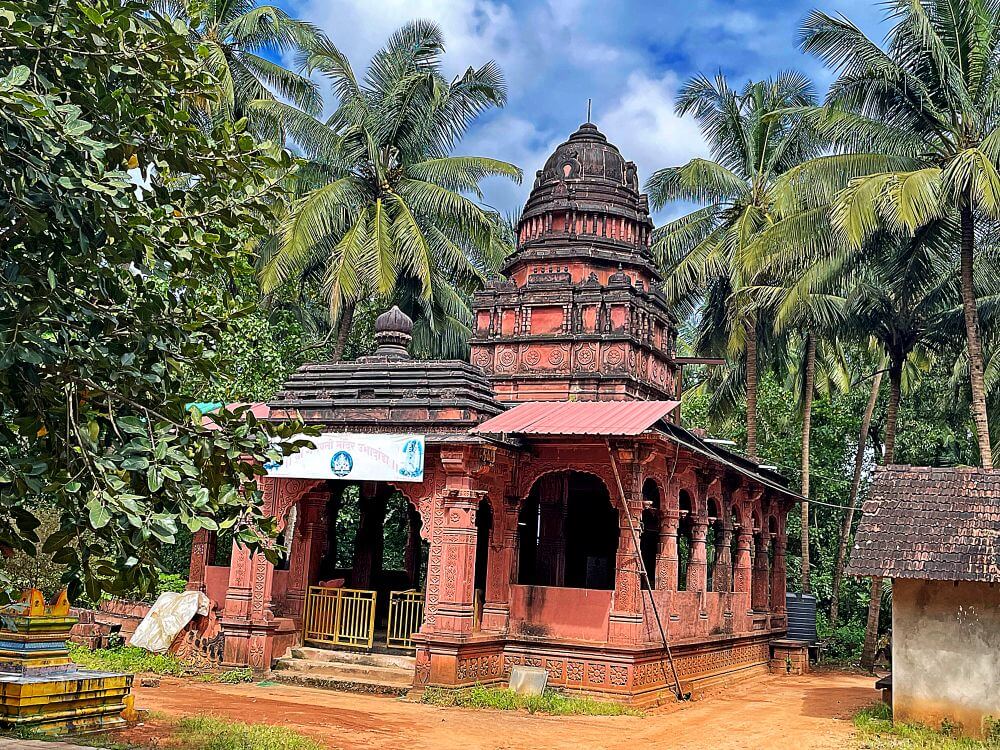
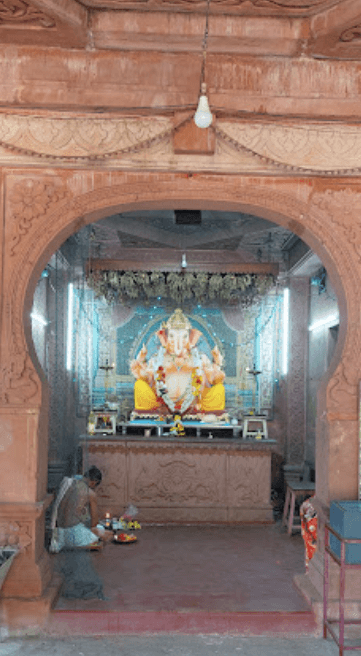
Shop Photo FramesThe approximately 150-year-old Ganpati shrine in the village of Ubhadanda in Vengurla Taluka is a place of deep faith for devotees in the surrounding region. The clay idol of Ganpati, which resides in this temple for only a few months of the year, is famous in the area as a ‘Navasacha Ganpati’ (a deity who grants wishes). Devotees make a vow of oil (telacha navas) to this Ganpati, who is known for answering the calls of his devotees. A unique feature here is that the idol is installed on the day of Lakshmi Pujan during Diwali and is worshipped until the oil vowed by devotees is exhausted. If the oil is not exhausted, the idol is immersed on the day of Holi, i.e., Phalguna Purnima.
The legend regarding the establishment of this temple states that many Tandel families have lived in the Ubhadanda area for a long time. Among them was a shepherd named Bablo. Bablo was always lost in his own world, which led the villagers to label him as mad. Bablo’s maternal uncle, who was a sculptor, lived in the nearby village of Khavane. He used to make idols for many devotees in the surrounding area for the Ganesh festival. Once, when Bablo visited his uncle, he saw a Ganesh idol there. Since no one had purchased it even after the Ganesh festival ended, the idol remained there. He picked up the idol and brought it to the place where the Ganpati temple stands today. That day was Ashwin Amavasya, the day of Bali Pujan and Lakshmi Pujan.
Bablo began the worship of Ganpati here on that day. Some villagers, remarking that a madman was performing religious rites, provided him with oil, lamps, and incense sticks to light lamps there. He worshipped this Ganesh idol for a few days and then immersed it. Just like the previous year, he installed a clay Ganesh idol here on the day of Lakshmi Pujan the following year, worshipped it, and immersed it. However, before the third year could pass, Bablo went missing. No one inquired about him further. Consequently, the festival stopped from the third year onwards, and the tradition of Ganesh worship was discontinued. A few days later, the residents of the area began to face various troubles. Many were afflicted by various illnesses. With no one understanding the cause, the villagers decided to seek the deity’s guidance (kaul). Accordingly, they asked the village deity about the sudden troubles and illnesses. The villagers then realized that this was happening because the tradition of worshipping Ganesh had been discontinued. Following this, on the next Lakshmi Pujan, the villagers resumed the tradition of Ganesh worship here and immersed the idol after a few days. Along with this, the illnesses in the village also disappeared.
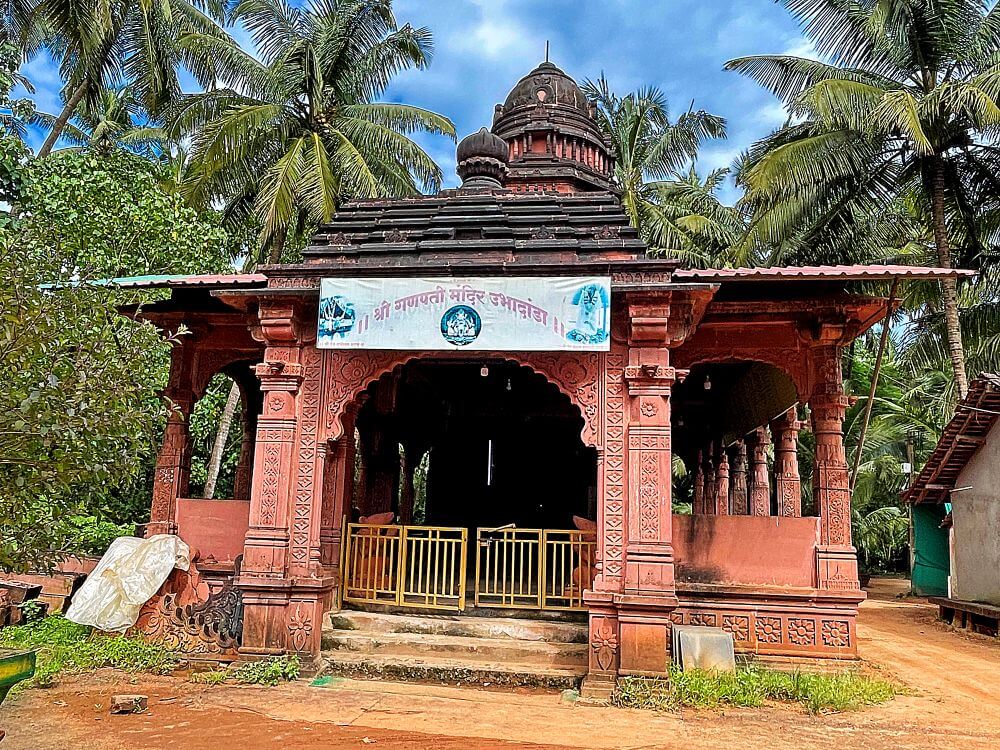
It is said that a vow of oil was made before this Ganpati. A lamp fueled by this vowed oil would burn continuously before the idol. Once the oil was exhausted, the idol would be immersed. Initially, the Ganesh idol was worshipped on a small bench. Later, a temporary shed began to be erected here for a few days. This practice continued for many years. Thereafter, the number of vows made by devotees before this Ganpati began to increase. After the Ganesh immersion, this space used to remain empty. From this, the idea of building a temple on this site was proposed by common consent. The temple was built here about 100 years ago. After the renovation that took place a few years ago, the temple attained its current form.
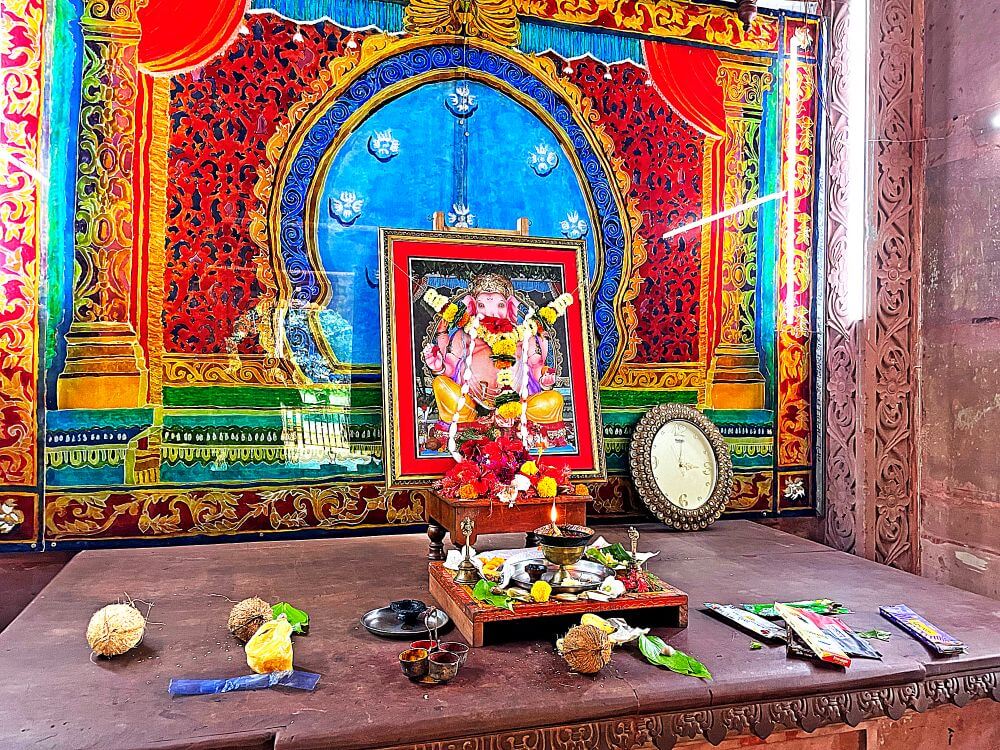
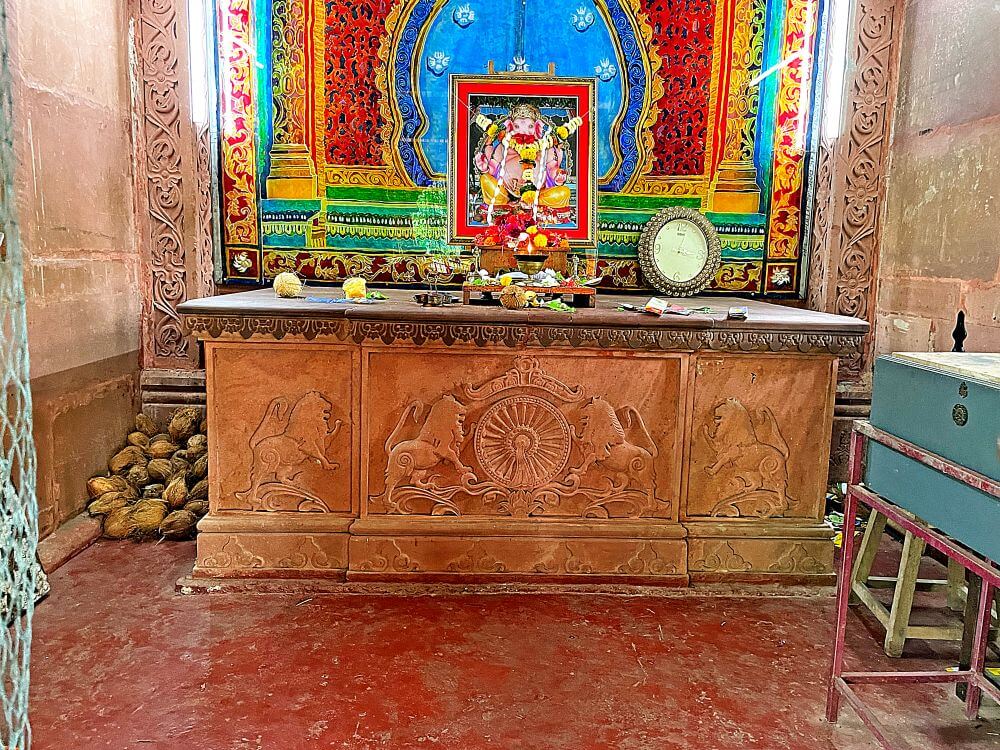
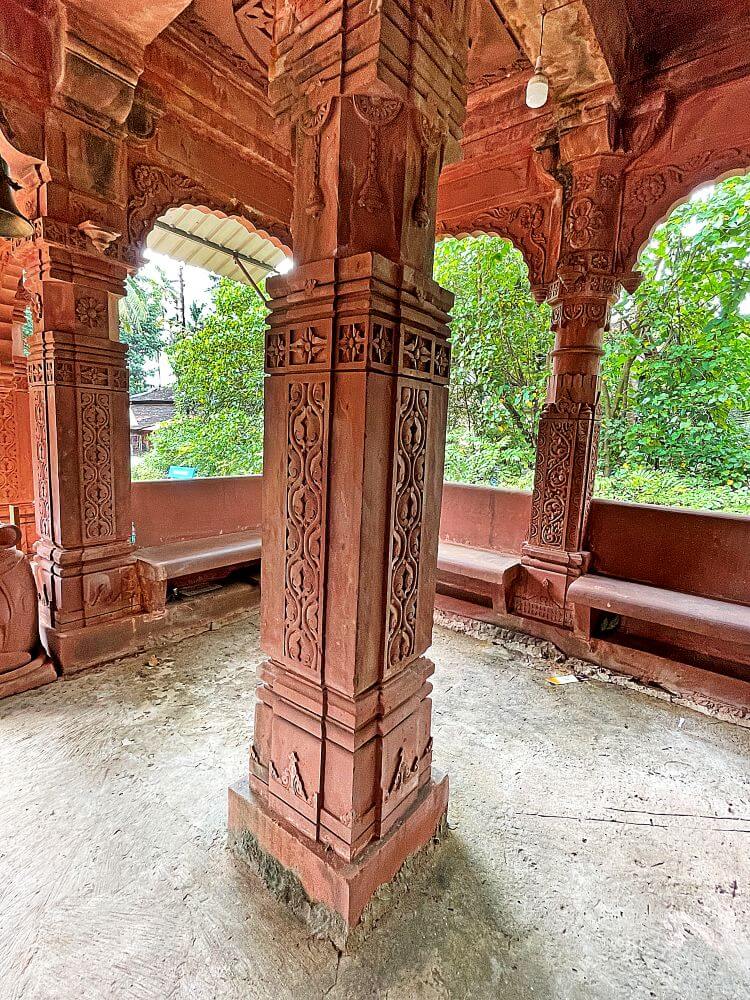
The temple structure consists of a Mukhamandapa (entrance hall), Sabhamandapa (main hall), and Garbhagriha (sanctum sanctorum). The temple, built entirely of laterite stone, has spires over the Mukhamandapa and the Garbhagriha. One enters the Sabhamandapa by climbing a few steps from the Mukhamandapa. At the entrance of the Sabhamandapa, there are idols of Mushakraja (the mouse) on both sides. The Sabhamandapa here is semi-open, with seating arrangements for devotees along the sides. There are carved stone pillars in this Sabhamandapa. Beyond the Sabhamandapa, after leaving a circumambulation path (pradakshina marg), lies the Garbhagriha. The Ganesh idol is seated on a Vajrapitha in this Garbhagriha. For the remainder of the year, only an image of Ganesh is worshipped here.
People of the Chandraseniya Kayastha Prabhu community, who are originally from Vengurla but settled in Mumbai, make large vows of oil to this Ganesh. Currently, an idol larger than five feet is installed in this temple on Ashwin Amavasya. After that, Ganpati is worshipped in this temple for four months—Kartik, Margashirsha, Pausha, and Magh. Previously, the idol was worshipped for only a few days, but as the vowed oil has increased, the worship now lasts longer. However, the idol is still immersed before Phalguna Purnima. During this period, bhajans are performed before this Ganpati every evening. At the time of the subsequent Aarti, prasad of coconut and khoya modaks is distributed. Additionally, before the Ganesh immersion, ‘Mhamana’ (Mahaprasad) is offered. For this, rations are collected from every household in the Ubhadanda area, and all villagers attend this feast. The Ganpati fair is held on the Sankashti Chaturthi following Maghi Jayanti. During that time, a Dashavatar play is performed. After the immersion of the Ganpati idol, only an image of Ganpati is kept in the temple at other times. During this period as well, bhajan programs are held here on Ekadashi and Sankashti.
This sacred temple stands as a testament to deep spiritual devotion, ancient architectural grandeur, and rich local cultural traditions.
The sanctum sanctorum houses the divine idol consecrated according to ancient Vedic traditions, surrounded by serene courtyards and traditional temple architecture.
Navratri, Maha Shivratri, Annual Temple Jatra & Deepotsav
Compare and book flights, secure top-rated local hotels near the temple, hire reliable guides, and rent cars instantly.
Extend your pilgrimage by visiting other highly sacred temples located nearby.


Add ₹999 more to unlock FREE SHIPPING!
Your sacred cart is currently empty.
Shop Photo FramesFill in your delivery details below to place your order.
Add comment