
Add ₹999 more to unlock FREE SHIPPING!
Your sacred cart is currently empty.
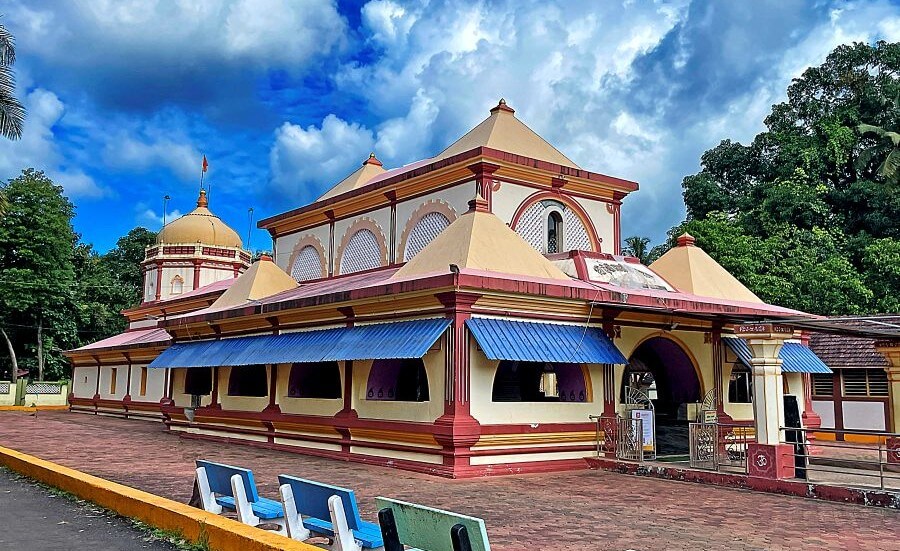
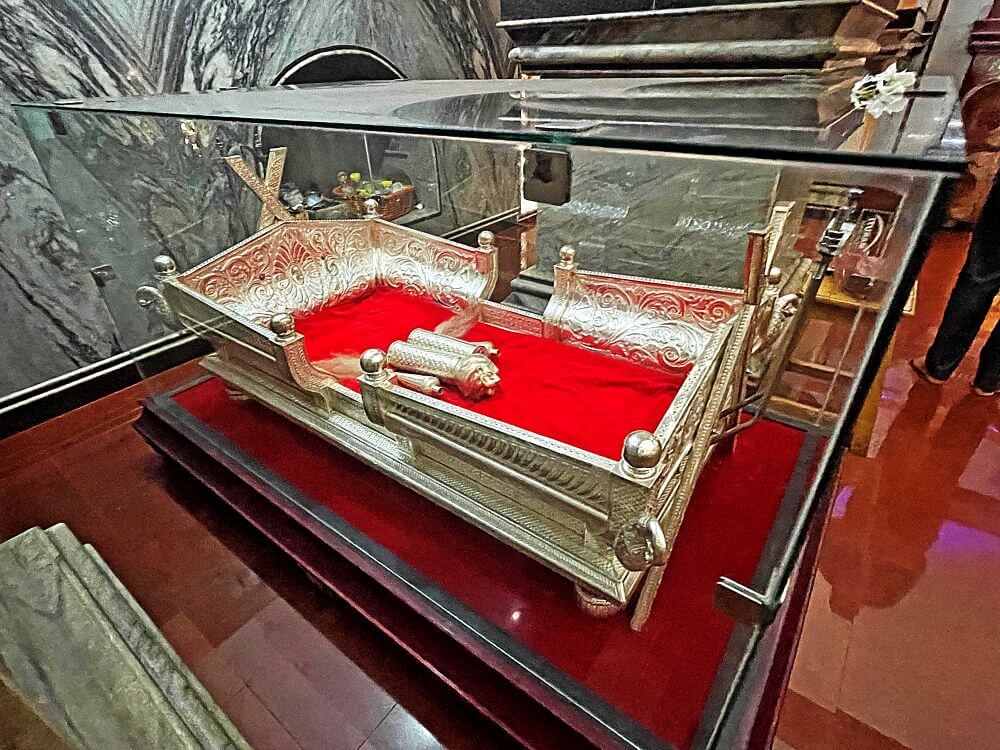
Shop Photo FramesThe temple of Sateri Devi, the presiding deity of Vengurla city, is a place of faith for thousands of devotees. This temple, measuring ५० feet in width and १५० feet in length, is constructed entirely of laterite stone. Each wall here is four feet thick. This temple is considered an excellent example of ancient Konkan architecture. The festival of the Goddess celebrated here on the day of Gudi Padwa is famous. On this occasion, a procession of Sateri Devi is taken out in a silver palanquin in the presence of thousands of devotees.
The legend of this temple is that there is a temple of Sateri Devi in the village of Ansur, located १० kilometers away from Vengurla. A devotee of the Goddess from the Parab clan here used to walk to Ansur every day to seek the Goddess’s blessings. Due to old age, he could no longer go to Ansur daily. Yet, he did not abandon his routine. Upon this, the Goddess appeared to him in a dream and told him that he no longer needed to go to Ansur for her darshan. She said, “I will manifest at the place in your village where your cow releases her milk.” When he searched accordingly, he saw his cow releasing milk at a certain spot. At the same time, he saw an anthill growing in size. He immediately embraced the anthill and said, “Mother, now you stay here.” At that moment, the growth of the anthill stopped. Thereafter, Sateri Devi was established at this place.
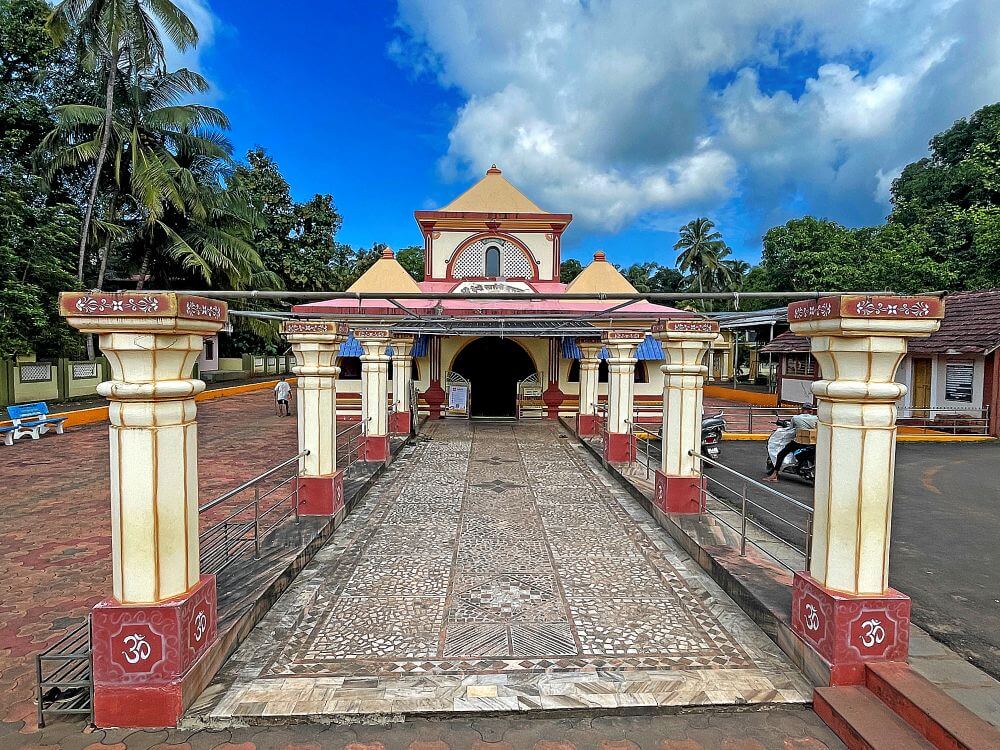
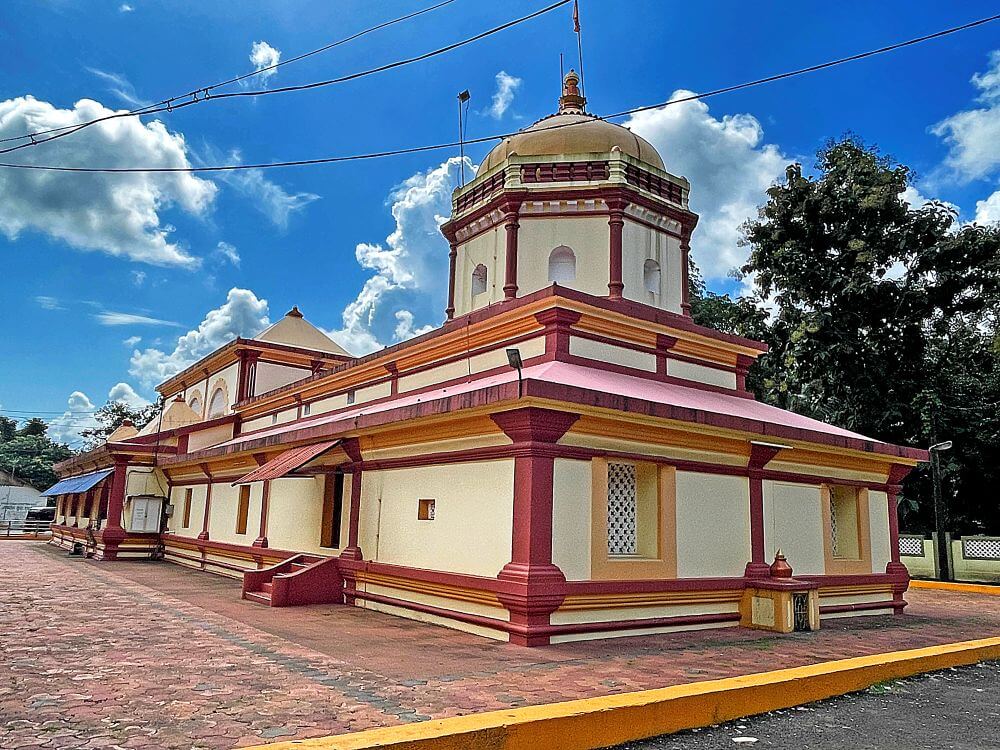
The temple of Sateri Devi is located in the central part of Vengurla city. In front of the east-facing temple, on a large and wide stone platform, stands a six-tiered lamp pillar (Deepstambh) and a Tulsi Vrindavan. The temple courtyard is paved, and there are benches provided for devotees to sit in various places. There is a path leading from the platform of the lamp pillar to the entrance of the temple, with four stone pillars on each side of this path. These pillars do not have any roof. The front two pillars support the main porch (Mukhamandap) of the temple. Beyond that, this two-storied temple is structured with a main hall (Sabhamandap), an inner sanctum (Antaral), and the sanctum sanctorum (Garbhagriha). After passing through the porch, one enters the main hall through an arch-like entrance.
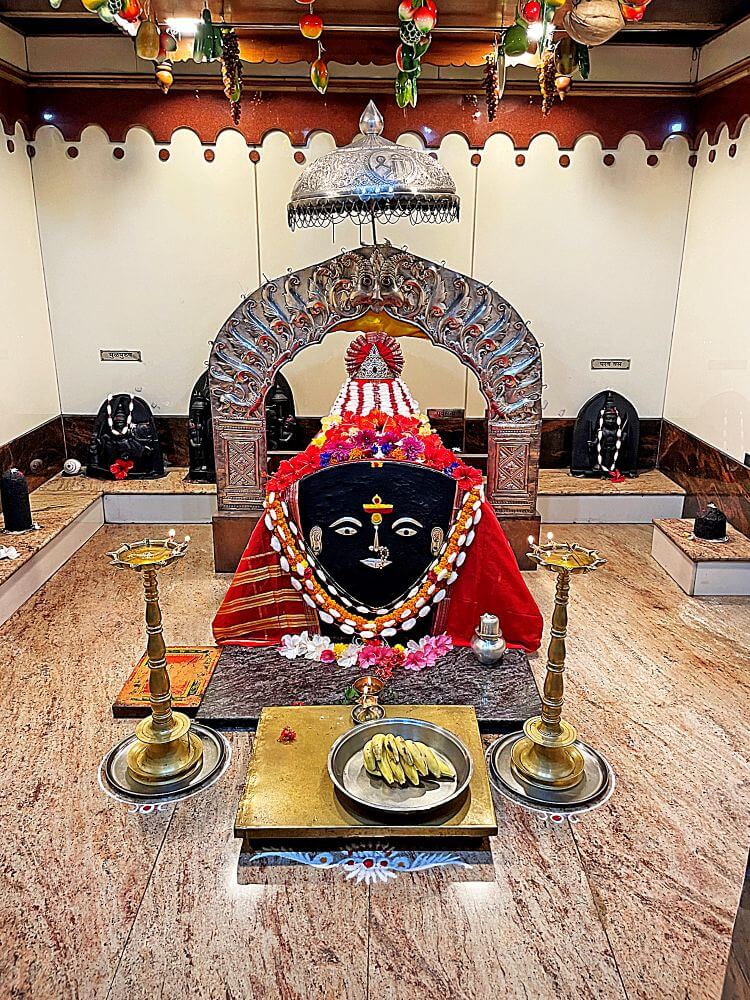
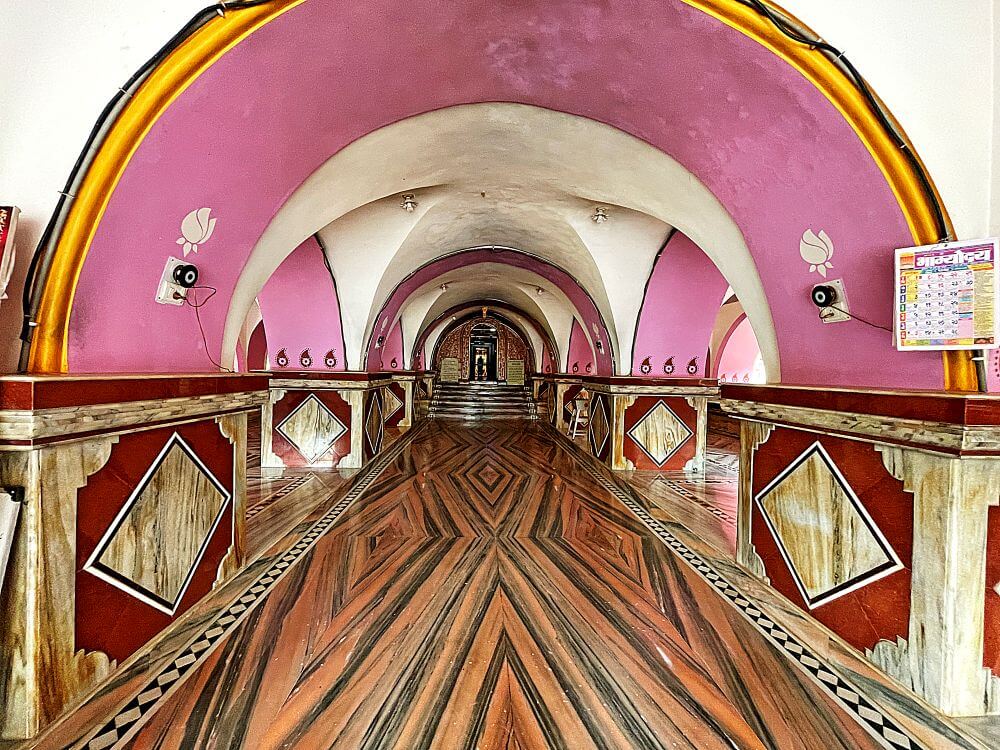
The main hall here is semi-open, with stone seating (Kakshasan) on both sides. The pillars on these seats are connected to each other with arch-like craftsmanship. The porch and the main hall have marble flooring. The inner sanctum and the sanctum sanctorum are at a higher level than the main hall. One enters the inner sanctum by climbing five steps from the main hall. There is beautiful carving around the door frame of the arched entrance of the inner sanctum. ‘Tarang Devtas’ (processional deities) are kept in this area. It is a tradition in Konkan to keep Tarang Devtas in every temple. In some places, there are three, five, or seven such deities. This temple houses three Tarang Devtas: Shri Ravalnath, Shri Pavanai, and Shri Bhutnath. Here, there is also a large silver palanquin of the Goddess with exquisite carvings. Leaving a circumambulation path (Pradakshina Marg) in the inner sanctum, the sanctum sanctorum is located. In the center of this sanctum sanctorum is the jet-black, mask-like idol (Tandala) of Sateri Devi. On this mask, there are silver eyes, a well-defined silver nose, a pearl nose ring, a silver canopy over the head, and a beautifully carved halo (Prabhaval) at the back. There is a small silver crown on the Goddess’s head. This idol of the Goddess is changed every three to four years, and a new consecration (Pranapratishthapana) is performed. In the local language, this is called ‘Malepan’. Behind this idol, the nine planets (Navagrahas) are established. On the circumambulation path, there are some stones which are referred to as the family deities (Parivardevata).
There are six spires (Shikharas) on the main hall of this temple. Apart from this, there is a large dome-shaped spire over the sanctum sanctorum, surrounded by sub-spires. Every evening between six and seven, the ‘Naubat’ (traditional drums) is played at the temple entrance. These musicians are Muslims. This tradition has been going on here for hundreds of years.
Every year on the day of Gudi Padwa, a grand festival is celebrated in the temple. On this occasion, a procession of the Goddess is taken out in a silver palanquin. The sacred poles (Tarangkathya) of the deities are worshipped and danced. Between 7 and 8 in the evening, thousands of oil lamps are lit in and around the temple. Thousands of devotees and citizens of Vengurla city are present here to witness this scene. Apart from this, Ghatasthapana is performed here on the first day of the bright fortnight of Ashwin. At this time, for nine days, the Goddess is worshipped in nine different forms with daily floral offerings and decorations. For the convenience of devotees, a Bhakta Niwas (pilgrim accommodation) has been made available by the temple trust.
Apart from this temple of Sateri Devi, Vengurla has long been famous as an important port. According to historical records, the Dutch established this port in the year १६३८ under the name ‘Fingurla’. At that time, the Dutch had a large colony here. Trade was conducted through this port with Bengal, Surat, Japan, Iraq, Iran, and many other countries. In the year १६७५, the Mughals set fire to this port and the entire surrounding area to take control, but they could not gain possession of this region. Thereafter, in the year १६९६, this area went under the control of the Sawant dynasty of Sawantwadi. In the year १८१२, this port and the surrounding area passed from the Sawant dynasty to the British. During the British era, this port flourished. As mangoes, jackfruit, cashews, and coconuts were produced in large quantities in this region, it was a major market for these goods.
This sacred temple stands as a testament to deep spiritual devotion, ancient architectural grandeur, and rich local cultural traditions.
The sanctum sanctorum houses the divine idol consecrated according to ancient Vedic traditions, surrounded by serene courtyards and traditional temple architecture.
Navratri, Maha Shivratri, Annual Temple Jatra & Deepotsav
Compare and book flights, secure top-rated local hotels near the temple, hire reliable guides, and rent cars instantly.
Extend your pilgrimage by visiting other highly sacred temples located nearby.


Add ₹999 more to unlock FREE SHIPPING!
Your sacred cart is currently empty.
Shop Photo FramesFill in your delivery details below to place your order.
Add comment