
Add ₹999 more to unlock FREE SHIPPING!
Your sacred cart is currently empty.
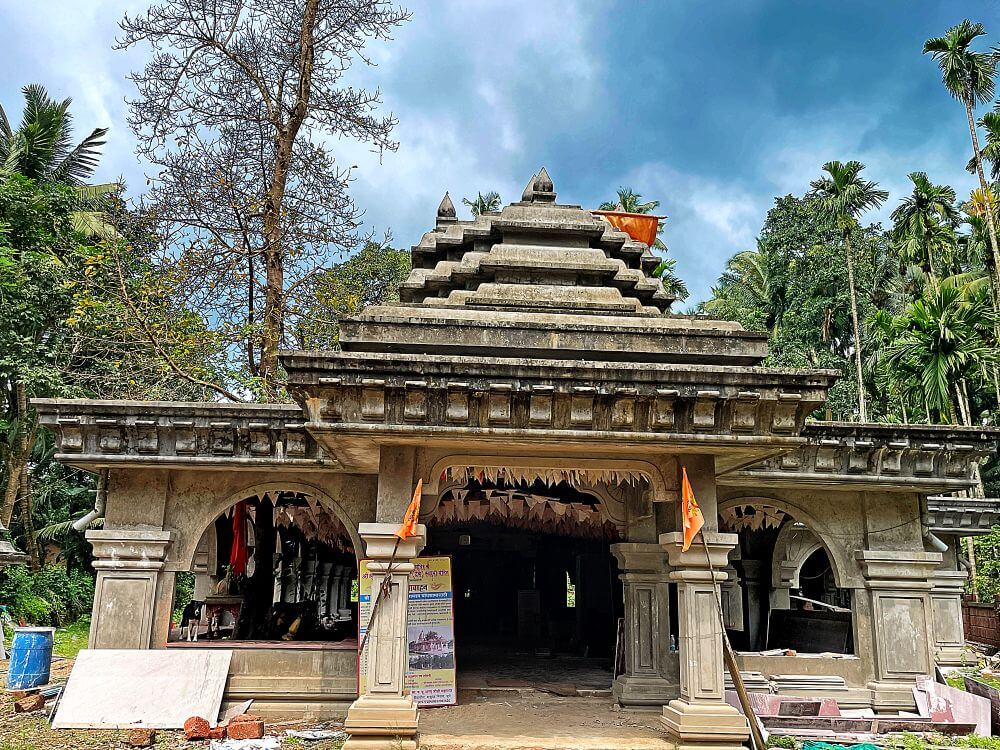
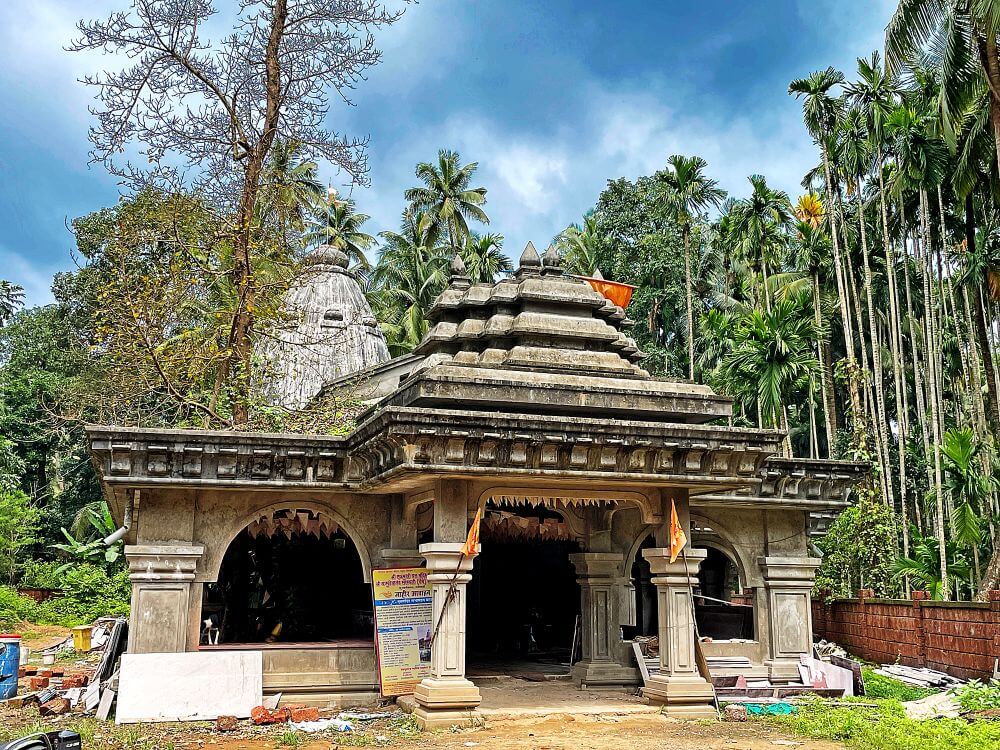
Shop Photo FramesAccording to the Puranas, Sripada Srivallabha is considered the first avatar of Lord Dattatreya, and Narasimha Saraswati is the second avatar. Following them, revered spiritual personalities like Janardana Swami, Eknath, Dasopant, Mukteshwar, Niranjan Raghunath, Manik Prabhu, and Swami Samarth of Akkalkot carried forward the tradition of the Datta Sampradaya. Vasudevanand Saraswati Tembye Swami is prominent in this holy lineage. Sanctified by the sacred presence of Tembye Swami, the Ekmukhi Datta Temple and Tembye Swami Paduka Temple, located in the Sabniswada area of Sawantwadi town, are revered places of faith for countless devotees.
The legend of this temple states that a holy man named Naropant Ukidwe used to live here in earlier times. Once, he had a divine vision in a dream where two Brahmins were sitting inside a temple discussing something while Naropant stood outside. One of the Brahmins inside showed a paper to Naropant and said, ‘This is going to happen at this place, and this is the scriptural basis for it.’ At that moment, Naropant woke up, but he could not comprehend the meaning of the dream. Being spiritually inclined, Naropant gradually grew detached from worldly life during this period. He decided to build a small room near his house for meditation. While excavation work was underway for this, he found a square stone carved with two Padukas (holy footprints). After the construction was complete, Naropant built a mud pedestal in the room and placed the excavated Padukas upon it, along with a picture of Lord Datta behind them and a copy of the holy Guru Charitra in front. Seeing this scene, he recalled his dream vision, for it was the exact same sight he had witnessed in his dream.
On Vaishakha Shuddha Panchami in 1883 CE, Tembye Swami established a Datta Temple at Mangaon in Kudal taluka. Naropant, who had been a disciple of Tembye Swami even before this, used to visit there frequently. One day, when a family member went to open the door of Naropant’s temple, he saw holy Padukas carved in marble on the threshold of the temple. Just as he was about to call Naropant to show him the Padukas, a guest who was sleeping in their house woke up, came towards the temple, and said that he had just had a dream. In the dream, Mangaon’s Maharaj (Tembye Swami) had come there and left after saying, ‘Nana has built a temple, I am leaving these Padukas here.’ Unable to comprehend this deep divine mystery, Naropant took the Padukas and went to Mangaon to meet Tembye Swami, narrating the incident and the guest’s dream. To this, Swami replied, ‘The divine plays (Leelas) of God are unfathomable; how can a human understand them? Loving devotion and worship is the true reverence.’
After this, Naropant felt that there should be an idol of Lord Datta in the temple. He had a Panchadhatu (five-metal alloy) idol of Lord Datta crafted. He went to Mangaon again to show it to Swami; however, Swami merely said that the time was not yet right to worship this idol, and he would inform him when divine command was received. Therefore, Naropant left the idol with Tembye Swami and returned to Sawantwadi. The idol remained with Tembye Swami for six months. Later, upon receiving divine command, the ritualistic Prana Pratishtha (consecration) of the Ekmukhi (single-faced) Datta idol was performed here in 1884 CE. It is said that an Audumbar (sacred fig) tree took root naturally in front of this temple. A platform (Paar) was built around it, and the black stone Padukas found during excavation were placed there.
The Audumbar tree holds a position of great significance in the Datta Sampradaya. Audumbar refers to the wild fig tree. It is believed that wherever this tree stands, Lord Dattatreya resides there. The mythological legend regarding this tree states that during the Narasimha incarnation, Lord Vishnu slew King Hiranyakashipu by tearing open his belly. Afterwards, the poison from Hiranyakashipu’s stomach caused a burning sensation in Narasimha’s claws. Mother Lakshmi then suggested piercing the claws into the fruit of the Audumbar tree. This remedy soothed the burning sensation. Lord Vishnu then blessed the Audumbar tree, granting a boon that it would bear fruit perpetually and be known as a Kalpavriksha (wish-fulfilling tree). According to another legend, the wooden pillar from which Lord Narasimha manifested to slay Hiranyakashipu eventually sprouted leaves and transformed into the Audumbar tree. Narasimha Saraswati, an incarnation of Lord Datta, used to sit under an Audumbar tree to chant and meditate upon the Narasimha Mantra. Near the Datta Temple in Mangaon as well, there are two such Audumbar trees.
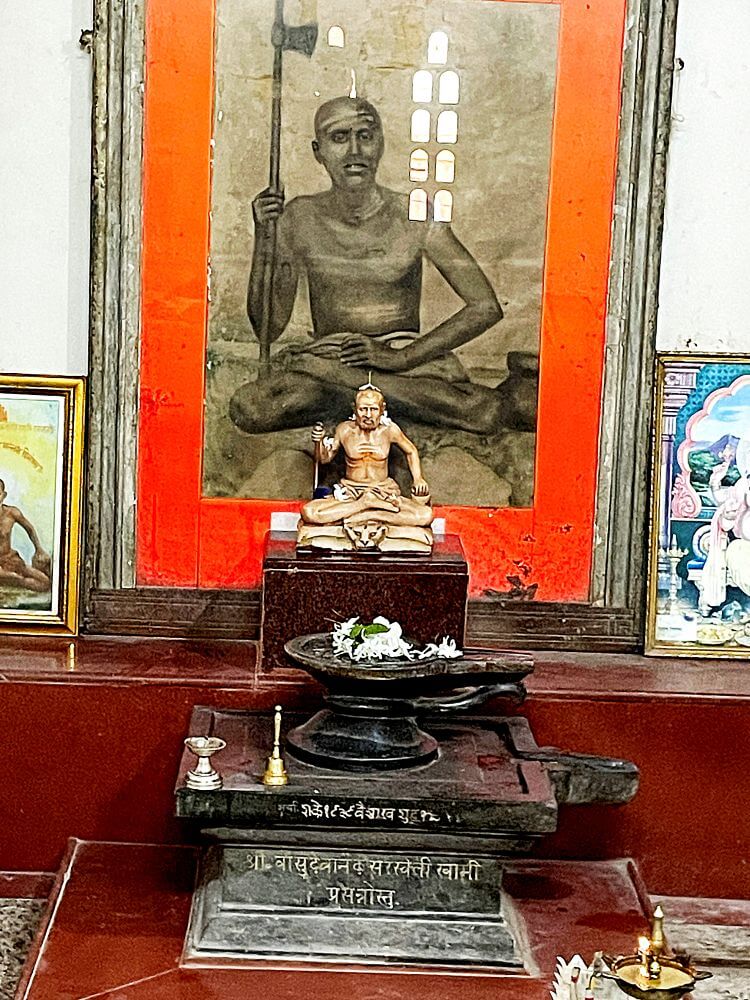
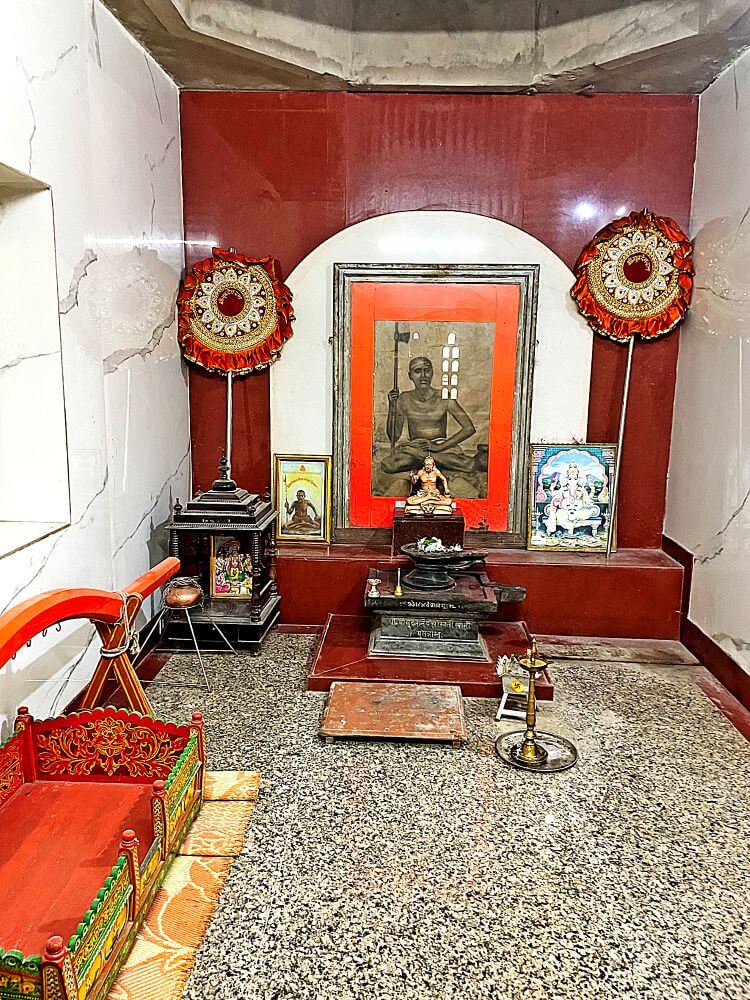
Following the Mahanirvana (passing away) of Tembye Swami in 1914 CE, Naropant could not bear the pangs of separation from him. At that time, he had a divine vision of Padukas, sensing the divine presence of Tembye Swami within them. As guided in the vision, he got Padukas crafted in Mumbai and brought them, establishing the Tembye Swami Paduka Temple here on Vaishakha Shuddha Dwadashi, Shalivahana Shaka 1838 (1916 CE). During his stay in Sawantwadi, Tembye Swami resided in a room behind this temple; this room remains intact to this day and is smeared daily with cow dung in the traditional manner.
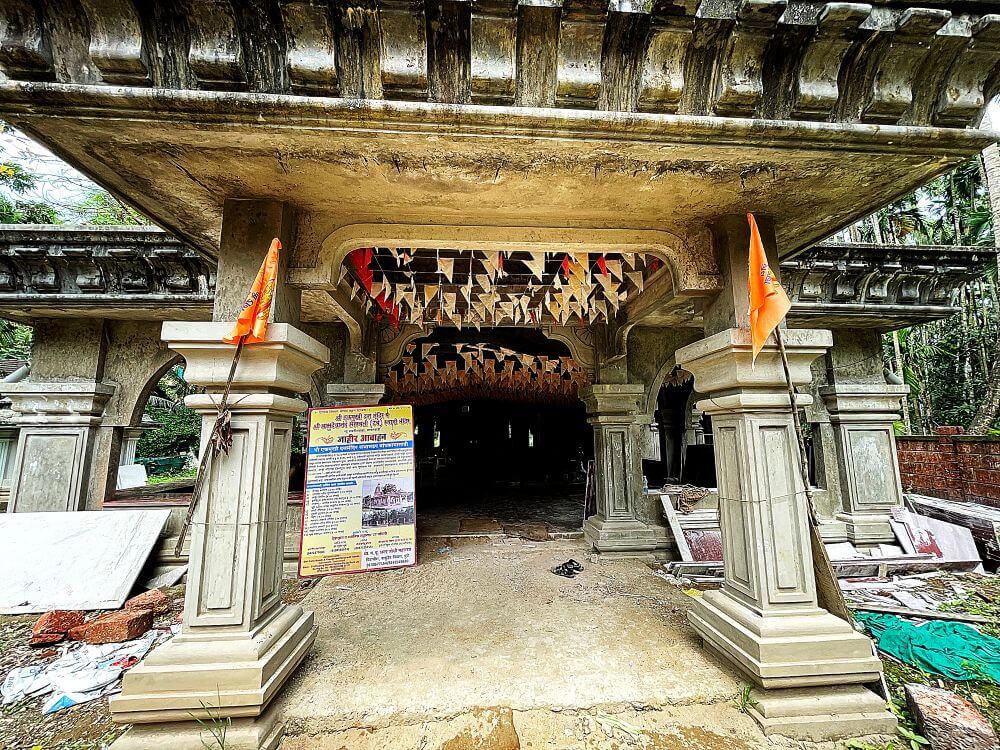
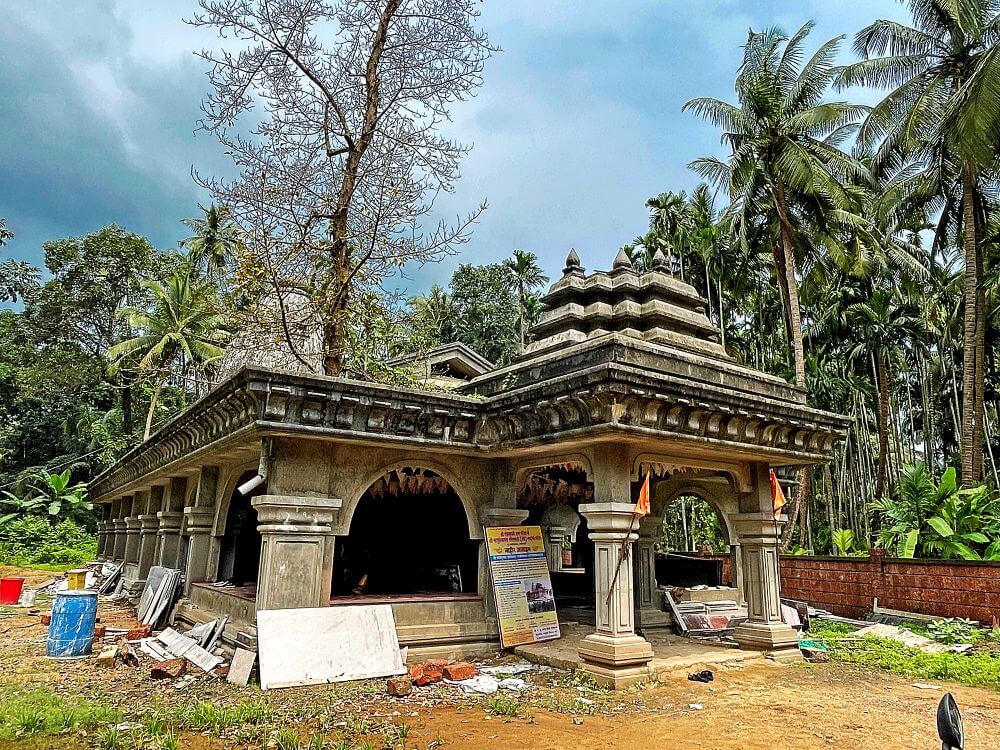
Located in a congested area of the town, pathways between buildings on both sides lead to this temple. The temple architecture consists of a Mukhamandapa (entrance porch), Sabhamandapa (assembly hall), and Garbhagriha (sanctum sanctorum). The Mukhamandapa and the Garbhagriha feature Shikharas (spires) above them. The Mukhamandapa is open-style, while the Sabhamandapa is semi-open. Built along the sides of the Sabhamandapa are stone seating ledges (Kakshasanas) for devotees. This Sabhamandapa and Mukhamandapa were constructed at a later period. Consequently, the Audumbar tree that originally stood in front of the main temple is now inside the Sabhamandapa. Beyond the Sabhamandapa, leaving space for the Pradakshina Marga (circumambulation path), lies the Garbhagriha. The entrance door of this Garbhagriha is made of wood, featuring intricate carvings on its frame. Inside the Garbhagriha, on a Vajrapeetha (sacred pedestal), stands a single-faced (Ekmukhi) idol of Lord Datta, with a picture of Naropant placed behind it. The reason for having a single-faced Datta idol here is that in scripture and ancient epics like the Mahabharata, Lord Dattatreya is described as single-faced (Ekmukhi) rather than three-faced (Trimukhi). All the holy saints who drew inspiration for Datta devotion from Narasoba Wadi worshipped the Ekmukhi Datta. Vasudevanand Saraswati Tembye Maharaj also propagated the worship of the single-faced, two-armed (Ekmukhi Dvibhuja) idol of Lord Datta. It is said that the worship of three-faced Dattatreya began along with single-faced Dattatreya after the fifteenth century.
The festival of Datta Jayanti is celebrated with great joy and enthusiasm at this temple. Vaishakha Shuddha Dwadashi marks the foundation day of the Tembye Swami Paduka Temple. On this occasion, various religious rituals and spiritual programs are organized from 6:00 AM until 8:00 AM the following morning. Every evening at 7:00 PM, Aarti is performed at the temple.
This sacred temple stands as a testament to deep spiritual devotion, ancient architectural grandeur, and rich local cultural traditions.
The sanctum sanctorum houses the divine idol consecrated according to ancient Vedic traditions, surrounded by serene courtyards and traditional temple architecture.
Navratri, Maha Shivratri, Annual Temple Jatra & Deepotsav
Compare and book flights, secure top-rated local hotels near the temple, hire reliable guides, and rent cars instantly.
Extend your pilgrimage by visiting other highly sacred temples located nearby.


Add ₹999 more to unlock FREE SHIPPING!
Your sacred cart is currently empty.
Shop Photo FramesFill in your delivery details below to place your order.
Add comment