
Add ₹999 more to unlock FREE SHIPPING!
Your sacred cart is currently empty.
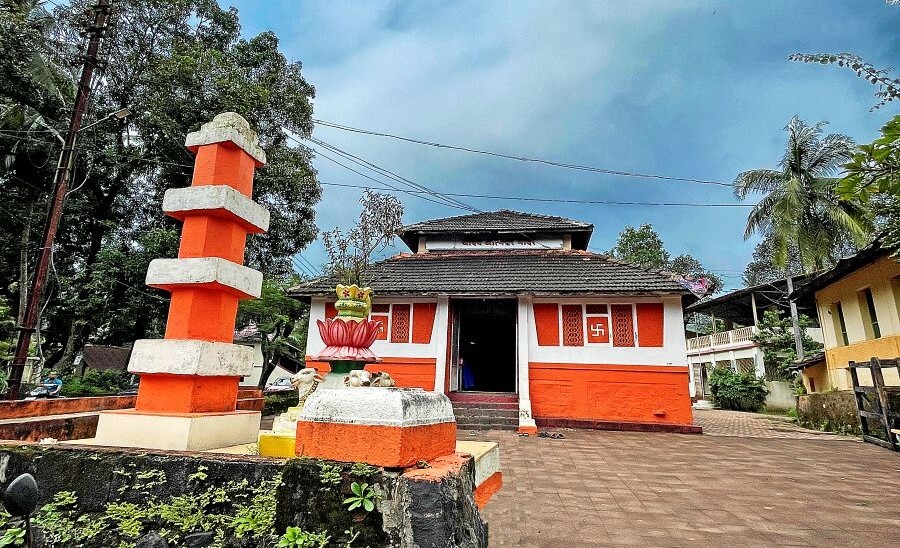
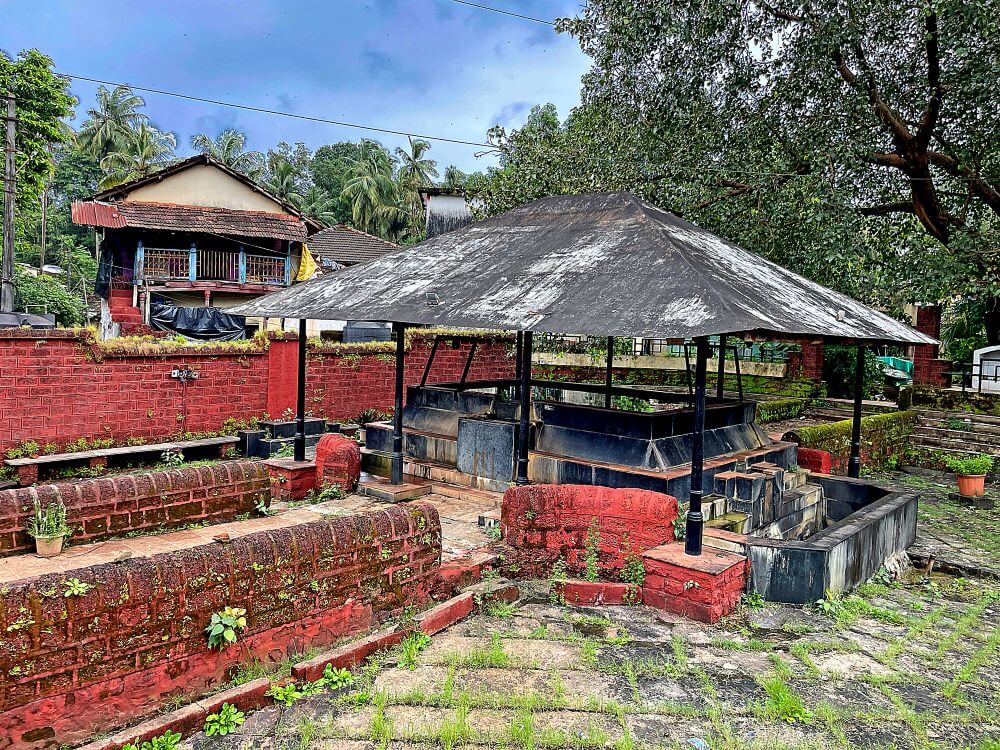
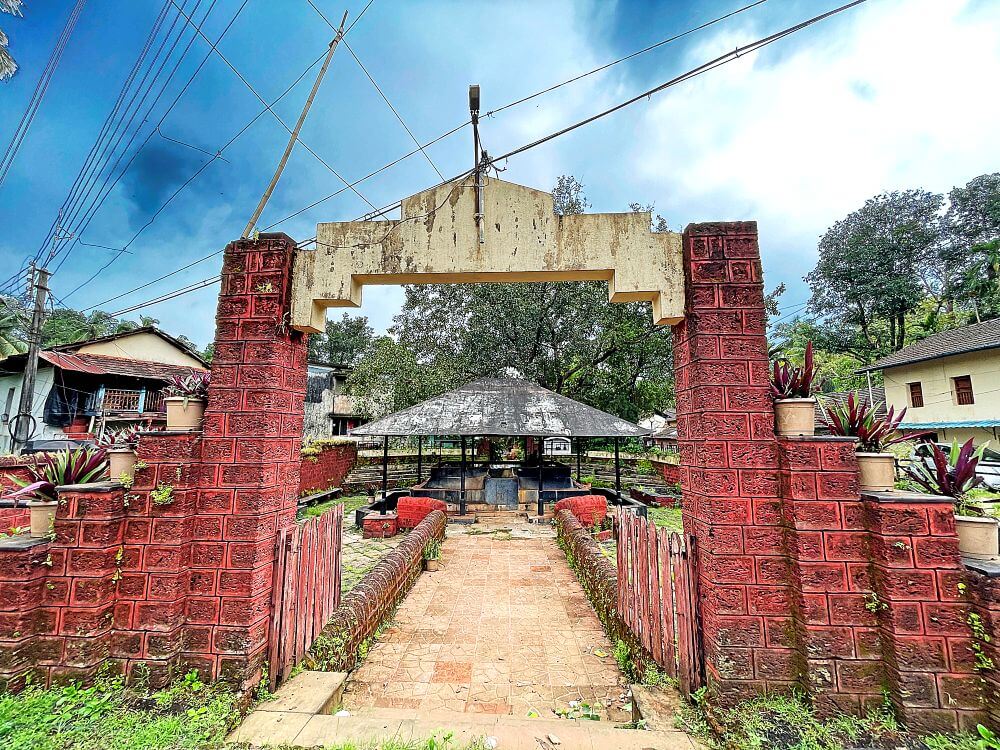
Shop Photo FramesLocated in the central part of Sawantwadi town in the Mathewada area, the Bhavani Shankar Atmeshwar Temple is a sacred place of deep devotion for numerous devotees here. Over 200 years old, the unique feature of this temple is that its sanctum sanctorum houses two Shivlingas, named ‘Atmeshwar’ and ‘Praneshwar’. Apart from this, the Atmeshwar Tank located in front of the temple is another distinct feature. Raised above ground level, this pond-like sacred tank (Kund) holds water throughout all twelve months. The State Government has also declared the Atmeshwar Temple and Atmeshwar Tank as pilgrimage tourism sites.
The legend of this temple states that a holy saint of the Samarth Sampradaya, Atmaram Buwa Ramdasi, was returning from his pilgrimage to Kashi. At that time, he had brought a Shivling with him to consecrate in Sawantwadi. Later, while staying at Valavali village on the way, he received a divine vision from Lord Shiva in his dream at night, saying, “I am at the house of a merchant. My body is burning due to the chili spices. So, take me from there and conduct my worship and rituals.” At the same time, the merchant in Konkan also received a divine revelation: “A person will come to you; hand me over to him.” As guided by the dream, Atmaram Buwa Ramdasi went to the merchant’s home. There, he saw a stone used for grinding spices. The stone was shaped like a Shivling, exactly as revealed in the dream. He requested the merchant for it. Since the merchant too had been blessed with the vision, he welcomed the saint with warm hospitality and handed over this stone in the form of a Shivling to him.
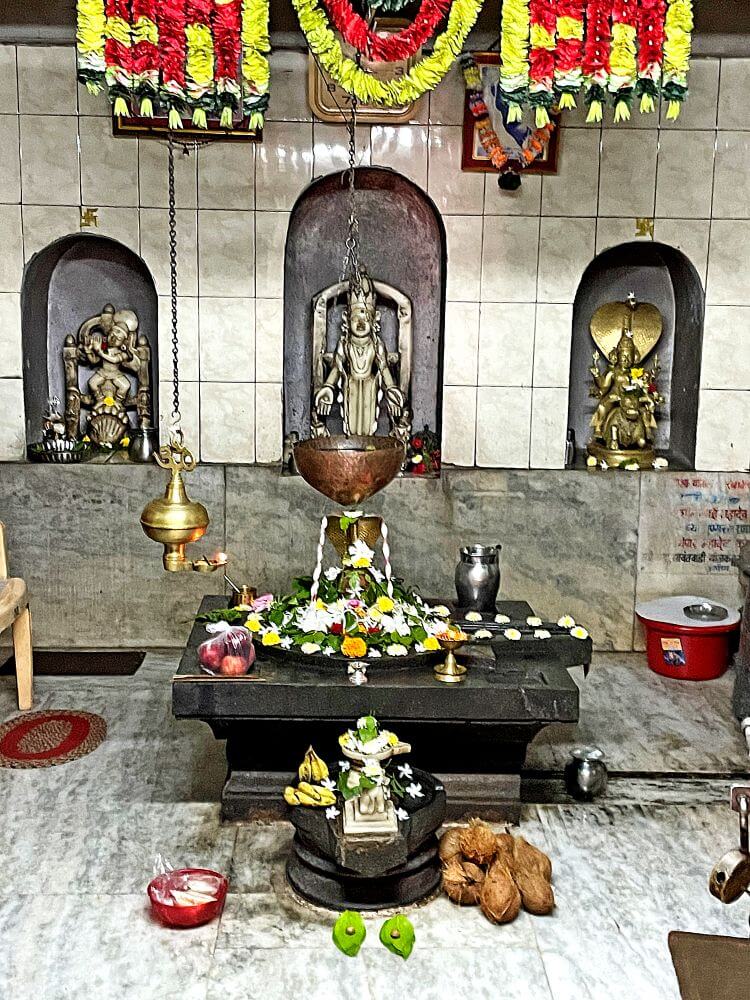
Subsequently, Atmaram Buwa Ramdasi approached the then ruler of the Sawantwadi Princely State, narrated the divine vision he received, and requested a suitable piece of land for consecrating this holy stone Shivling. The king granted the land near a pond (Atmeshwar Tank) in the Mathewada area to Atmaram Buwa Ramdasi for constructing the temple. Establishing the temple here, Atmaram Buwa consecrated this sacred Shivling stone. Simultaneously, he also consecrated the crystal Shivling brought from Kashi in front of it. Since then, the sanctum sanctorum of this temple houses two Shivlingas. The temple later became famous after the name of Atmaram Buwa and came to be known as the Atmeshwar Temple. The second Shivling came to be known as Praneshwar.
According to historical records, there were formerly 599 princely states in the country, out of which about 35 were Maratha princely states. Sawantwadi State was considered one of the important princely states among them. This princely state has a rich history spanning over 400 years. The first ruler of this state, Khem Sawant I, was a brave warrior. Through valor and strategic wisdom, he brought a large surrounding region under his rule, made Sawantwadi the capital, and built a palace on Narendra Hill. Khem Sawant II founded Sundarwadi (Charathe), which is present-day Sawantwadi city, and constructed a palace here. His reign lasted from 1697 to 1709 CE. After his passing, his brother’s son, Phond Sawant II (alias Annasaheb), ascended the throne. Rajashri Khem Sawant III was renowned as a patron of learning and a benevolent king. His reign spanned from 1755 to 1803 CE. He granted lands and monetary donations to numerous temples and shrines. Many of the traditional royal grants (Inams) still active in this region date back to his era. In 1799 CE, he established the Deva Atmeshwar Devasthan.
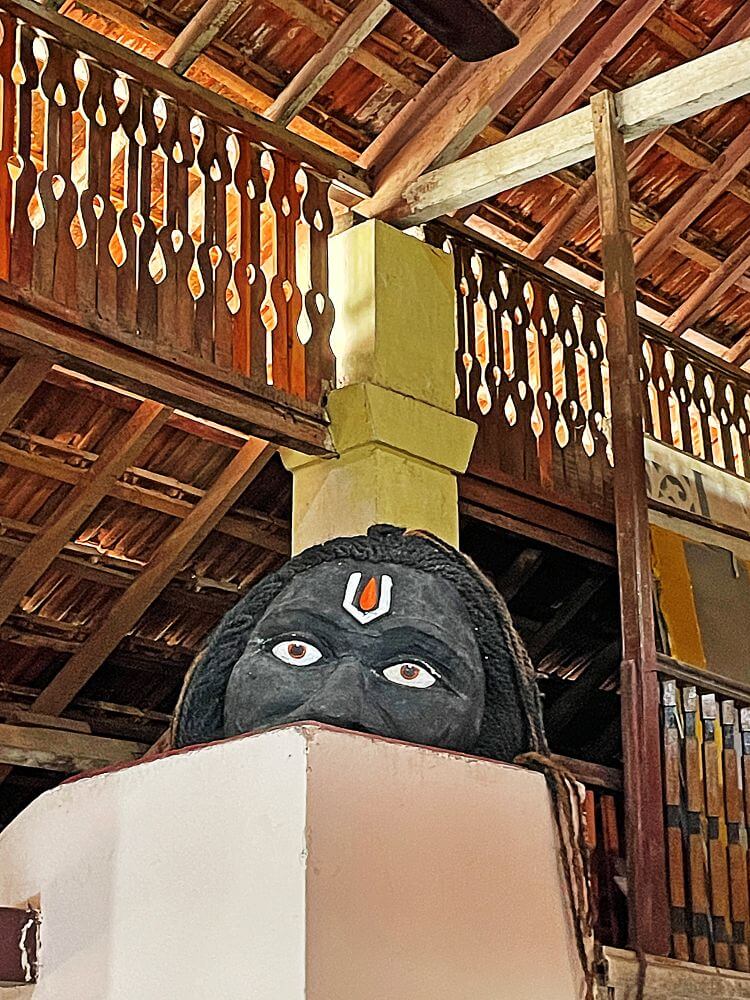
The Atmeshwar Temple is a fine example of traditional Konkani architecture. The temple structure consists of a Sabhamandap (assembly hall), an Upmandap (intermediate hall), and the Garbhagriha (sanctum sanctorum). In front of the temple, on a raised platform, stand a Deepastambha (lamp tower) and a Tulsi Vrindavan. This Tulsi Vrindavan is designed such that its weight is supported by four seated Nandi figures below. Built on a sturdy stone plinth, five steps lead from the ground into the temple. These steps lead into the Sabhamandap of the temple. The Sabhamandap here is an enclosed structure with seating ledges (Kakshasanas) around all sides for devotees to sit. To ensure adequate light and ventilation, there are several latticed windows (Gavakshas) in the walls above the seating ledges. In true Konkani architectural style, two rows of square pillars run through the center of the Sabhamandap. The floor between these rows is a few inches lower. Paved with red tiles, it gives the illusion of a red carpet spread out. This two-storied Sabhamandap features a wooden balcony above, topped with a sloping double-pitched tiled roof.
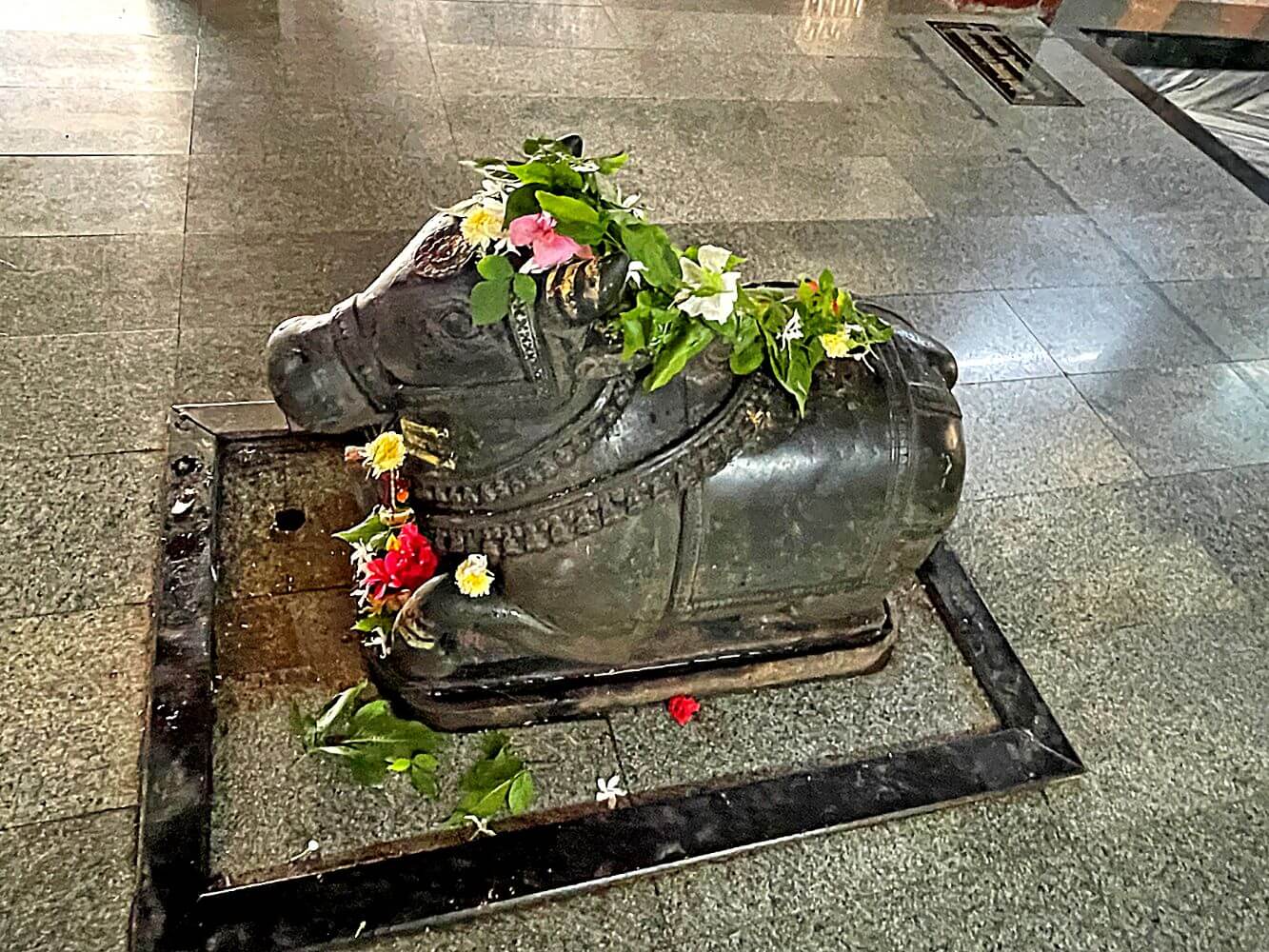
Slightly elevated from the Sabhamandap lies the Upmandap. Like the main assembly hall, this hall is also enclosed and supported by several pillars at the center. At the center of this hall stands a sacred idol of Nandi carved from black stone. Beyond the hall, leaving space for a circumambulation path (Pradakshina Marga), is the sanctum sanctorum. In the niches of the front wall of the sanctum sanctorum, idols of Lord Ganesha on one side and Mother Parvati on the other are enshrined. Inside the sanctum sanctorum, a large black stone Shivling (Atmeshwar) rests upon a Vajrapitha (sacred pedestal). Right in front of it lies a small crystal Shivling (Praneshwar).
In front of the temple lies a pond-like sacred tank, renowned as the Atmeshwar Tank. According to local legend, once during midday, King Rajashri Khem Sawant III of Sawantwadi State arrived in this area along with his soldiers, feeling extremely parched with thirst. At this very spot, a devout devotee of Shiva, Damodar Bharati Maharaj, was seated in deep meditation upon a rock. Through intense penance, he had attained divine spiritual powers (Siddhis). Realizing the king’s thirst, the Maharaj struck the rock forcefully with his trident (Trishul). Instantly, a stream of water gushed forth from the rock. Ever since, the flow of water in this tank has remained continuous. This sacred tank in front of the temple never runs dry. Over time, a ten-foot-high wall was constructed around all four sides of this Kund. A unique feature of this Kund is that despite being above ground level, it remains full and overflowing. Water is present in this tank throughout the year. Devotees hold a firm belief that this water is as sacred as the Holy Ganga, and taking a bath in it cures skin afflictions.
This sacred temple stands as a testament to deep spiritual devotion, ancient architectural grandeur, and rich local cultural traditions.
The sanctum sanctorum houses the divine idol consecrated according to ancient Vedic traditions, surrounded by serene courtyards and traditional temple architecture.
Navratri, Maha Shivratri, Annual Temple Jatra & Deepotsav
Compare and book flights, secure top-rated local hotels near the temple, hire reliable guides, and rent cars instantly.
Extend your pilgrimage by visiting other highly sacred temples located nearby.


Add ₹999 more to unlock FREE SHIPPING!
Your sacred cart is currently empty.
Shop Photo FramesFill in your delivery details below to place your order.
Add comment