
Add ₹999 more to unlock FREE SHIPPING!
Your sacred cart is currently empty.
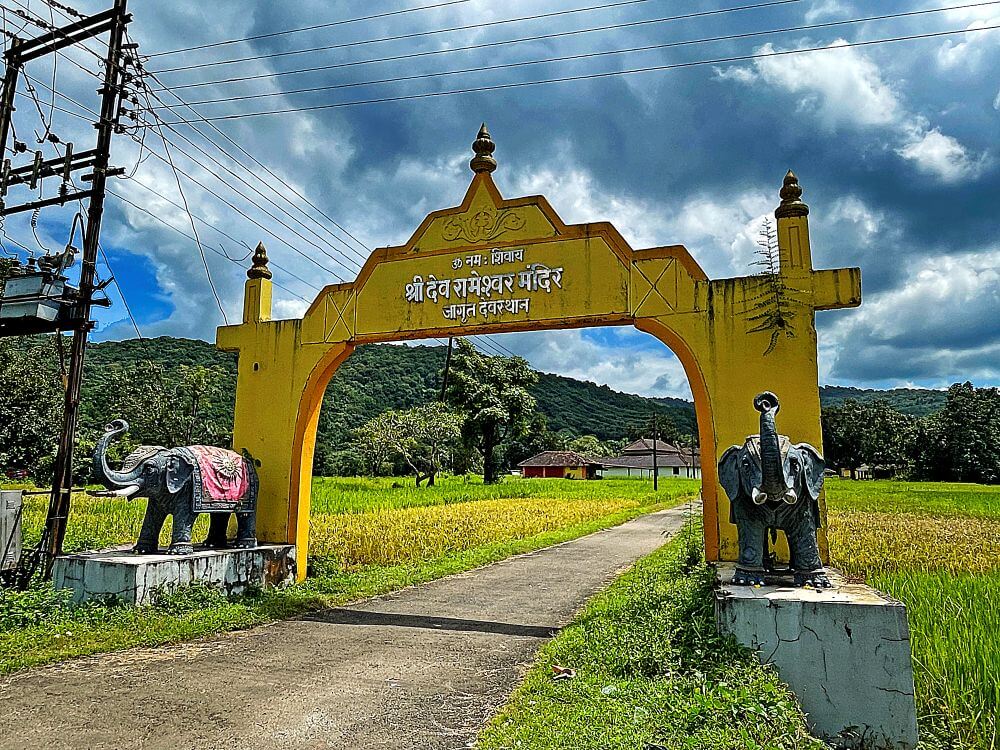
Shop Photo FramesAkeri is a village in the Konkan region that has followed a rule for generations: because the temple of their deity is made of stone, no one in the village uses stone for the construction of their homes. Rameshwar, the village deity, resides in this village on the road connecting Tembye Swami’s Mangaon and Sawantwadi. The ancient temple, built of black stone and wood, is the main attraction of this village. Experts estimate that this temple dates back to the fifteenth century. Along with the stone carvings and sculpted idols, the monolithic shayan-manchak (stone bed) here is a point of fascination for devotees and architectural scholars alike.
Rameshwar is a name for Lord Shiva. The mythological story behind this name is that since Ravana was a Brahmin, Lord Rama incurred the sin of Brahmahatya (killing a Brahmin). Sages advised Lord Rama to install and worship a Shiva Linga to cleanse himself of that sin. Then, Sita created a sand Linga on the seashore, which Lord Rama installed. That very Linga came to be known as Rameshwaram. The sages requested Lord Rama to explain the meaning of the name Rameshwar. At that time, Lord Rama said, ‘Ramasya Ishwarah sah yah Rameshwarah’, meaning he whose Lord is Rama is Rameshwar. Shiva-Shankar is my Lord. At that time, Shiva said that the meaning of the word Rameshwar is not that, but rather ‘Ramah Ishwaro yasya sah Rameshwarah’, meaning he whose Lord is Rama is Rameshwar. This story conveys that Hari and Hara are one and the same. Although this temple in Akeri belongs to the Shaiva sect, the presence of Vaishnava images here confirms this narrative.
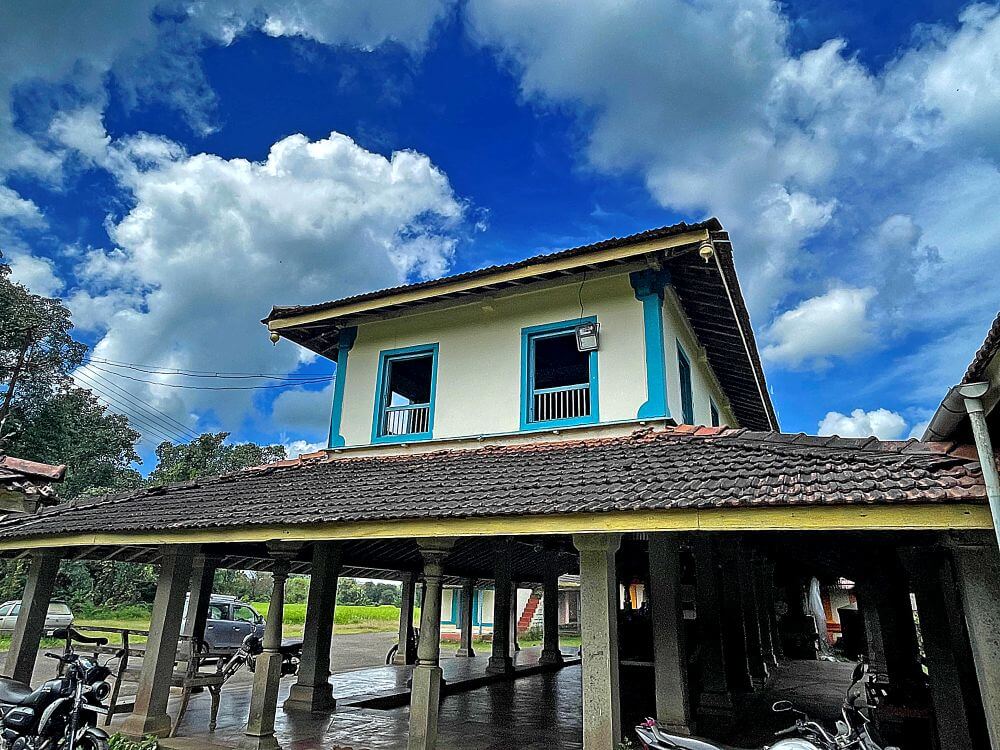
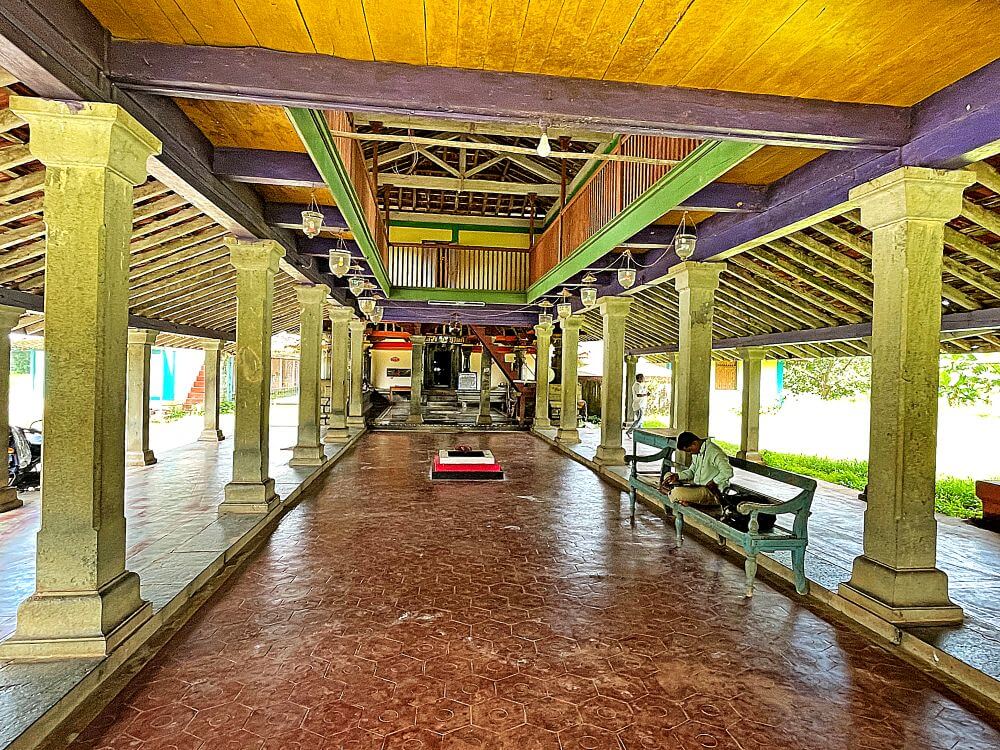
This ancient temple is situated on a spacious plateau, nestled in the lap of a hill, some distance outside the village. A fine example of architecture, this temple is built in the Konkan style. The structure of the temple consists of a main assembly hall (sabhamandap), a secondary assembly hall, an antarala (vestibule), and the sanctum sanctorum (garbhagriha). In front of the temple stands a recently erected, painted five-tiered lamp pillar (deepstambh). Both assembly halls of the temple are spacious. The main assembly hall is open, two-storied, and features a sloping tiled roof. The pillars here are simple, hewn, and square. There is not much ornamentation or carving in this hall, which suggests that this assembly hall was added to the temple at a later period.
Attached to the main assembly hall is a semi-open, ancient secondary assembly hall. This hall has stone benches (kakshasanas) on the left and right sides, which also serve as the base for the hall’s pillars. At the top of these round stone pillars are carved serpent images, topped with wooden brackets (tarang-hast). The wooden brackets in this temple are excellent examples of woodcraft. A unique feature of this hall is the stone shayan-manchak. This stone bed is carved from a single piece of stone. Smooth, yet simple and low-profile, such a bed is rarely seen in temples. A similar bed exists in the ancient Madhukeshwar Shiva temple in Banavasi, near Sirsi in Karnataka. This stone bed is kept in a room near the outer wall within the temple premises. It is 600 years old and has beautifully carved pillars at its four corners. It is said that King Raghu Naik of the Sonda dynasty of Karnataka gifted it to the temple. However, such a bed is rare in Maharashtra.
From the secondary assembly hall of the Rameshwar temple, one enters the antarala, which is at a slightly higher elevation. The entrance to the antarala is three-branched (trishakhiya). The two inner door frames are carved from a single piece of stone. At the base of these frames are sculptures of Garuda and Hanuman, while at the top, on the lintel, is a carved image of Ganesha. On both sides of this image are images of Riddhi and Siddhi. The antarala of the temple is enclosed and features wide, circular pillars. These pillars, standing on low, circular pedestals, have their upper sections decorated with pot-and-foliage (ghat-pallava) motifs. On these pillar capitals are carved wooden brackets. In the front part of the antarala, there is a stone idol of Nandi.
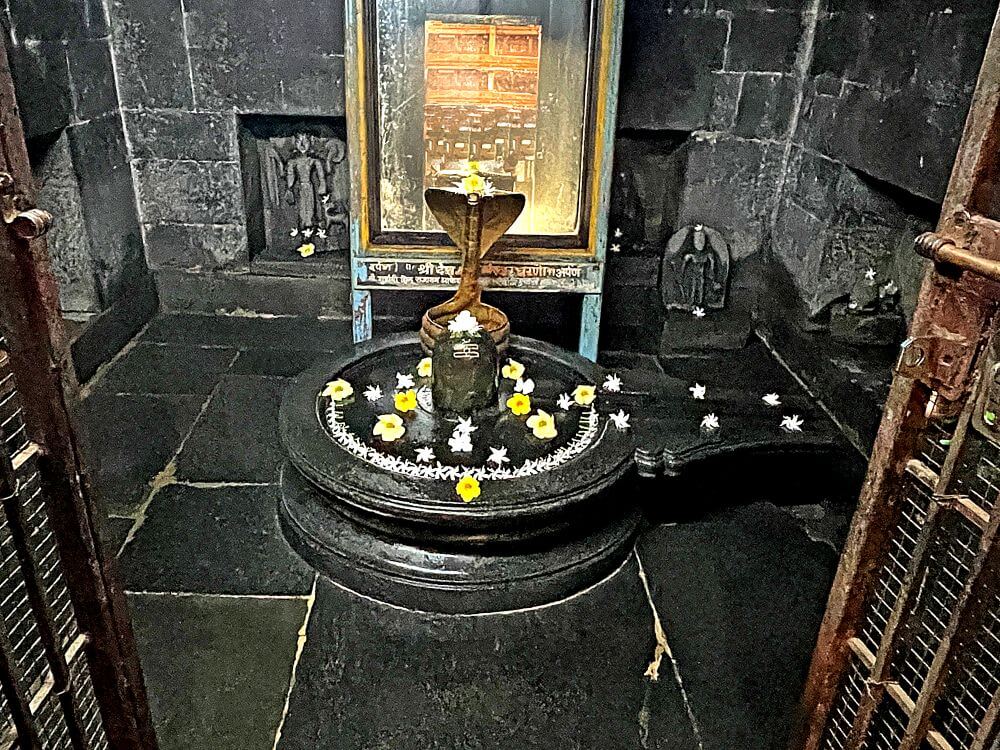
Upon entering the antarala, just like the pillars, the grand statues of the door guardians (dwarapalas) on the front wall of the sanctum sanctorum catch the eye. These tall statues are carved on both sides of the entrance to the sanctum. Notably, these are Vaishnava door guardians, holding a conch and a mace in their hands. The entrance to the sanctum is two-branched, and these branches feature beautiful carvings. On the lintel is a sculpture of Lord Vishnu in his Sheshashayi form. In this remarkable sculpture, Lord Vishnu holds a mace, conch, lotus, and discus; Lord Brahma is seated on a lotus emerging from Vishnu’s navel, Lakshmi is massaging Vishnu’s feet, Hanuman is on the left, and Garuda and Sheshnag are near Vishnu’s head on the right in a gesture of salutation. Above this front wall are the eight directional deities (Ashtadikpalas). These include the statues of Indra riding an elephant, Agni riding a ram, Yama riding a buffalo, Kubera riding a human, Varuna riding a crocodile, Vayu riding a deer, Nirriti riding a donkey, and Ishana riding a bull. In the center is the Kirtimukha. Many scholars visit this place specifically to see these sculptures. Inside the sanctum of the temple is a tall, circular Shiva Linga. Behind this stone Shiva Linga, in niches in the walls of the sanctum, are images of deities including Ganesha.
Every Monday in the month of Shravan, there is a steady stream of devotees from early morning at this temple. Festivals like Tripurari Purnima, Navratri, and Dussehra are celebrated here with great enthusiasm. After Navratri, on Dashami, a grand Shiva wedding ceremony is held here. Similarly, a major festival is organized here on Mahashivratri. During this two-day festival, a chariot procession of Rameshwar is taken out. Thousands of devotees participate in this festival. At night, a Dashavatar play is performed here. The chariot used for the festival was offered to the temple by the kings of the Sawantwadi princely state. This chariot is four-tiered and is also an excellent example of woodcraft. This colorful chariot is adorned with carved wooden horses, serpent images, and figures of various deities and guards. This chariot is otherwise kept covered in a shed here. Behind the temple, in a porch, is the deity’s palanquin. This palanquin features images of gods and goddesses painted in a distinct Maharashtrian style.
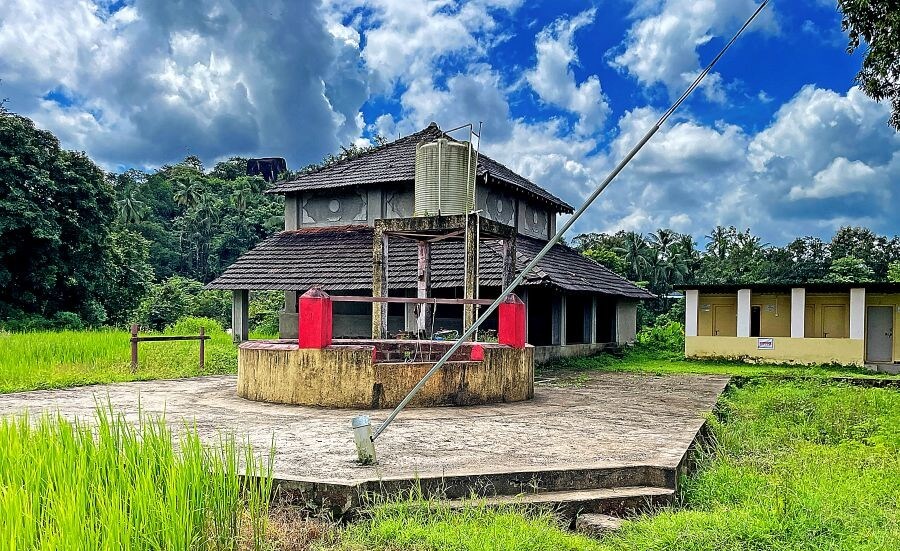
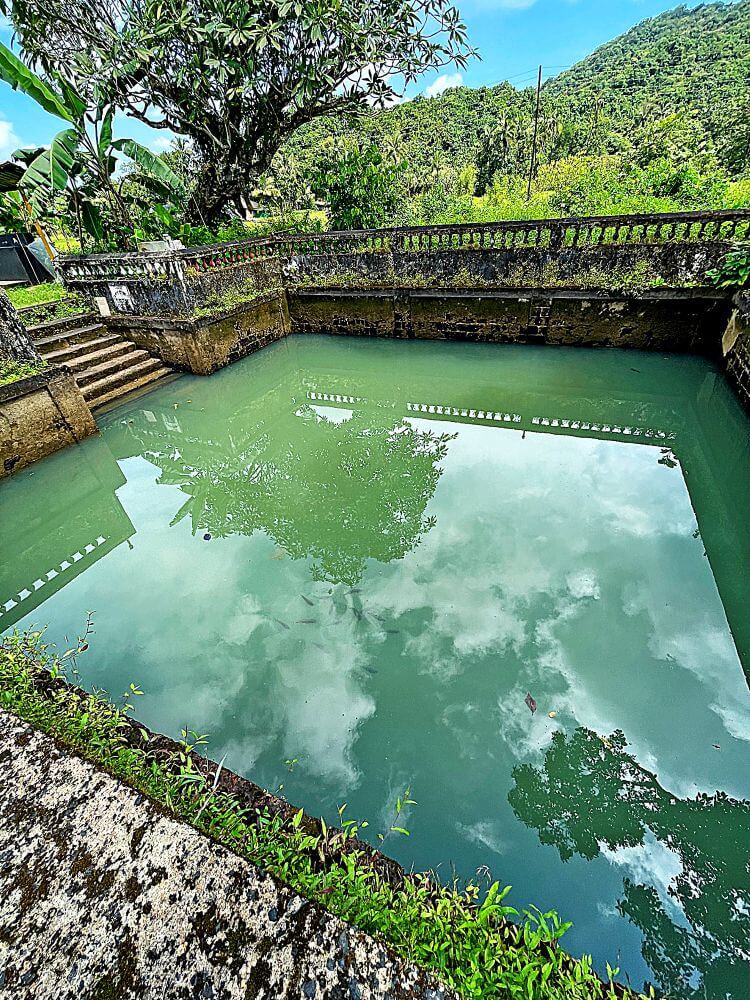
In the premises of the Rameshwar temple, there is also a temple of Rawalnath. There is an ancient stone Tulsi Vrindavan here. Outside the Rameshwar temple, there are some hero stones (virgal) and sati stones. One of these hero stones commemorates a hero who died in a tiger attack. A depiction of this is carved in the lower part, while the upper part features images of the moon and the sun. Right here, there is also a stone-built pond with railings and steps.
Akeri, a village blessed with abundant nature and a mystical charm, came into the limelight after the filming of the television series ‘Ratris Khel Chale’. Apart from government buildings, stone-constructed houses are rarely found here. Regarding this, a legend is told that the village elders, during the construction of the temple, gave their word to the Deity that no one should be greater than the Divine, and if the temple of the Deity is made of stone, then no one should build a house of stone. This vow is upheld to this day.
This sacred temple stands as a testament to deep spiritual devotion, ancient architectural grandeur, and rich local cultural traditions.
The sanctum sanctorum houses the divine idol consecrated according to ancient Vedic traditions, surrounded by serene courtyards and traditional temple architecture.
Navratri, Maha Shivratri, Annual Temple Jatra & Deepotsav
Compare and book flights, secure top-rated local hotels near the temple, hire reliable guides, and rent cars instantly.
Extend your pilgrimage by visiting other highly sacred temples located nearby.


Add ₹999 more to unlock FREE SHIPPING!
Your sacred cart is currently empty.
Shop Photo FramesFill in your delivery details below to place your order.
Add comment