
Add ₹999 more to unlock FREE SHIPPING!
Your sacred cart is currently empty.
Shop Photo FramesThe villages of Pendur and Varad in Malvan taluka are famous for their Vetaldev temples, which serve as the village deities. The Vetal temple in Pendur is renowned throughout the Konkan region for the Mand festival held every three years, while the Vetaldev temple in Varad is especially famous among devotees in Konkan for the offering of ganja and leather sandals. It is said that the ancient and heavy bell in the assembly hall of this temple often begins to ring suddenly at night. Because there are temples of various deities surrounding this temple in Varad, the area is known as a sacred grove (Devrai).
The legend of Vetal in Varad village states that many families from the cobbler community used to live here. Vetaldev requested sandals from them for himself; however, because no one provided the sandals to the deity on time, the deity declared that this community had no place in the village and had a horse crafted by the carpenter community. Since then, Vetaldev has been protecting the village while riding the horse. Because of this, the carpenter community holds a special place of honor during the temple processions. It is said that no matter where in the world the people of Varad village are, they do not use a horse or a horse-drawn carriage for travel, as these are the vehicles of their deity. Furthermore, not even a branch of a tree in this temple premises is ever cut.
Vetal is considered the lord of ghosts, spirits, and specters. He is an attendant (Gana) of Lord Shiva. He is also known by the names Agyavetal, Jwalavetal, and Pralayavetal. These names reflect his fierce attributes. According to the descriptions found in the Mahabharata, the Puranas, and folk literature, he is described as a giant with cruelty in his eyes. He consumes blood and flesh and is always armed. This Vetal is also described in the ‘Vikram and Vetal’ stories. In the first century CE, Gunadhya, a minister in the court of the Satavahana king of Pratishthana, wrote the great epic ‘Brihatkatha’ in the Paishachi language. In the eleventh century, Queen Suryavati of King Anantadeva of Kashmir commissioned the poet Somadevabhatta to write the ‘Kathasaritsagara’ in Sanskrit based on the ‘Brihatkatha’. This very ‘Kathasaritsagara’ contains twenty-five stories of Vikram and Vetal. According to the descriptions therein, Vetal resides in the cremation ground and dwells among corpses. In the Konkan, however, Vetal is considered a village protector deity, and it is the people’s belief that he roams the village at midnight carrying a staff in his hand and a woolen blanket (ghongadi) on his shoulder.
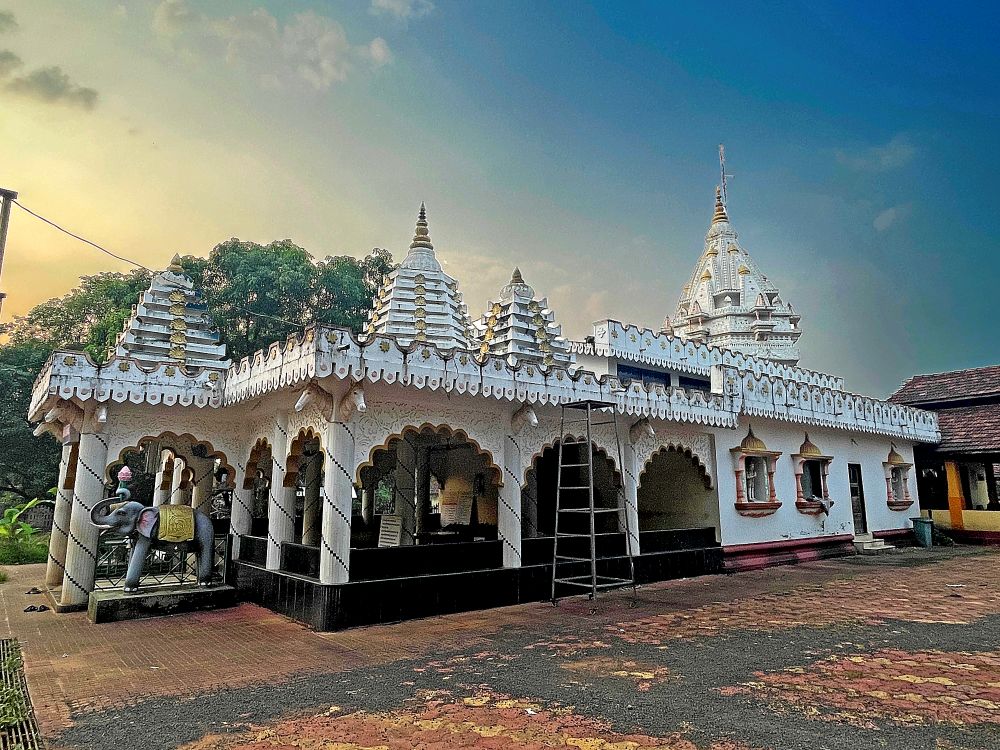
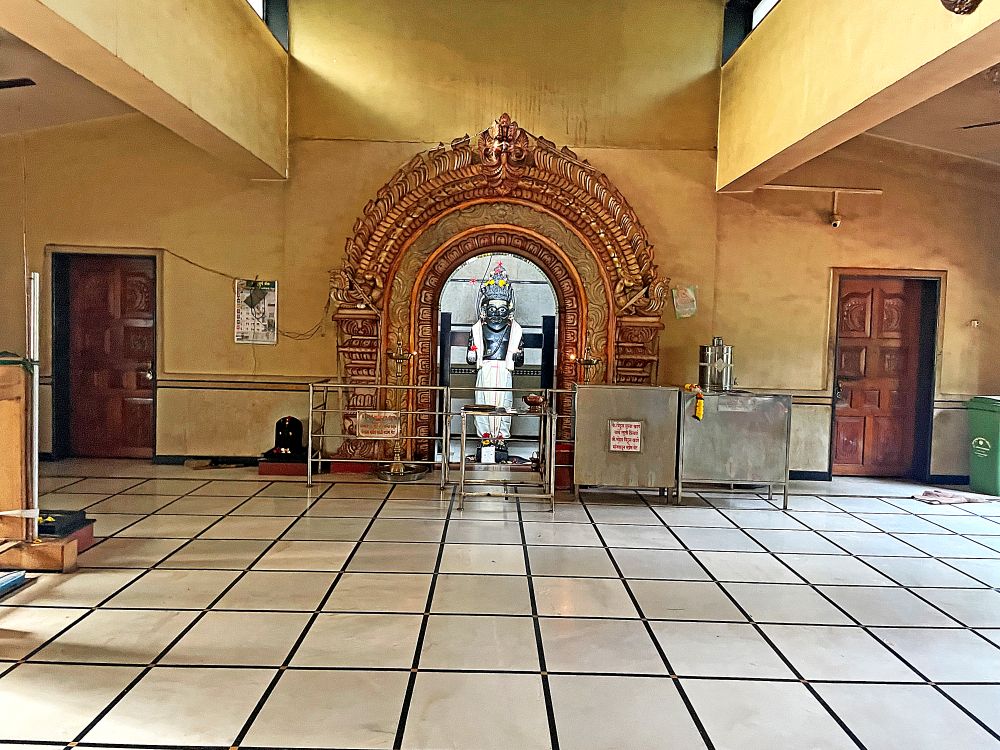
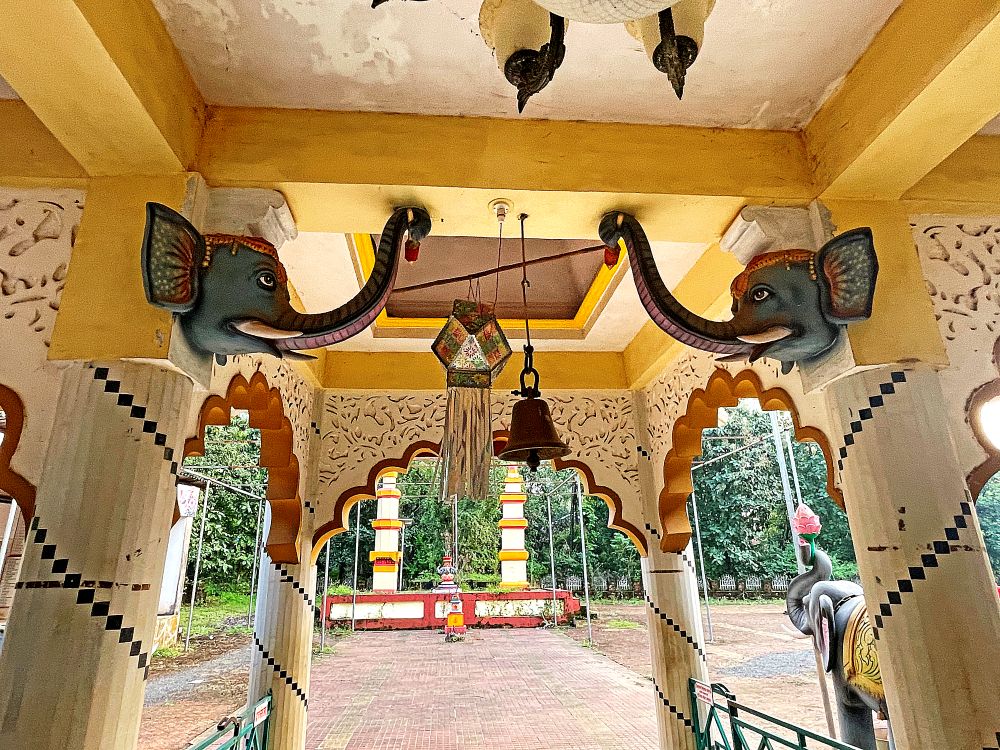
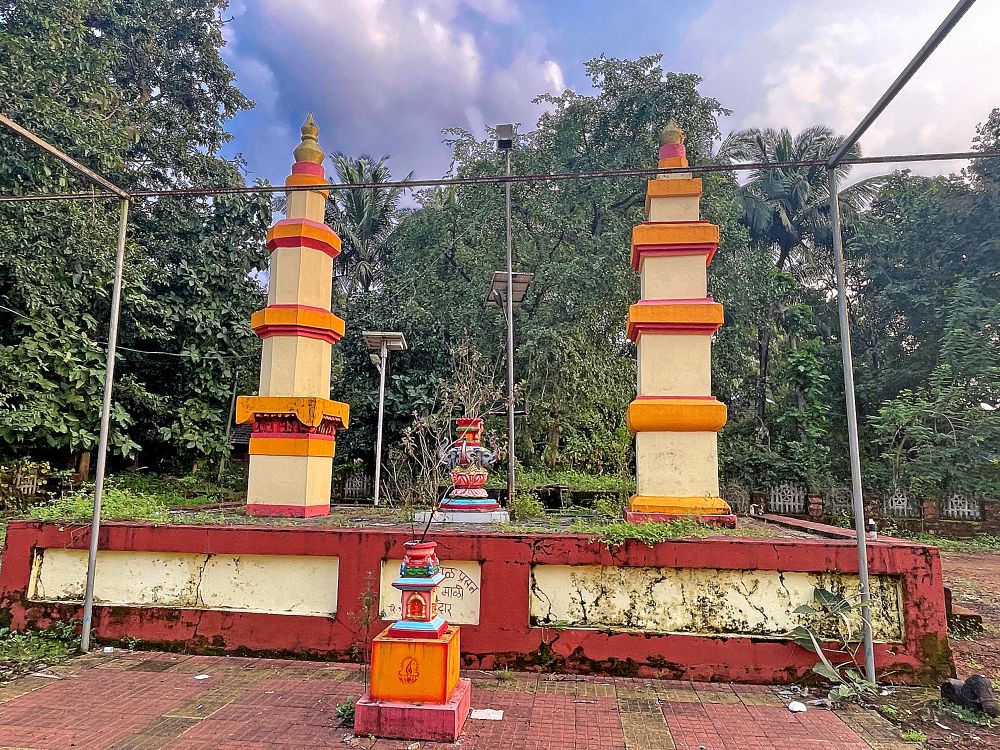
After entering through a large gateway in the sacred grove area, one sees the grand south-facing temple of Vetaldev. In front of the temple, on a high rectangular platform, are two lamp pillars (Deepastambhas) and a Tulsi Vrindavan. The temple structure consists of a porch (Mukhamandapa), an assembly hall (Sabhamandapa), an intermediate chamber (Antarala), and the sanctum sanctorum (Garbhagriha). On both sides of the porch here are sculptures of elephants holding lotus flowers in their trunks. The assembly hall of the temple is semi-open in nature. It has stone benches along the sides for devotees to sit. On the stone benches near the front wall of the intermediate chamber, pairs of leather sandals are placed by devotees after the fulfillment of their vows. The wooden entrance to the intermediate chamber, which is slightly elevated from the assembly hall, is decorated with intricate carvings. On both sides of the entrance are statues of mace-bearing gatekeepers. Although Vetal is a Shaivite attendant, the statues of the gatekeepers here are those of Jaya and Vijaya from the Vaishnava tradition. The three-tiered door frame features floral and leaf carvings. At the base of the first door frame, elephant heads are carved on both sides. On the lintel of the door, there is a carved image of Ganesha.
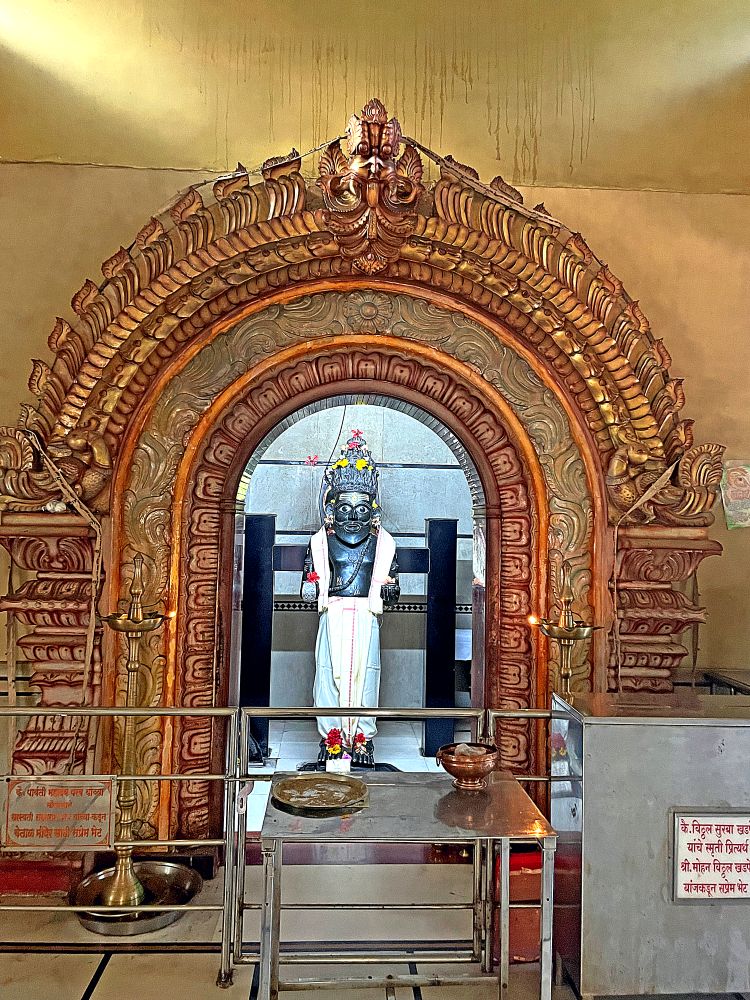
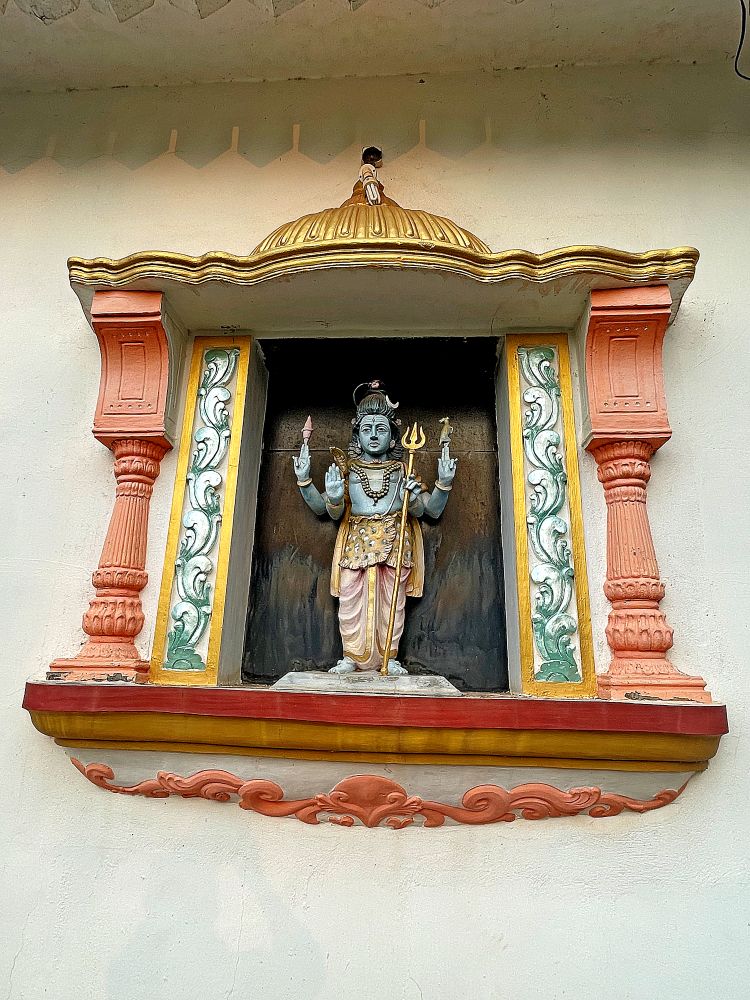
In the intermediate chamber, in front of the sanctum sanctorum, there are six ceremonial poles (Tarangkathya). Near these poles are ancient stone footprints (Padukas). Additionally, near the front wall of the sanctum sanctorum, there is a statue of the Ghadivasa. Inside the sanctum sanctorum, on a diamond-shaped pedestal, stands a black stone idol of Vetal. The idol is depicted with a crown on its head, ash on its forehead, a sacred thread (Janve) around its neck, a sword in its hand, and a dhoti around its waist. To the right of Vetaldev is the black stone shrine of Agyavetal and Goddess Bhavai, who is a form of Goddess Bhagwati. Here too, Goddess Bhavai appears in the form of Gajalakshmi. Gajalakshmi was the family deity of the Rashtrakutas. Since their time, Gajalakshmi was worshipped extensively in the Konkan. After the fall of the Rashtrakuta power, this practice declined or stopped. However, even today, in many villages, Gajalakshmi is worshipped in the form of Goddess Bhavai. Here, on the left side, is the shrine of the founding ancestor (Mulpurush). On the exterior walls of the temple’s sanctum sanctorum, there are beautiful sculptures of Garuda, Hanuman, Shankar, and Vishnu in the niches.
In the Vetaldev temple premises, there are temples of Mahadev, Goddess Pavanai, Goddess Satvi, Sateri, Vitthalai, Mahalakshmi, Barache Kul, and Brahman Dev. In the small shrine of Goddess Satvi, located to the left of the Vetaldev temple, newborn babies are brought for the goddess’s darshan, and the goddess’s lap is filled with offerings (Oti). There is a black stone idol of Goddess Satvi here. In the book ‘Purankatha ani Vastavata’ by the great scholar Damodar Dharmanand Kosambi, it is stated that the name Satvi is derived from the original Sanskrit word ‘Shasthi’. There is a tradition of keeping a lamp lit all night and placing grinding stones, a rolling stone, and writing materials there to appease Goddess Satvi on the sixth night after a child’s birth. It is believed that on this day, Satvi writes the child’s destiny and character traits on their forehead. In the Devi Purana, Shasthi is the wife of Skanda, whereas in folk tradition, she is unmarried.
The temple of Goddess Pavanai here is of an old style with tiled roofing. The temple structure consists of an assembly hall and a sanctum sanctorum. Goddess Pavanai is considered a symbol of the five elements (Panchatattva). In the center of the sanctum sanctorum is the idol of Goddess Pavanai, with the black stone idols of the ancestor of Maya on her left and the gods Ravalnath and Bhutnath on her right. Next to the Pavanai temple is the tiled temple of Mahalakshmi. Beside this temple is the Barache Kul temple. In the Brahman temple here, there is a Shiva Linga and some local deities in stone nearby. Brahman Dev is considered strict and vigilant.
At the Vetaldev Temple, various days, festivals, and celebrations are observed, including the offering of the Yajnopavita (Janeu) to the deities on Shravan Purnima, the Harinam Saptah on Shravan Krishna Ashtami, Ghatasthapana on Ashwin Shuddha Pratipada, Dussehra on Ashwin Shuddha Navami, Tulsi Vivah on Kartik Shuddha Ekadashi, Kartik Shuddha Purnima (Tripurari), the first Yatra of Lord Mahadev on Kartiki Sankashti Chaturthi, Dattatreya Jayanti on Margashirsha Chaturdashi, the second Yatra of Lord Mahadev on Margashirsha Purnima, the Yatra festival of Sateri Devi on Margashirsha Krishna Navami, the Palkhi procession on Mahashivratri, Ram Navami, the anniversary of the Sateri Devi Temple on Vaishakh Shuddha Shashthi, the anniversary of the Vetaldev Temple on Vaishakh Shuddha Dwadashi, and Bhavai Purnima on Ashadh Purnima.
This sacred temple stands as a testament to deep spiritual devotion, ancient architectural grandeur, and rich local cultural traditions.
The sanctum sanctorum houses the divine idol consecrated according to ancient Vedic traditions, surrounded by serene courtyards and traditional temple architecture.
Navratri, Maha Shivratri, Annual Temple Jatra & Deepotsav
Compare and book flights, secure top-rated local hotels near the temple, hire reliable guides, and rent cars instantly.
Extend your pilgrimage by visiting other highly sacred temples located nearby.


Add ₹999 more to unlock FREE SHIPPING!
Your sacred cart is currently empty.
Shop Photo FramesFill in your delivery details below to place your order.
Add comment