
Add ₹999 more to unlock FREE SHIPPING!
Your sacred cart is currently empty.
Shop Photo FramesThe Sai Baba temple in Shirdi is world-famous. Today, there are Sai Baba temples in many places across the country; however, the honor of building the very first temple in the world belongs to Kavilgaon in Kudal. Sai Baba of Shirdi attained Mahasamadhi on the day of Vijayadashami, 15 October 1918. Just four years later, this temple was built in Kavilgaon. Initially, the idol of Sai Baba was consecrated in a small thatched hut. Today, a grand temple of Sai Baba stands at that very spot. Known as the ‘Shirdi of Konkan’, this place witnesses a large gathering of Sai devotees every Thursday as well as on Sai Punyatithi.
The story of this temple, which has a history spanning over one hundred years, is that Ramchandra Madye from Kavilgaon near Kudal was a devout follower of Lord Dattatreya. He was constantly immersed in the remembrance of Dattatreya’s name. Once, he received a divine vision in a dream. In it, he saw that Lord Dattatreya was present in Shirdi in the form of Sai Baba. Following this, he went to Shirdi. There, he had the darshan of Sai Baba. At that time, Sai Baba gave him a one-rupee coin. Thereafter, he began taking devotees from the surrounding region to Shirdi for Sai Baba’s darshan. After Sai Baba attained Mahasamadhi in 1918, Madye Buva publicly celebrated Baba’s first Punyatithi in Kudal on the day of Vijayadashami in 1919 in a religious manner. Madye spent the one rupee given by Sai Baba for this Punyatithi ceremony. Since then, Sai Baba’s Punyatithi is celebrated here every year.
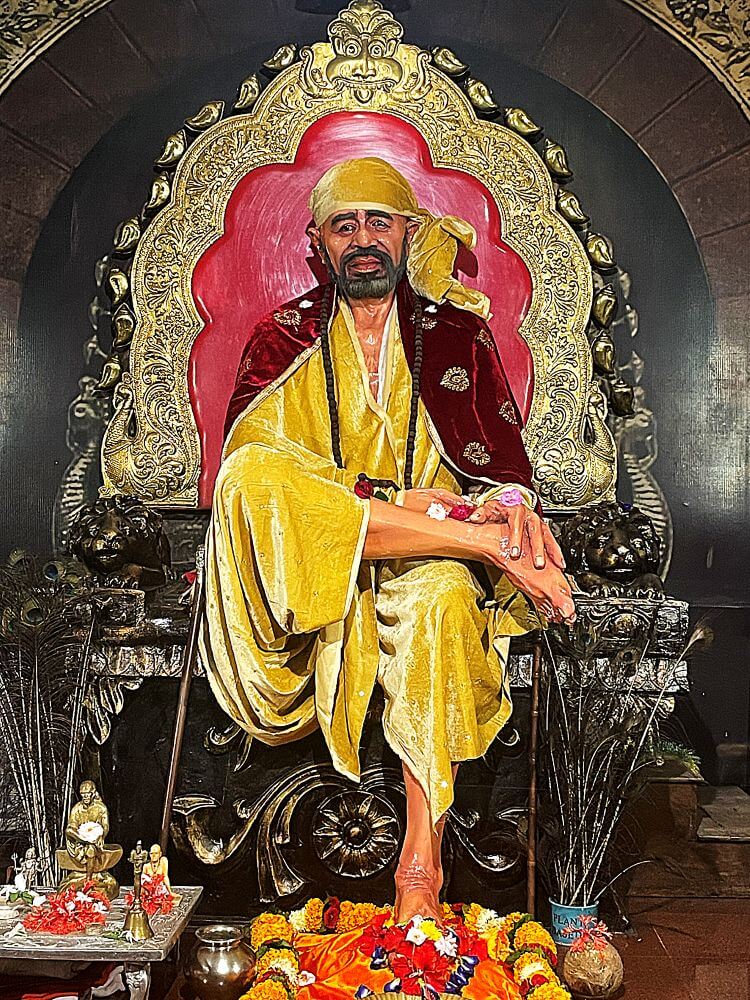
Following this, he felt inspired to build a temple of Sai Baba at this place. It was from this that in the year 1922, the construction of the temple was undertaken here. It arrived. A six-foot-tall idol of Sai Baba, crafted by sculptor Baburao Sarang, was consecrated in this temple. Notably, this idol predates the one in the Shirdi temple by 32 years. After Sai Baba attained Mahasamadhi in Shirdi, his mortal remains were placed at Butti Wada in Shirdi according to his wishes, and his Samadhi was built over them. A portrait of Baba was kept there and worshipped. The idol of Sai Baba that stands in Shirdi today was consecrated there on the day of Vijayadashami in 1954. The legend regarding this is that one day, a large slab of marble arrived in Mumbai on a ship. It had been sent from Italy. It was sent for Baba’s idol; however, to this day, it is not known who sent it. From that marble, Balaji Vasant Talim sculpted a lifelike image of Sai Baba. The idol at Kavilgaon predates that one. Later, in 1983, this temple underwent renovation.
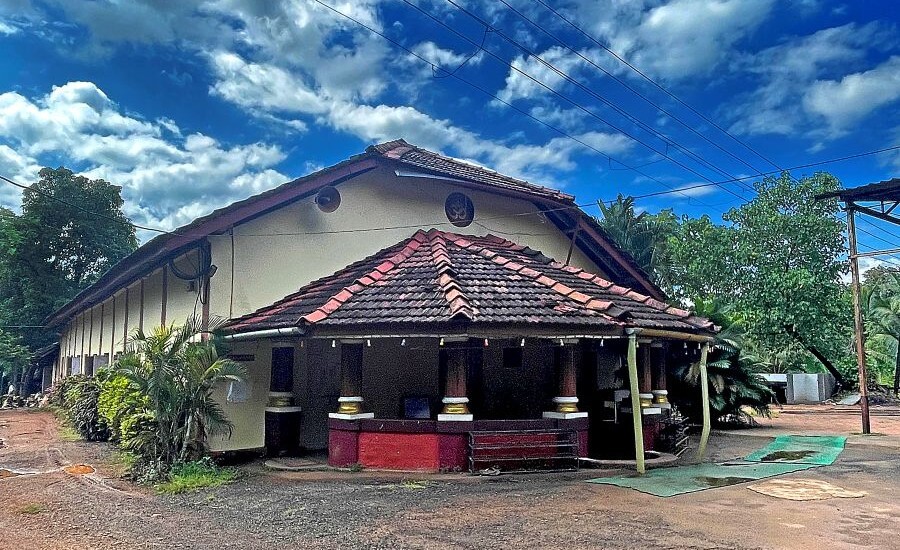
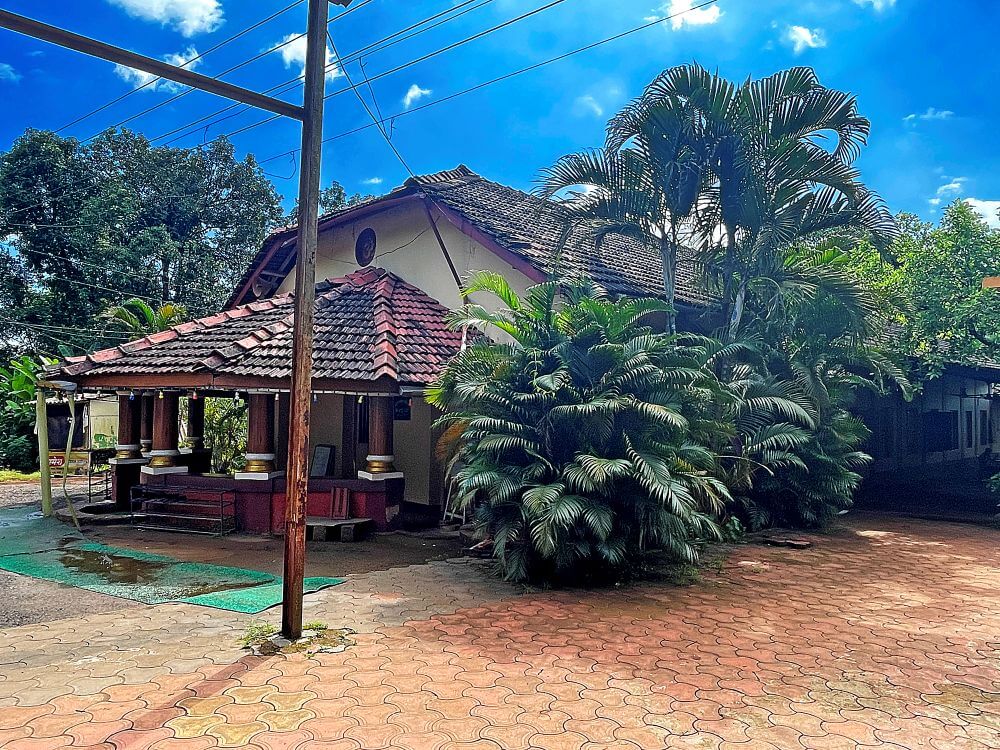
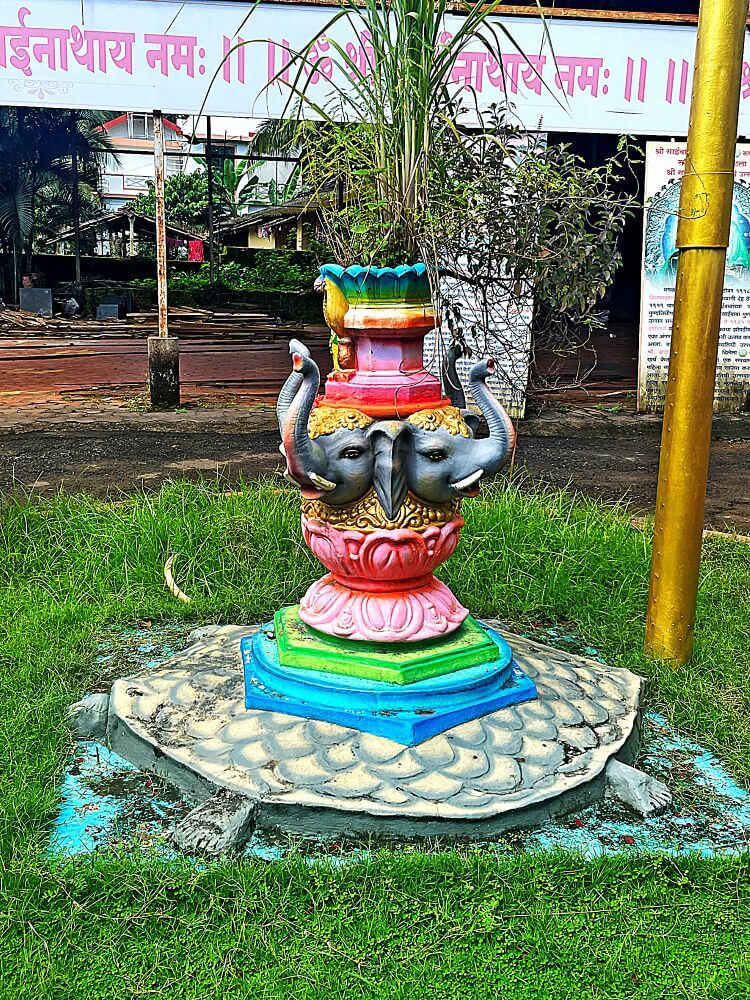
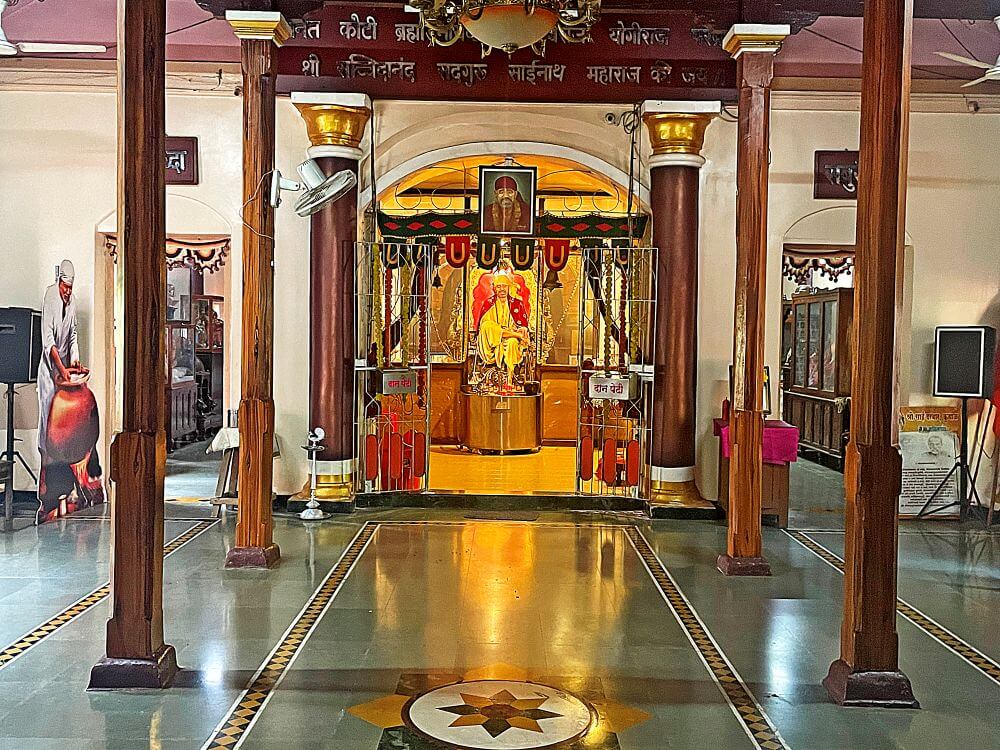
This temple is located approximately 500 meters from Kudal railway station. The temple premises are scenic and surrounded by nature. The temple is constructed in the traditional Konkani architectural style. The structure of the temple consists of a Mukhamandapa (entrance porch), Sabhamandapa (main assembly hall), Antarala (vestibule), and Garbhagriha (sanctum sanctorum). In front of the temple, there is a Tulsi Vrindavan situated within a small, circular grassy bed. Elephant heads are installed on all four sides of this Vrindavan. A short distance ahead lies the Mukhamandapa of the temple. The Mukhamandapa is semi-circular in shape from the front and is of a semi-open design. It is supported by eight circular pillars and features a sloping, tiled roof. The front wall of the Sabhamandapa resembles that of a typical Konkani house. There are three doors in the front wall of the Sabhamandapa, with entry provided through the central door, which has a simple frame. The Sabhamandapa is an enclosed space, with large windows in the side walls to allow for natural light. In this outer wall, there are pilasters, which are half-pillars embedded into the wall. At some distance from the wall, on both sides, there are three carved wooden pillars each. Above, there is a sloping roof.
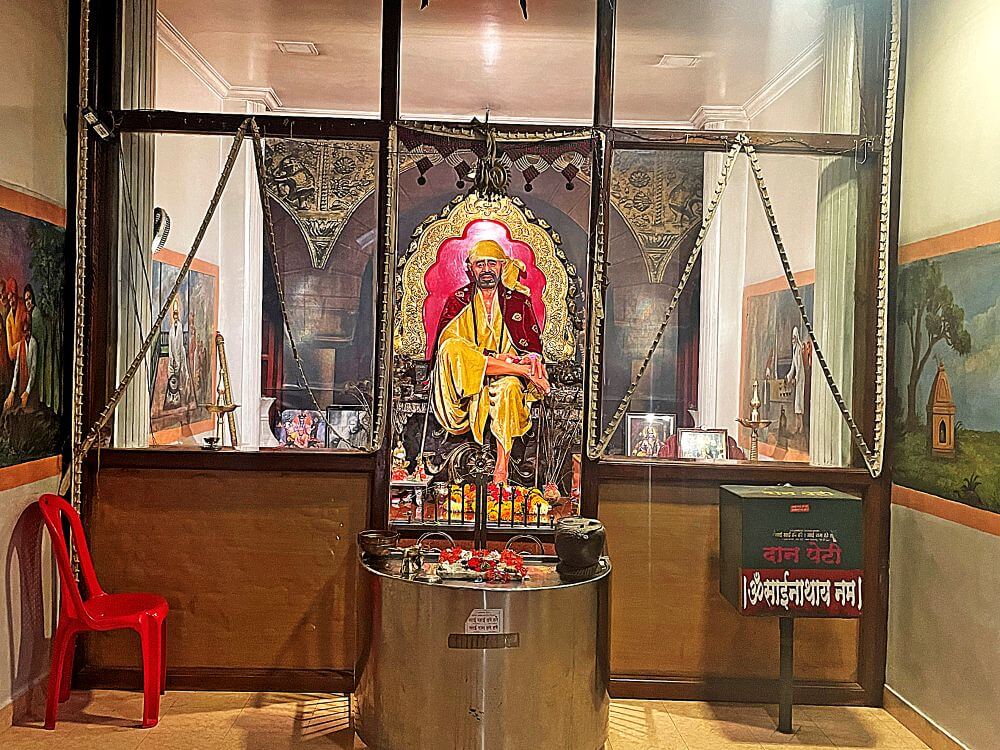
From there, one descends a step to enter the inner sanctum of the temple. Directly ahead lies the Garbhagriha. The outer wall of this Garbhagriha is made entirely of glass. Inside the sanctum, on a high pedestal, stands a seven-and-a-half-foot tall idol of Sai Baba seated on a throne. When the temple was renovated in 1983, this new idol was consecrated in place of the original one. It was crafted by Shyam Sarang, the son of the original idol’s sculptor, Baburao Sarang. On the walls of the temple’s sanctum and the inner sanctum, there are large murals depicting significant events from the life of Sai Baba.
There is a path from the assembly hall for circumambulation around the sanctum sanctorum. In this circumambulation path, there is an idol that was consecrated in the temple in 1922. Apart from this, there are also some artifacts related to the history of the temple, as well as idols of deities such as Ganesha, Vishnu-Lakshmi, and Trimukhi Dattatreya. Here, one can also see another attractive idol of Sai Baba, sculpted by the sculptor Baburao Sarang. The form of this idol is that of Sai Baba standing with Bal Ganesha resting on his waist. This idol belonged to the Ganeshotsav of Shripadbuva Madye. It was placed here after the Ganpati immersion. Adjacent to the Sai Baba temple is the small Samadhi temple of Dattadas Ramchandra Madyebaba. There, an idol of Madyebaba is seated in a wooden shrine. In this temple, programs such as Abhishek and Laghurudra are conducted every Thursday. Every year, the Punyatithi ceremony of Sai Baba is celebrated here with great enthusiasm. At that time, a large crowd of Sai devotees gathers at the temple.
This sacred temple stands as a testament to deep spiritual devotion, ancient architectural grandeur, and rich local cultural traditions.
The sanctum sanctorum houses the divine idol consecrated according to ancient Vedic traditions, surrounded by serene courtyards and traditional temple architecture.
Navratri, Maha Shivratri, Annual Temple Jatra & Deepotsav
Compare and book flights, secure top-rated local hotels near the temple, hire reliable guides, and rent cars instantly.
Extend your pilgrimage by visiting other highly sacred temples located nearby.


Add ₹999 more to unlock FREE SHIPPING!
Your sacred cart is currently empty.
Shop Photo FramesFill in your delivery details below to place your order.
Add comment