
Add ₹999 more to unlock FREE SHIPPING!
Your sacred cart is currently empty.
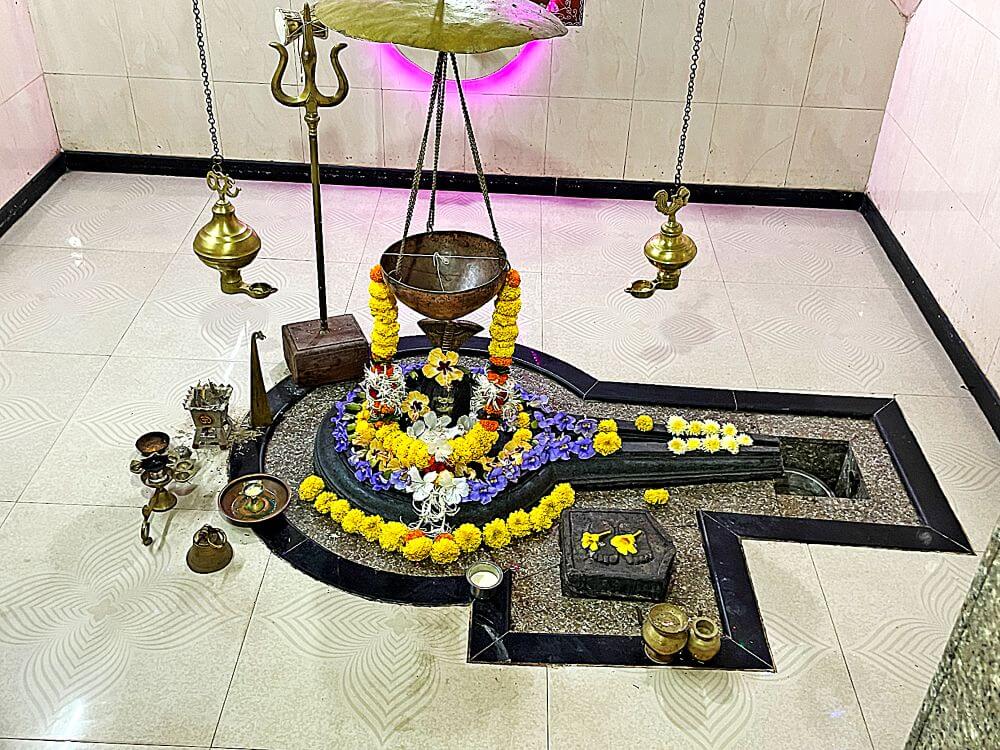
Shop Photo FramesUbhadanda village in Sindhudurg district is known as the birthplace of the eminent poet Mangesh Padgaonkar, who was honored with the Padma Bhushan and Maharashtra Bhushan awards, and is recognized as the country’s first ‘Village of Poems’. Furthermore, the ancient Sagareshwar Temple located on the seashore here is especially famous among devotees. It is said that the location of the Shiva Linga here is Swayambhu (self-manifested). A Swayambhu Linga is considered the most sacred because it has originated naturally and has existed since time immemorial. The Swayambhu Linga here is rooted in the stone, meaning it is embedded in such a way that it has become one with the earth.
The legend of the temple states that a pious man from the Sandye family, who currently serves as the priest, discovered this Linga in the sand on the seashore. Only the middle part of this Linga was visible. With the help of the villagers, he began digging; however, no matter how much they dug, the base of the Linga could not be found. There was no Shalunka (base) around the Linga either. When this information reached the rulers of the Sawantwadi princely state, they provided land for this temple and constructed it. They entrusted the responsibility of the maintenance and rituals of this temple to the Sandye family. While building this temple, a Shalunka was constructed around the original Linga. As it is near the seashore, the temple was named Sagareshwar. The beach here is also famous by the name Sagareshwar after this temple.
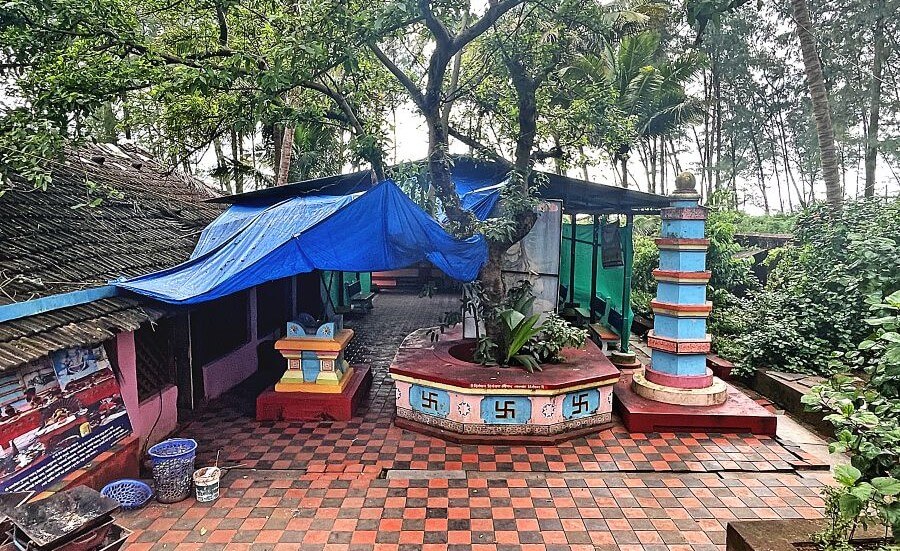
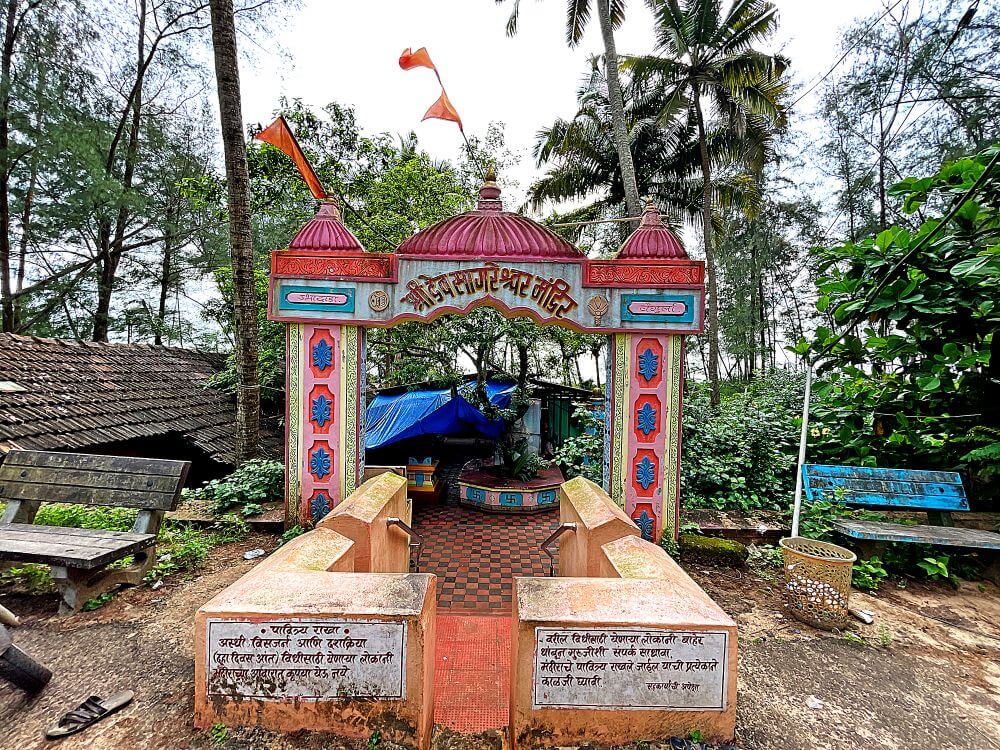
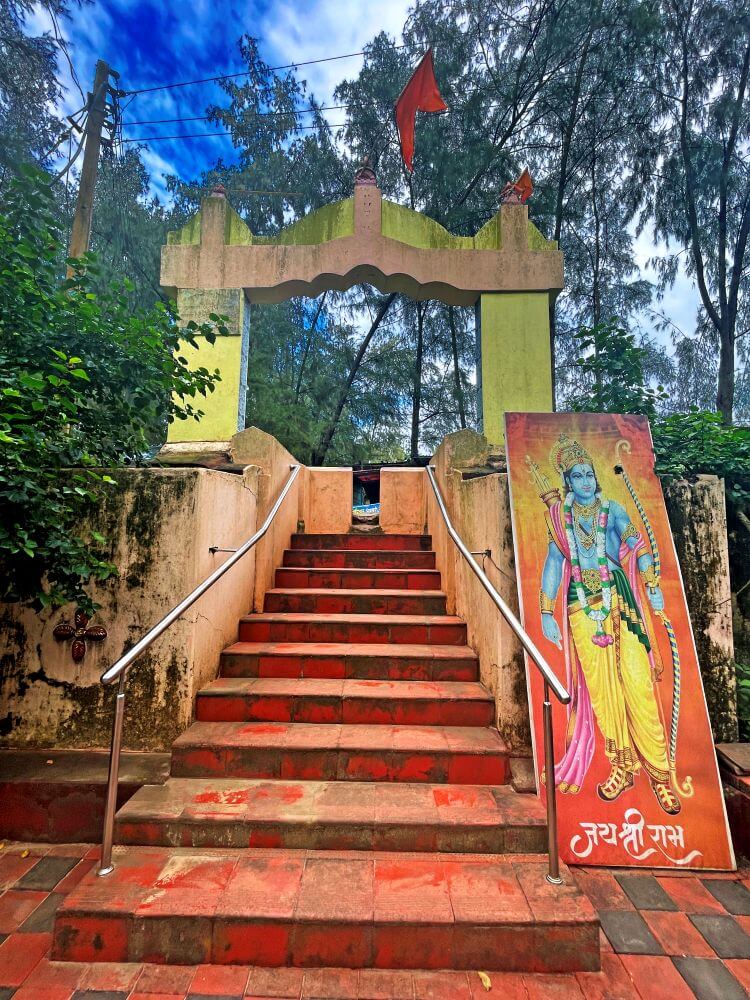
The Sagareshwar Temple is situated on the seashore near Wagheshwarwadi in Ubhadanda on the Vengurla-Shiroda road. This stone-built temple with a tiled roof is located in a forest of Casuarina trees on the shore. There are ten steps from the entrance to descend into the temple courtyard, which is five to six feet below the road level. The temple is surrounded by a fortification wall on all four sides. It is said that when the temple was built, it was level with the ground; however, due to the sand blowing from the shore, a sand dune formed in this area, and the temple went below the ground level. Upon entering the courtyard through the entrance, one sees an Audumbar (cluster fig) tree in front of the temple. A large platform has been built around this tree. On one side of this platform, there is a lamp pillar (Deepstambh), and on the other, a Tulsi Vrindavan.
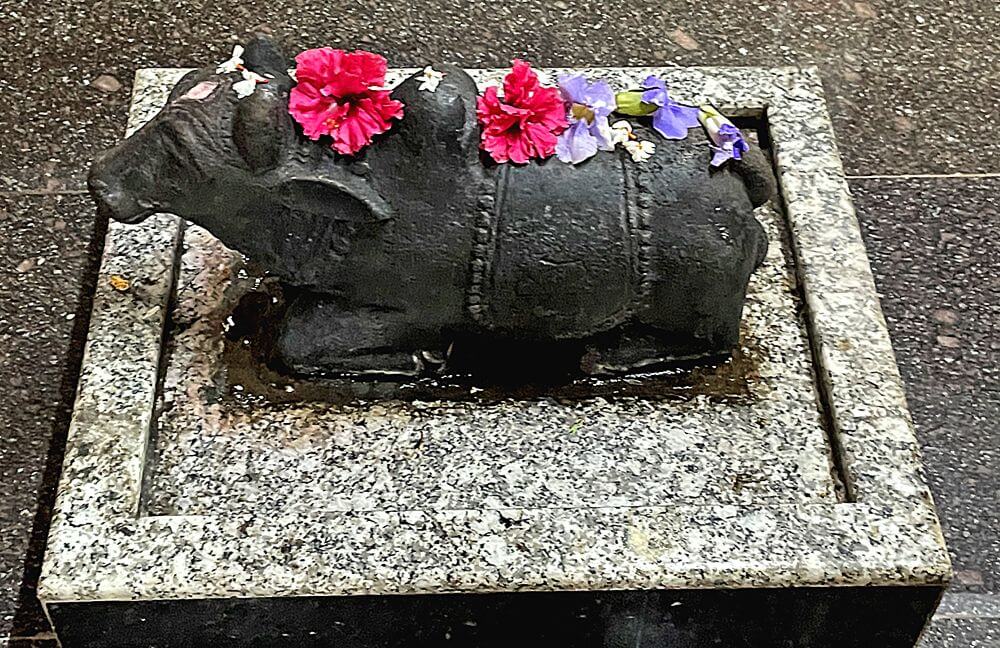
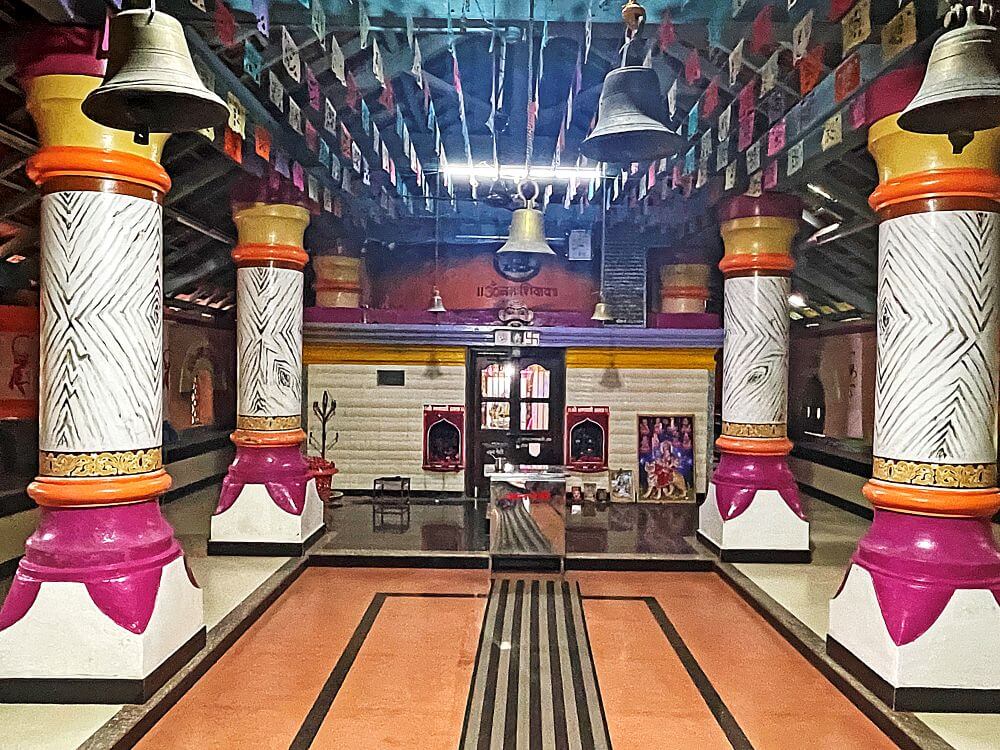
The temple structure consists of a Sabha Mandap (assembly hall) and a Garbhagriha (sanctum sanctorum). The rectangular Sabha Mandap of the temple has two rows of stone pillars. These are circular, carved pillars wide enough to be embraced. Following the Konkani architectural style, the floor of the Sabha Mandap between these two rows of pillars is sunken. On both sides of the Sabha Mandap, there are stone seats for devotees, and above them are carved stone windows. Beyond the Sabha Mandap, leaving a circumambulation path, is the Garbhagriha. In front of this Garbhagriha stands a stone idol of Nandi.
On the front wall of the Garbhagriha, in the niches to the right and left of the entrance, are idols of Lord Ganesha and Goddess Bhagwati, respectively. On the lintel of the Garbhagriha doorway, there is an image of Ganesha, with auspicious symbols like Swastika and Om on both sides. Above it is a relatively large Kirtimukha. There is a dome-shaped pinnacle above this Garbhagriha. In the center of the Garbhagriha is the Swayambhu Linga of black stone, and on a stone beside it, footprints (Paduka) are carved. Entry into this Garbhagriha is permitted only in traditional ritual attire (Sowale). In the wall of the Garbhagriha, on one side, there is an inscription carved in Devanagari script that narrates the history of this temple. The text mentions that in Shake 1777, i.e., 1885 AD, a Brahmin named Sandye found the Linga embedded in the sand on this shore.
All types of funeral rites (Shraddha) are performed at this temple. There is a large gathering of devotees here on the day of Mahashivratri and on Shravani Mondays. Every three years, the Mahodaya Parva takes place. During this festival, on the day of Paush Amavasya, deities and processional idols (Tarang Devta) from many surrounding villages are brought to the Sagareshwar shore. Thousands of devotees from many villages are present for this festival. Devotees can have the Darshan of Sagareshwar in this temple daily from 6 AM to 1 PM and from 3.30 PM to 9 PM. Near the temple is the Sagareshwar beach. It is one of the cleanest and most beautiful beaches in Konkan.
Apart from the Sagareshwar Temple and Sagareshwar beach, Ubhadanda is famous as the country’s first ‘Village of Poems’. A large hall for poems has been built in the Casuarina forest on the Sagareshwar beach at Ubhadanda. Famous poems by Mangesh Padgaonkar have been written on the walls of this hall. Additionally, 700 books of poetry have been kept here. Tourists can visit this poetry hall along with the beach.
This sacred temple stands as a testament to deep spiritual devotion, ancient architectural grandeur, and rich local cultural traditions.
The sanctum sanctorum houses the divine idol consecrated according to ancient Vedic traditions, surrounded by serene courtyards and traditional temple architecture.
Navratri, Maha Shivratri, Annual Temple Jatra & Deepotsav
Compare and book flights, secure top-rated local hotels near the temple, hire reliable guides, and rent cars instantly.
Extend your pilgrimage by visiting other highly sacred temples located nearby.


Add ₹999 more to unlock FREE SHIPPING!
Your sacred cart is currently empty.
Shop Photo FramesFill in your delivery details below to place your order.
Add comment