
Add ₹999 more to unlock FREE SHIPPING!
Your sacred cart is currently empty.
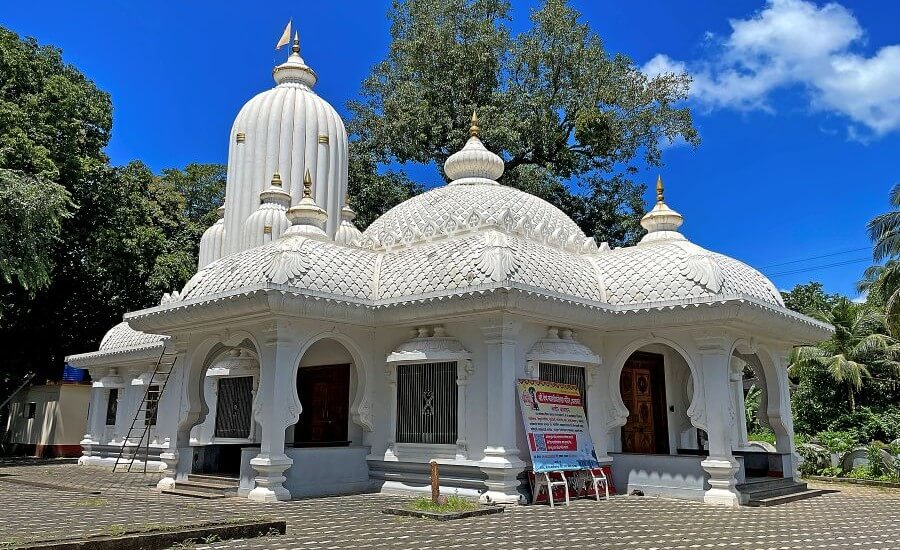
Shop Photo FramesAccording to etymology, the name of the city of Kankavli is derived from the word ‘Kanakvalli’, which means the ‘Land of Gold’. Situated in the vicinity of this golden land, on the banks of the Janavali River, lies the nature-rich village of Kalamath. This village, sanctified by the presence of the eternal silent Digambar Paramhansa Bhalchandra Maharaj, is home to the magnificent temple of Kashikaleshwar. With its golden pinnacle and pristine white structure, this temple is a place of deep faith for countless devotees in the surrounding five-village region (Panchkroshi). Kashikaleshwar, the presiding deity of Kalamath, is a ‘Jagrut Devasthan’ (an awakened divine abode), and devotees believe that the Lord rushes to answer their calls in times of distress.
There are many temples of Mahadeva across the country known by various names such as Kaleshwar, Kaleshwar, and Kuleshwar. This temple in Kalamath is renowned by the name Kashikaleshwar. Although the history of this site is unknown, scholars believe that the name of the temple clearly indicates its connection to Kashi, i.e., the Mahadeva of Varanasi. There is also a Kaleshwar temple in Kashi. The religious belief regarding it is that the Kaleshwar Linga in Kashi is a symbol of Mahakaleshwar, one of the twelve Jyotirlingas in Ujjain. However, the temple in Kalamath is known as Kashikaleshwar. This is an ancient and awakened site, and the current grand temple was built after its restoration and renovation in 2023. That year, the temple restoration, Kalasharohan (consecration of the pinnacle), and idol installation ceremony took place over three days, from Magh Krishna Tritiya to Panchami.
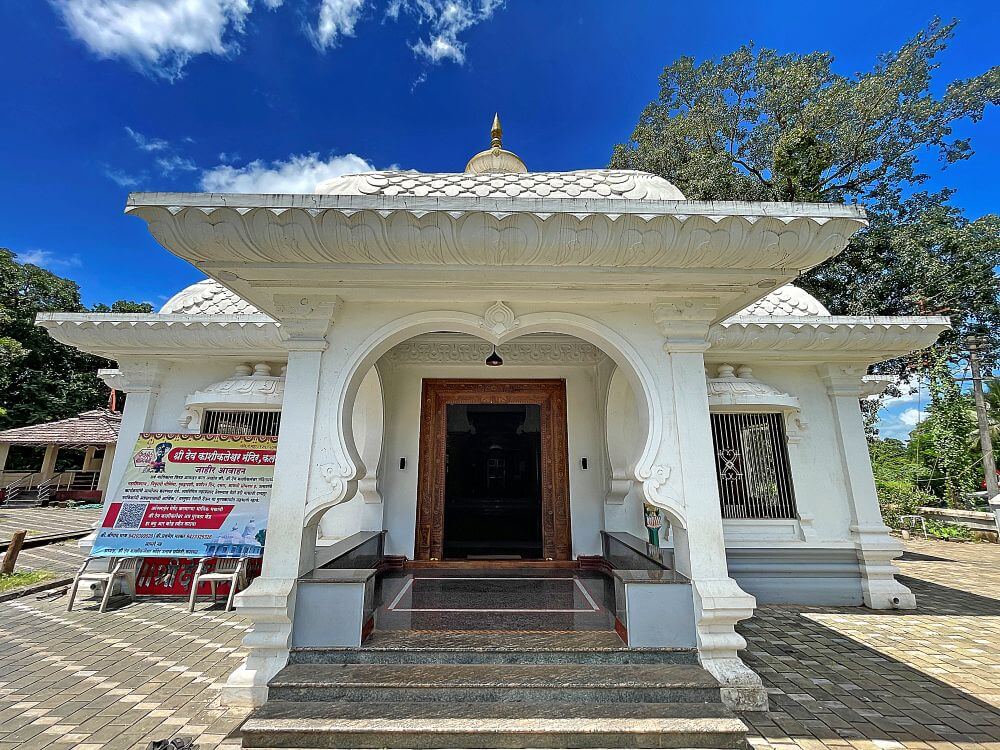
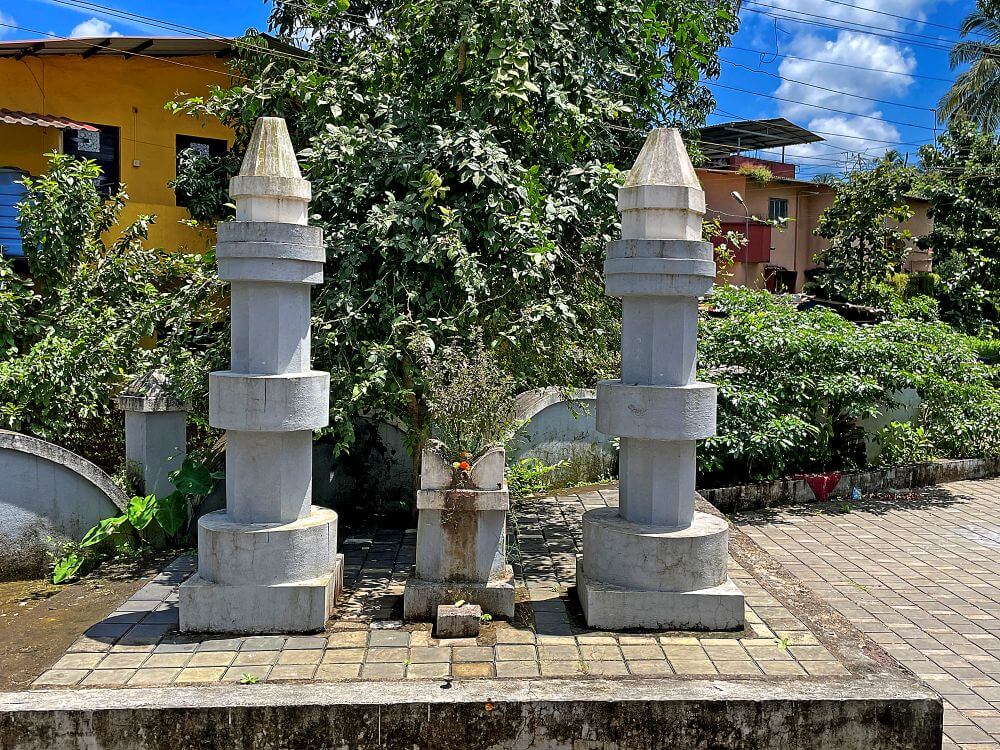
While many other temples in the Konkan region are painted in various colors, the Kashikaleshwar temple is pure white. The snow-clad Kailash peak in the Himalayas is considered the abode of Lord Shiva. The exterior of the temple has been painted in this color with the sentiment that it should evoke the memory of that snow-covered mountain. In front of the temple, there are two small lamp pillars (Deepstambhas) on a platform. The temple features a porch (Mukhamandap) with an elephant-back (Gajaprishthakar) roof and arched pillars. The entrance to the assembly hall (Sabhamandap) is made of wood with three sections (Trishakhiya) and is adorned with beautiful vine carvings.
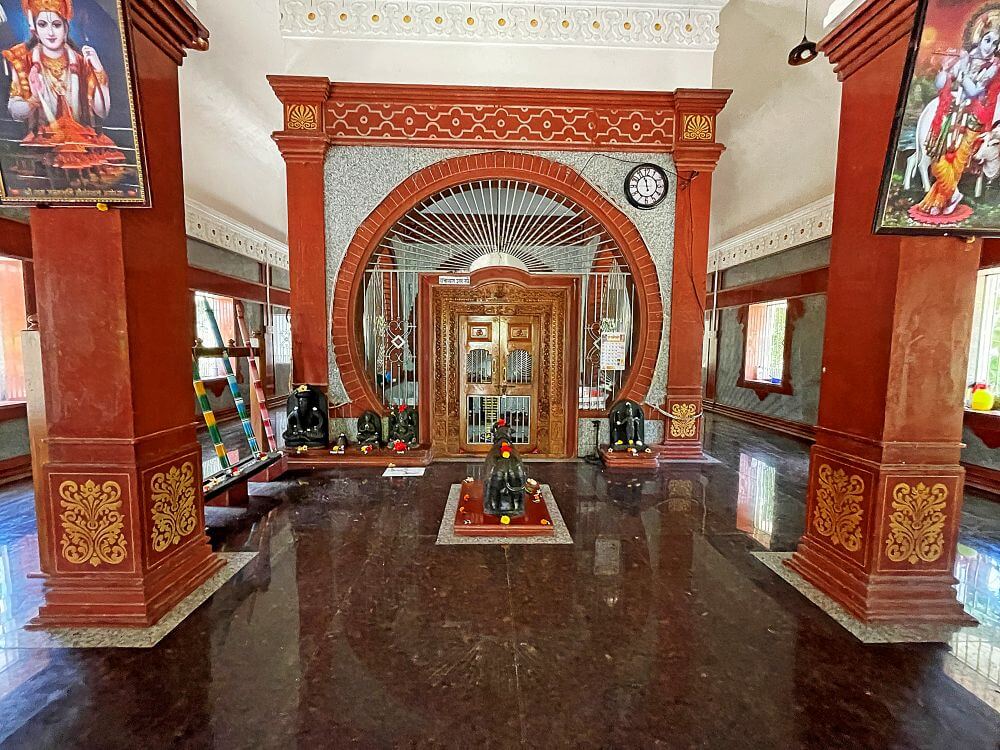
The shape of the assembly hall is highly distinctive. It features circular pillars resembling those in ancient temples, with lotus-top and vase-and-foliage (Ghatapallav) motifs at the top. Above the pillar, there is a flat, low-height square section resembling a tile, known as ‘Palagai’. On this, there are characteristic ‘Taranghastas’ (bracket figures). These brackets feature small golden sculptures of a coiled cobra with its hood raised. Above these pillars are arches supporting a circular roof, creating a dome-like structure in the center of the assembly hall. In this hall, to the right near the pillars, are the idols of Ravalnath, Nishandar, Pavnai Devi, Bhumicha Nirvashi, and Dev Vashik.
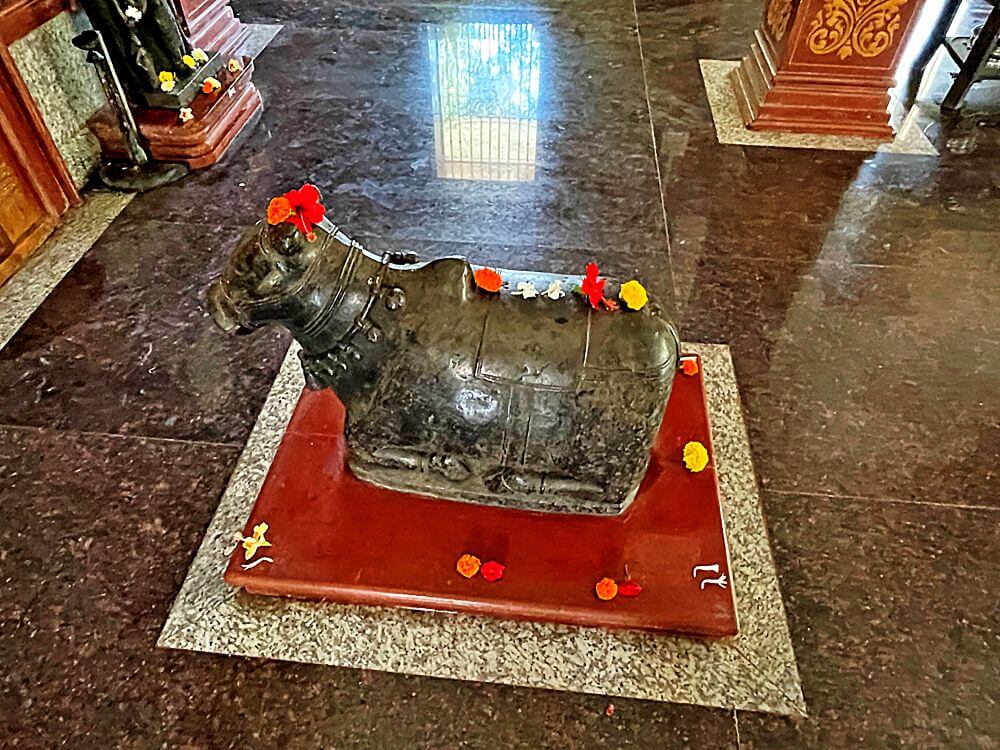
Ascending two steps from the assembly hall, one enters the inner chamber (Antaral) of the temple. On the upper step, near a pillar on one side, is the headless, seated idol of the deity ‘Nitkari’. This idol is only up to the neck; it has no head. In the folk traditions of the lower Konkan, the deity Nitkari is believed to dispense justice according to moral principles and is considered a judge in the village judicial system. On the same step, to the right, is a metal pole for the ‘Nishan’ (standard). In the center of the inner chamber, on a pedestal, is a beautiful stone idol of Nandi, the vehicle of Mahadeva. This idol is remarkable for its small horns, small hump, bell around the neck, and the saddle placed on its back. To the left of this Nandi, on a wooden stand, are five ‘Tarangkathis’ (ceremonial poles). In the center of the inner chamber is the sanctum sanctorum (Garbhagriha), surrounded by a circumambulation path (Pradakshina Marg). On the front wall of the sanctum entrance, to the left, are black stone idols of Jain, Panchakshari Garudi, Guru, and Ganpati, while to the right is a well-defined idol of Vishnu.
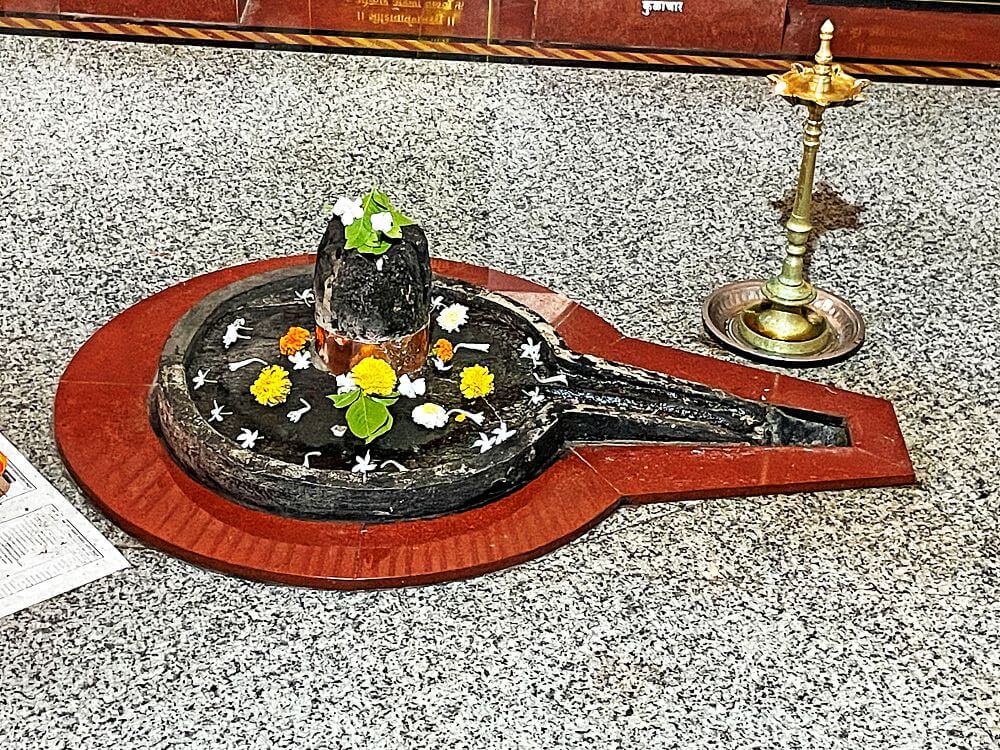
In the center of the sanctum is a Shiva Linga made of a single piece of black stone. The base (Shalunka) of this Shiva Linga is circular. The channel for water drainage is somewhat short and slopes downwards. The Shiva Linga in Kalamath bears a strong resemblance to the Kaleshwar Linga in Varanasi. Beside this Shiva Linga is a beautiful Damaru, and on the back wall are the idol of Parvati and the family deities (Kulachar).
Outside the temple are the idols of Navlai Devi holding a sword and trident, Vitlai Devi holding a sword and trident, the Vashik Kulachar consisting of a square base with a round stone, and eight round stones representing the ‘Chalya’ arranged on a platform. Festivals like Mahashivratri, Tripurari Purnima, Gurudwadashi, the temple’s anniversary, Dussehra, and Shravani Mondays are celebrated at the temple. On these days, ‘Mahaprasad’ is provided to the visiting devotees by the temple trust.
This sacred temple stands as a testament to deep spiritual devotion, ancient architectural grandeur, and rich local cultural traditions.
The sanctum sanctorum houses the divine idol consecrated according to ancient Vedic traditions, surrounded by serene courtyards and traditional temple architecture.
Navratri, Maha Shivratri, Annual Temple Jatra & Deepotsav
Compare and book flights, secure top-rated local hotels near the temple, hire reliable guides, and rent cars instantly.
Extend your pilgrimage by visiting other highly sacred temples located nearby.


Add ₹999 more to unlock FREE SHIPPING!
Your sacred cart is currently empty.
Shop Photo FramesFill in your delivery details below to place your order.
Add comment