
Add ₹999 more to unlock FREE SHIPPING!
Your sacred cart is currently empty.
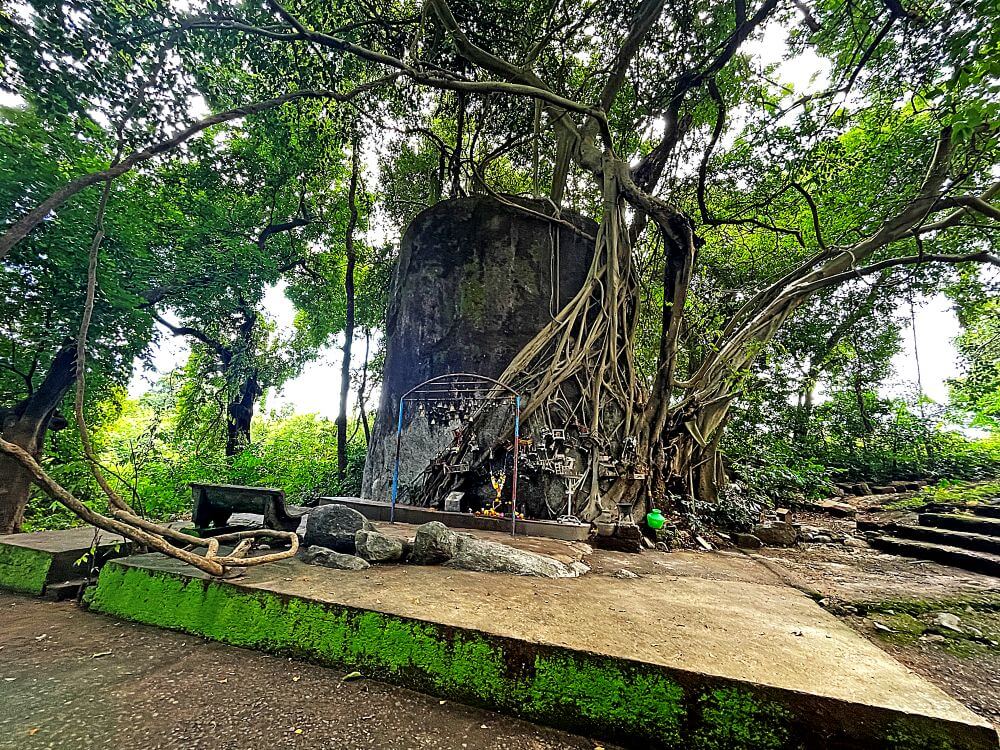
Shop Photo FramesThe abode of the deity known as Ubha Dev is situated in the dense sacred grove on the banks of the Gad River at Vagade, just outside the town of Kankavli. This deity is represented simply by a colossal stone monolith. Devotees visit this place throughout the day. Due to its location amidst lush forest and away from the bustle of the town, people also come here for picnics. However, no one visits this site after sunset. A deep sense of mystery surrounds this place. This deity is also referred to as the ‘Chala’ (guardian spirit) of the village deity of Vagade.
According to the village traditions of Konkan, all the deities of the village are subordinate to the Gramadevata (village deity). This includes both Sattvic and Tamasic deities. These Tamasic deities include Vetal, Devchar, Bhutnath, as well as Cheda and Chala. However, in Konkan, Chala has been accorded divinity and is considered a guardian deity. Devotees believe that Chala works to avert the calamities and disasters that may befall the village. The task of this unknown power is to protect against evil forces, maintain boundaries, and safeguard the people, animals, and flora of the village. Devotees believe that this ‘Chala’ of the Wagde village deity fulfills their heartfelt wishes. As this is a deity residing at the village entrance, people in the past would make vows to ensure safe travels. Similarly, even today, vows are made to this deity for the fulfillment of desires.
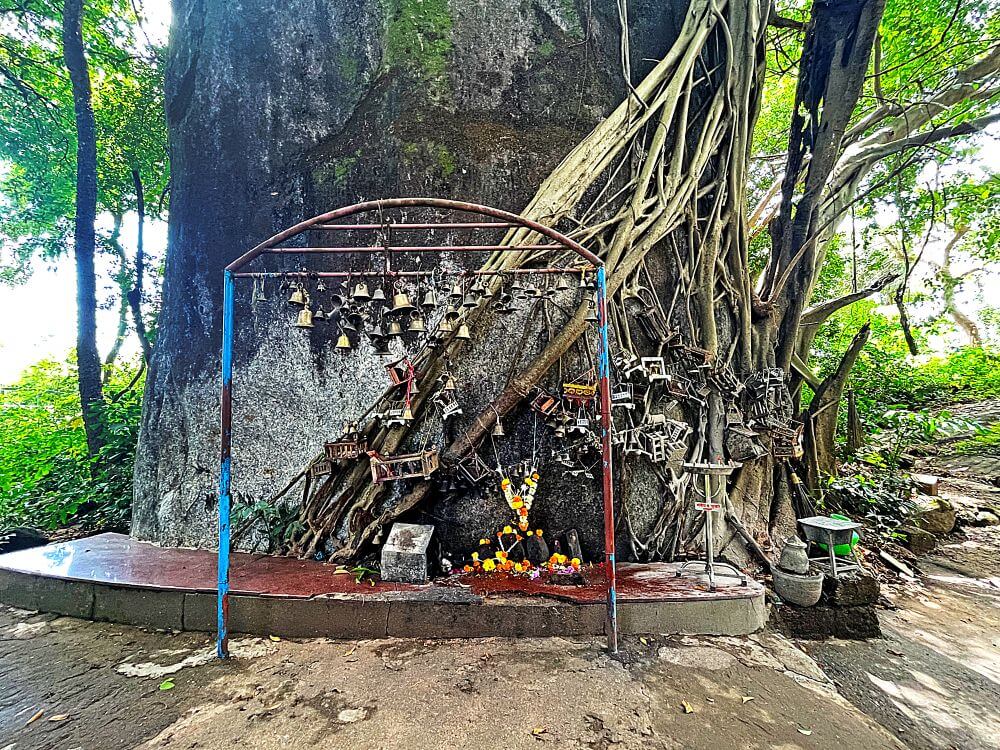
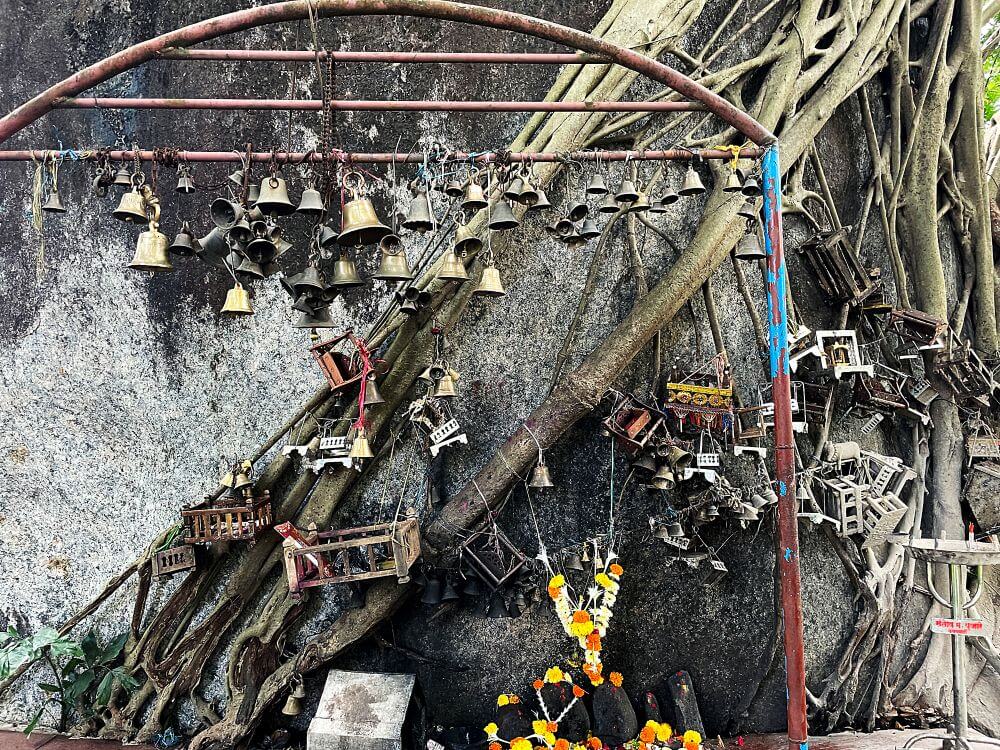
If a vow of offering a rooster or a goat to the deity has been made, it is fulfilled on the three days of Wednesday, Friday, and Sunday. Non-vegetarian food is consumed on these days. A unique feature of this place is that devotees, upon the fulfillment of the desire for which they made a vow, offer a replica of the object or thing for which the vow was made. If someone has made a vow for the fulfillment of a desire for a house, a vehicle, or a son, once it is fulfilled, that person offers a wooden replica of the house, vehicle, or cradle here. Some people perform the offering of bells as well as the offering of food. Many such items can be seen hanging on the stone slab of the standing deity. Among these, the number of bells and cradles is significant.
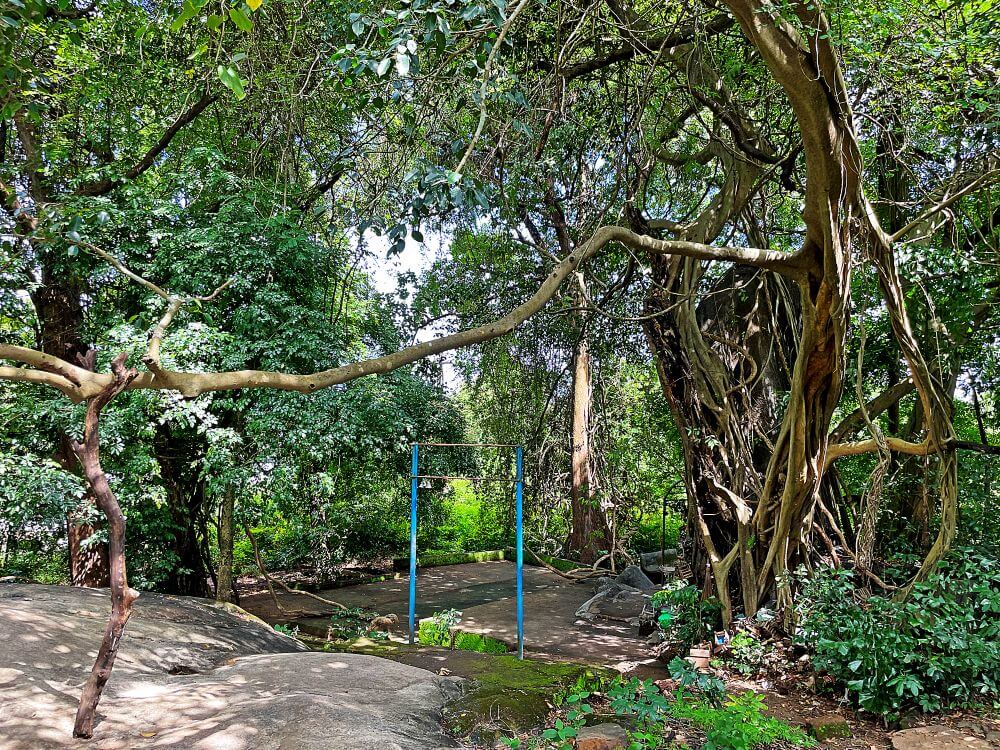
While traveling from Kankavli towards Goa, a short distance from the highway near the Gad River lies the boundary of the old Sawantwadi State and the Salshi Mahal, which was a taluka headquarters in ancient times. Right there, tucked away from the highway, is a dense sacred grove known as a Devrai. The Devrai is a unique feature of the Sindhudurg and Ratnagiri districts of Konkan. A Devrai is a part of the forest or a distinct forest area itself. It is called Devrai because it is a woodland preserved in the name of the Divine. Forests are also preserved here in the names of deities, animals, and spirits who have been bestowed with divinity just like the Gods. Human interference is strictly prohibited in a Devrai. Carrying any tool for cutting trees into these areas is forbidden. In many sacred groves, there is a tradition of entering only after becoming ritually pure. Even picking up a dried twig from the woodland is believed to invite the wrath of the Deity. There is a fear among the people that something might happen. If a branch of a tree there needs to be cut for any reason, the divine consent of the deity is sought. Due to such customs and beliefs, the forest wealth and biodiversity in many places in Konkan have remained intact. In one such sacred grove in Vagade, the deity has stood in its natural habitat for centuries.
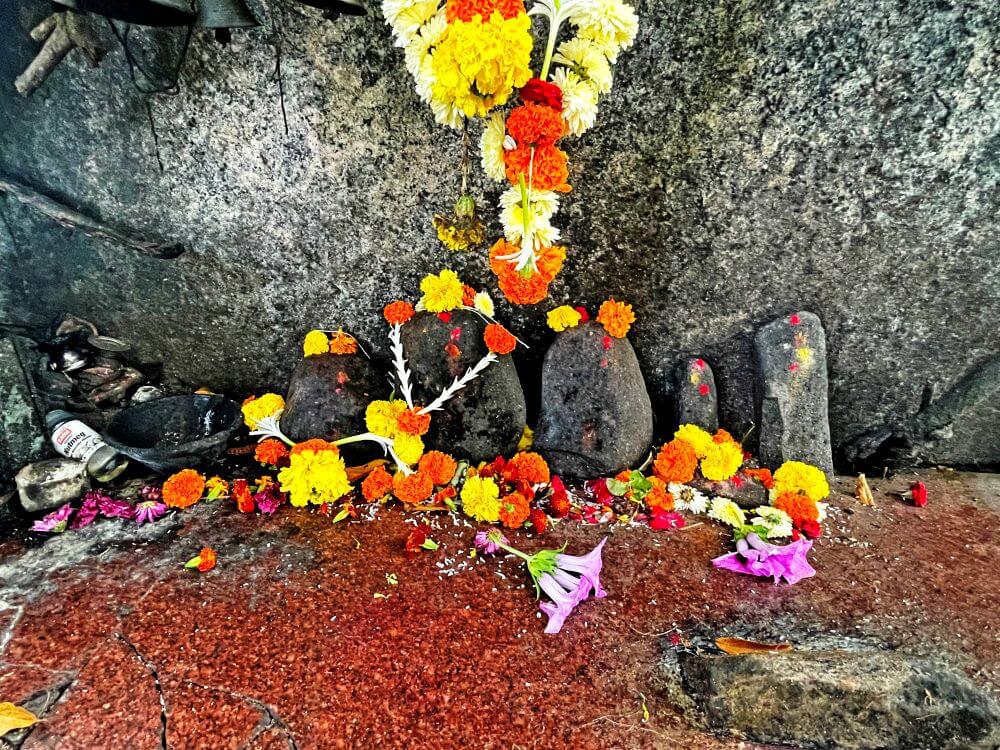
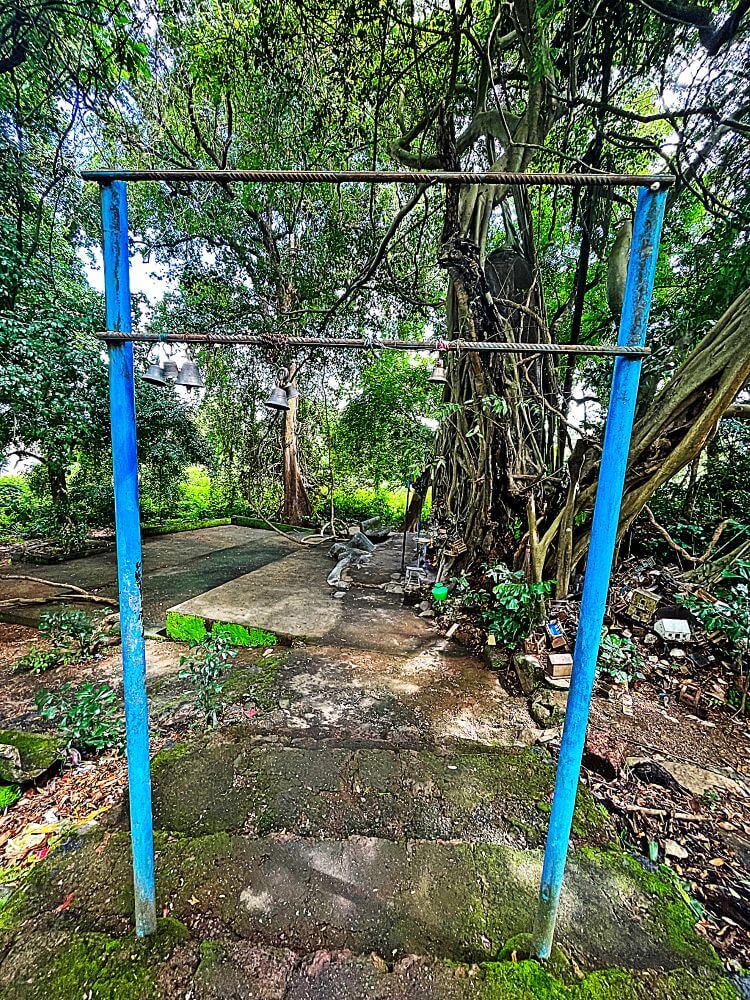
On a small cart track leading into the dense thicket by the side of the main road, a sign reading ‘Shri Ubha Dev Prasanna’ has been placed. Following this path for two to three minutes into the deep woods, one finds large rocks below. Here, bells are hung from a horizontal rod fixed between two iron pipes. Upon descending five steps from that entrance, one sees a tall, wide stone slab of the standing deity situated next to a large tree. This stone is semi-circular at the top. In front of the stone is a small platform on which five stone idols of the Chalyas are arranged. Two round iron pillars are also planted here. Bells are hung from a horizontal rod fixed upon them. Many small wooden replicas of bells, cradles, houses, vehicles, and other items are hung upon this stone slab.
The walls of the eight directions and the canopy of the sky are considered the temple of this standing deity. Because the deity prefers a natural habitat, building a sanctum sanctorum here is not permitted. Recently, the area in front of the deity has been cleared and leveled. Cement benches have been installed on the side for seating. Some individuals had expressed a desire to build a roof in front of this temple for the convenience of devotees. However, the villagers forbade it, stating that according to the command of the village deity, such an act is not possible. A folk tale regarding this is that some people once tried to make changes here for seating arrangements, but they were struck by various calamities. Consequently, no one even considers attempting such a thing now. Due to the awe-inspiring presence of the standing deity, no one dares to touch the sacred grove here either. Another folk tale is that some people were once having a drinking party in this forest. They were told not to do so, but they dismissed the request. However, while their party was in full swing, some were stung by scorpions, while others began to experience various hallucinations. Four people developed a fever that would not subside with any medical treatment. Finally, they sought forgiveness before the standing deity, and only then did their fever break. It is also said that no one stays here after sunset. If anyone tries to come at night, they experience various hallucinations and perceive strange odors. Because of such occurrences, the sanctity of the standing deity’s premises and the surrounding forest remain preserved.
This sacred temple stands as a testament to deep spiritual devotion, ancient architectural grandeur, and rich local cultural traditions.
The sanctum sanctorum houses the divine idol consecrated according to ancient Vedic traditions, surrounded by serene courtyards and traditional temple architecture.
Navratri, Maha Shivratri, Annual Temple Jatra & Deepotsav
Compare and book flights, secure top-rated local hotels near the temple, hire reliable guides, and rent cars instantly.
Extend your pilgrimage by visiting other highly sacred temples located nearby.


Add ₹999 more to unlock FREE SHIPPING!
Your sacred cart is currently empty.
Shop Photo FramesFill in your delivery details below to place your order.
Add comment