
Add ₹999 more to unlock FREE SHIPPING!
Your sacred cart is currently empty.
Shop Photo FramesKaalbhairav, one of the Ashta Bhairavas described in the Shaiva Agamas, is considered a Tantric deity. According to lexicographers, the word ‘Bhairav’ means ‘terrible’ or ‘fearsome’. It is also said that one of its meanings is ‘the one who protects from fear’. Bhairav is the fierce and formidable form of Lord Shiva himself. Kaalbhairav is also known as the ‘Kotwal’ (guardian) of Kashi. Paapbhakshan, Aamardak, and Kaalraj are his other names. This very Kaalbhairav is the Gramadevata (village deity) of the ancient heritage site of Kharepatan and the surrounding 72 villages. His grand and beautiful temple is situated here.
According to the renowned historian Tryambak Shankar Shejwalkar, the ancient name of the village Kharepatan was Valipattan. It is also known by the name Balipattan. The history of this village is that Dhammiyar, the son of Sanphulla, who established the Shilahara dynasty in South Konkan, founded this city between 785 and 820 AD. This was his capital. A fort was also built here to protect the capital. In 1660 AD, Chhatrapati Shivaji Maharaj conquered Kharepatan. Situated on the banks of the Vijaydurg creek, this village is considered the northern gateway to the Sindhudurg district. Goods were exported from the Ghodepathar trading port here to the Deccan plateau via Bawada and Phondaghat. It is said that numerous bullock carts from the lower Konkan region would be stationed here to transport goods from the port.
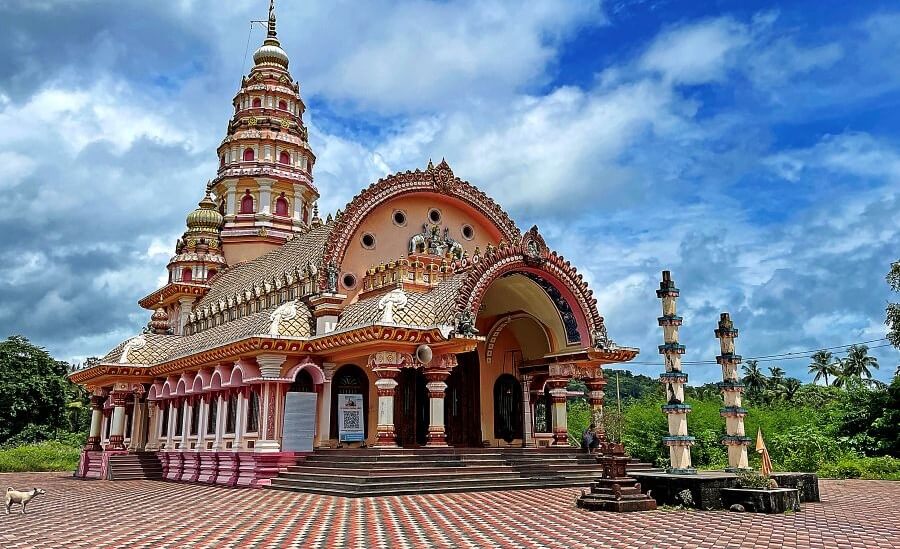
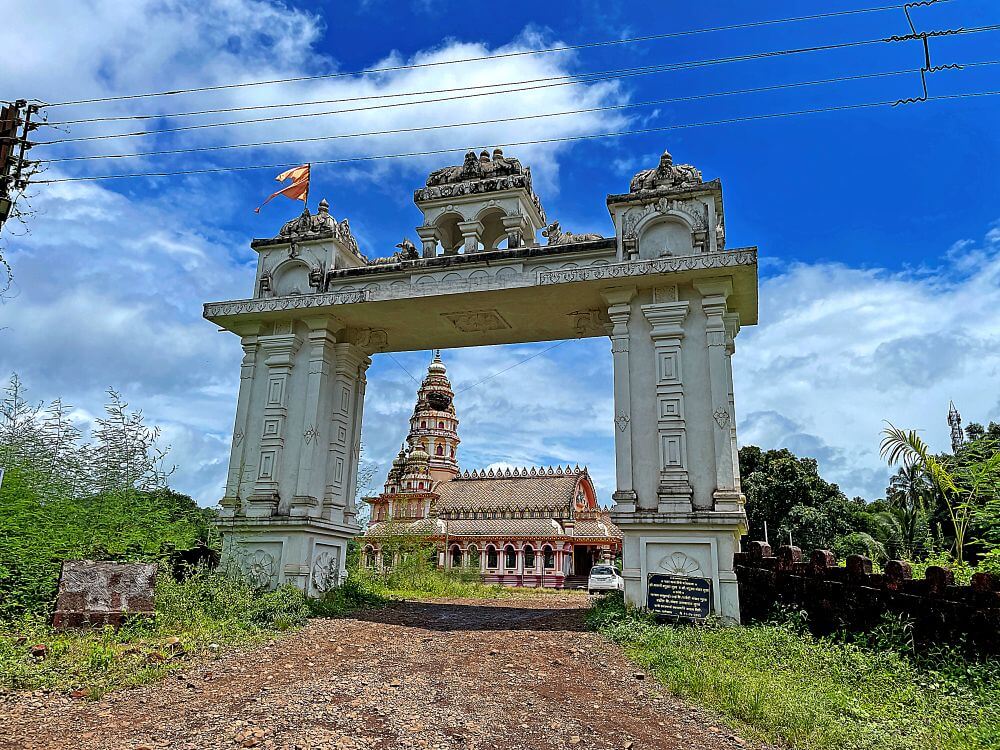
Today, the Mumbai-Goa highway passes through the center of this village. While traveling from Mumbai on this highway, one can see the directional arch for the Shri Kalbhairav Temple on the right side at Kharepatan. Approximately one km further from the highway At a distance is the main entrance of the temple. This grand entrance features wide, intricately carved pillars, with two small shrine-like structures on either side, topped with squat shikhara spires and kalashas. In the center, there is a canopy supported by three pillars connected by arches, flanked by Nandi sculptures on both sides. From here, one enters directly into the spacious temple courtyard. A few steps ahead is the south-facing temple of Kalbhairav.
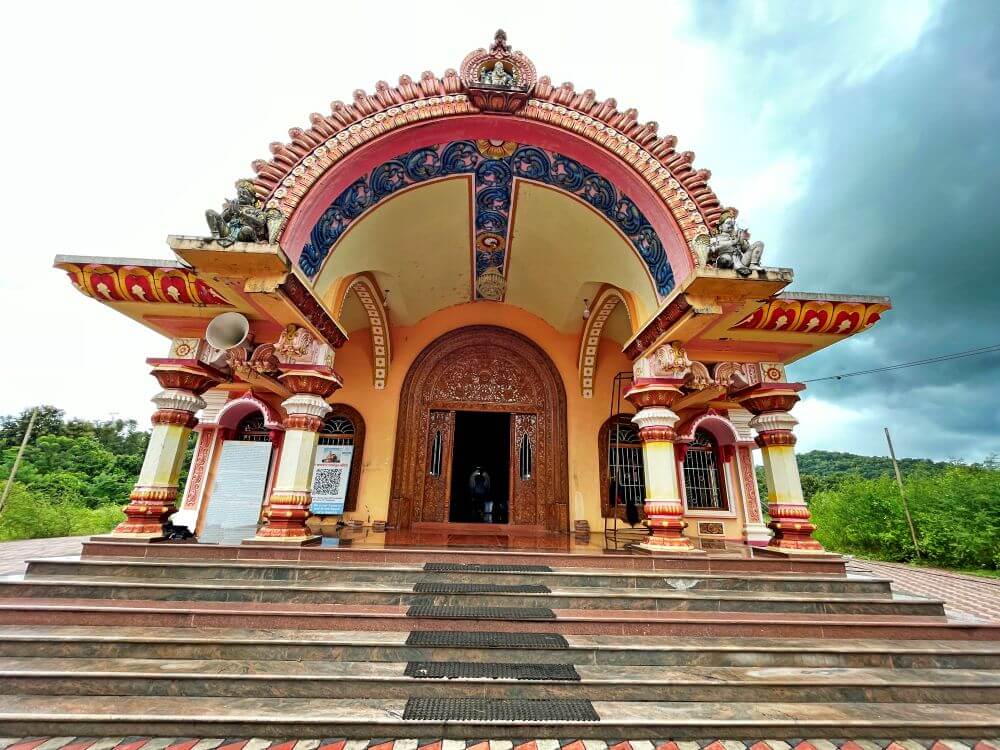
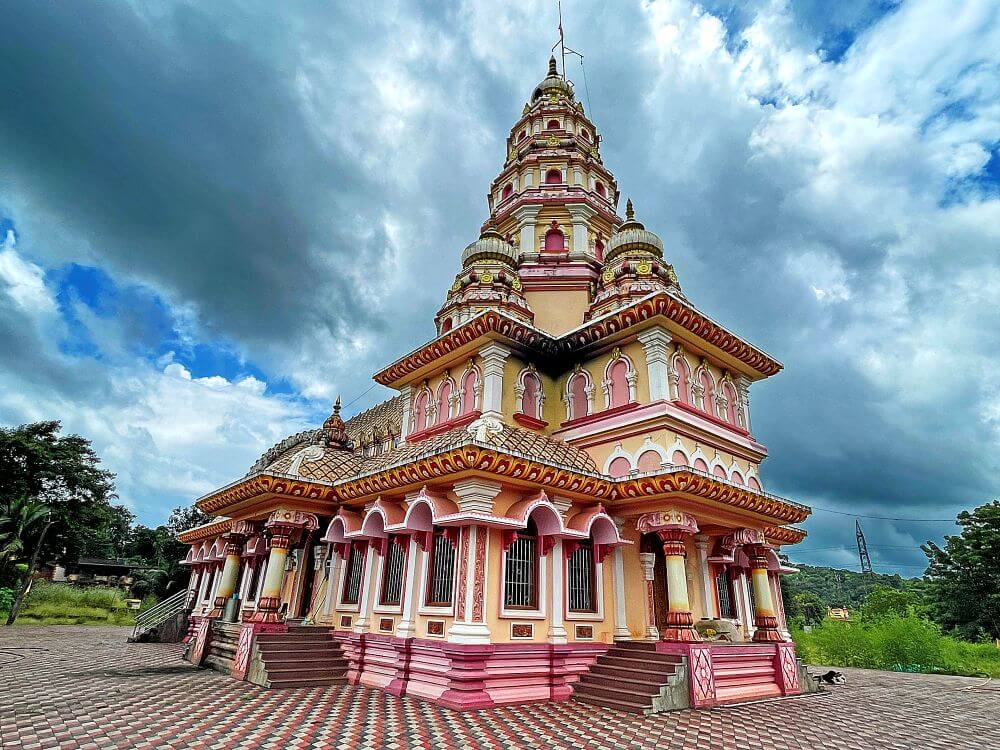
This temple is of the Tridal or Trikut style, meaning it has three sanctum sanctorum (Garbhagrihas). The structure of the temple consists of a Sabha Mandap (assembly hall) and a Darshan Mandap (viewing hall) in front of them. The entire temple is built upon a plinth several feet high. In front of the temple, there are two Deepastambhas (lamp pillars) on a rectangular platform; one is seven-tiered and the other is six-tiered. Next to this platform is a small Tulsi Vrindavan. One enters the Darshan Mandap of the temple by climbing seven steps from near the lamp pillars. This Darshan Mandap is open in nature and has four pillars on the front side. This Darshan Mandap has a semi-circular roof, adorned with images of Garuda on both sides and an idol of Lord Ganesha in the center.
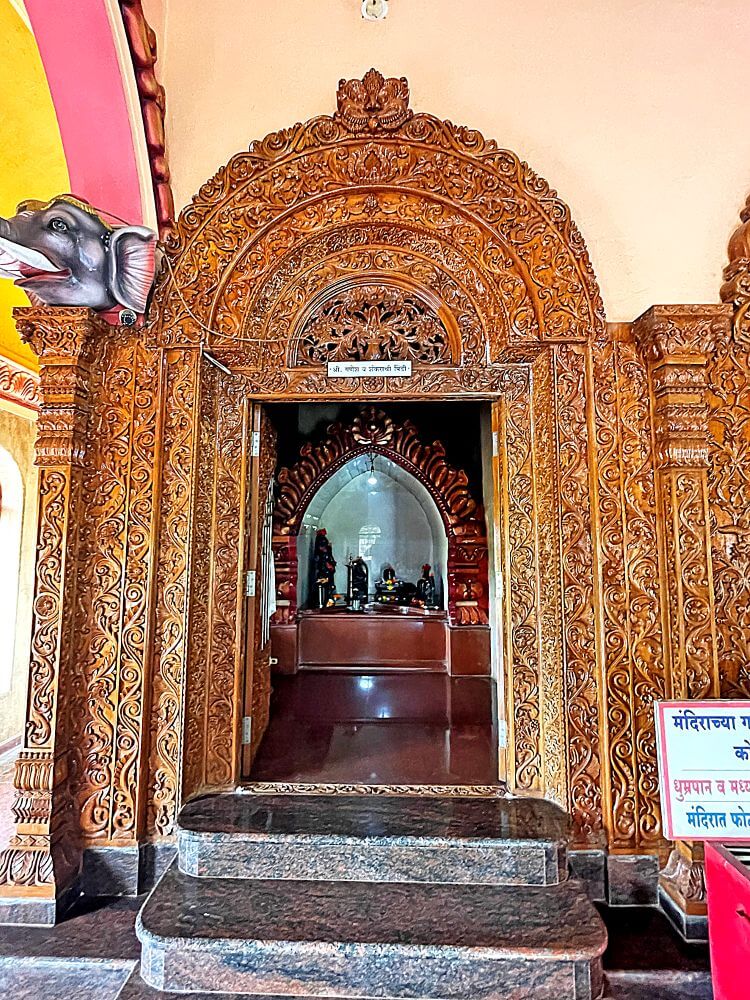
The entrance to the sabhamandapa (assembly hall) here is wooden and arched, featuring intricate carvings. A short distance from the walls of the sabhamandapa stand six wide pillars. The base of these pillars is adorned with carved lotus motifs. The middle section is hexagonal, and the upper part, near the ceiling, also features lotus carvings. Above this, an arch connects the two pillars. On each of these pillars, in the section above the lotus carvings, are the idols of Shri Samhara Bhairava, Shri Asitanga Bhairava, Shri Bhishana Bhairava, Shri Unmatta Bhairava, Shri Chanda Bhairava, and Shri Ruru Bhairava, depicted along with their respective vahanas (divine vehicles).
Beyond the Sabhamandapa (main hall), leaving space for the circumambulatory path (Pradakshinamarga), there are three sanctum sanctorums (Garbhagrihas). Similar to the entrance of the Sabhamandapa, these sanctums also feature intricate wooden carvings. On the wall above them, there is a magnificent relief sculpture based on the mythological tales of Lord Shiva. The central figure of this relief is the four-armed Lord Mahadeva with a fierce expression, performing the Tandava dance. On one side of this sculpture is a child embracing the Shiva Linga, and on the other side is Bhairava, depicted with one leg raised, holding an iron staff (Lohadanda) and a noose (Pasha).
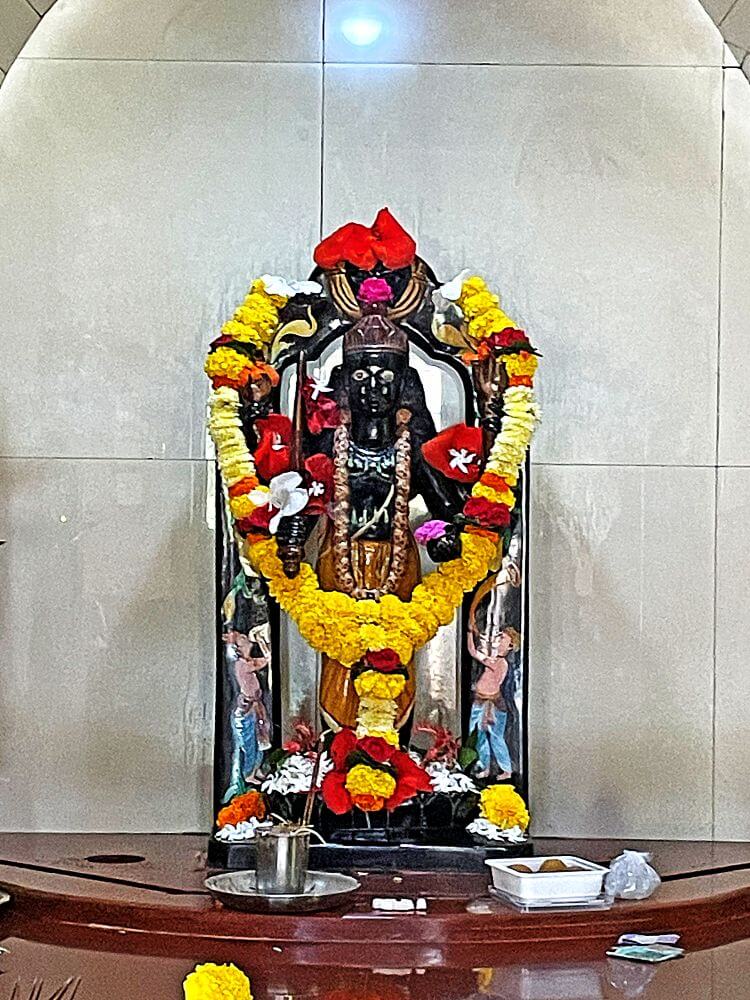
In the sanctum sanctorum at the center of the temple stands the idol of Kalbhairavnath, carved from black stone. This idol is depicted standing upon a lotus flower. In one of its hands, the deity holds a sword (khadga). The idol is adorned with a garland of skulls around the neck and a crown upon the head. At the base of the idol, on one side, there are figures of attendants blowing a conch (shankh), and on the other side, figures of attendants blowing a trumpet (tutari).
There is a mythological legend regarding Kalbhairav that Kalbhairav originated from the wrath of Lord Shiva on Margashirsha Krishna Ashtami. Once, Lord Brahma Shankara was insulted. Consequently, Shankara became enraged, and from that fire of wrath, the black-complexioned Bhairava was born, who severed the head of Brahma that had blasphemed Shiva. However, he incurred the sin of Brahmahatya (killing a Brahmin) by this act. Despite visiting all the sacred pilgrimage sites, his sin was not cleansed. Finally, he attained liberation from his sin in Kashi, where he placed Brahma’s head. The place where Kalabhairava placed Brahma’s head is known as Kapalamochana Tirtha. The Kalika Purana narrates that due to Parvati’s curse, the Gana Mahakala was born in the form of Bhairava. He was born during the fourth watch of the night. On Kartika Vadya Ashtami, the Bhairava Jayanti kamya-vrata (vow performed for a specific desire) is observed.
To the right of the sanctum sanctorum of this Kalbhairavnath, there is a sanctum housing Shri Ganesha and a Shiva Linga, while to the left, there is an idol of Goddess Jogeshwari. There is a circumambulatory path (pradakshina marg) around the sanctum, and there is also an entrance to the temple from the rear (northern side) of the sanctum. Additionally, there are entrances to the east and west from the main assembly hall (sabhamandap) of this temple.
A grand fair of Kalbhairav is held here on Magh Shuddha Panchami and Shashthi. Thousands of devotees come here for darshan on this occasion. It is a popular belief that the influence of evil spirits and snake bites is dispelled by the grace of Bhairav. The temple’s anniversary is also celebrated every year on May 11th. On the second Tuesday of the month of Shravan, an Abhishekam is performed for Kalbhairav at 8:00 AM. Aarti and Mahaprasad are organized at 1:00 PM on this day. Every year, the Kalbhairav Janmotsav festival is held from Kartik Vadya Pratipada to Dashami. Countless devotees attend this festival as well.
This sacred temple stands as a testament to deep spiritual devotion, ancient architectural grandeur, and rich local cultural traditions.
The sanctum sanctorum houses the divine idol consecrated according to ancient Vedic traditions, surrounded by serene courtyards and traditional temple architecture.
Navratri, Maha Shivratri, Annual Temple Jatra & Deepotsav
Compare and book flights, secure top-rated local hotels near the temple, hire reliable guides, and rent cars instantly.
Extend your pilgrimage by visiting other highly sacred temples located nearby.


Add ₹999 more to unlock FREE SHIPPING!
Your sacred cart is currently empty.
Shop Photo FramesFill in your delivery details below to place your order.
Add comment