
Add ₹999 more to unlock FREE SHIPPING!
Your sacred cart is currently empty.
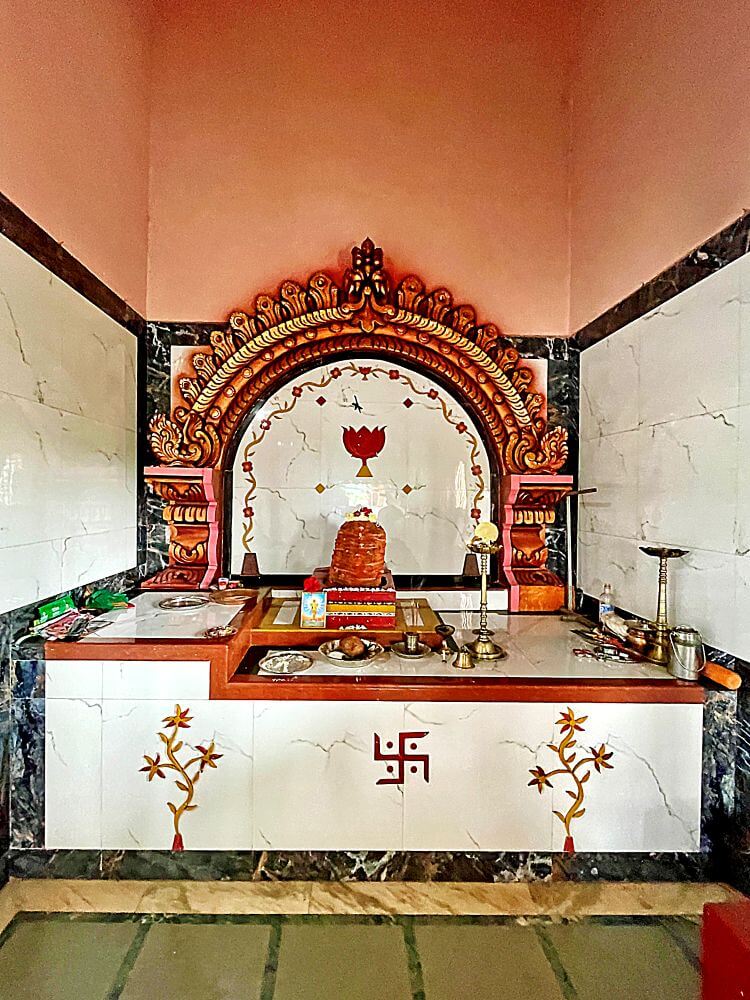
Shop Photo FramesAccording to mythological lore, Goddess Durgadevi is Aadishakti (the Supreme Primordial Energy); She was named Durga because She slayed the demon named Durg. The Markandeya Purana states that Goddess Durga emerged from the divine elements of deities such as Shiva, Yama, Vishnu, Chandra, Indra, Varuna, Bhumi, and Surya. Goddess Durga possesses both fierce (Raudra) and serene (Saumya) forms. In Kolkata, She resides in the form of Mother Kali, whereas in Goa (Gomantak), She is manifested in the serene form of Shanta. Idols depicting Her in various forms are found across different regions. However, in the Durgadevi Temple at Kharepatan Fort, the Goddess is worshipped in the sacred form of a Swayambhu Tandala (a self-manifested, unformed sacred stone).
According to historical records, Kharepatan was an ancient and prominent trading center. In the second half of the eighth century, Rashtrakuta King Krishna I conquered South Konkan (Tal Konkan) and appointed Sanphulla of the Shilahara dynasty as its administrator. The Shilahara dynasty considered themselves descendants of Vidyadhara Jimutavahana. According to Hindu tradition and culture, Vidyadharas were celestial demigods, similar to Gandharvas, Apsaras, Yakshas, and Kinnaras. Jimutavahana was a Vidyadhara prince. Eleven generations of this dynasty ruled over this region. Their capital was initially located at Chandor (Chandrapur) in South Goa. Dhammiyara, son of Sanphulla who reigned between 765 and 785 CE, shifted the capital to the then Balipattan, which is modern-day Kharepatan. It was he who constructed the hill fort (Giridurg) of Kharepatan.
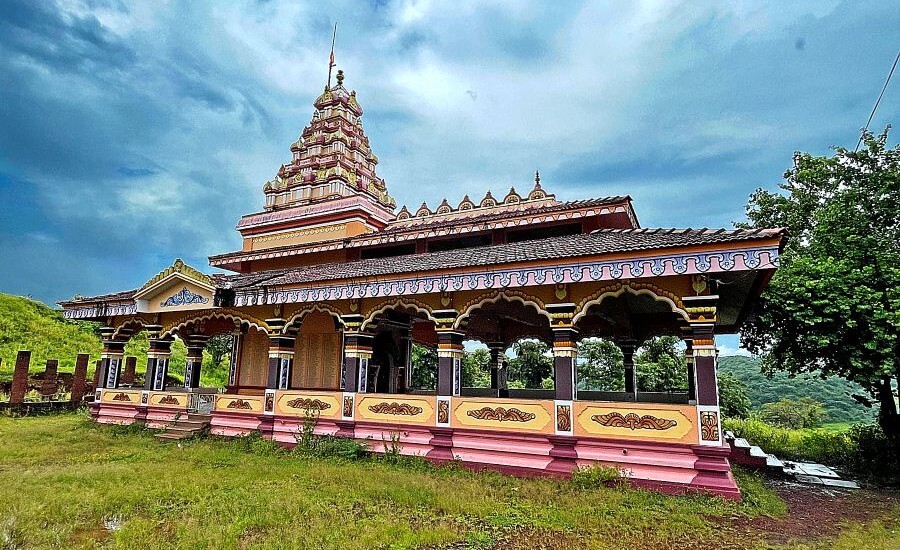
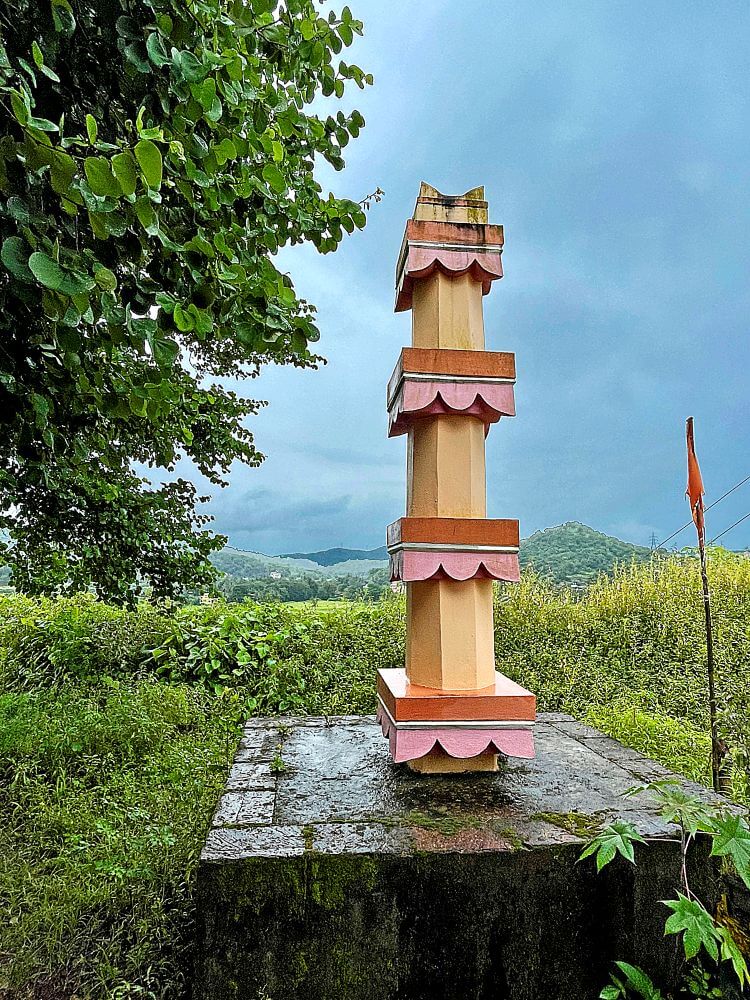
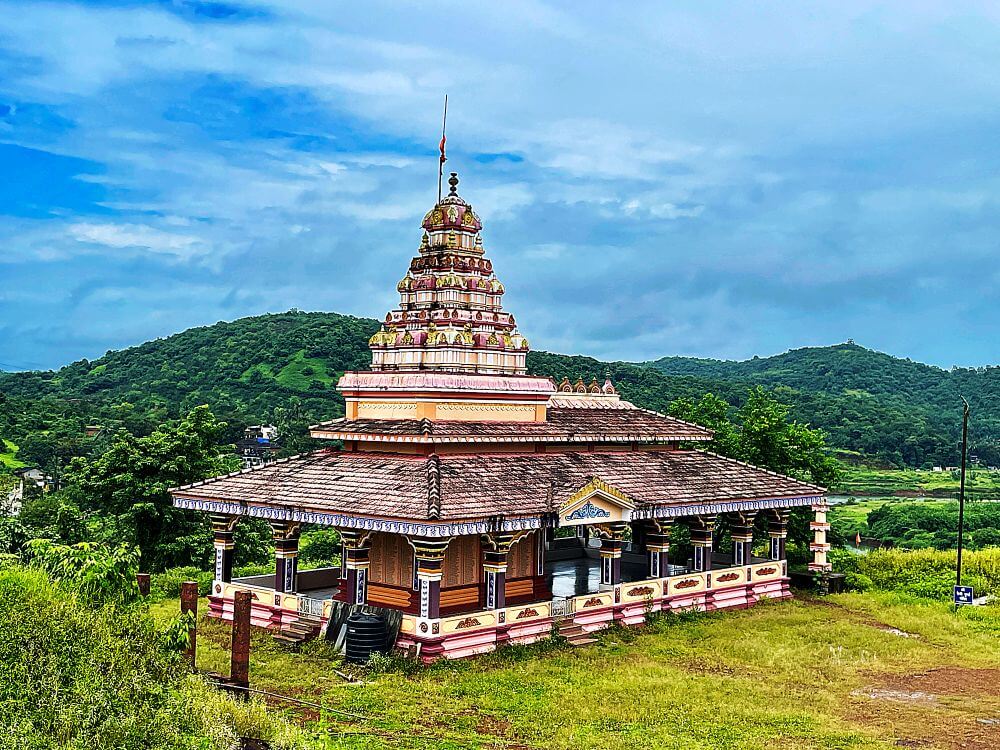
In 1660 CE, Chhatrapati Shivaji Maharaj invaded the Adilshahi territories of Konkan. During this campaign, he conquered this fort along with Kharepatan and annexed it into Swarajya. Situated at an elevation of 80 meters above sea level, the Durgadevi Temple was built within the citadel (Balekilla) of this fort during the era of Chhatrapati Shivaji Maharaj. Near this temple, a dilapidated bastion stands today, bearing silent witness to that historic era. Looking towards the mountain ranges on the right side from Kharepatan on the Mumbai-Goa Highway, one can behold this fort atop a medium-sized hill and the temple situated upon it. The temple has now been beautifully renovated, with a magnificent and spacious new structure standing in place of the old one. Built on a flat expanse within the fort, this shrine faces east. In front of the temple entrance, on a raised platform, stands a Deepastambha (sacred lamp tower) alongside a Tulsi Vrindavan.
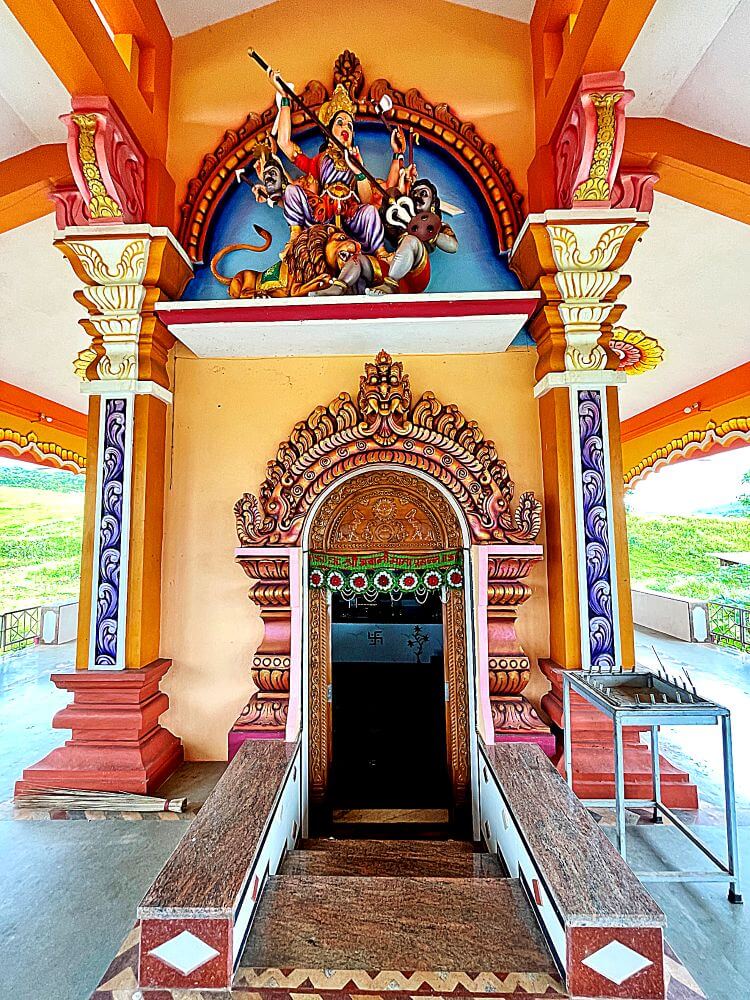
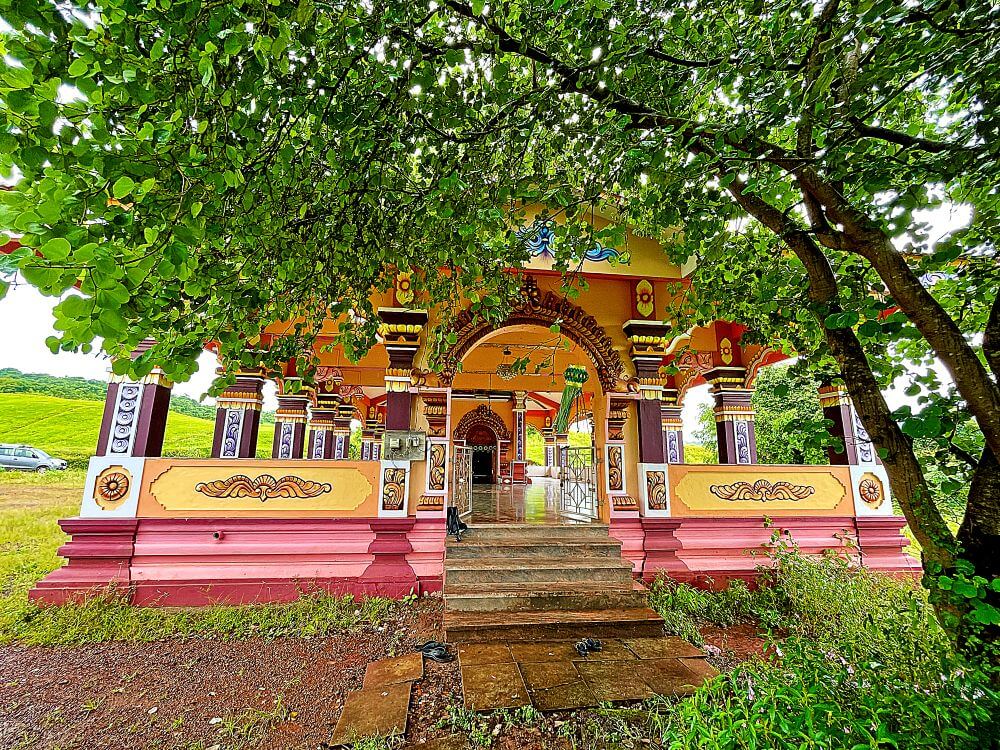
The temple is built on an Adhisthana (plinth) raised a few feet above ground level. The architectural layout consists of a spacious rectangular Sabhamandap (assembly hall) and a Garbhagriha (sanctum sanctorum) surrounded by an inner Pradakshina Marga (circumambulatory path). On the front side of the temple, the Sabhamandap features three arches supported between four pillars. The central arch houses the main entrance to the temple. It is flanked by square pillars adorned with decorative Ghatapallava (vase-and-foliage) motifs near the ceiling level, topped by a short square section known as the Palagai. Ascending five steps through the entrance framed by these distinctive pillars, one enters the Sabhamandap.
The Sabhamandap here is designed in the style of an Ardhamandap (half-hall). It features a sloping tiled roof, characteristic of traditional Konkan architecture. Inside, on both the right and left sides, there are Kakshasanas (built-in seating platforms) for the comfort of visiting devotees. The Sabhamandap is supported by 18 pillars. Beyond the hall and the circumambulatory path lies the sanctum sanctorum of the Goddess. The archway of the Garbhagriha is semicircular at the top, featuring a carved Vyaghramukha (tiger face) motif above the arch. On the upper wall section above the lintel, known as the Uttararanga, there is a relief sculpture depicting Mother Kali slaying Mahishasura. Descending four steps from the doorway, one enters the Garbhagriha. Inside, seated upon a Vajrapeetha (sacred altar), is the cylindrical Tandala form of the Goddess. According to local lore, the sacred stone icon was originally small, but appears larger now due to the ritual threads (Nadya) wrapped around it by generations of devotees. On the wall behind the deity, an elegant semicircular design rests upon two short, decorative pillars.
The towering Shikhara (spire) above this sanctum is visible even from the base of the fort. Pyramid-shaped, it consists of stepped, receding square tiers adorned with carvings resembling tiny shrines or traditional canopy motifs. At top, in place of the Amalaka, is an inverted half-pot motif (Ardha-ghata), surmounted by a tall Kalasha (finial). The festival of Navratri is celebrated at this temple with great grandeur and spiritual fervor. For nine days, the holy site is thronged with large numbers of devotees. It is a deeply held belief among devotees that this divine abode is *Jagrut* (spiritually vibrant and vigilant) and fulfills the sacred vows (*Navsas Pavanare*) of true seekers. Many offer vows (Navas) to the Goddess, which are fulfilled on the ninth day of Navratri. According to local tradition, a goat sacrifice is performed here as part of the ritual, and the deity is bathed with its blood.
This sacred temple stands as a testament to deep spiritual devotion, ancient architectural grandeur, and rich local cultural traditions.
The sanctum sanctorum houses the divine idol consecrated according to ancient Vedic traditions, surrounded by serene courtyards and traditional temple architecture.
Navratri, Maha Shivratri, Annual Temple Jatra & Deepotsav
Compare and book flights, secure top-rated local hotels near the temple, hire reliable guides, and rent cars instantly.
Extend your pilgrimage by visiting other highly sacred temples located nearby.


Add ₹999 more to unlock FREE SHIPPING!
Your sacred cart is currently empty.
Shop Photo FramesFill in your delivery details below to place your order.
Add comment