
Add ₹999 more to unlock FREE SHIPPING!
Your sacred cart is currently empty.
Shop Photo FramesKapileshwar is one of the names of Lord Shiva. The Shiva Linga first established by Sage Kapila—the fifth avatar of Vishnu in the Svayambhuva Manvantara and the one about whom Krishna says in the Bhagavad Gita, “Siddhanam Kapilo Munih” (Among the perfected, I am the sage Kapila)—is known as Kapileshwar. Sage Kapila is the founder of the Samkhya philosophy. He was the first to preach the path of meditation and penance. There are many temples in the country dedicated to Kapileshwar, named after him. One such temple is located in the historically renowned town of Kharepatan.
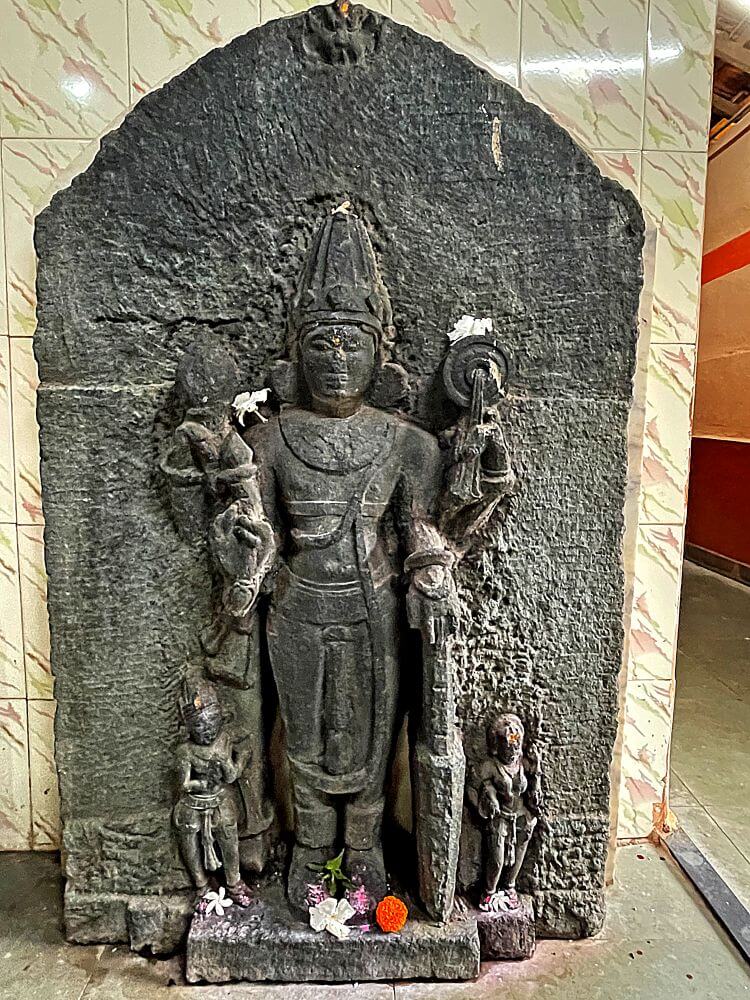
According to historical records, the ancient name of Kharepatan was Bali-pattan. It was established in the 8th century by King Dhammiyar of the Shilahara dynasty of South Konkan. It served as his capital city and was also a major trading hub. Although concrete information about the history of the Kapileshwar temple is not available, historians believe that based on the ancient idol of the Sun God found here, this temple must also date back to the Shilahara period. The Shilahara kings of South Konkan patronized religion, education, and the arts. They built many temples. This exquisitely carved idol of the Sun God from their era is considered an important historical heritage of the Konkan region. The Kapileshwar temple in Kharepatan is also known for this Sun idol.
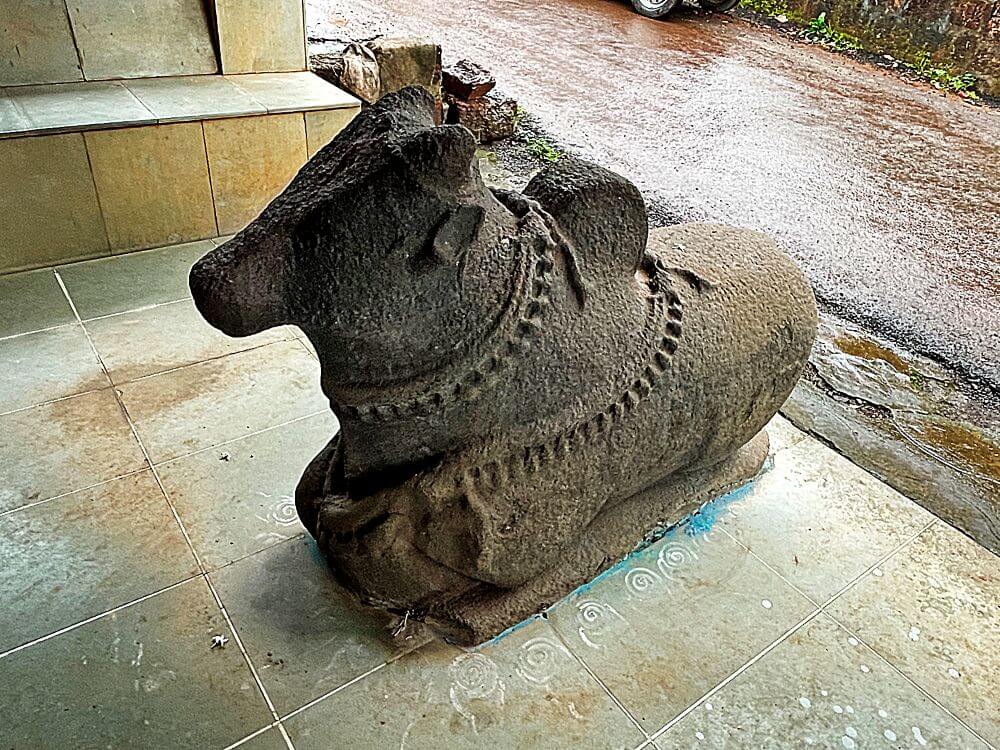
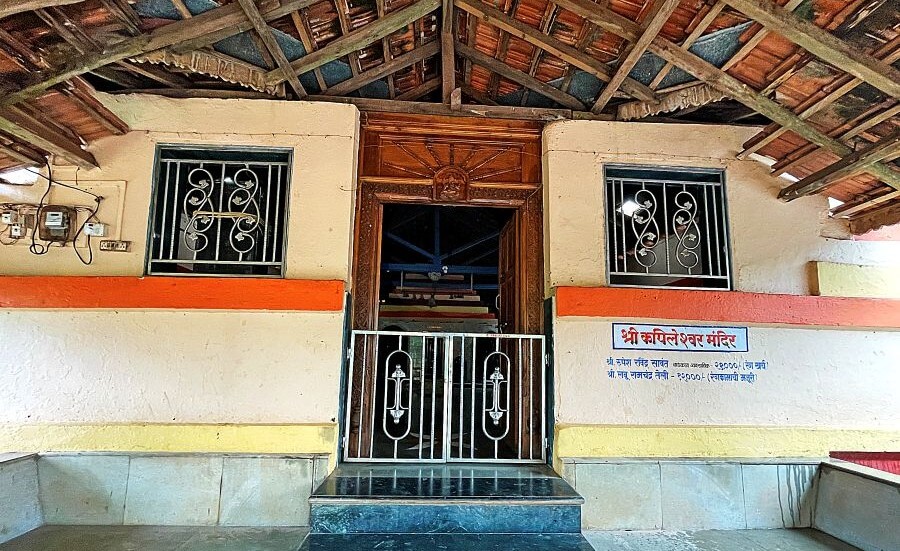
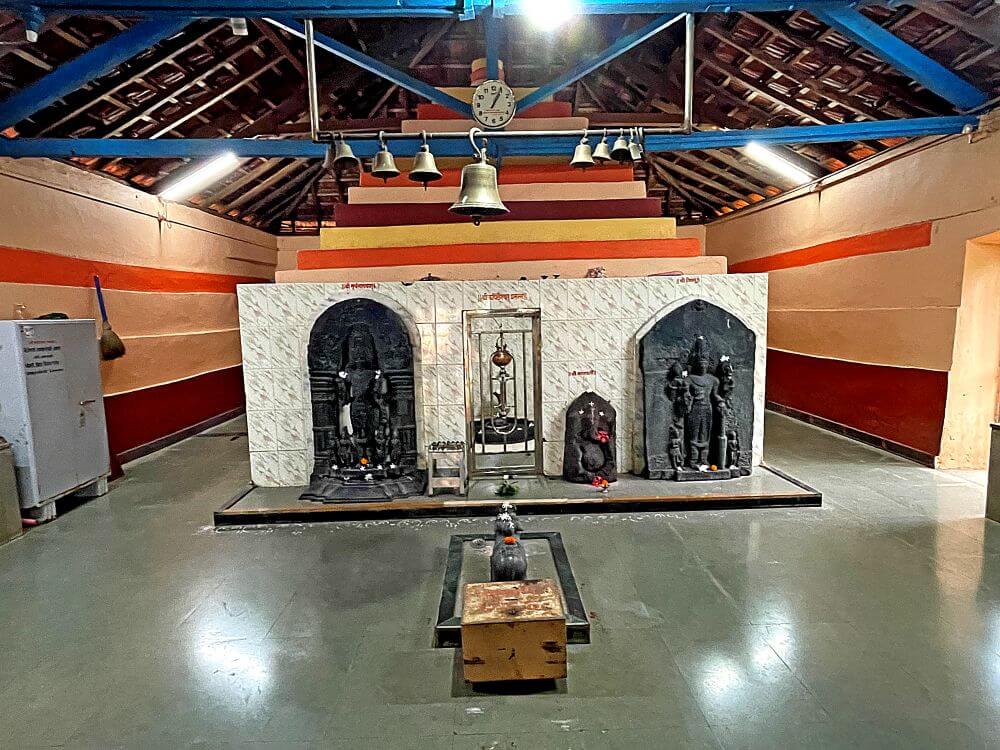
The Kapileshwar temple is located approximately 500 meters from the highway after turning right from Kharepatan on the Mumbai-Goa highway. By the side of the road here, there is a deepastambha (lamp tower) on a high plinth, and adjacent to it is a Tulsi Vrindavan. An asphalt road passes between the lamp tower and the temple structure. Like other temples in Konkan, this temple is roofed with tiles and faces east. In the mukhamandapa (entrance hall) of the temple, there is a large Nandi carved from a single stone. Although the carving on it appears incomplete, the bell necklaces around its neck and the floral garlands carved on its back behind the hump are remarkable.
The darshan-mandapa here is in the form of an ardha-mandapa (half-hall). It has stone benches on the south and north sides for devotees to sit. The main temple is at a height of three feet from the darshan-mandapa. One enters the sabha-mandapa (assembly hall) of the temple by climbing four steps from here. On the lintel of the wooden entrance of the sabha-mandapa, there is a Ganesha idol carved in wood. Although this assembly hall is enclosed, it has stone benches on the left and right sides for devotees. There is also a small Nandi idol in the assembly hall in front of the entrance to the sanctum sanctorum.
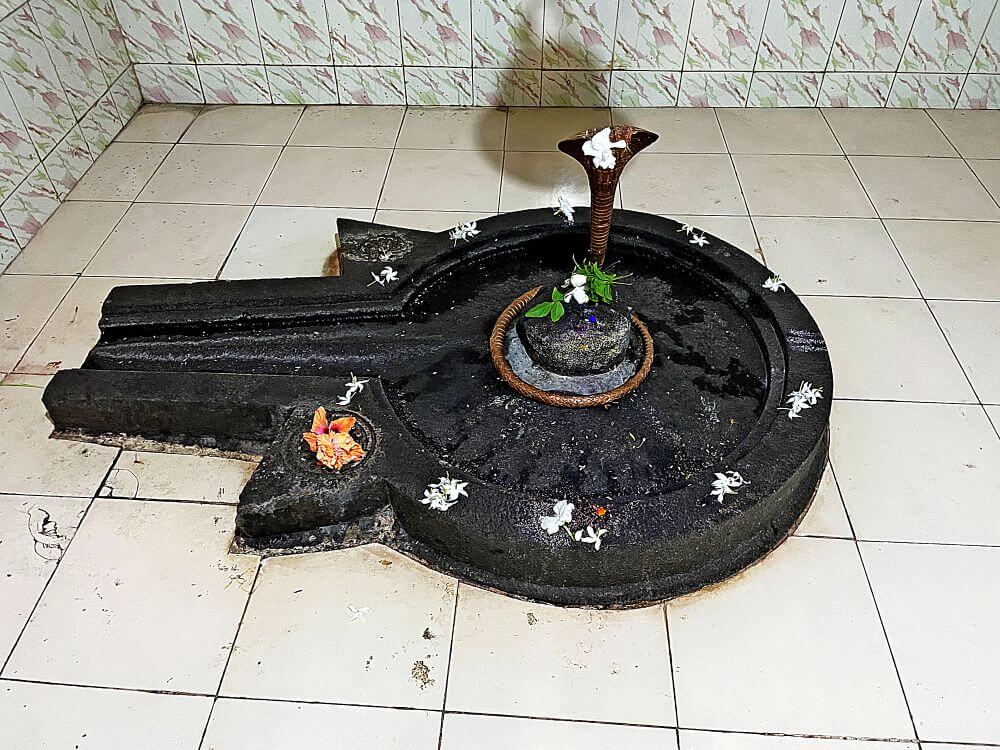
The sanctum sanctorum is located in front of the assembly hall, separated by a circumambulatory path (pradakshina marg). Like other Konkani temples, the sanctum of this temple is also inside the tiled structure. The shikhara (spire), created from squares that become smaller as they go up, is a unique feature of this sanctum. To the right of the entrance to the sanctum is an ancient and distinctive idol of Suryanarayana. To the left is a small stone Ganesha idol, and next to it is a partially carved idol of Vishnu, similar in size to the Suryanarayana idol. In the center of the sanctum is a Shiva Linga carved from a single piece of black stone. A unique feature of this Linga is that where the circular base ends and the water-outlet (pranala) begins, there is a triangular shape protruding on both sides. A similar type of Linga is found in the medieval Ravaneshwar Mahadev temple at Shiur in Vaijapur taluka of Marathwada.
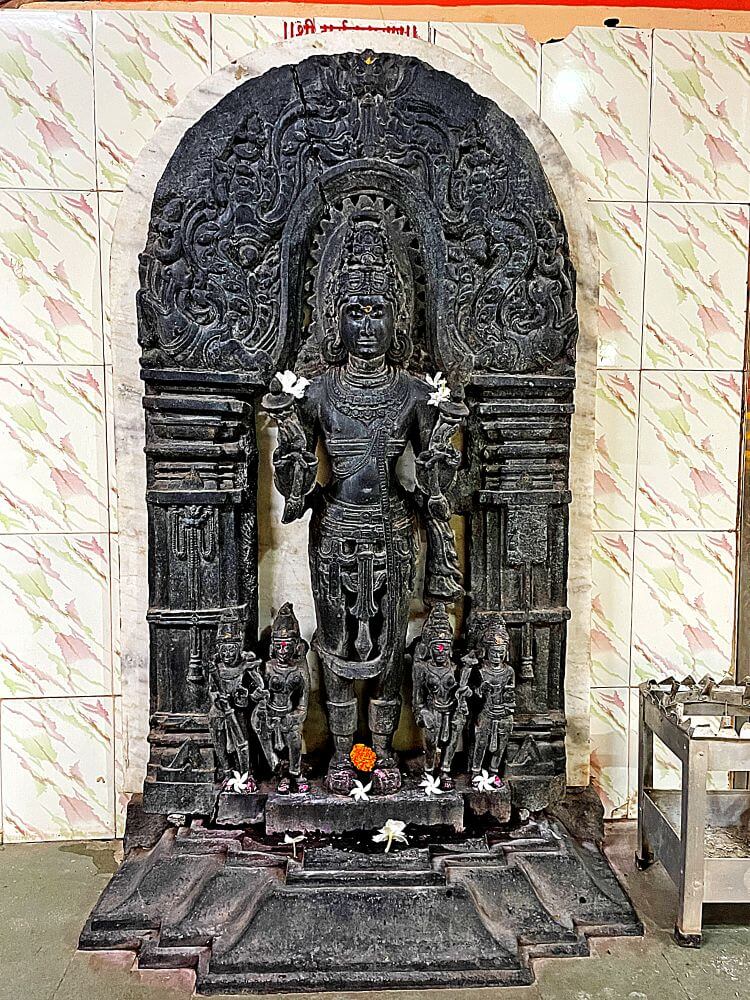
The idol of Suryanarayana in the Kharepatan temple bears witness to the fact that sun worship was once widely prevalent in Konkan. Sun worship has been practiced in India since ancient times. The Gayatri Mantra of Sage Vishwamitra, related to sun worship, is famous. Rathasaptami, celebrated on Magh Shuddha Saptami, is also a solar vow. It is believed that because the Sun received its chariot on this date at the beginning of the Manvantara, it is called Rathasaptami. On this occasion, milk is boiled over a fire of cow dung cakes in an earthen pot in the courtyard in front of the house, and an offering (naivedya) is made to the Sun God. There are Sun temples in Murud and Kurdhe in Konkan. There is also a Sun temple at Ponkshe-Ambav. Aditya Narayan is worshipped at Aravali, Kanakaditya at Kasheli, Aditya Narayan at Makhjan, Adinarayan at Parule, and similarly, Adinath is worshipped at Kayaghale, Nevre, Ajgaon, and Satarde. The Sun idol in the Kapileshwar temple at Kharepatan is also considered to be that of Adinath. This Sun idol, about three and a half feet tall, is carved from a single block of black stone along with other smaller attendant deities. There is a prabhavali (halo) behind this idol. The halo features a makara-torana (arch) with floral carvings.
The Sun God, standing in a samacharan (straight) posture, has a serene expression on his face and holds lotus flowers in both hands. On his head is a crown (kirit-mukuta) adorned with jewelry. The idol’s neck is marked with three lines (trivali). He wears ornaments like an ekavali (single-strand necklace) and a phalakahar (flat-beaded necklace). He has earrings, a chest ornament (urubandha), a garment around his waist with a girdle (mekhala), and anklets (padaganda). At the feet of this idol, adorned with carved jewelry, are the Sun God’s wives, Sanjna and Rajni. They also hold lotus flowers in their hands. Next to them are the Sun God’s attendants, Danda and Pingala. Danda holds a long staff, and Pingala holds an inkpot and a stylus. The Sun God’s idol is in the samacharan (straight) posture, while the other idols are in the dvibhanga (slightly bent) posture. Along with devotees, history-loving tourists also come here to see this idol of Adinath or Suryanarayana. This shows that while Konark on the east coast of India is a world-famous Sun temple, sun worship was also widely practiced on the west coast.
This sacred temple stands as a testament to deep spiritual devotion, ancient architectural grandeur, and rich local cultural traditions.
The sanctum sanctorum houses the divine idol consecrated according to ancient Vedic traditions, surrounded by serene courtyards and traditional temple architecture.
Navratri, Maha Shivratri, Annual Temple Jatra & Deepotsav
Compare and book flights, secure top-rated local hotels near the temple, hire reliable guides, and rent cars instantly.
Extend your pilgrimage by visiting other highly sacred temples located nearby.

Add ₹999 more to unlock FREE SHIPPING!
Your sacred cart is currently empty.
Shop Photo FramesFill in your delivery details below to place your order.
Add comment