
Add ₹999 more to unlock FREE SHIPPING!
Your sacred cart is currently empty.
Shop Photo FramesThe only temple of Rajarajeshwari Mahayogini Mata Kaila Devi in Maharashtra is located at Pachora in Jalgaon district. This sacred site, which houses an idol identical to the one at the awakened Kaila Mata temple situated on the Trikut Mountain in Karauli, Rajasthan, serves as a ‘Shaktipeeth’ for the devotees of the city. According to the legend of Kaila Devi, the divine maiden who escaped from the hands of Kansa while he attempted to kill the eighth child born to Devaki in the prison, later manifested herself on the Trikut Mountain. Devotees firmly believe that the Goddess in the Pachora temple, much like the one in Karauli, is a granter of wishes and prayers.
The mythological legend regarding Kaila Devi of Karauli, who is worshipped as an incarnation of the primordial power Adi Shakti Mahayogini Maya, states that she was born as the child of Nanda and Yashoda. During the wedding of Devaki and Vasudeva, a divine voice from the heavens (Akashvani) had prophesied that the eighth son of the couple would slay Kamsa, the King of Mathura. Enraged by this, Kamsa imprisoned Devaki and Vasudeva. He killed their first six children immediately after birth. The seventh child, Balarama, survived because he was transferred by divine will to the womb of Rohini, one of Vasudeva’s other wives. Krishna was born as the eighth child of this couple.
Vishnu instructed Vasudeva to leave Krishna with Yashoda and bring her newborn daughter back to the prison with him. Following Vishnu’s command, Vasudeva brought the infant girl to the prison. When Kamsa attempted to kill the child by dashing her against a stone, she assumed a divine form. Declaring, “The one destined to slay you has already been born and is in a safe place,” she slipped from Kamsa’s grasp and ascended into the sky. It is mentioned in the 65th chapter of the Skanda Purana that the Goddess proclaimed through a celestial voice, “In the Kali Yuga, my name shall be ‘Kaila’, and devotees will worship me in the form of ‘Kaileshwari’.” In some places, this Goddess is also worshipped in the form of Vindhyavasini and Hinglaj Mata.
The original abode of this Goddess is in Karauli. This Goddess appeared before a sage named Kedargiri. She gave an assurance that she would soon come there for the welfare of the people in the region. Accordingly, around the eleventh century, the idol of the Goddess was found in the forests of Karauli. According to a folklore, a sage fleeing from invaders from Nagarkot placed this idol in a bullock cart. That bullock cart came to a halt in the middle of a mountain in the forest, near the banks of the Kalisil river. Despite all efforts, the bullocks would not move from there. Thereafter, following a divine sign, the idol was consecrated at that very spot. In 1723, the Yaduvanshi ruler of Karauli, Maharaja Gopal Singh They built her temple. Here, they also consecrated the idol of Chamunda Mata. They had brought the idol of Chamunda Mata from a cave near Gagron Fort. The idol of Kaila Devi is taller than that of Chamunda Devi, and this idol is slightly tilted. There is a legend behind this as well. One day, a devotee who came to the temple was sent back without having the darshan of the Goddess. Displeased by this, the Goddess turned her head to look in the direction the devotee had gone. Since then, her face has remained tilted.
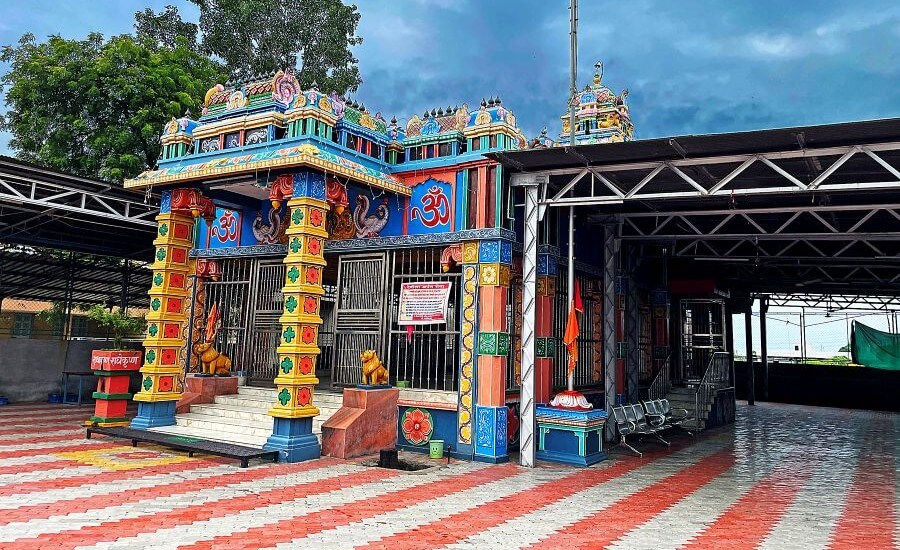
Thirty years ago, the renowned industrialist from Pachora, Jagdish Agrawal, also known as Purushottam Agrawal, built this temple dedicated to his Kuldevi (family deity) in Pachora. The temple is located near M. M. College on the Nagpur-Mumbai Highway. The serene idol of Kaila Devi here, as well as the two eternal flames (Akhand Jyoti) burning in the temple, have been brought from Karauli. One of these lamps is fueled by oil, while the other is fueled by pure ghee.
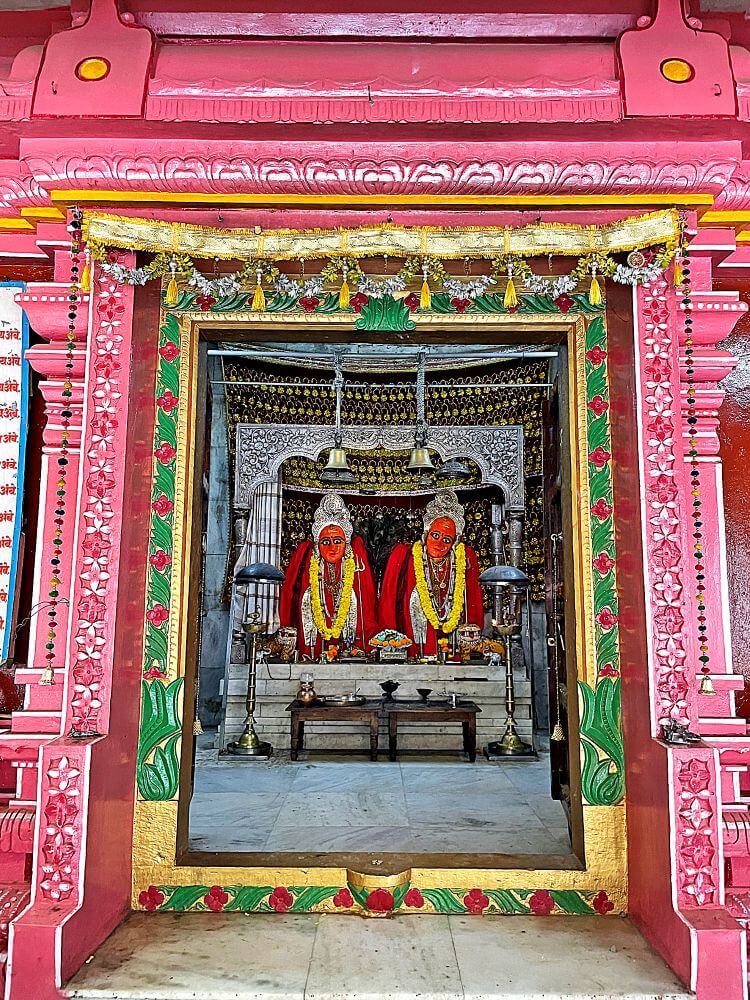
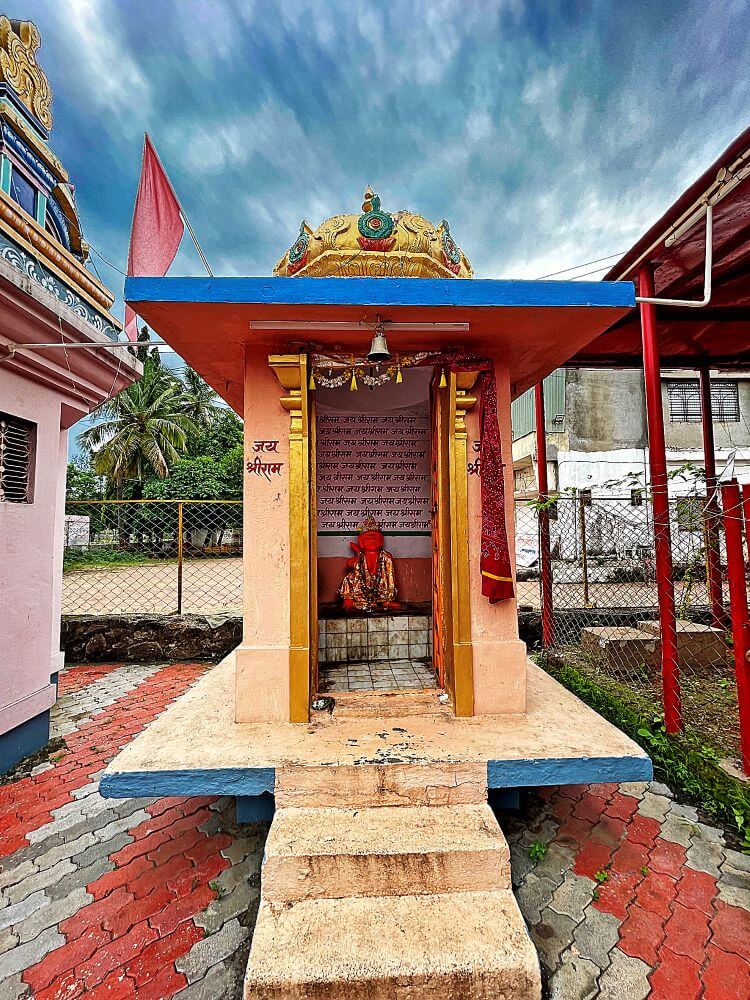
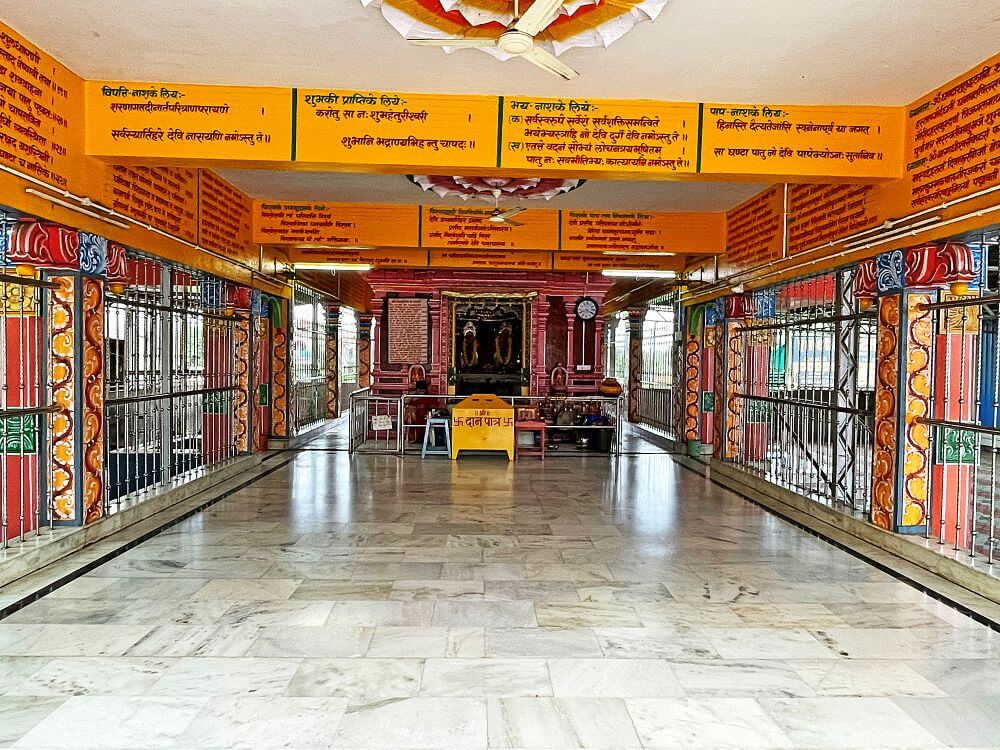
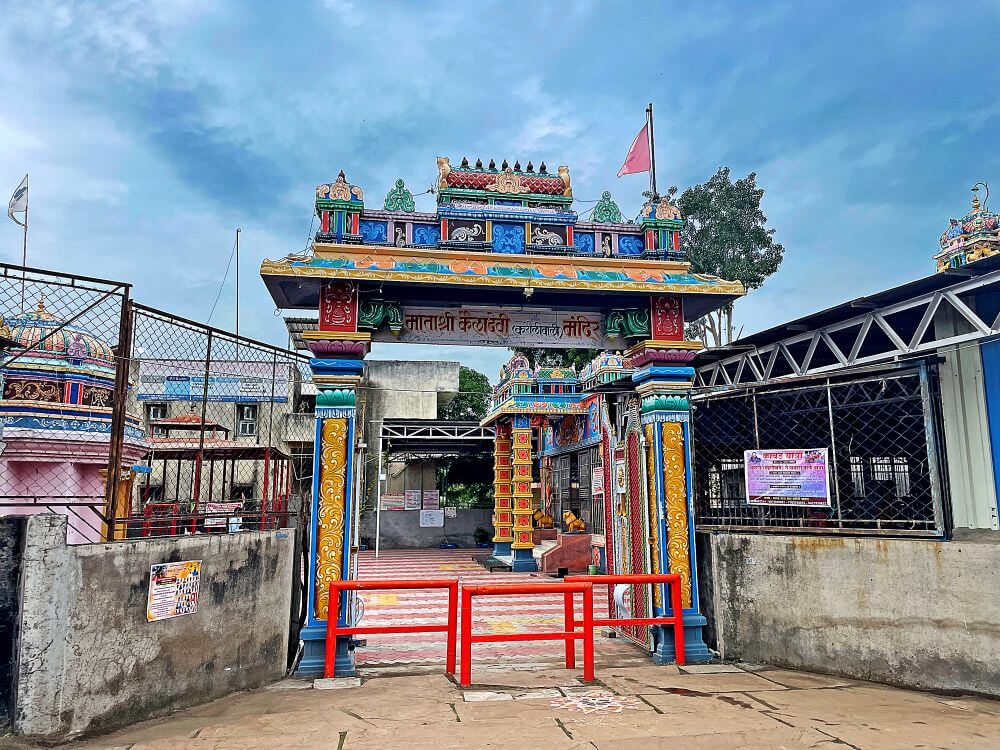
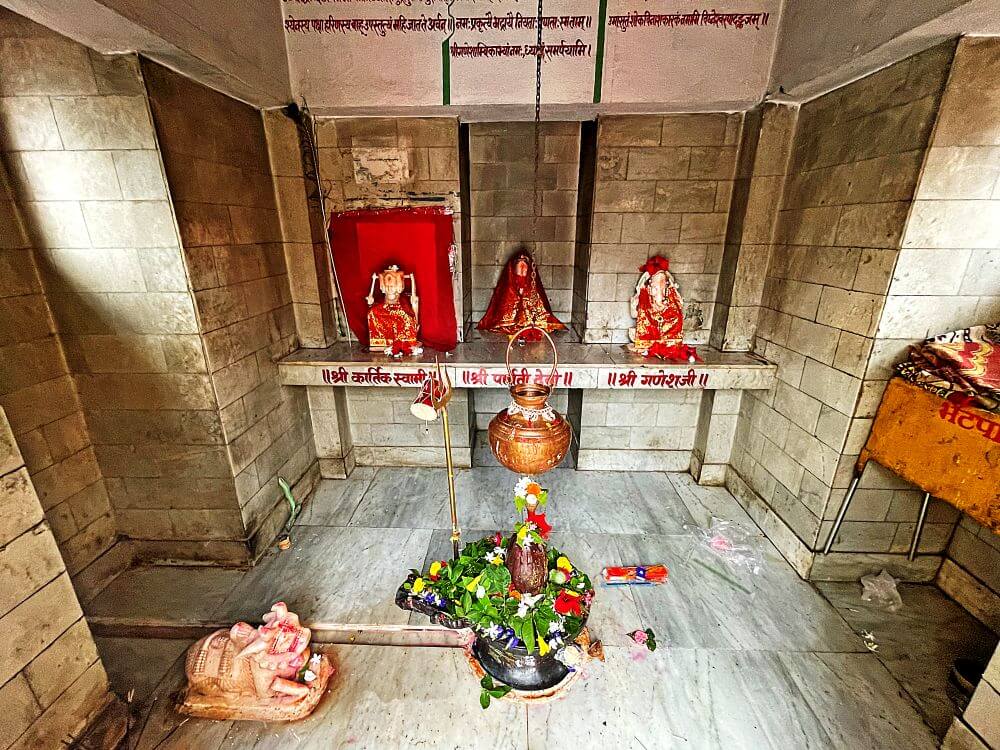
As you arrive in the temple premises, the temple’s magnificent shikhara (spire) immediately catches your eye. Upon entering the temple courtyard through the exquisitely carved entrance, the temple of Kaila Devi is visible to the right. In the courtyard, which is paved with paver blocks, there are also temples dedicated to Bhairavnath and Mahadev. The Mahadev temple houses the Shivpanchayatan (the family of Lord Shiva). On the dais behind the Shivling, there are marble idols of Kartikeya Swami on the left, Goddess Parvati in the center, and Lord Ganesha on the right. In front of the Shivling stands a marble idol of Nandi. Beside the Bhairavnath and Mahadev temples is the Yajnashala. The architecture of the Kaila Devi temple here has been brought to life by renowned sculptors from the states of Maharashtra, Rajasthan, and Tamil Nadu. There is intricate craftsmanship on the temple entrance and its pillars. In the upper part of the entrance, there is a Kirtimukha (a protective face) in the center, flanked by peacocks on both sides. The temple structure consists of a Sabhamandap (main hall), a Garbhagriha (sanctum sanctorum), and a Pradakshina Marg (circumambulatory path). The Sabhamandap does not have walls; instead, stainless steel grills have been installed between the pillars. In the center of the Sabhamandap, inside the Garbhagriha, the vermilion-anointed idols of Kaila Devi and Chamunda Mata are enshrined on a marble pedestal within an ornate arch. Similar to the temple in Karauli, the idol of Kaila Devi here is slightly taller than the idol of Chamunda Mata, and its neck is tilted. Both idols are adorned with crowns, garments, and jewelry, and are sheltered by a silver canopy. A peacock feather is placed between the two idols.
It is the firm belief of devotees that worshipping this Goddess with a sincere heart brings happiness and prosperity. Daily Aarti is performed here regularly at sunrise and sunset. Both the Chaitri and Sharadiya Navratri festivals are celebrated with great enthusiasm at the temple. Various religious programs are held here throughout all nine days. During the Sharadiya Navratri festival, Garba is organized here. The temple’s foundation day ceremony is held on Vaishakh Shuddha Ashtami. On this occasion, Homa-Havan, Maha Aarti, Bhandara, and other religious programs are conducted here for two days. During the festivals, the temple is decorated with attractive lighting. The temple premises are adorned with flowers.
This sacred temple stands as a testament to deep spiritual devotion, ancient architectural grandeur, and rich local cultural traditions.
The sanctum sanctorum houses the divine idol consecrated according to ancient Vedic traditions, surrounded by serene courtyards and traditional temple architecture.
Navratri, Maha Shivratri, Annual Temple Jatra & Deepotsav
Compare and book flights, secure top-rated local hotels near the temple, hire reliable guides, and rent cars instantly.
Extend your pilgrimage by visiting other highly sacred temples located nearby.


Add ₹999 more to unlock FREE SHIPPING!
Your sacred cart is currently empty.
Shop Photo FramesFill in your delivery details below to place your order.
Add comment