
Add ₹999 more to unlock FREE SHIPPING!
Your sacred cart is currently empty.
Shop Photo FramesIn Hindu religion, bathing at the confluence (Triveni Sangam) of the three rivers Ganga, Yamuna, and Saraswati at Prayagraj holds special significance. It is said that attaining salvation is possible by bathing at this Triveni Sangam. Similarly, devotees believe that wherever two or more rivers meet, the divine presence of Mother Ganga resides there. Consequently, many temples have been built at such confluence sites since ancient times. One such famous temple is in the village of Sangameshwar in Pachora Taluka. This temple is said to date back to the thirteenth century.
The Agnavati River is considered the harbinger of prosperity for Pachora Taluka. Originating in Pachora Taluka, this river irrigates thousands of acres of land here before joining the Tapi River. The Agnavati Dam project, which provides life-giving water to Sangameshwar, Nagardeola, and the surrounding areas, is located in this vicinity. The Kag River and the Narli stream, flowing near Sangameshwar village, meet the Agnavati River near this temple. Therefore, this region is considered extremely sacred. Due to this confluence, the village and the temple have been named Sangameshwar. After the fall of the Rashtrakutas, the rule of the feudatory kings of the Yadavas was established in various parts of Khandesh. During the reign of the Yadava Emperor Ramdevraya, many temples in the Hemadpanti style were built in this region. The Sangameshwar temple is one of them. It was declared a national monument by the Archaeological Survey of India in the year 1914.
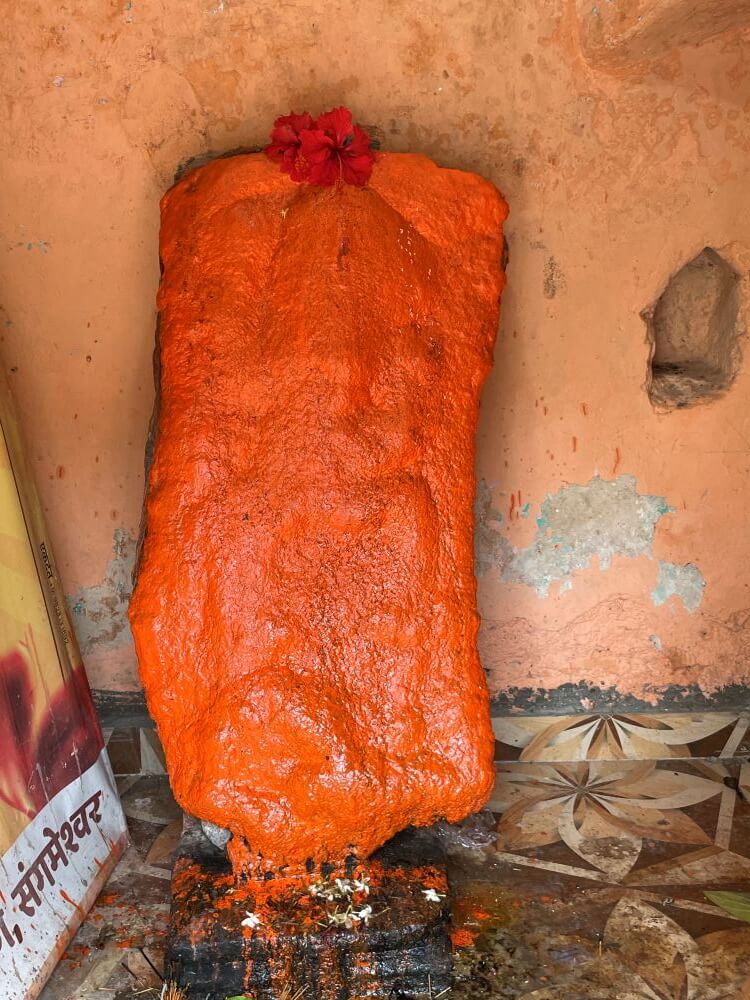
Sangameshwar village is located at a short distance from the village of Nagardeola in Pachora Taluka. This ancient temple is situated near the river confluence close to this village. There is an arch by the road to enter the temple premises. The temple is situated on a mound within the courtyard. A unique feature of this Sangameshwar village is that even today, many ancient idols and Shiva Lingas are found during excavations. Many such idols and Shiva Lingas found during excavations are kept on a platform next to the Maruti temple located in front of the main temple.
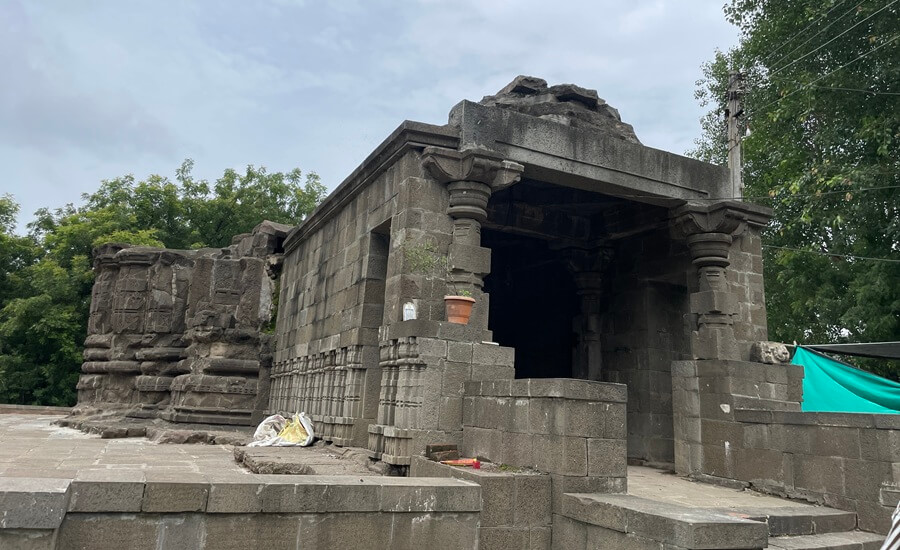
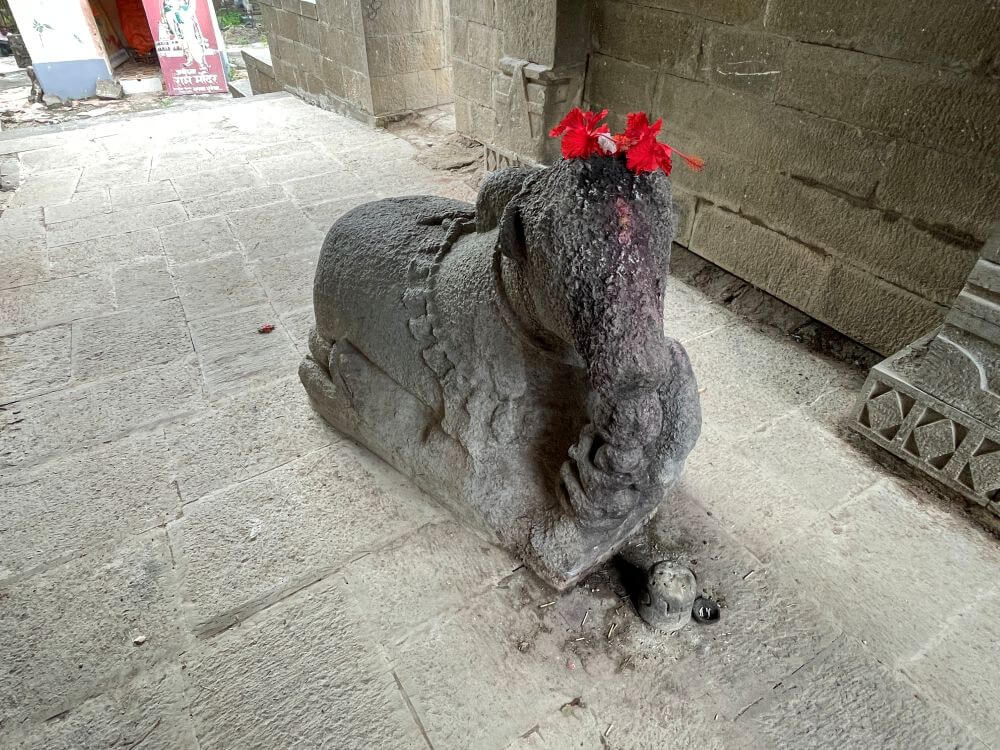
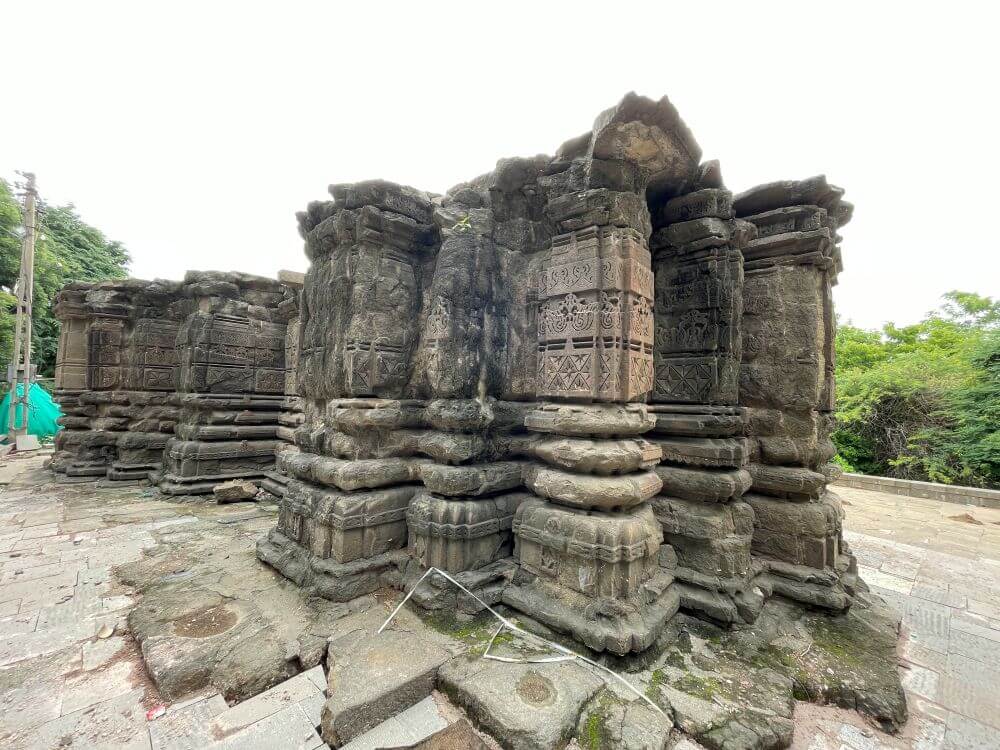
The temple of Sangameshwar Mahadev stands on a six-foot-high plinth. It is built in the Hemadpanti architectural style. The structure of this temple consists of a Mukhamandapa (entrance hall), Nandimandapa, Sabhamandapa (assembly hall), Antarala (vestibule), and Garbhagriha (sanctum sanctorum). One enters the Mukhamandapa of the temple by climbing a few steps. This semi-open Mukhamandapa has stone benches (Kakshasana) with stone pillars atop them. In the Nandimandapa ahead, there is a large, ancient idol of Nandi carved from black stone. Beyond this Nandimandapa is the Sabhamandapa. Previously, there was a large spire over this Sabhamandapa. Over the course of time, it has disappeared. As a result, this Sabhamandapa now appears to have transformed into an Akashamandapa (open to the sky). A similar design of an Akashamandapa is found at the Kopeshwar Temple in Khidrapur, Kolhapur district, and the Harihareshwar Temple at Hattarsang Kudal in Solapur district. On the right side of this Sabhamandapa, there is an ancient idol of Ganapati in a niche. Some other ancient idols of Ganapati and other deities are also kept here.
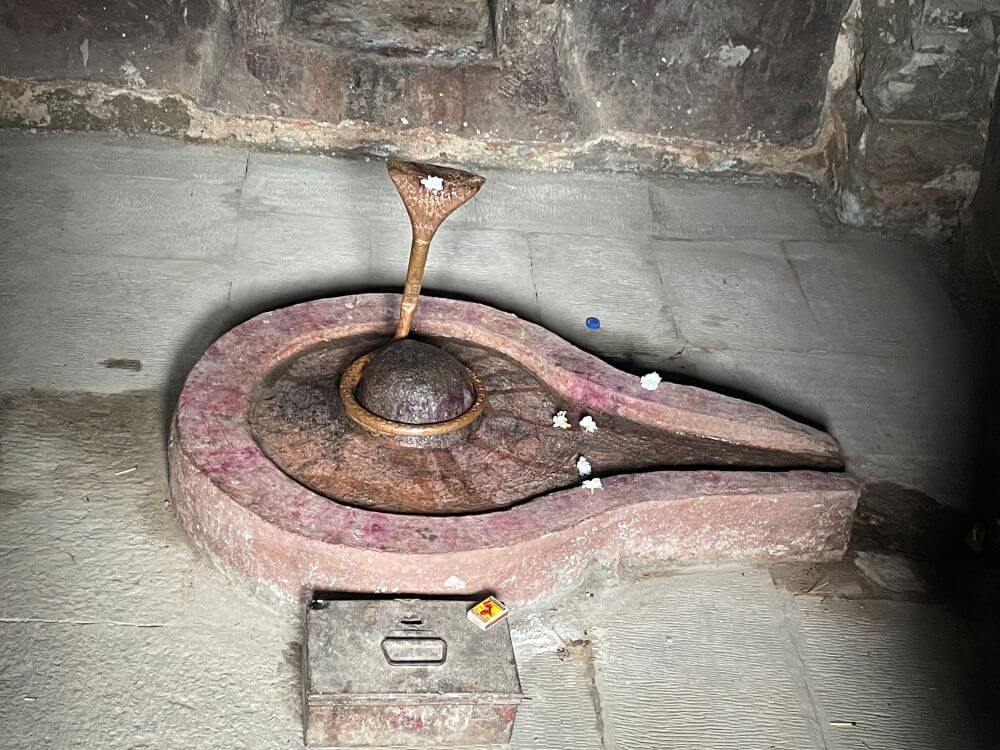
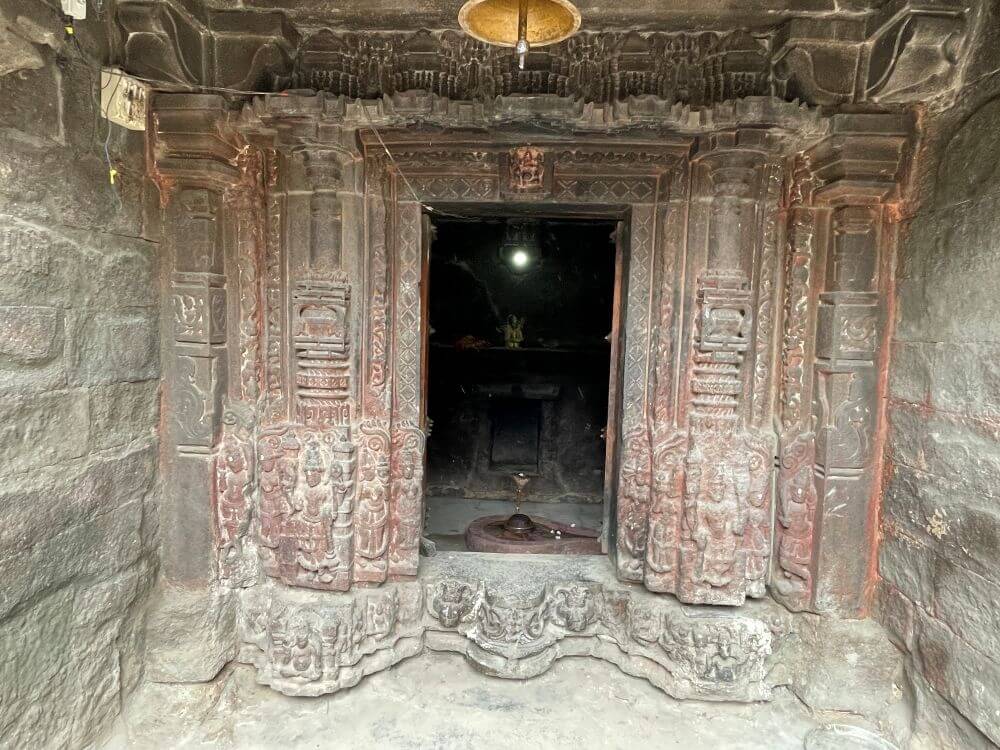
The Antarala in front of the Sabhamandapa is oval-shaped. This structure is considered rare. The ceiling above it is hexagonal. The seven-layered door frame at the entrance of the Garbhagriha is the most beautiful piece of art in this temple. On the upper part of this door frame, on the Uttaranga, carvings are drawn based on horizontal and vertical lines. Below that, at the Lalatabimba position, is an idol of Ganesha. In the middle of the door frames, there are pillar branches on both sides and guardian sculptures (Dwarapala) at the bottom. At the base of the entrance, there is a half-moon stone (Ardhachandrashila) and a Kirtimukha. In the center of the Garbhagriha, there is a Shiva Linga of Sangameshwar Mahadev carved from a single stone. Above it, a serpent deity with its hood coiled provides a canopy. There is a Ganga-sthan (sacred water spot) in this Garbhagriha. It is said that in the past, holy water from the nearby Triveni Sangam used to fall into this reservoir through a cow-mouth (Gomukha).
The outer walls of the temple feature intricate carvings resembling rangoli patterns. The Antarala and Garbhagriha of the temple appear to stand on a star-shaped plinth from the outside. There is a well in the temple premises. A large fair is held here every year on Mahashivratri. At that time, thousands of devotees from the surrounding areas come here for darshan.
This sacred temple stands as a testament to deep spiritual devotion, ancient architectural grandeur, and rich local cultural traditions.
The sanctum sanctorum houses the divine idol consecrated according to ancient Vedic traditions, surrounded by serene courtyards and traditional temple architecture.
Navratri, Maha Shivratri, Annual Temple Jatra & Deepotsav
Compare and book flights, secure top-rated local hotels near the temple, hire reliable guides, and rent cars instantly.
Extend your pilgrimage by visiting other highly sacred temples located nearby.


Add ₹999 more to unlock FREE SHIPPING!
Your sacred cart is currently empty.
Shop Photo FramesFill in your delivery details below to place your order.
Add comment