
Add ₹999 more to unlock FREE SHIPPING!
Your sacred cart is currently empty.
Shop Photo FramesThe Swayambhu Ganpati Temple at Borgaon Arj in the Phulambri taluka of Chhatrapati Sambhajinagar district is a place of faith for thousands of devotees. It is considered an important pilgrimage site among the awakened and famous Ganpati shrines in the district. It is also believed to be the twentieth Shaktipeeth among the twenty-one Ganpati Shaktipeeths in Maharashtra. Devotees believe that the Ganpati in this temple, situated on the banks of the Girja River, responds to the calls of his worshippers.
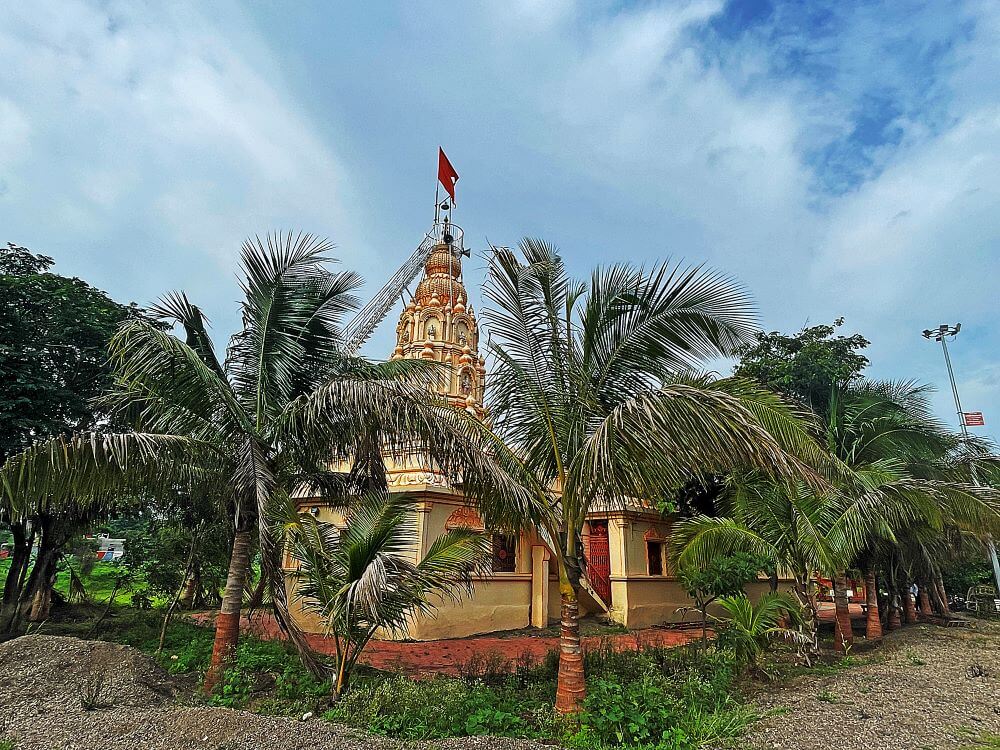
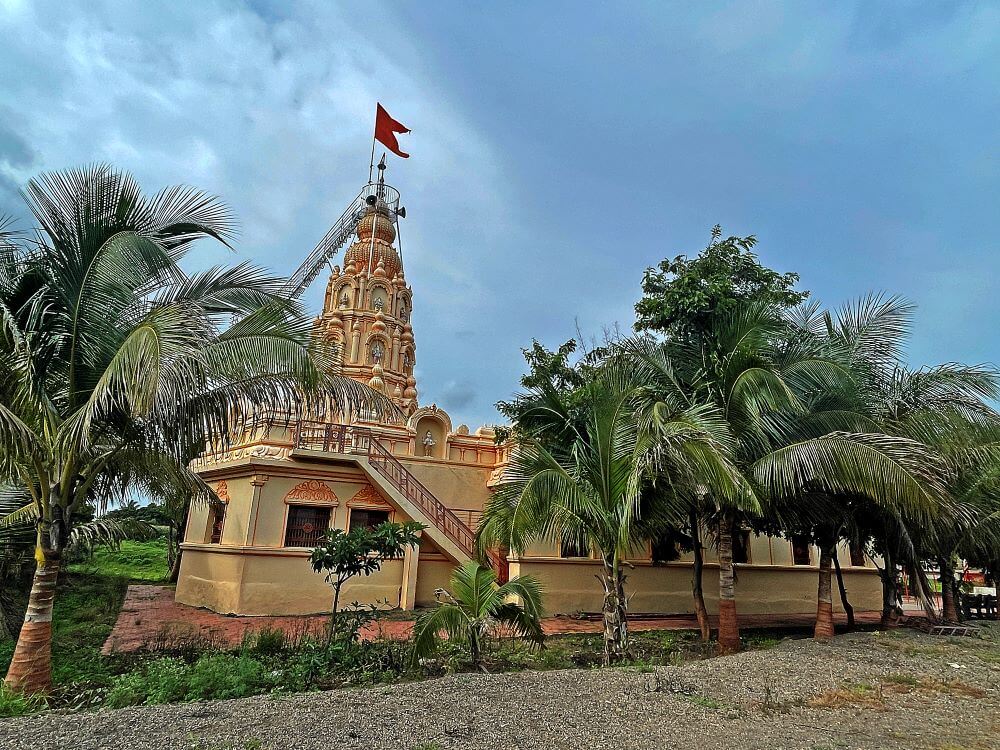
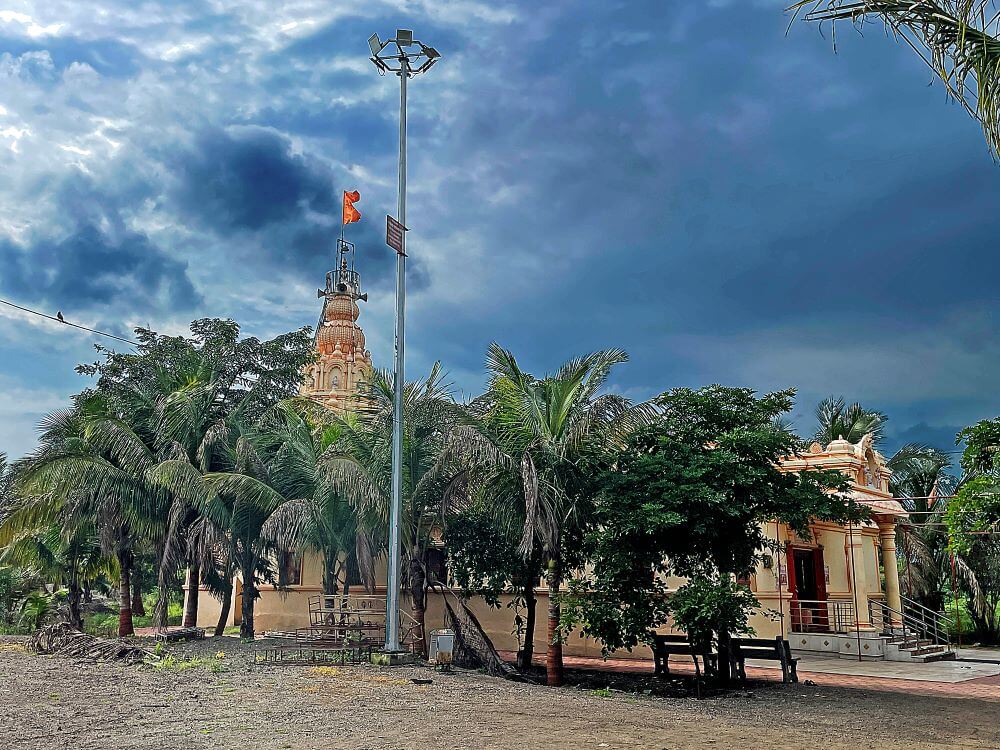
On the Chhatrapati Sambhajinagar-Jalgaon road, while traveling from Phulambri towards Sillod, one encounters the Borgaon Arj junction on the right side near Aland village. The temple is located eight kilometers from this junction. There is no definitive information available regarding when this temple was built. The temple acquired its current form after a recent renovation. Situated in a scenic area on the banks of the Girja River, the Uma-Maheshwar Temple is located next to this temple. Thus, the rare site of the mother, father, and son is found here in one place. The temple premises are peaceful and pleasant. About ۲۰۰ coconut trees have been planted all around the area. Because of this, when viewed from a distance, the temple appears hidden among the coconut trees. Various ornamental and flowering plants have been planted in the garden in front of the temple.
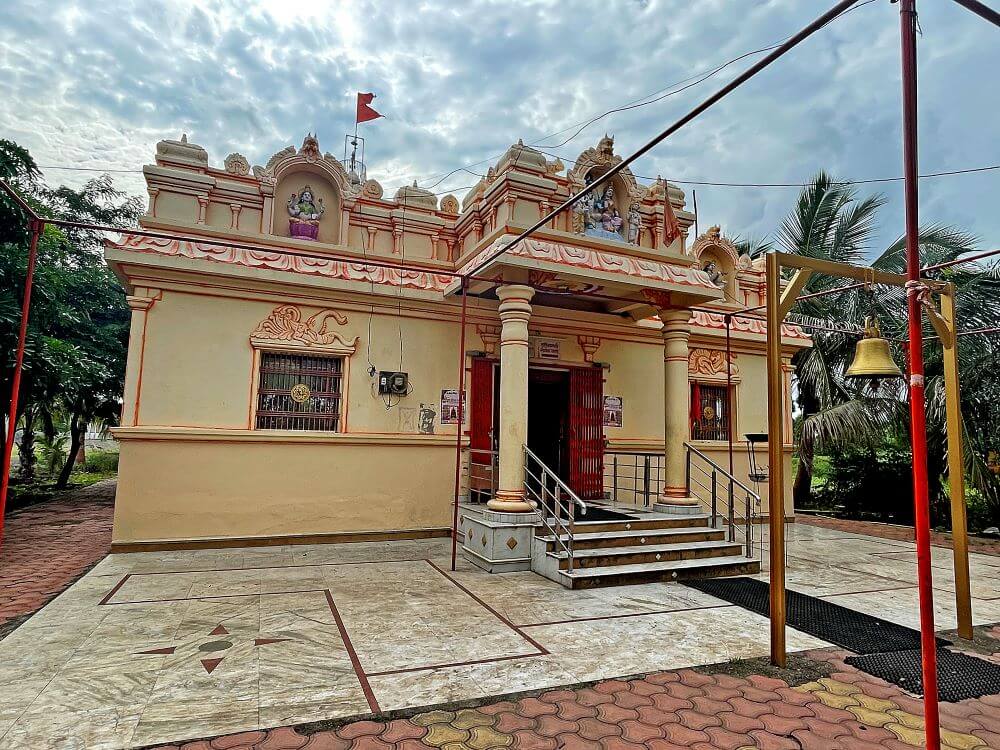
In front of the main entrance of the temple is a Tulsi Vrindavan, and in front of that is a large brass bell. The temple, which stands about two feet above the ground, consists of a Darshan Mandap (viewing hall), Sabha Mandap (assembly hall), and Garbhagriha (sanctum sanctorum). One enters the Darshan Mandap by climbing four steps. In the upper middle part of the Darshan Mandap are the idols of the Shivpanchayatan, with Lakshmi on the left and Saraswati on the right. In the spacious Sabha Mandap, railings have been installed for the convenience of devotees, providing separate queues for men and women. In the area beyond the Sabha Mandap, leaving a circumambulation path, lies the Garbhagriha in the center. Since the Garbhagriha is slightly elevated, one must climb four steps from the Sabha Mandap to enter it. There, on a high marble pedestal, is the vermilion-smeared idol of Ganpati with a left-turning trunk. The crown of this Ganpati is made of silver, and the eyes are made of gold. For security reasons, devotees are not allowed to enter the Garbhagriha; however, one can have darshan of this Ganpati from the Sabha Mandap. A brass idol of Ganesha is kept outside the Garbhagriha for worship rituals.
Attractive craftsmanship can be seen on the exterior of the temple. The temple spire is decorated with distinctive carvings. There are idols and sculptures of various gods and goddesses in the niches on the spire. The Government of Maharashtra included this temple in the Pilgrimage Development Scheme in ۲۰۰۷. Many works in this area have been carried out using the development funds received from the government. The temple is crowded with devotees every Tuesday, as well as on the Sankashti Chaturthi of every month. On Angarki Chaturthi, the area takes on the appearance of a fair. On this day, the Kakad Aarti takes place at four o’clock in the morning. After the Maha Aarti of Ganesha at seven o’clock in the morning, the temple opens for darshan. Various religious programs are held here throughout the day. Shops selling coconuts, flowers, and prasad are also set up in the area. Light refreshments are provided by the villagers for the devotees who come here.
For over a hundred years, an unbroken Harinam Saptah has been held in this temple from Gudi Padwa to Ram Navami. During this week, Kakad Bhajan takes place at dawn. Apart from this, Sangeet Ramayan, Haripath, and Bhajan-Kirtan are held throughout the day. Discourses by many renowned speakers also take place. This week concludes on Ram Navami. After that, the Ram Janmotsav is celebrated here. A grand fair of Ganpati is held on Ram Navami and Dashami. Thousands of devotees from across the state come here at this time. Villagers who have settled in various places for work also make it a point to come to the village for this fair. On Dashami, the day after Ram Navami, a Bhandara (community feast) is organized by the villagers. A blood donation camp is also organized during the fair.
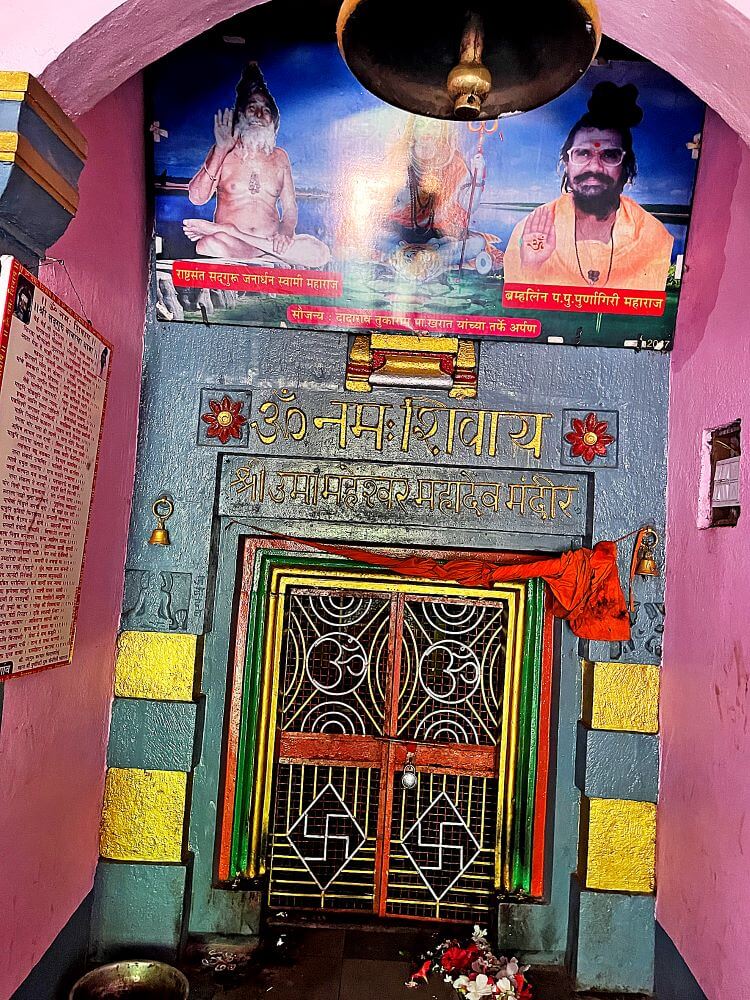
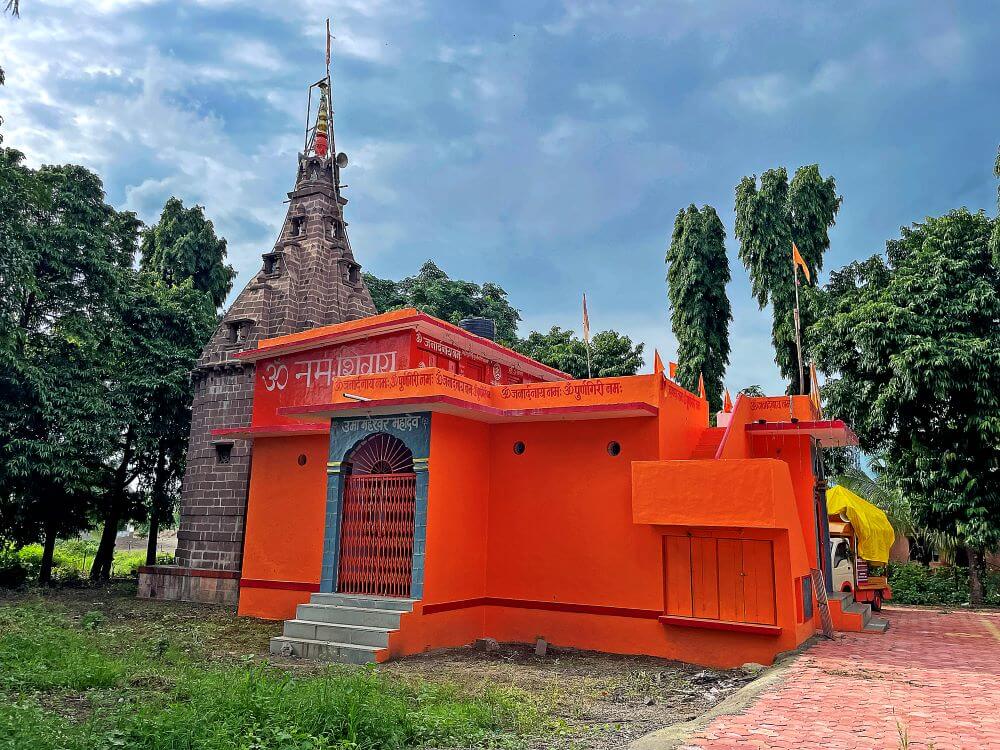
Next to this temple is an ancient temple of Uma-Maheshwar. This small temple consists of a Darshan Mandap, Sabha Mandap, and Garbhagriha. In the Darshan Mandap of this stone-built temple, there is a stone idol of Nandi on a pedestal. In the niche to the left of the Nandi idol is a beautiful idol of Ganesha. This temple, built in an old style, has wooden pillars in the Sabha Mandap. In the niches of the Sabha Mandap are idols of deities such as the Sun and Moon. On the upper part of the wall at the entrance of the temple’s Garbhagriha are images of Janardan Swami Maharaj and Brahmaleen Purnagiri Maharaj. In the center of the Garbhagriha is a Shivling. In the niche on the wall behind the Pindi is an idol of Parvati.
This sacred temple stands as a testament to deep spiritual devotion, ancient architectural grandeur, and rich local cultural traditions.
The sanctum sanctorum houses the divine idol consecrated according to ancient Vedic traditions, surrounded by serene courtyards and traditional temple architecture.
Navratri, Maha Shivratri, Annual Temple Jatra & Deepotsav
Compare and book flights, secure top-rated local hotels near the temple, hire reliable guides, and rent cars instantly.
Extend your pilgrimage by visiting other highly sacred temples located nearby.


Add ₹999 more to unlock FREE SHIPPING!
Your sacred cart is currently empty.
Shop Photo FramesFill in your delivery details below to place your order.
Add comment