
Add ₹999 more to unlock FREE SHIPPING!
Your sacred cart is currently empty.
Shop Photo FramesThe Khamblingeshwar Mhasoba temple in Mhasa, located in the Murbad taluka, is considered one of the most spiritually awakened (Jagrut) temples in the state. The temple is named ‘Khamblingeshwar’ because the deity manifested from a pillar (Khamb), and ‘Mhasoba’ derived from ‘Maheshwar’, a name for Lord Shiva. Devotees hold a firm belief that if one makes a vow (Navas) to the pillar from which the deity appeared, their heartfelt wishes are fulfilled. The annual 15-day fair held here, which boasts a tradition of about 250 years, is famous as the largest fair in the Mumbai, Thane, Raigad, and Palghar districts.
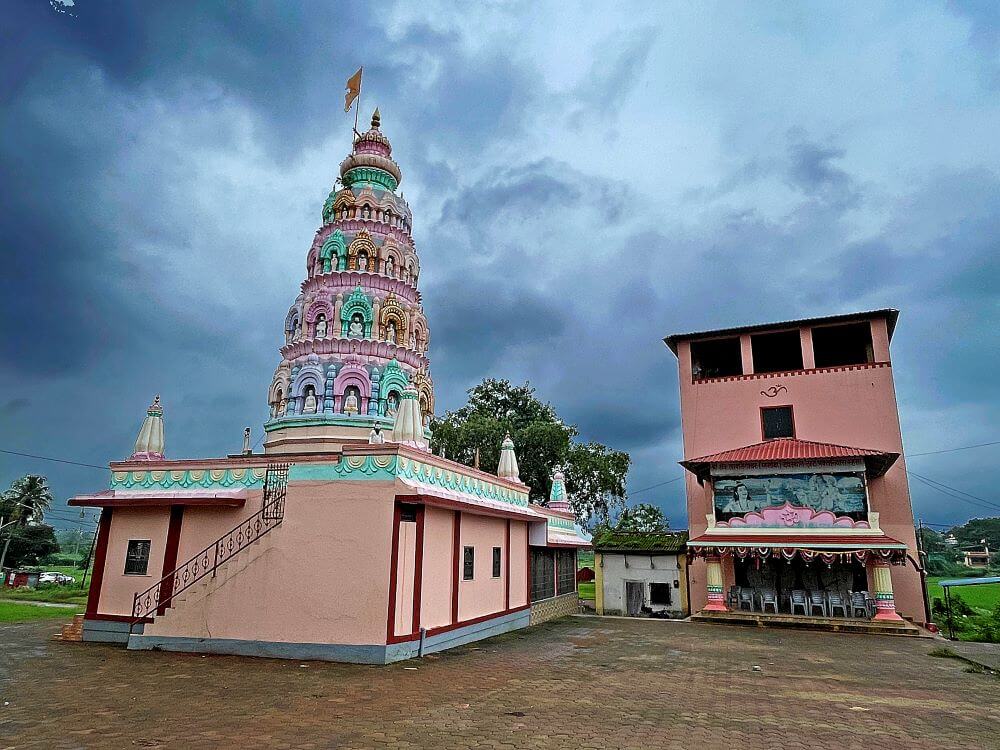
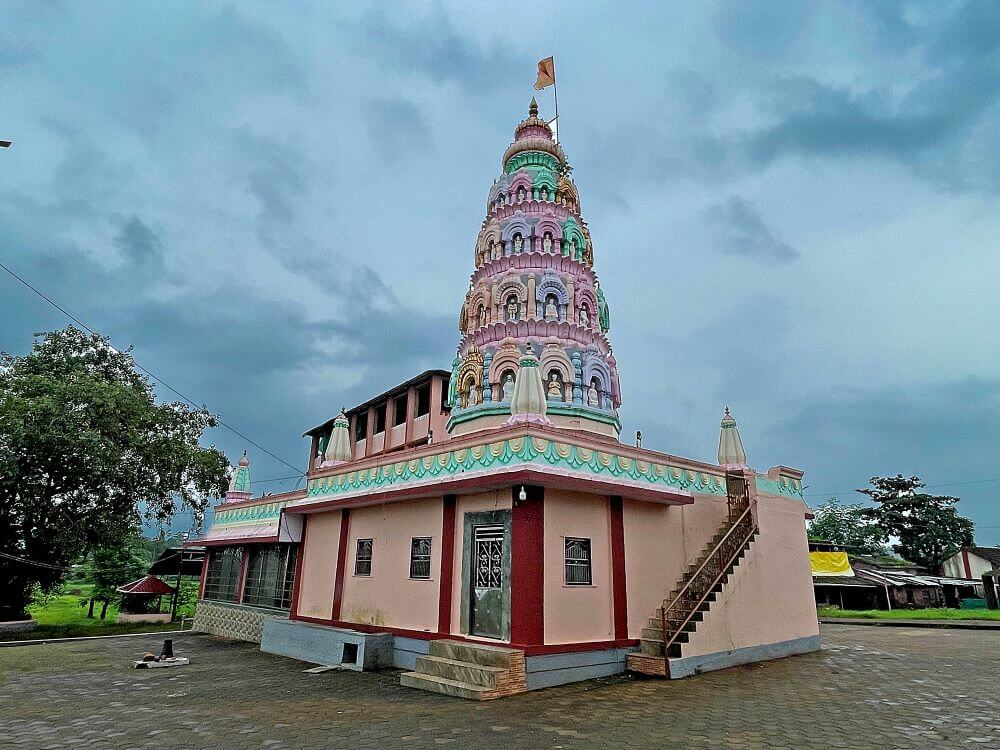
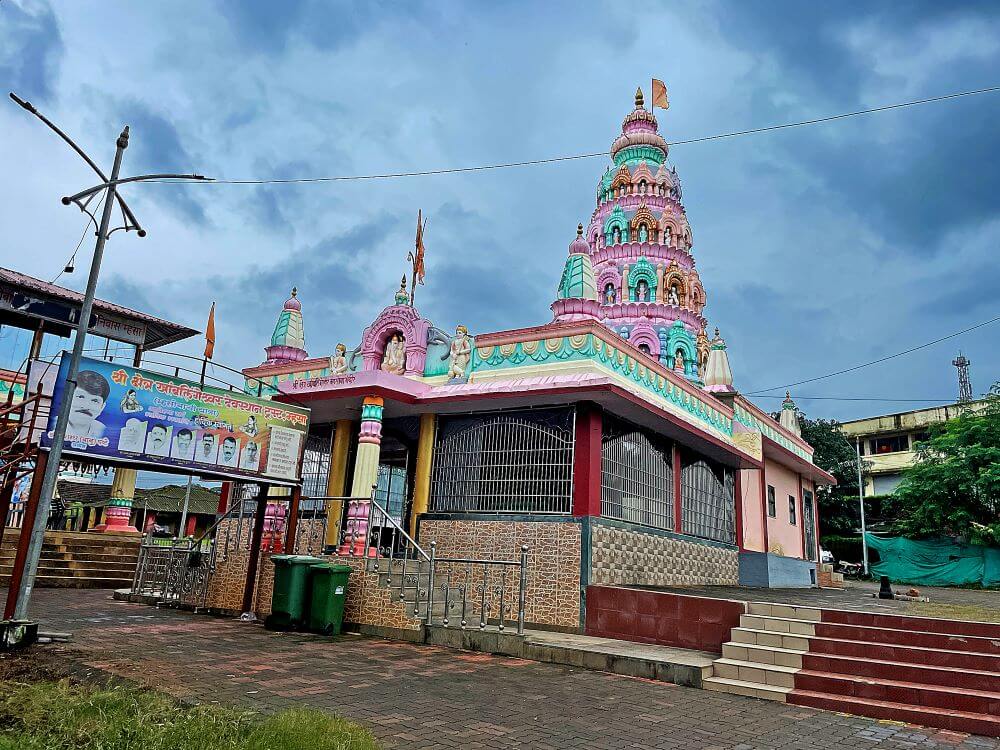
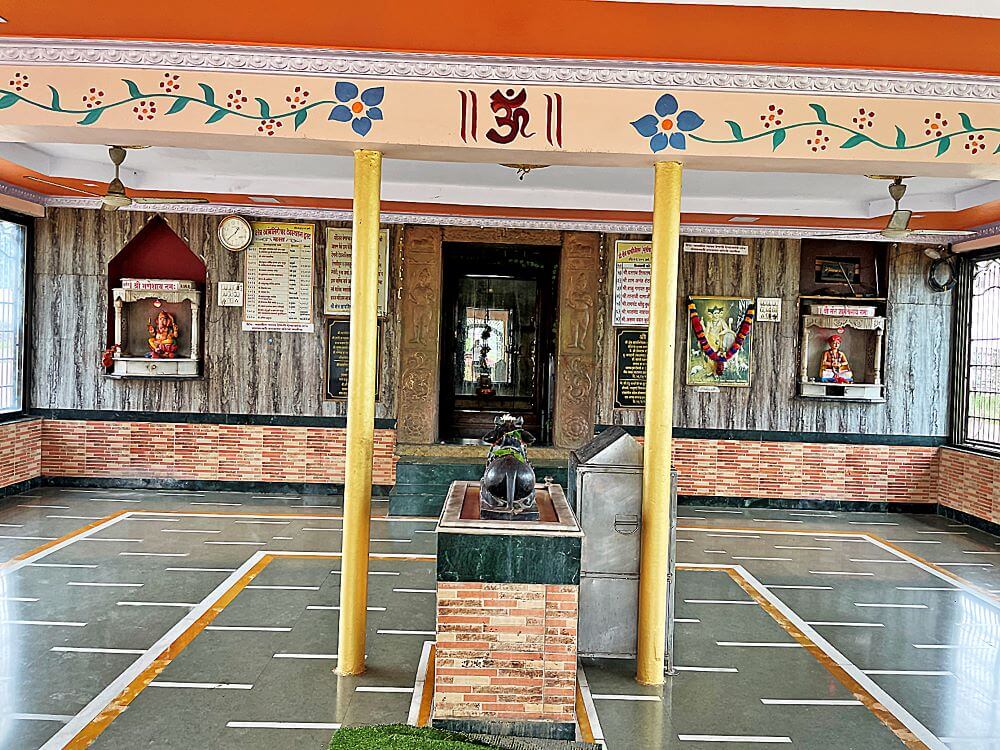
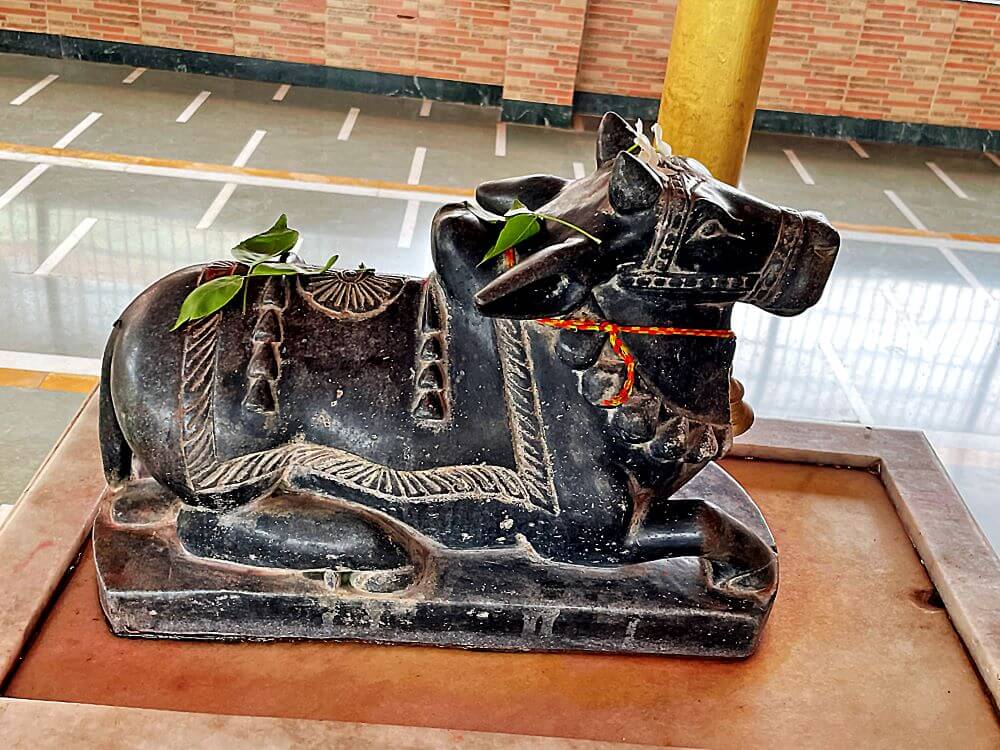
Mhasa is a village in Murbad taluka with an ancient history. The village derives its name ‘Mhasa’ from the Mhasoba (Shankar) temple located here. The temple attained its current form after a renovation in 1987. Upon entering the temple premises, the four-tiered spire (Kalash) immediately captures one’s attention. This intricately carved spire features statues of various deities, saints, and sages. The temple is built on a plinth three to three-and-a-half feet high and consists of a Darshan Mandap (viewing hall), Sabha Mandap (assembly hall), and the Garbhagriha (sanctum sanctorum). A large statue of Lord Ganesha is situated in the upper part of the Darshan Mandap. In the Sabha Mandap, near the entrance of the sanctum, there is a statue of Nandi on a high pedestal. On the walls of the sanctum, there are statues of Lord Ganesha on the right and Saint Dnyaneshwar on the left.
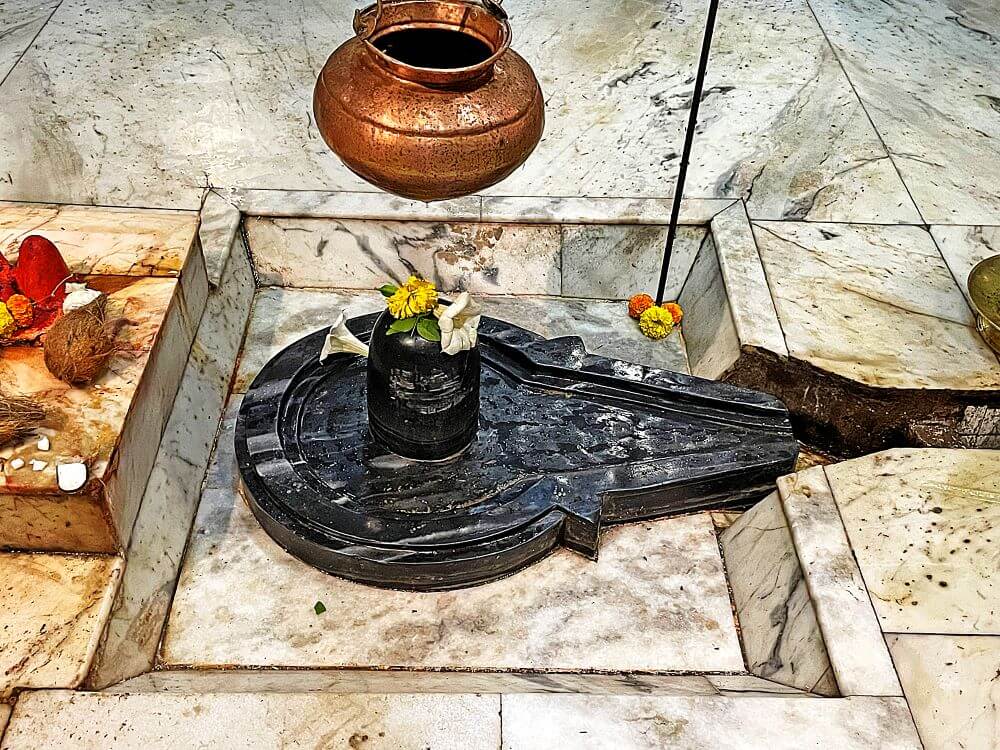
The door frame of the sanctum features attractive carvings with door guardians (Dwarpal) on both sides. Inside the sanctum, there is a Shiva Linga, accompanied by seven small stones smeared with vermilion. These stones are referred to as Mhasoba, while the Shiva Linga is called Khamblingeshwar. Outside the temple, on the southern side, stands a tall, brass-plated pillar dedicated to Lord Khamblingeshwar. Devotees believe this pillar to be sacred and spiritually potent. It is from this pillar that the temple derives the name Khamblingeshwar. Adjacent to the temple is a spacious Bhakta Niwas (pilgrim accommodation) for devotees.
The fair is held for 15 days starting from Paush Purnima. According to records, more than 4.5 lakh devotees visit for darshan during these 15 days. During this time, the temple is beautifully illuminated. Many devotees stay for the duration of the fair, setting up tents nearby. Vows are made on Paush Purnima, and they are fulfilled the next day, on Paush Vadya Pratipada, at a platform near the temple. It is customary for women to wear yellow clothes and men to wear white clothes while fulfilling their vows. On the second day of the fair, iron hooks (Dabhan) are pierced into the waist of those who have fulfilled their vows. It is a belief among devotees that if the intention behind the vow is malicious, blood will flow from the spot; if the intention is pure, no blood is shed.
The ‘Mana-chya Kathya’ (ceremonial staffs) are another unique feature of this fair. There are three ceremonial staffs: one from the Siddhagad village (a Koli community settlement 14 km from Mhasa), one from the Agri-majority village of Koravale near Mhasa, and the third one held by the priest of Mhasa village. On Paush Purnima, all three staffs are decorated and brought to the platform near the temple with great fanfare and music. The priest then performs worship of these staffs. This platform is believed to belong to Nagmata Devi, the sister of Lord Shiva.
During the fair, on Paush Vadya Pratipada, the cattle market begins. This day is known as ‘Bajar Phutla’. Bulls and other animals are brought for sale across an area of about 35 acres. The market primarily focuses on the buying and selling of bulls. A pair of bulls can cost anywhere from one lakh to four lakhs, depending on their breed, color, and age. Transactions are sealed by throwing gulal. The cattle trade during the fair generates a turnover of about 1.5 crore rupees. Agricultural tools are also available for sale here.
This fair is the go-to place for authentic ‘Ghongadi’ (traditional woolen blankets) made from sheep’s wool. Two types of Ghongadi are available here—woven and felted—ranging from 500 to 2500 rupees. While traditional sweets are sold, the ‘Hatoli’ variety of sweet is in high demand. The ‘Tamasha’ (traditional folk theater) performances held during the fair are also very famous. Devotees from various parts of the state, as well as neighboring states like Gujarat, Karnataka, and Andhra Pradesh, attend in large numbers. During the fair, the State Transport Corporation runs additional buses from Thane, Kalyan, Karjat, and Murbad.
This sacred temple stands as a testament to deep spiritual devotion, ancient architectural grandeur, and rich local cultural traditions.
The sanctum sanctorum houses the divine idol consecrated according to ancient Vedic traditions, surrounded by serene courtyards and traditional temple architecture.
Navratri, Maha Shivratri, Annual Temple Jatra & Deepotsav
Compare and book flights, secure top-rated local hotels near the temple, hire reliable guides, and rent cars instantly.
Extend your pilgrimage by visiting other highly sacred temples located nearby.


Add ₹999 more to unlock FREE SHIPPING!
Your sacred cart is currently empty.
Shop Photo FramesFill in your delivery details below to place your order.
Add comment