
Add ₹999 more to unlock FREE SHIPPING!
Your sacred cart is currently empty.
Shop Photo FramesMachindranath founded the Nath Sampradaya, and subsequently, the Navnaths spread this tradition across India through the Guru-Shishya parampara (teacher-disciple lineage). Wherever the Navnaths stopped during their travels across India, they established maths (monasteries). Over time, their samadhi sites were built at these locations, and all these places became renowned as pilgrimage centers of the Nath Sampradaya. As the influence of the Nath tradition grew, these sites became places of supreme reverence for all Hindus. The original samadhi temple of Gahininath at Gahininath Gad in Chincholi, Patoda taluka, is one such sacred site.
Among the nine Naths of the Navnath Sampradaya, ‘Gahininath’ is recognized as an extremely accomplished, radiant, and compassionate personality. As the chief disciple of Guru Gorakshanath, Gahininath holds an unshakable position in the spiritual realm. The story of his birth is as supernatural and ‘mysterious’ as his name. It is believed that Gahininath was born from the mud (karali) at Kushavarta Tirtha in Trimbakeshwar. Guru Gorakshanath fashioned a statue, breathed life into it, and thus Gahininath was born. A Brahmin couple nurtured and cared for this child for twelve years. Thereafter, Gahininath accepted discipleship under Gorakshanath and took over the mantle of the Nath Sampradaya. Under the guidance of Gorakshanath, he reached the highest pinnacle of Yoga and Brahmavidya. In the text ‘Shri Navnath Bhaktisar’, he revealed to the world the path to attain salvation through Bhakti (devotion), Jnana (knowledge), Karma (action), and Dhyana (meditation).
Gahininath’s spiritual contribution lies in building a golden bridge connecting the Nath Panth and the Warkari Sampradaya. In the vicinity of the Brahmagiri mountain, he bestowed grace upon Saint Nivruttinath. Gahininath instructed Nivruttinath, “The secret knowledge I received from Gorakshanath, you must reveal for the welfare of the world.” Inspired by this, Saint Dnyaneshwar later brought the river of devotion to the masses through the ‘Dnyaneshwari’. He taught society that God is not just in a Himalayan cave, but resides in the heart of every living being. By combining Yoga with devotion, he made spirituality accessible. It is believed that he took Sanjeevan Samadhi at Gahininath Gad in Chincholi village, Beed district.
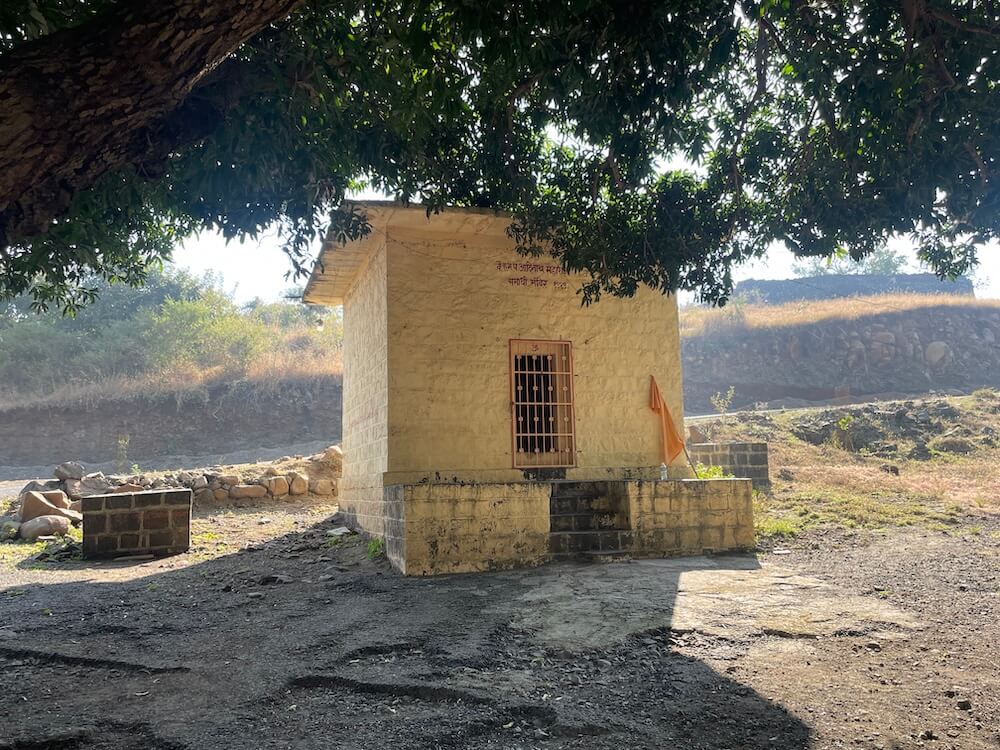
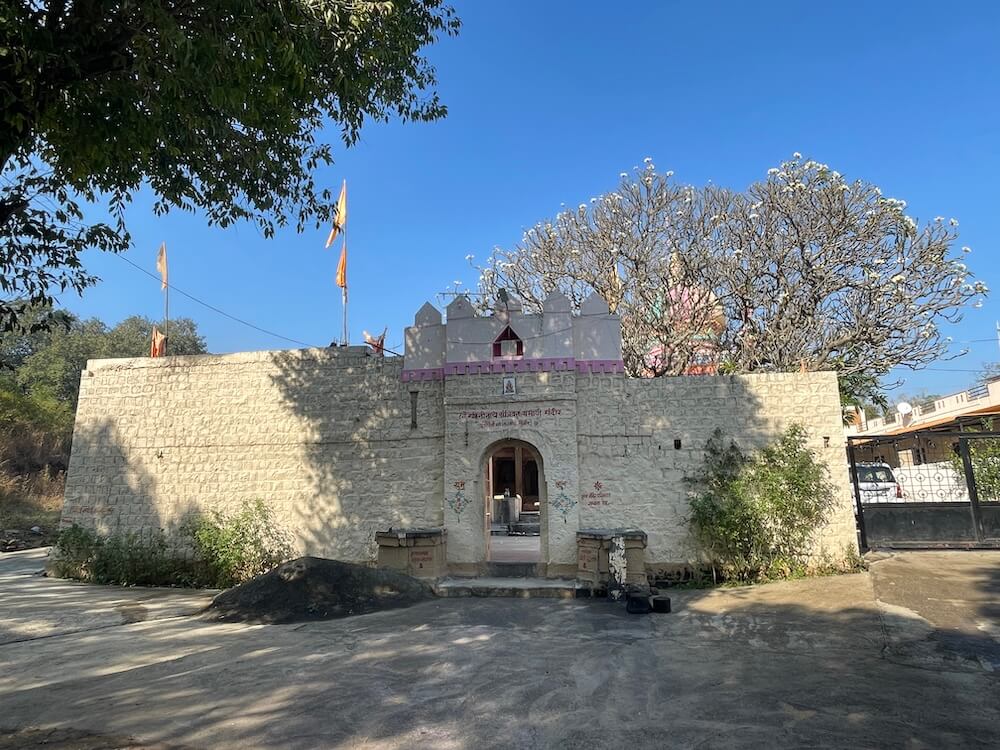
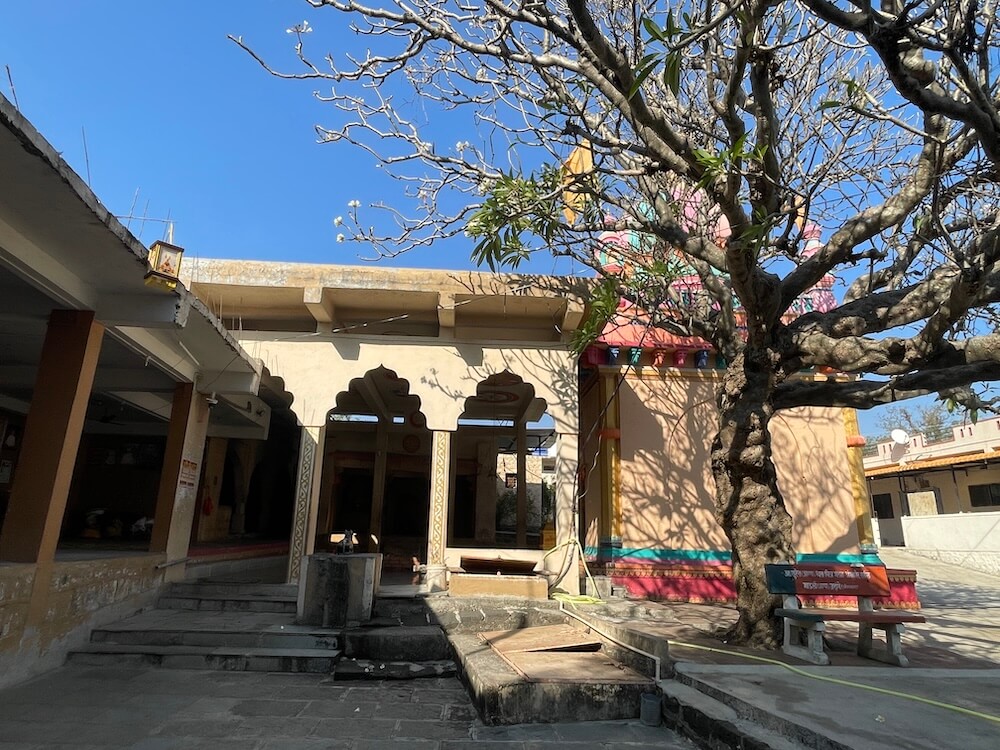
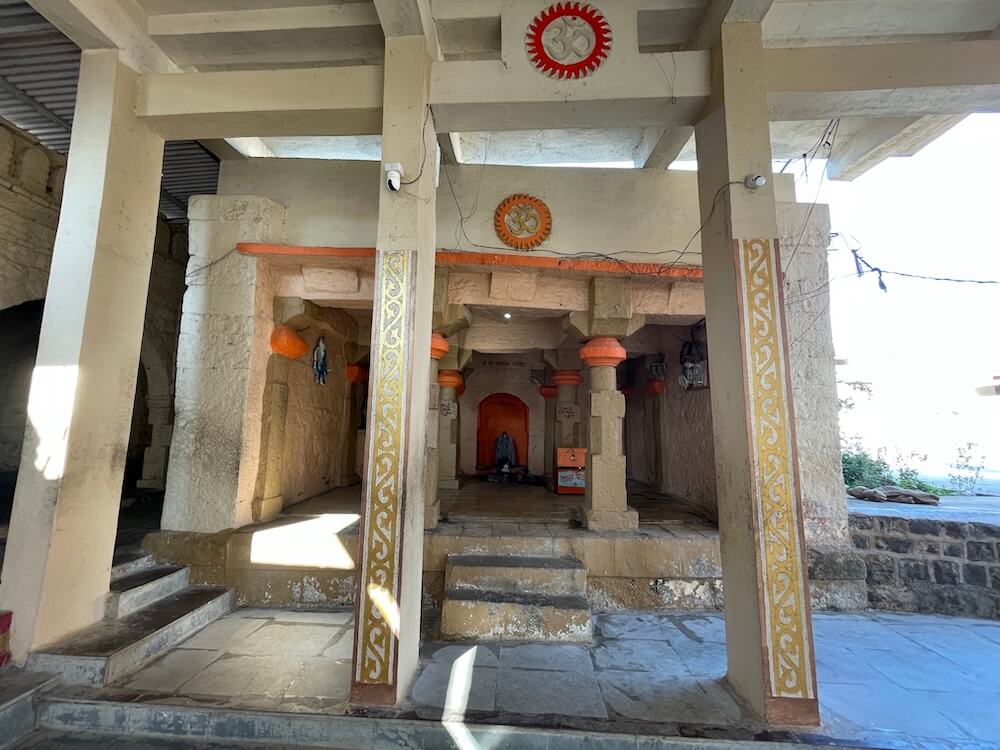
Villagers state that this samadhi temple is approximately eight hundred years old. An inscription carved on the temple entrance indicates that the temple was renovated in the seventeenth century. The temple complex is enclosed by a sturdy fortification wall and features a grand entrance gate. Outside the fortification, in front of the entrance, are the samadhi sites of Gahininath’s disciples. There are platforms on both sides of the entrance and guard rooms on the inside. Upon entering through the gate, one sees various ancient trees in the paved courtyard of the temple. In the courtyard, there is a Tulsi Vrindavan, and to the left, along the fortification wall, are spacious cloisters. These cloisters are used as resting places and bhaktiniwas (pilgrim accommodation) for devotees. There is also a goshala (cow shelter) in the courtyard.
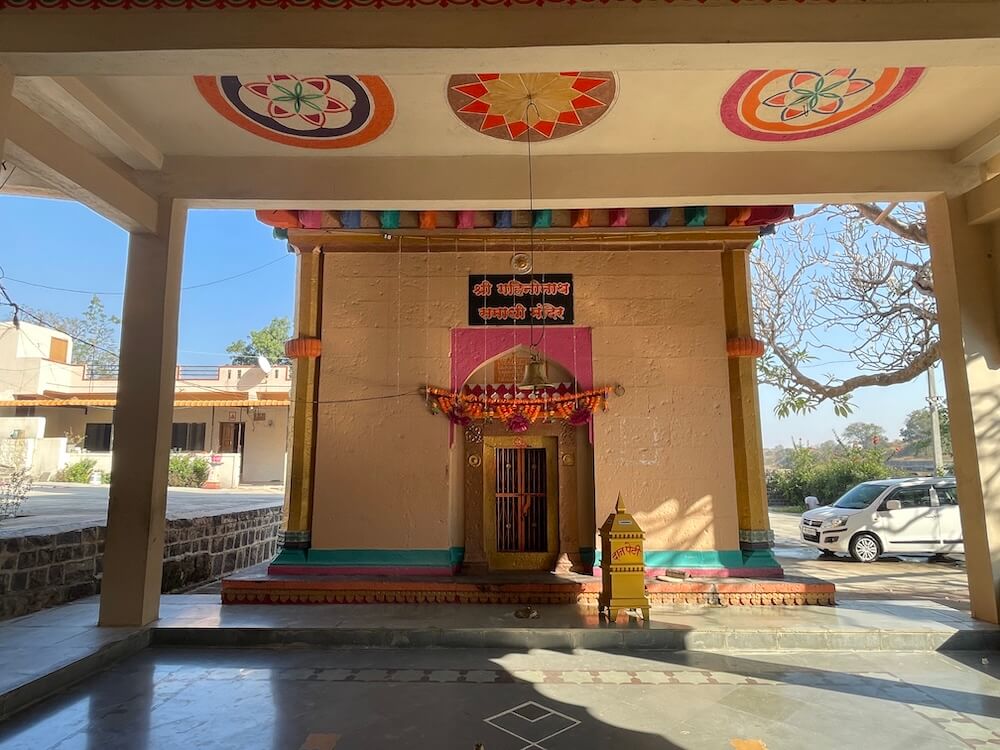
From here, to the right, the temple structure consisting of a sabhamandap (assembly hall) and garbhagriha (sanctum sanctorum) catches the eye. The sabhamandap is semi-open and stands on ten square pillars. Beyond it, on a high platform, is the garbhagriha. In front of the entrance to the garbhagriha, there is a tortoise sculpture (kachhapa) on the floor. The door frames are flat, and there is a Ganesha sculpture on the lintel. The arch is carved with floral patterns, and above it is an ancient inscription stating that the temple was renovated in Shaka 1619. There are lotus carvings on both sides of the entrance and on the mandap pillars.
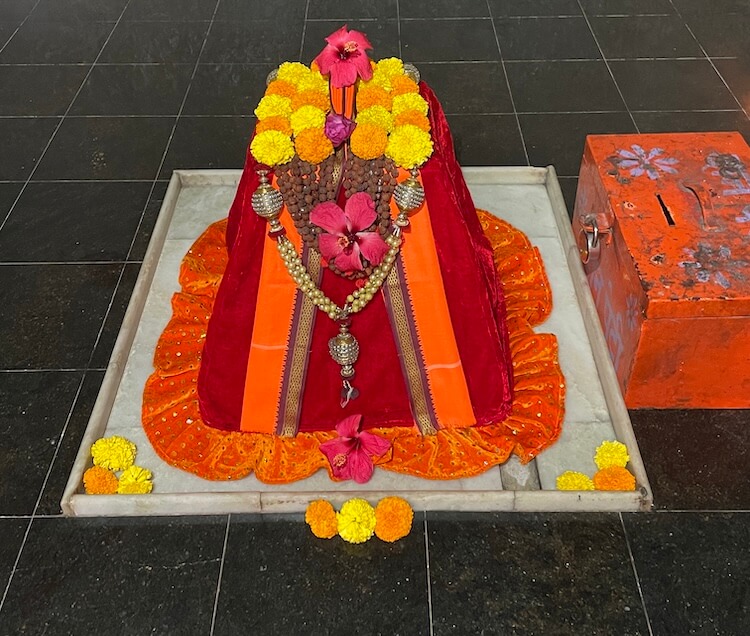
In the center of the garbhagriha floor lies the samadhi of Gahininath. Rudraksha malas are placed on the stone of the samadhi. Along the left wall of the garbhagriha, in a niche on a vajrapitha (throne), is an idol of Gahininath in a meditative posture. The idol wears a turban and Rudraksha malas around the neck. There are lamp niches in all four walls of the garbhagriha. There is a circumambulation path (pradakshina marg) around the exterior of the garbhagriha. On the roof of the garbhagriha, there are four minaret-like pillars at the four corners, topped with amalakas and kalashas. In the center of the roof is a dome-shaped shikhara.
Adjacent to the samadhi temple is an ancient Shiva temple built of stone in the Hemadpanti architectural style. The temple has four rows of four ornate pillars each. All pillars stand on square bases. The shafts of the pillars feature various geometric shapes such as squares, hexagons, octagons, and circles. At the top of the pillars are brackets and corbels. Inside the temple, there is a Shivling on the floor, over which a brass cobra holds a hood. A copper vessel for abhishekam is hung from the ceiling, dripping water onto the Shivling. Along the back wall of the temple, on a vajrapitha, is an ancient stone idol of Goddess Parvati. To the left of the Shivling, on a vajrapitha, is an idol of Saint Tukaram Maharaj. Behind the temple is a water tank, which is said to be the source of the Sindphana River.
Gahininath’s Punyatithi (death anniversary) is celebrated with great devotion on the Vadya Ashtami of the month of Paush. Guru Purnima and Dattatreya Jayanti are also celebrated with great enthusiasm in the temple. Thousands of devotees visit for darshan during various festivals throughout the year. The temple sees a special influx of devotees on Thursdays, Mondays, Purnima (full moon), Amavasya (new moon), Pradosh, and Ekadashi.
This sacred temple stands as a testament to deep spiritual devotion, ancient architectural grandeur, and rich local cultural traditions.
The sanctum sanctorum houses the divine idol consecrated according to ancient Vedic traditions, surrounded by serene courtyards and traditional temple architecture.
Navratri, Maha Shivratri, Annual Temple Jatra & Deepotsav
Compare and book flights, secure top-rated local hotels near the temple, hire reliable guides, and rent cars instantly.
Extend your pilgrimage by visiting other highly sacred temples located nearby.


Add ₹999 more to unlock FREE SHIPPING!
Your sacred cart is currently empty.
Shop Photo FramesFill in your delivery details below to place your order.
Add comment