
Add ₹999 more to unlock FREE SHIPPING!
Your sacred cart is currently empty.
Shop Photo FramesThe Nath Sampradaya has played a major role in the transformation of Indian society. Rejecting ritualism and the Varna system to secure equal rights and self-respect for the people of the grassroots, the Navanaths travelled the length and breadth of India. Consequently, maths and samadhi temples of the Nath Sampradaya are found in every village. The samadhi sites of the Navanaths are located within the Garbhagiri hill ranges in Beed district. The samadhi temple of Machhindranath, the founder of the Nath Panth, is enshrined on the hilltop of Mayamba in Ashti taluka. Devotees have a firm faith that the presence of Machhindranath is felt here even today.
According to religious history, Shrishail-Kardaliban in Andhra Pradesh is considered the birthplace of the Nath Sampradaya. Andhra Pradesh, Karnataka and Maharashtra are the principal sites of the divine play (lila) of this sampradaya. This sampradaya is referred to by various names such as Nath Sampradaya, Siddhapanth, Avadhut Mat, Kanphata Sampradaya and Gurumarg. The first historical personage of this sampradaya is Matsyendranath (Machhindranath). There are diverse opinions regarding his place of origin. The great historical researcher R. Chin. Dhere has propounded that his era dates to the latter half of the tenth century. Renowned treatises such as Kaulajnananirnaya, Shri-Kamakhyaguhyasiddhi, Akulagamatantra, Kularnavatantra, Kaulopanishad and Kaulavalinirnaya are ascribed to Matsyendranath. Gorakhnath (circa 1050 to 1150 CE), whom Sant Dnyaneshwar praised in the Dnyaneshwari with the epithets ‘Yogabdhinisरोवर’ and ‘Vishayadhvansaekaveer’, was a disciple of Matsyendranath.
According to the Navanath Bhaktisara text, Lord Narayan Himself incarnated in the form of a fish and assumed the name Machhindranath. He received divine powers from Adinath, that is, Mahadev. He propagated and disseminated the path of devotion through Kaul knowledge and yoga knowledge. He explained to the common people the principle that all living creatures have an equal right to all forms of knowledge. Later, this Ganga of knowledge reached every nook and corner of Maharashtra in the form of the Varkari Sampradaya through the Guru-disciple lineage of the Nath Panth comprising Gorakhnath, Gahininath and Nivruttinath. Having accomplished his avataric mission, Machhindranath attained Sanjeevan Samadhi at this very place.
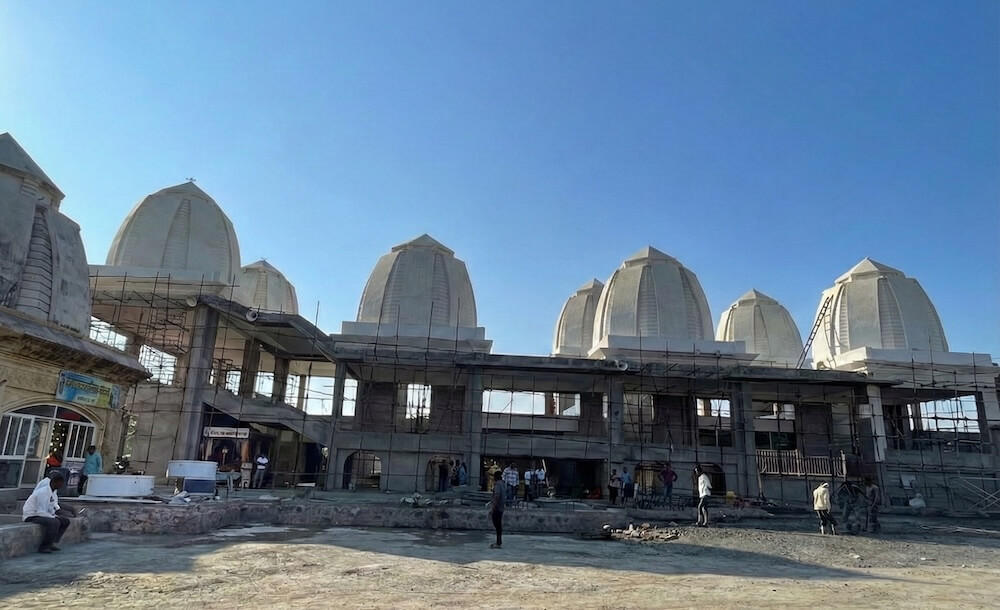
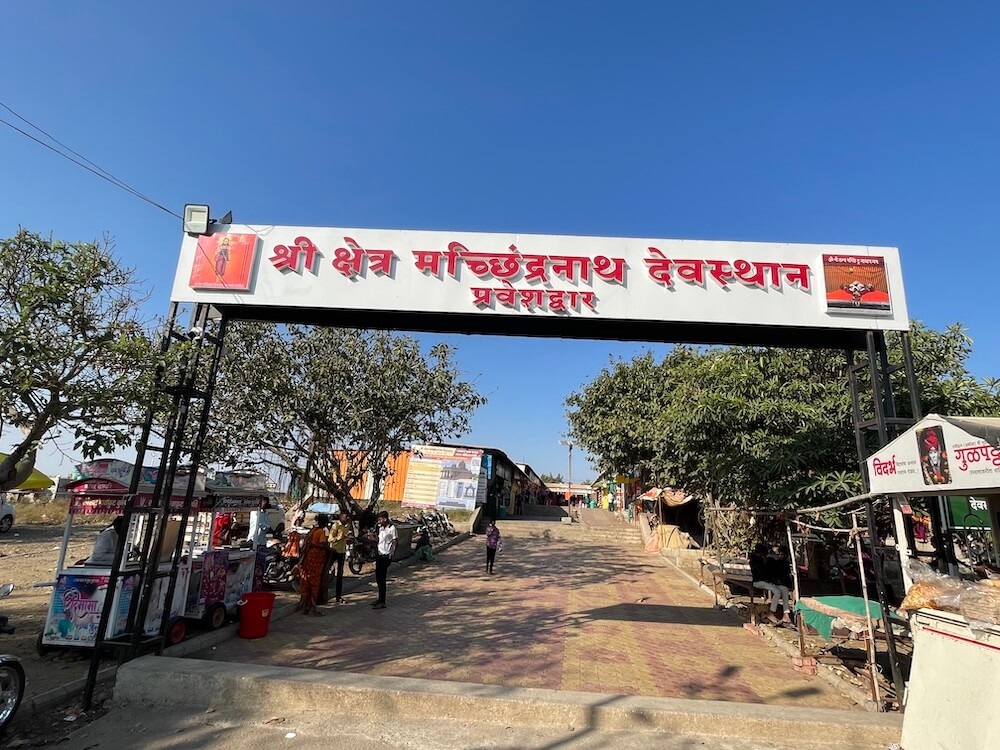
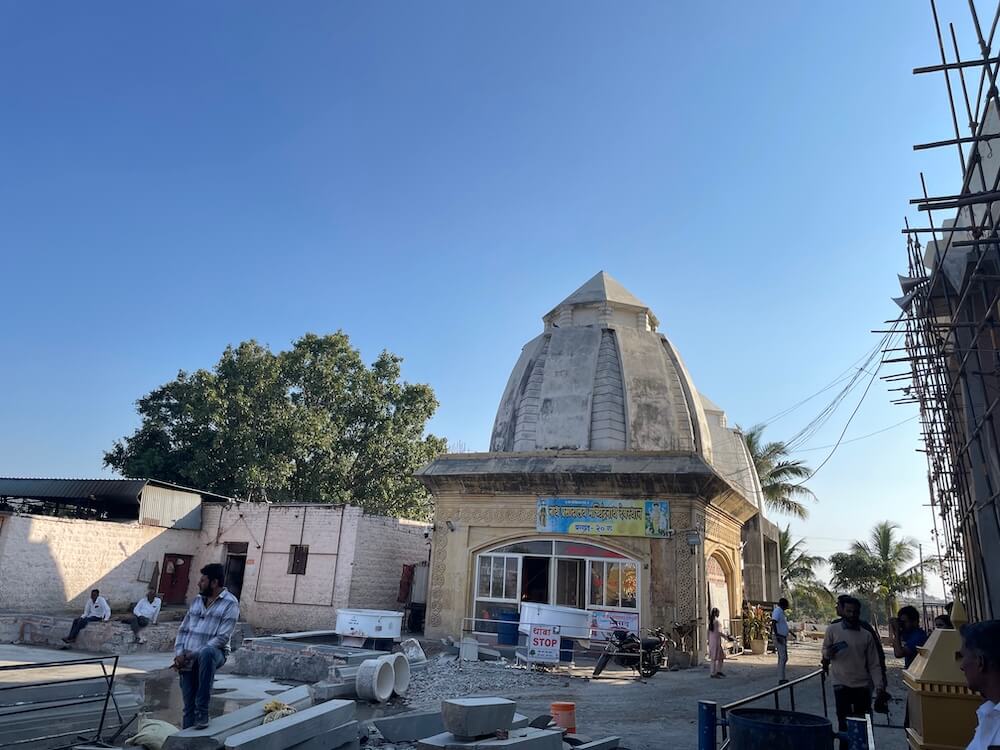
This samadhi temple is situated on the hilltop close to the village. The first welcoming arch of the temple stands on the road leading towards the hill. This welcoming arch comprises two square pillars on either side of the road with a horizontal beam resting on them. Sculptures of fish, as a symbol of Machhindranath, are carved on the horizontal beam. One can reach the temple using a pathway of approximately three hundred steps to ascend the hill. This flight of steps leads directly to the Mahadwar (main gateway). In recent times, a paved asphalt road reaching the hilltop has been constructed. Utilising this road, private vehicles can drive directly to the parking lot in front of the temple. Along the paver-block pathway from the parking lot to the temple, there are shops on both sides selling various items such as worship materials, food items, toys and clothes. Upon entering the spacious courtyard of the temple, one first encounters the Navanath Mandir. The architecture of this temple consists of a sabhamandap (assembly hall) and a garbhagriha (sanctum sanctorum).
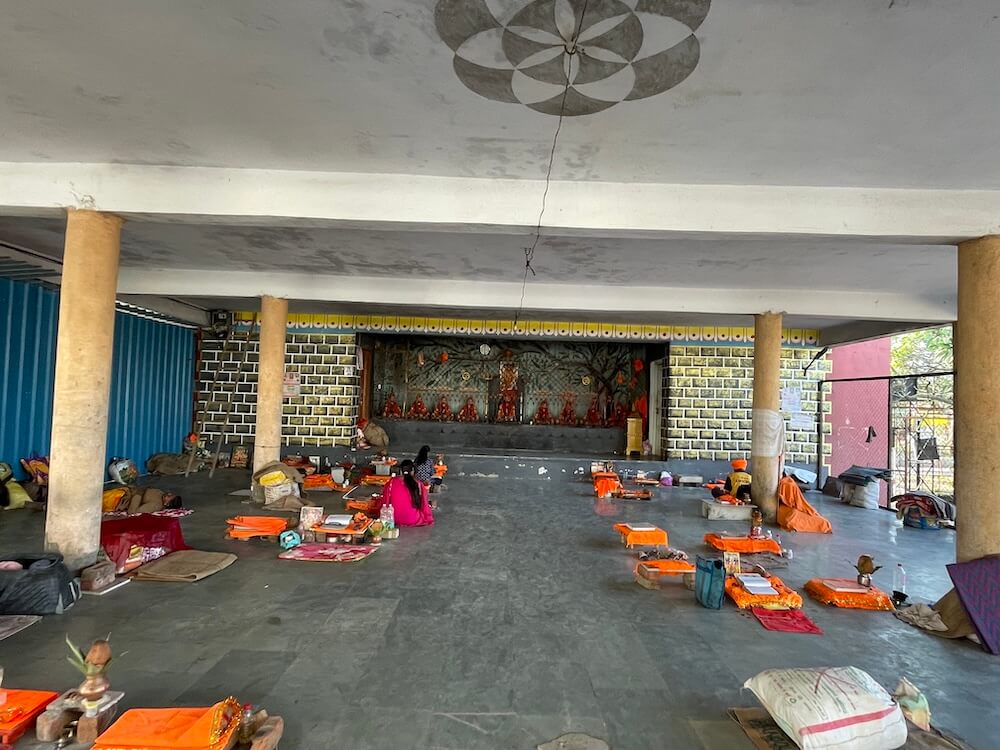
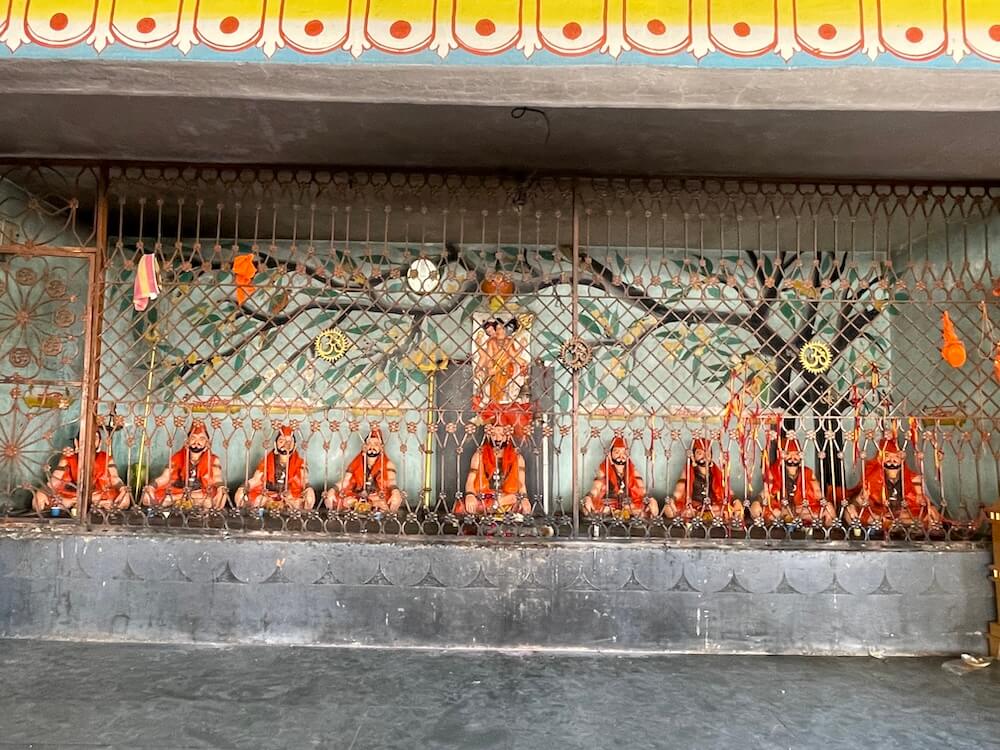
The semi-open sabhamandap features four rows of five pillars each. The ceiling of the sabhamandap bears a circular floral pattern. Recitation (parayan) of the Navanath Bhaktisara text by devotees is continuously underway in this sabhamandap. Further ahead is the open-style entrance gateway of the garbhagriha. In the center of the garbhagriha, on a large vajrapitha (stone pedestal), are the idols of Machhindranath and, on either side of him, the other eight Naths. All the Naths are in meditative posture (dhyanamudra) and attired in the garb of yogis. On the wall behind the idol of Machhindranath is a sculpture of Shri Dattatreya. Furthermore, the roof of the garbhagriha features a dome-shaped shikhara (spire). At the apex of the shikhara are the amalaka and kalasha. Adjacent to the Navanath Mandir is a spacious assembly hall building. All events and the mass distribution of food (maha-annadan) of the temple trust are organised here. Rooms have also been constructed here for the accommodation of devotees coming from outstation areas.
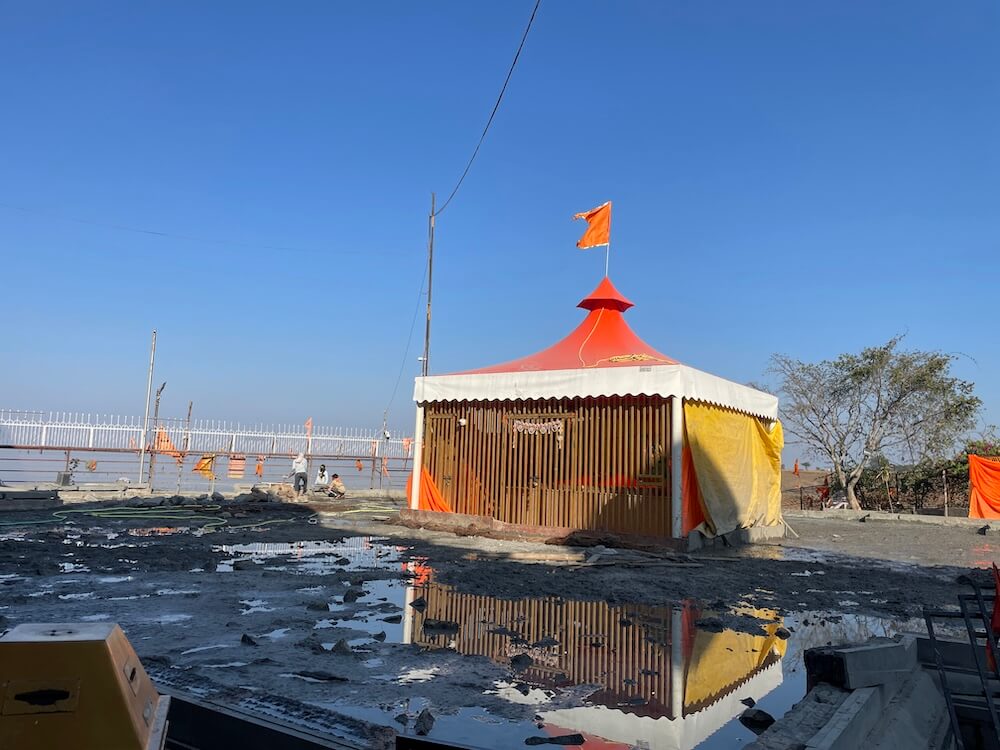
Proceeding further from here along the path leading to the Machhindranath Sanjeevan Samadhi Mandir, a rangamandap has been erected. The iron pillars of this rangamandap support an elephant-back (gajaprishtha) shaped roof. The samadhi temple here is semi-open in structure. This temple has a total of twelve ornate pillars on all four sides. All the pillars are connected to one another by arched gateways and fitted with iron grills. Lotus motifs are carved on the ceiling here. In the center of the temple is the samadhi plinth (chautara). This samadhi is draped with saffron cloth. Auspicious symbols such as the conch (shankha), discus (chakra) and trident (trishula) are carved on all four sides of the samadhi plinth. The canopy (chhatra) over the samadhi is suspended from the ceiling. Atop the temple roof stands a tall, circular, tapering shikhara adorned with pillar carvings. At the summit of the shikhara are the amalaka, followed by the kalasha and flag banner (dhvajapataka). This samadhi temple is opened for public darshan only once a year on the auspicious day of Chaitra Padwa. On other days, however, darshan must be had from the outside.
Within the temple courtyard are the samadhis of the Mahants, residential quarters for priests and attendants, the office of the temple trust and other structures. The entire temple premises is secured with robust iron fencing. Devotees tie sacred threads to these grills to fulfill their vows (navas). In the same hill, a short distance away from the samadhi mandir, is the Amriteshwar Mahadev Mandir. Descending about two hundred to three hundred feet into the bosom of the hill, one can reach the Amriteshwar Mahadev Mandir. A water spring flows continuously from the gomukh (cow’s mouth spout) located near this temple.
Chaitra Padwa is the principal annual festival and fair (jatrotsav) held at the Machhindranath Samadhi Mandir. This festival is celebrated with great enthusiasm. On Phalgun Amavasya, devotees bring waters from various rivers and perform abhishek on the samadhi of Machhindranath. Thousands of devotees arrive here for darshan on this occasion. Numerous festivals and celebrations throughout the year are observed here.
This sacred temple stands as a testament to deep spiritual devotion, ancient architectural grandeur, and rich local cultural traditions.
The sanctum sanctorum houses the divine idol consecrated according to ancient Vedic traditions, surrounded by serene courtyards and traditional temple architecture.
Navratri, Maha Shivratri, Annual Temple Jatra & Deepotsav
Compare and book flights, secure top-rated local hotels near the temple, hire reliable guides, and rent cars instantly.
Extend your pilgrimage by visiting other highly sacred temples located nearby.


Add ₹999 more to unlock FREE SHIPPING!
Your sacred cart is currently empty.
Shop Photo FramesFill in your delivery details below to place your order.
Add comment