
Add ₹999 more to unlock FREE SHIPPING!
Your sacred cart is currently empty.
Shop Photo FramesNestled in the Sahyadri mountain ranges near Badlapur in Thane district, at the confluence of two rivers, the Kondeshwar Temple is one of the ancient Shiva temples of Maharashtra. Situated within a natural black stone cave amidst lush green nature, this temple is renowned as a *Jagrut Devasthan* (a spiritually awakened site). Because of this, thousands of devotees visit for *darshan* on Mahashivratri and every Monday during the holy month of Shravan. The Kondeshwar Waterfall here is well-known across the state as a tourist destination, with hundreds of visitors arriving daily during the monsoon season to enjoy its beauty.
There are five to seven *kunds* (water reservoirs) along the path of the stream near the temple. As the presiding deity of these *kunds*, this site was formerly known as ‘Kundeshwar’. Over time, the word underwent a linguistic shift and came to be called ‘Kondeshwar’. Near these *kunds*, there are five caves in the vertical cliff. Of these, three appear like grooves in the rock wall, the fourth has collapsed, and the fifth cave houses a *Shivalinga*. Since there are five caves, there is a legend that the Pandavas resided here and built this temple. However, there is no mention of the temple’s construction in historical documents. There is also a belief that Lord Shiva performed his *Tandava* dance here. It is said that stones from the *kunds* near this temple were used in the construction of the ancient Shiva temple at nearby Ambernath.
The temple was originally located inside a natural cave, adjacent to a water *kund*. About 75 years ago, Shri Avadhut Niranjan Giri Maharaj, also known as Kondeshwar Baba, arrived here in search of a place for his spiritual practice (*sadhana*). Impressed by the atmosphere, he chose this site. He spent his entire life maintaining the *Shivalinga* in the cave and the surrounding area. During the monsoon, he would reside in a hut located on higher ground a short distance from the cave, returning to the cave to continue his *sadhana* once the water receded. He took *Samadhi* here in 1999. Subsequently, the villagers renovated the temple through public participation. A unique feature of this temple is that it does not accept cash donations from devotees.
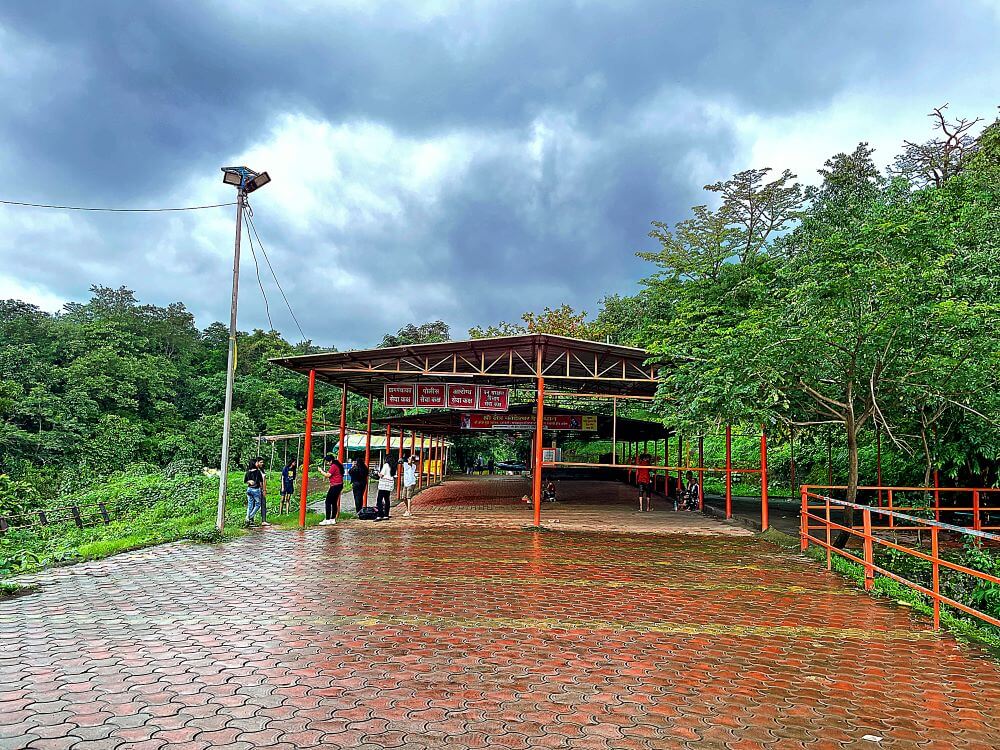
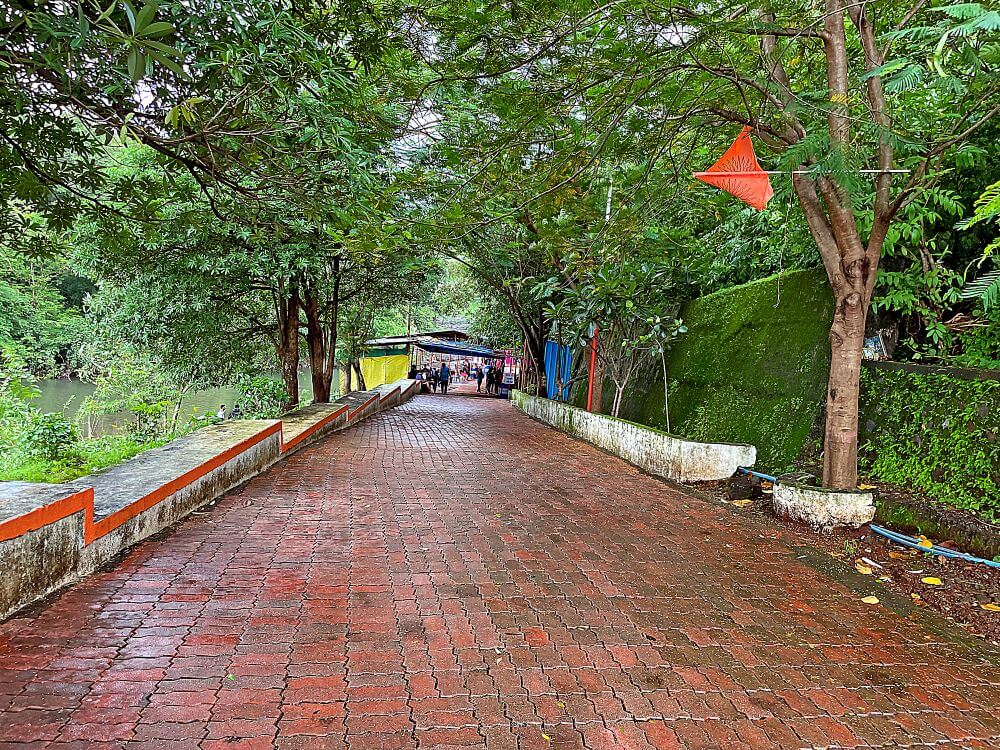
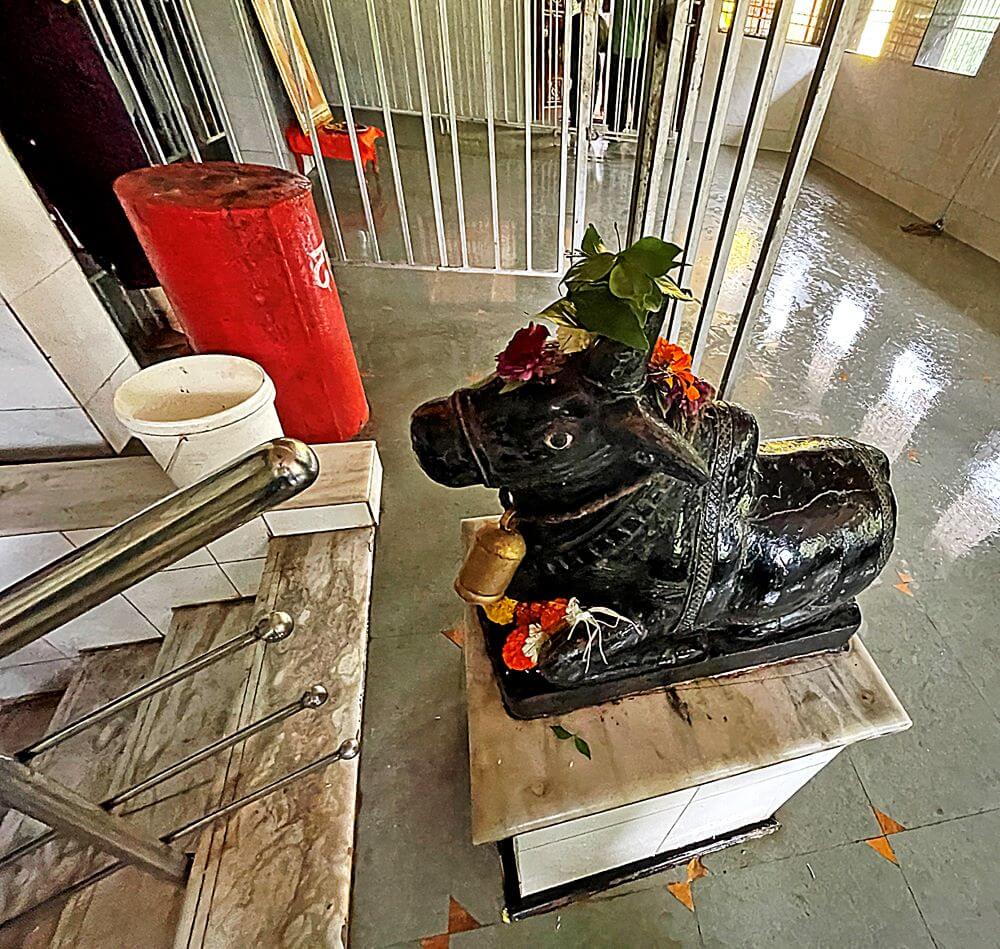
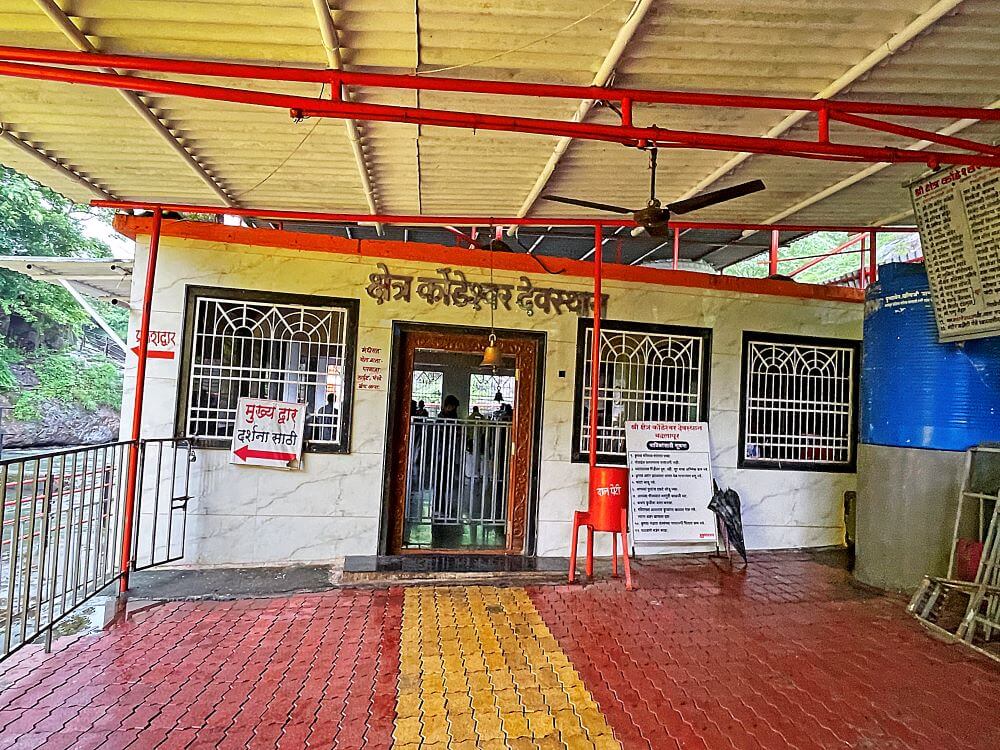
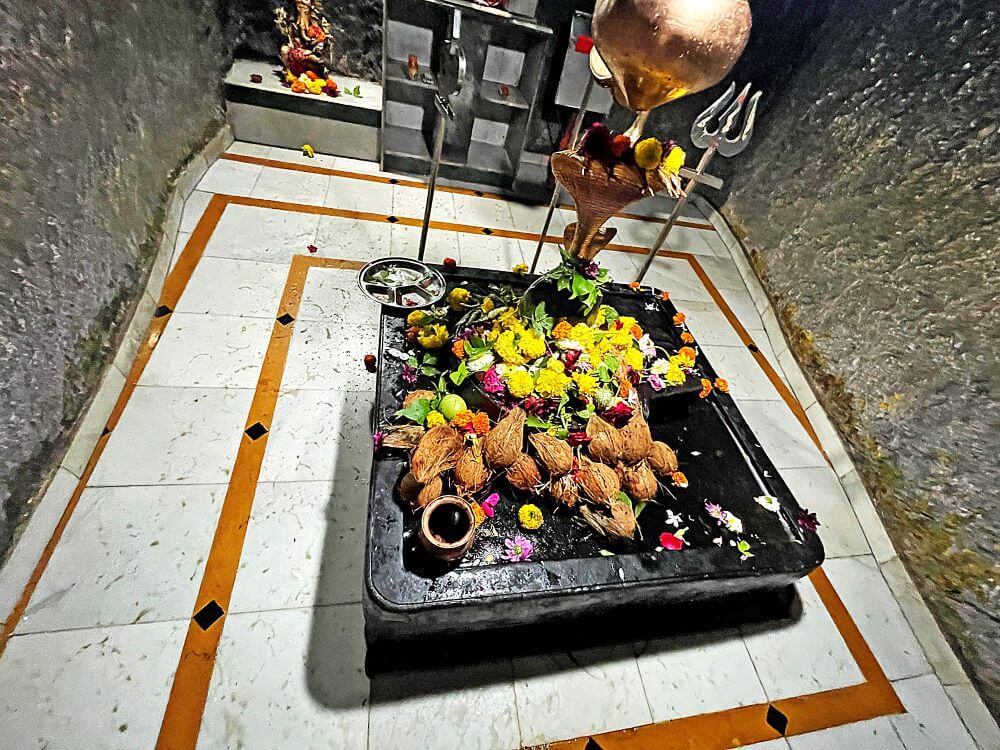
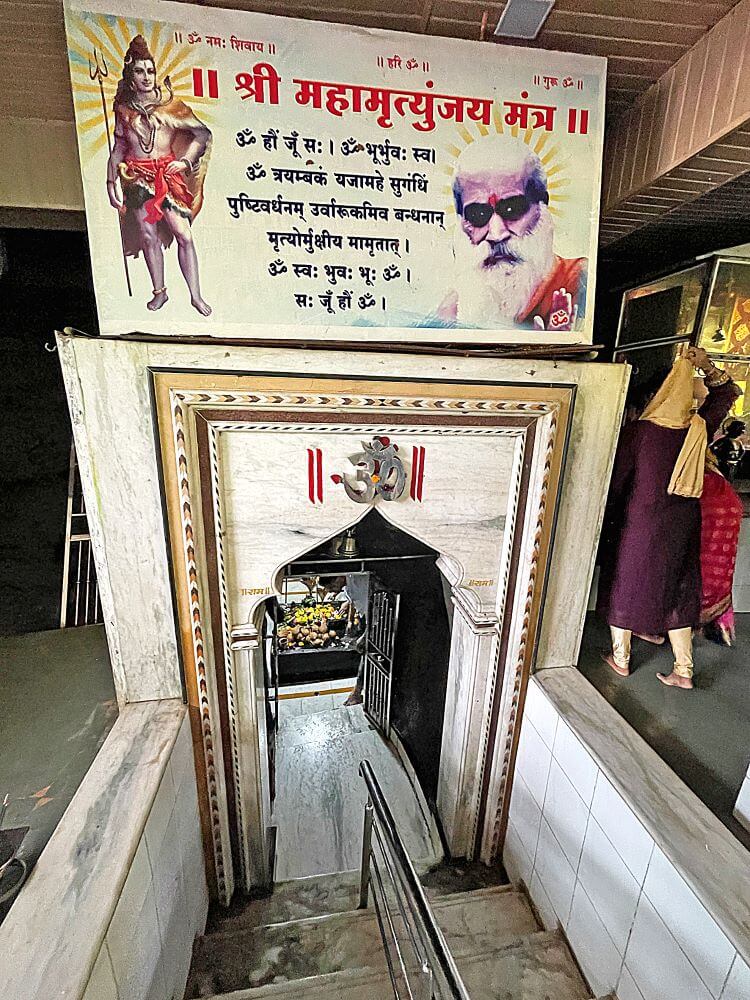
Wrapped in the lush green velvet of the Sahyadri range, this temple is situated in the forest area a short distance from Badlapur city. Paver blocks have been laid on the path from the entrance to the main temple, and tin sheds have been erected in some places for the convenience of devotees. A few steps before entering the main temple, one can see a *Shivalinga* and Nandi on the left. The temple’s *sabhamandap* (assembly hall) is spacious and provides seating for devotees. Near the sanctum sanctorum, there are idols of Ganesha, Vitthal-Rukmini, Hanuman, Dattatreya, and Durga Devi. Behind these idols is a portrait of Kondeshwar Baba. In front of the main sanctum, there is a stone idol of Nandi. One must descend a few steps to enter the sanctum. In the sanctum carved out of black stone, one can see the *Swayambhu Shivalinga*. The *linga* is sheltered by a hooded serpent, and a *galantika* (dripping vessel) above performs a continuous *abhishek* over it. Behind the *Shivalinga* are idols of Ganesha and Parvati. Behind the temple, near the *kunds*, are temples dedicated to Kalika Mata and Ganesha. These two *kunds* were formed over the years by the cascading waterfall. Due to their depth, barricades have been installed around them. During the *Adhik Maas*, many devotees bathe in the *kunds* near the temple, and changing facilities are provided for female devotees.
Devotees can enter the sanctum to have *darshan* of Kondeshwar daily from 6:00 AM to 8:30 PM. Grand festivals are held here on Mahashivratri, Shravani Mondays, and Tripurari Purnima. Every Monday, *khichdi prasad* is distributed to devotees. There is a large crowd of devotees on Mahashivratri, during which the temple committee organizes religious programs such as *bhajans*, *pravachans* (discourses), and *Haripath*. A *Mahaprasad* is served to all visiting devotees, and *Mahaprasad* is also distributed on every Shravani Monday.
The waterfall near the temple is an attraction for thousands of tourists. Many visitors from the Mumbai, Thane, and Pune regions come here during the monsoon to experience the cascading water. After exiting the main temple, one can reach the waterfall by descending three or four steps. During the monsoon, the two *kunds* and the two temples beyond the waterfall are often submerged. To prevent accidents, devotees are prohibited from entering those temples during heavy rainfall.
This sacred temple stands as a testament to deep spiritual devotion, ancient architectural grandeur, and rich local cultural traditions.
The sanctum sanctorum houses the divine idol consecrated according to ancient Vedic traditions, surrounded by serene courtyards and traditional temple architecture.
Navratri, Maha Shivratri, Annual Temple Jatra & Deepotsav
Compare and book flights, secure top-rated local hotels near the temple, hire reliable guides, and rent cars instantly.
Extend your pilgrimage by visiting other highly sacred temples located nearby.


Add ₹999 more to unlock FREE SHIPPING!
Your sacred cart is currently empty.
Shop Photo FramesFill in your delivery details below to place your order.
Add comment