
Add ₹999 more to unlock FREE SHIPPING!
Your sacred cart is currently empty.
Shop Photo FramesThe Kalvan Devi Temple, situated in the town of Kalwa adjacent to Thane city, is a highly significant place of worship for local devotees. This ancient village boasts a historical legacy of about a thousand years, and it is said that this temple also dates back to the Shilahara era. It is believed that the area derived its name, Kalwa, from the Kalvan Devi worshipped here. Along with Kalvan Devi, the temple also houses the Gramdevi (village deity) of Kalwa. Devotees hold deep faith that the Goddess here fulfills the prayers of her followers and rushes to their aid in times of distress.
The Vasai Campaign is considered one of the most important military expeditions in the history of Maharashtra. In 1739, the Maratha forces of the Peshwas captured the Vasai Fort, effectively uprooting the fanatical Portuguese rule in the region. Two significant skirmishes of that campaign took place in the Kalwa area. The Portuguese had captured Thane in December 1533 and had wreaked havoc here for two centuries. The Maratha forces were determined to drive them out. To thwart Maratha attacks, the Portuguese began building a fort in Thane around 1730. It is said that they also constructed a small fortification (gadhi) near the banks of Kalwa for protection. At that time, the Maratha commander Gangaji Naik attacked Kalwa from the village of Itave and looted the Portuguese-held village of Kalwa.
The Thane fort was completed in 1734. To protect this fort, the Portuguese had built a water bastion (panburuj) named Jeronimo near Kalwa. Capturing this bastion was essential to winning Thane. On March 26, 1737, the Maratha forces launched an attack on this bastion. Under the leadership of Khandoji Mankar, Honaji Balkawade, Ramchandra Hari Patwardhan, and Ramaji Mahadev, some Koli soldiers secretly approached and placed ladders against the bastion. A hundred men entered, killed the Portuguese captain and six soldiers, and conquered the bastion. This is considered a significant skirmish in the Vasai campaign. The town of Kalwa, which witnessed such historic events, is also linked to the transport revolution in modern India. On April 16, 1853, India’s first train ran from Bori Bunder to Thane. About a quarter of a century later, in 1877, the British built a bridge over the Kalwa creek. Built at a cost of 1,68,864 rupees, this bridge brought the cities of Kalyan, Bhiwandi, Panvel, Pune, and Mumbai closer together, boosting trade and commerce. This is the same bridge now known as the ‘Old Kalwa Bridge’. The site of Kalvan Devi in Kalwa, with its rich history, is also said to be ancient.
The exact history of the establishment of the original temple is unavailable. During the Portuguese rule, they destroyed all the temples in the Thane-Kalwa area, and it is believed that the original temple of the Goddess was among them. For many years thereafter, the idol of the Goddess remained in the open, enduring the sun and rain. About a hundred years ago, an incident sparked the revival of this temple. The legend goes that a woman from the village had immense devotion to the Goddess and would visit this spot daily to offer prayers. One day, the Goddess appeared to her in a dream and instructed her to build a temple. Following this, the women of the village came together and started a campaign to rebuild the temple. The villagers supported this initiative, and a grand temple was erected.
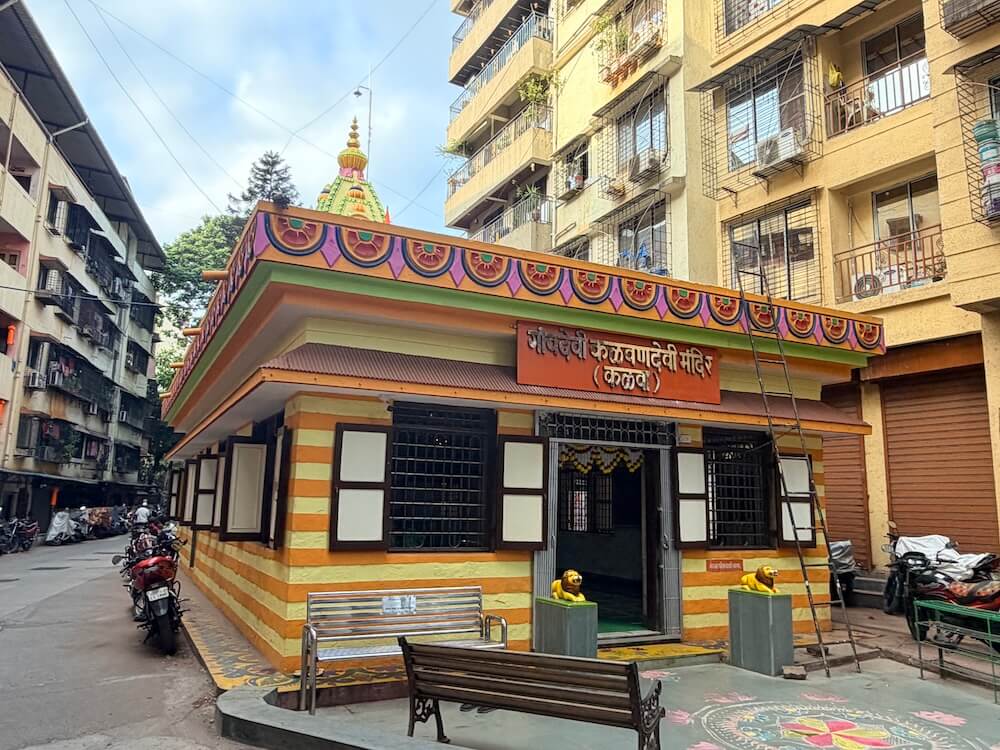
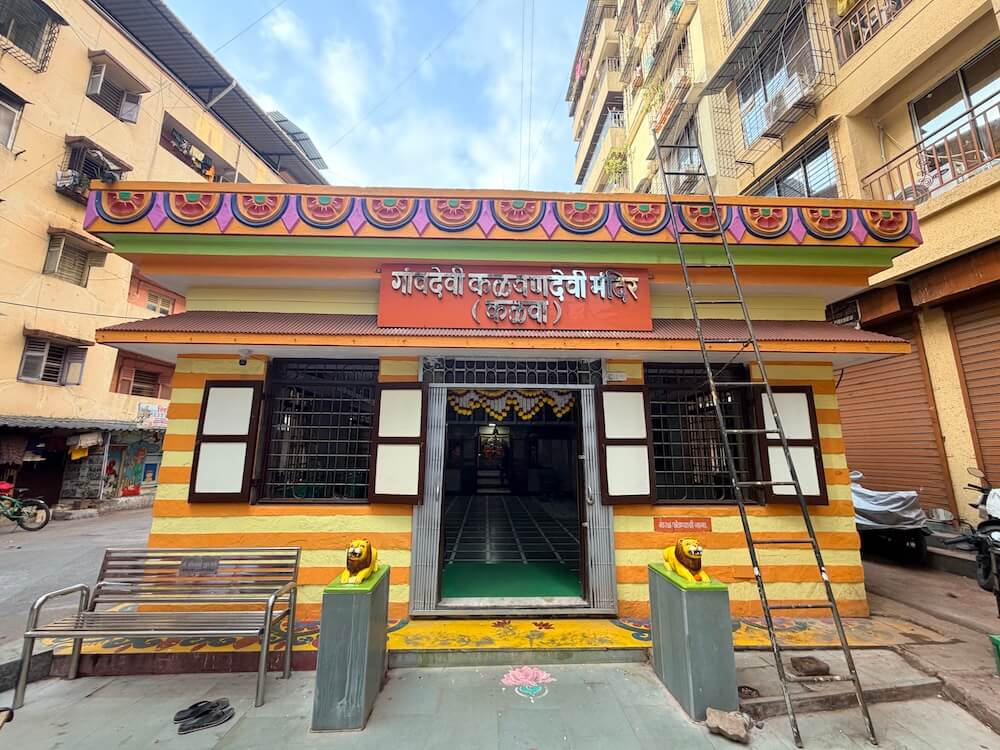
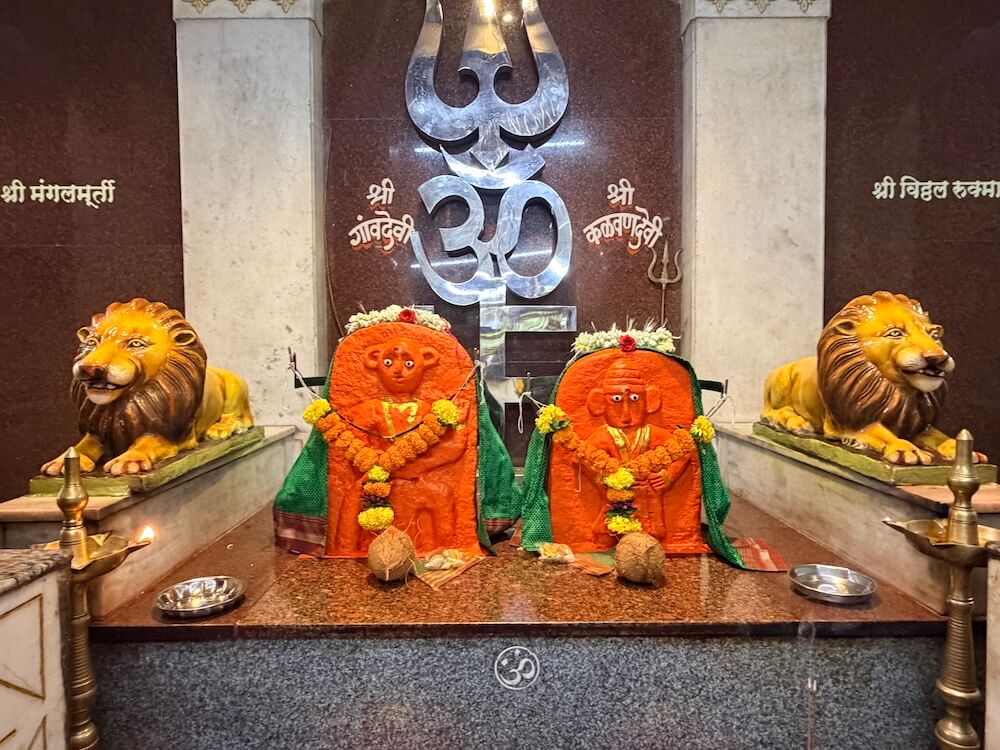
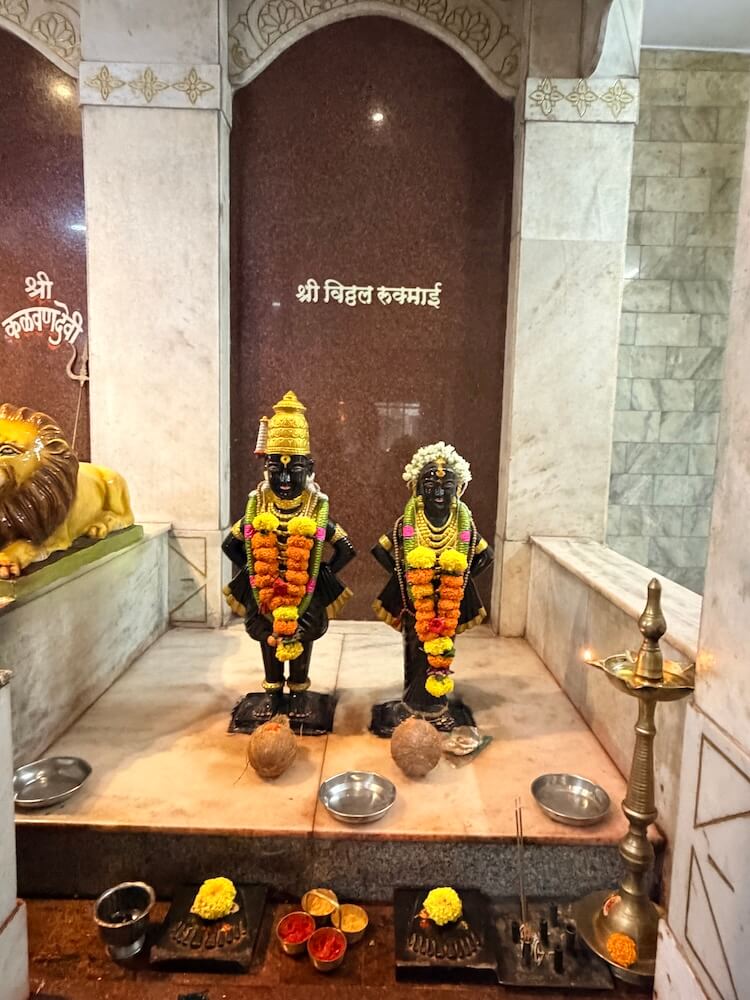
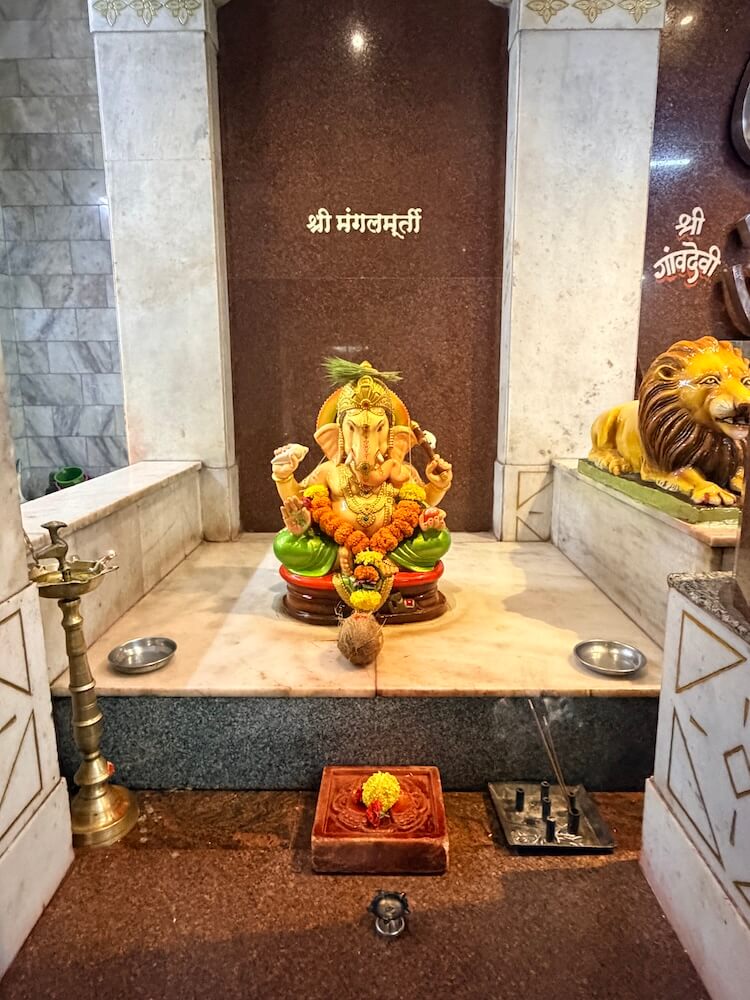
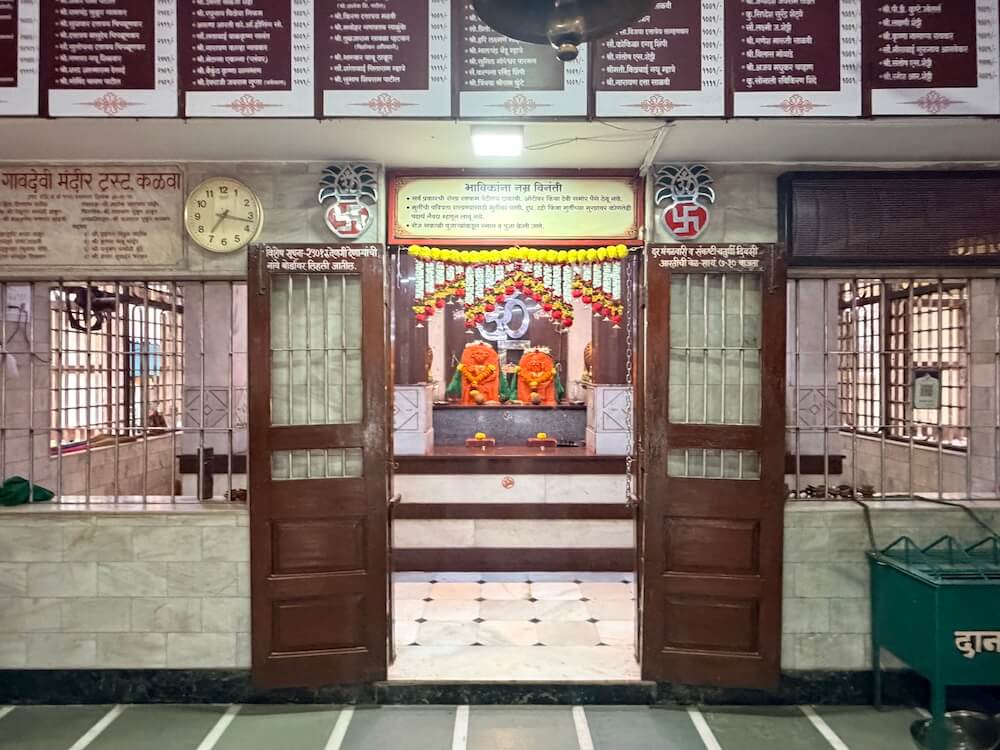
The temple courtyard, paved with stone, features a square, ornate Tulsi Vrindavan with a circular base. Benches have been provided for devotees in this open courtyard. The temple, which consists of a Sabha Mandap (assembly hall) and a Garbhagriha (sanctum sanctorum), has two lion sculptures on the pedestals on either side of the entrance. The walls of the enclosed Sabha Mandap have windows for light and ventilation. On the main altar (Vajrapitha) in the center of the sanctum are two black stone idols smeared with vermilion: the Gramdevi and Kalvan Devi. Both idols are two-armed, wearing crowns, bangles, and anklets. On the right and left sides of the Vajrapitha are sculptures of lions, the vehicle of the Goddess. On the right side of the altar are Vitthal-Rukmini, and on the left is an idol of Ganpati.
The temple roof has a parapet with a semi-circular lotus flower design on the outside. The main shikhara (spire) is square, ornate, and consists of two tiers. The main shikhara features niches (devkosthas) on all four sides in both the lower and upper tiers. The two tiers of the main shikhara are separated by lotus flower carvings.
The shikhara is topped with an amalaka and a kalash. Smaller shikharas surround the main one on all four sides, each featuring niches on three sides. These smaller shikharas are adorned with lotus carvings and topped with modak-shaped spires and kalashas on tapered sections with vertical ridges.
Festivals such as Chaitra Padwa, Harinam Saptah in the month of Shravan, and Sharadiya Navratri are celebrated here. The annual Jatrotsav (fair) of the Goddess is held on May 1st.
On the day of the Jatrotsav, at one o’clock in the morning, the Goddess is bathed (abhishek) and offered worship and naivedya. The idols of Ganesh and Vitthal-Rukmini are also worshipped. From 6:00 AM to midnight, long queues of devotees form for darshan. At 4:00 PM, grand wrestling matches begin at the Gramdevi grounds.
Many renowned wrestlers participate in this competition. At 8:00 PM, the Goddess is seated in a palanquin and taken on a procession through the village. The palanquin returns to the temple at midnight. Devotees can have darshan daily from 6:00 AM to 9:00 PM.
This sacred temple stands as a testament to deep spiritual devotion, ancient architectural grandeur, and rich local cultural traditions.
The sanctum sanctorum houses the divine idol consecrated according to ancient Vedic traditions, surrounded by serene courtyards and traditional temple architecture.
Navratri, Maha Shivratri, Annual Temple Jatra & Deepotsav
Compare and book flights, secure top-rated local hotels near the temple, hire reliable guides, and rent cars instantly.
Extend your pilgrimage by visiting other highly sacred temples located nearby.


Add ₹999 more to unlock FREE SHIPPING!
Your sacred cart is currently empty.
Shop Photo FramesFill in your delivery details below to place your order.
Add comment