
Add ₹999 more to unlock FREE SHIPPING!
Your sacred cart is currently empty.
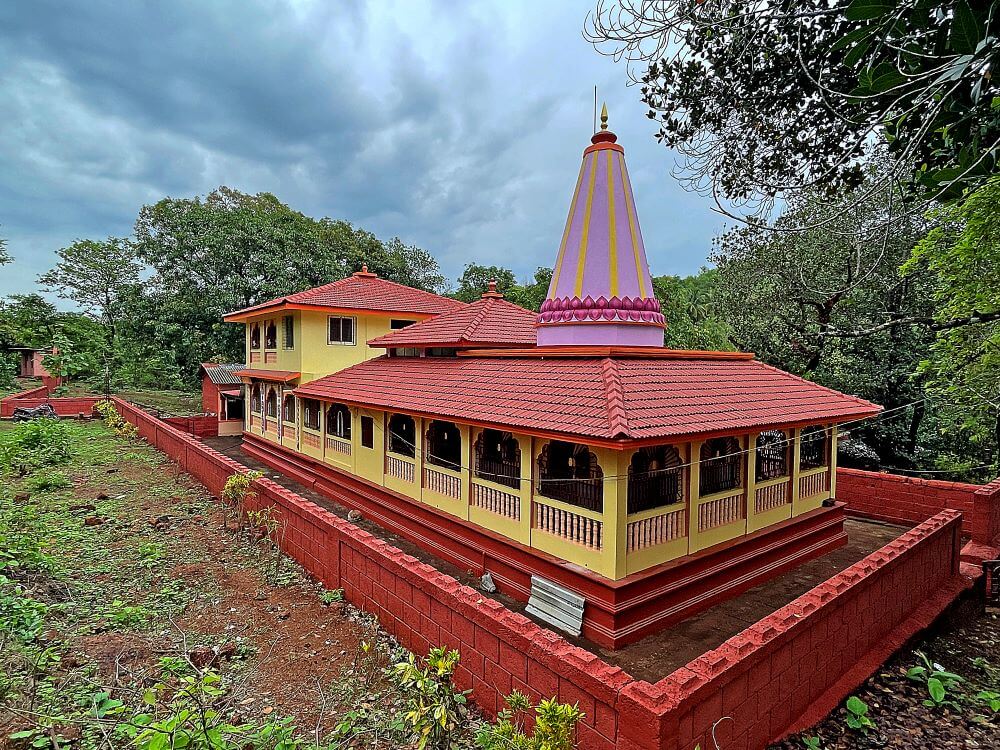
Shop Photo FramesOn the border of Wada Bharade and Mogre villages in Rajapur Taluka, on the banks of the Vaishnavi River, stands the renowned Lakshminarayan Temple, which is about four hundred years old. Nestled in a naturally abundant environment, this holy shrine is the revered place of worship and the family deity (Kuladaivat) of the Paranjape, Deo, and Mandlik families. According to historical records, on the occasion of the birth anniversary of Sawai Madhavrao Peshwa, a grant of one hundred bamboo mats (jhap) and some donations were given for the construction of the temple’s assembly hall (sabhamandap). Devotees believe that Shri Dev Lakshminarayan fulfills all wishes and desires.
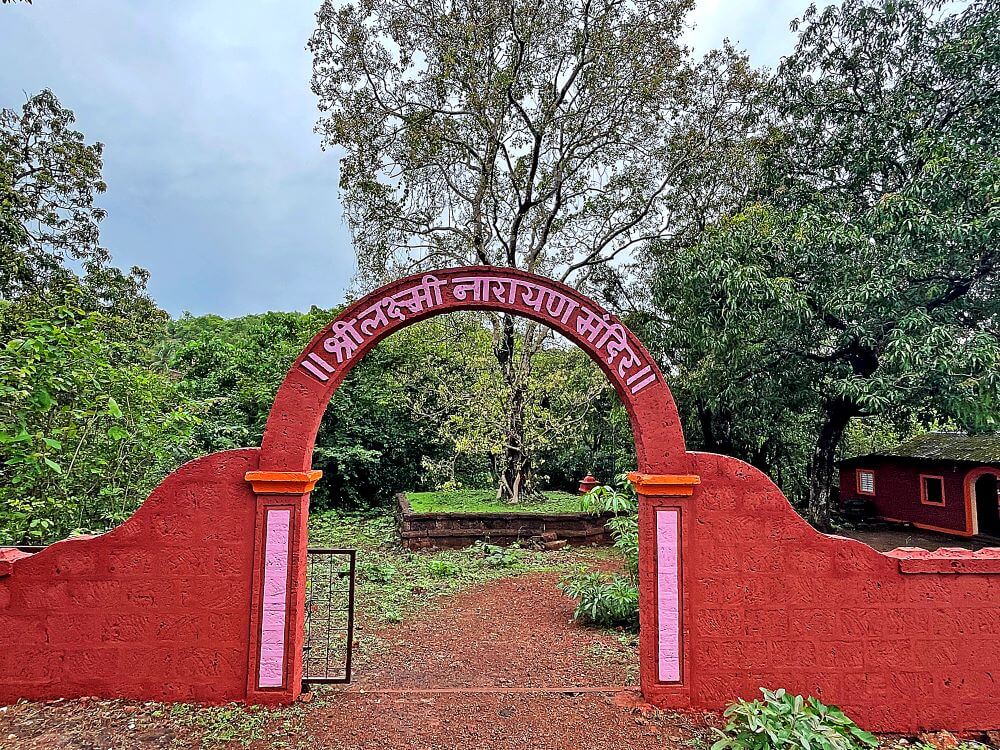
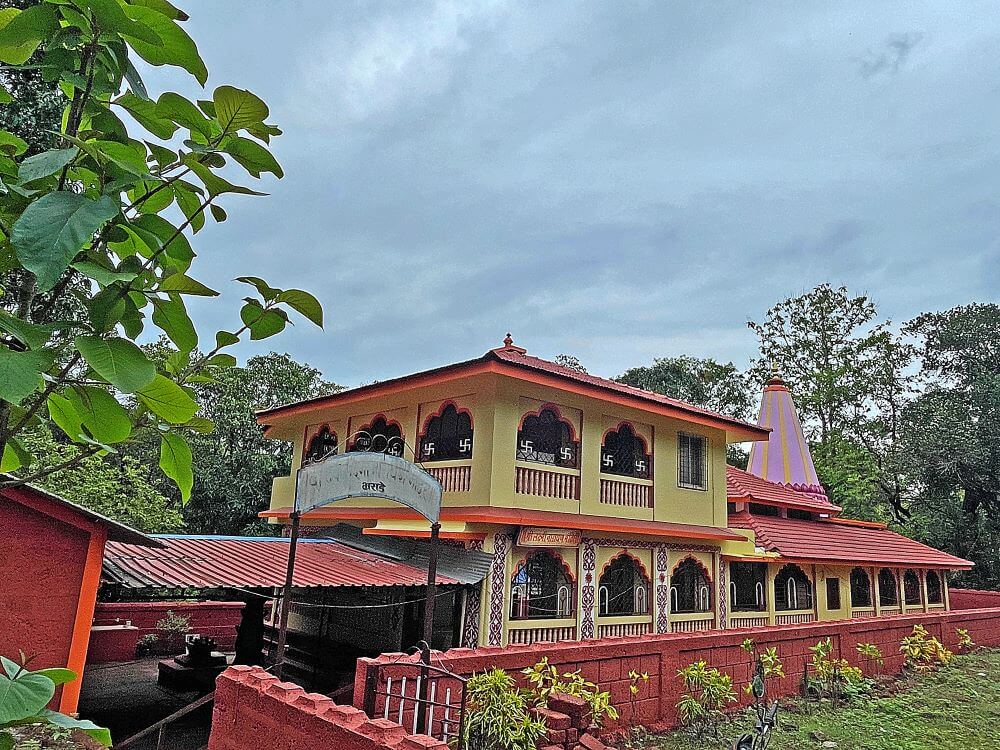
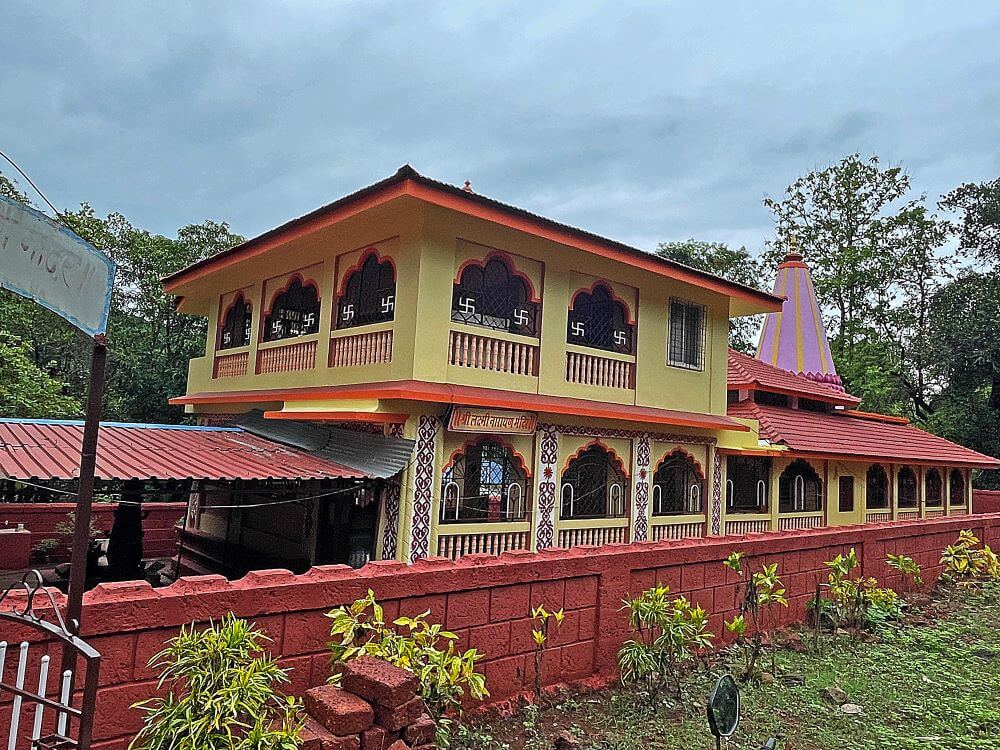
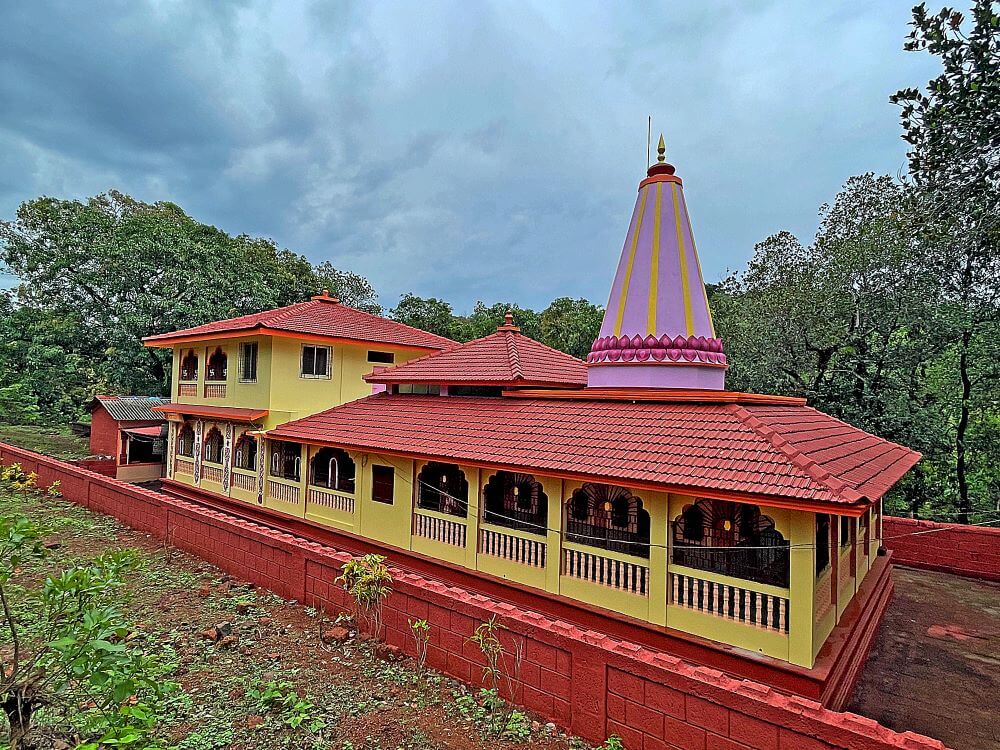
Situated somewhat set back from the main road, this temple is reached by descending a few steps. The temple is enclosed on all four sides by a robust fortification wall made of laterite stone. Entry into the temple courtyard is through a gateway in the fortification. A tin shed has been erected in this courtyard for the convenience of devotees. In front of the main temple stands a stone lamp pillar (deepmal) twenty-five to thirty feet in height along with a large Tulsi Vrindavan. This east-facing temple features an architectural layout consisting of an assembly hall (sabhamandap), an intermediate hall (antarala), and the sanctum sanctorum (garbhagriha). Wood has been extensively used in the construction of the temple, and it is topped with a tiled roof. In the year ۲۰۱۱, marking the completion of four hundred years of the temple, the assembly hall and the sanctum sanctorum were renovated. There is a large, ancient well within the temple premises.
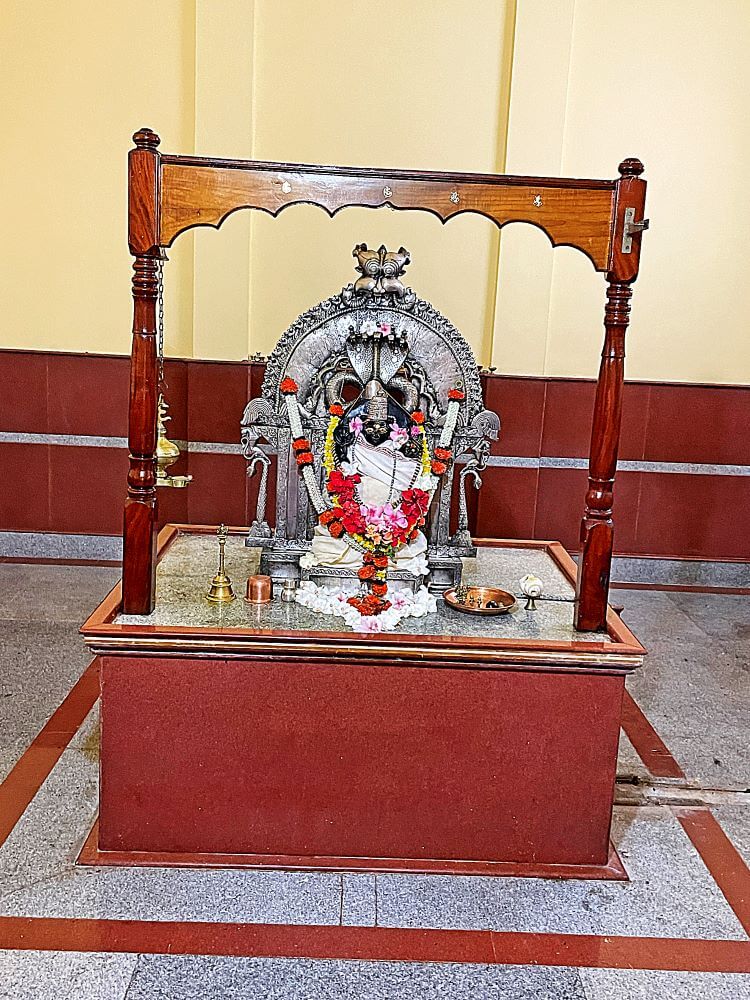
The assembly hall is of an open-type design. In the intermediate hall near the entrance to the sanctum sanctorum, there are idols of Shri Ganapati and Shri Dattatreya. Inside the sanctum sanctorum, placed on a stone altar, is a two-foot-tall idol of Lakshminarayan sculpted from a Shaligram shila (sacred stone). Lord Narayan is seated with His left thigh folded upon the head of Garuda, and Goddess Lakshmi is seated on His left thigh. Door guardians (dwarapala) are positioned at the base of the idol. The idol of Narayan has four hands, holding a discus (chakra) in the upper right hand, a conch shell (shankh) in the lower right hand, a mace (gada) in the upper left hand, and a lotus (padma) in the lower left hand. Atop the head of the idol is the five-headed hood of a serpent, while behind it stands an exquisitely carved glowing halo (prabhaval). Devotees visiting this temple can perform worship (puja), ritual ablution (abhishek), grand food offerings (mahanaivedya), or other religious rituals. For this, if a money order is sent, the religious rituals are duly performed, and the consecrated blessed food (prasad) and sacred ash (angara) are sent by mail. (Contact: Shri Dev Lakshminarayan Temple: Vinayak Paranjape, President: ۹۸۲۱۲۶۰۳۹۳, Avinash Kamat, Vice President: ۷۵۸۸۳۶۹۸۸۲)
During the month of Shravan, the celebration of Krishna Janma, namely Gokulashtami, is observed here on a grand scale. This festival lasts for two days, specifically on Shravan Krishna Saptami and Ashtami, which mark Shri Krishna Jayanti and Gopalakala. For this festival, members of the Paranjape family arrive from Gujarat, Madhya Pradesh, Rajasthan, and even from foreign countries, alongside those from Maharashtra. On the day of Saptami, at the Devi Mahakali Temple located in Adivare seven kilometers away from this temple, the family members perform the ritual offering of a blouse piece and coconut (oti) to Goddess Mahakali. In accordance with tradition, a collective prayer (garhane) is offered to her for the welfare and well-being of all. Following this, everyone gathers at the Lakshminarayan Temple in Bharade for a collective aarti, marking the commencement of the festival. Located in a highly remote region, the temple at this time is decorated with various flowers and illuminated with electric lights.
On the next day, which is Shravan Krishna Ashtami, collective chanting of the Vishnu Sahasranamavali is held in the morning. This is followed by a Kirtan, and upon its conclusion, the assembled devotees dance in circles around the cradle of Lord Krishna. After bathing the idol of Lord Krishna in the nearby stream, performing ritual worship and aarti, all the devotees return to the temple. According to tradition, the local priest then offers a collective prayer (garhane), after which the grand food offering (mahanaivedya) is presented to the deity. In addition to this, the Kartiki festival is celebrated here with great fervor. This festival takes place during the period from Ashwin Purnima to Kartik Purnima. During this time, daily programs of Deepotsav, lighting the lamp pillar, night-long devotion (harijagara), and Kakada aarti are held. On Kartik Shuddha Dashami, the palanquin procession starts at ten o’clock at night. On the day of Datta Jayanti, programs including a grand Satyanarayan Puja and Maha Prasad are organized on behalf of the local villagers.
To ensure convenience for outstation devotees visiting the Lakshminarayan Temple for darshan, a pilgrim rest house (bhakta niwas) and dining arrangements have been provided by the temple committee. With prior notice, overnight accommodations are arranged for devotees upon payment of a nominal fee. (Contact: ۰۲۳۵۳ ۲۲۶۴۷۷)
This sacred temple stands as a testament to deep spiritual devotion, ancient architectural grandeur, and rich local cultural traditions.
The sanctum sanctorum houses the divine idol consecrated according to ancient Vedic traditions, surrounded by serene courtyards and traditional temple architecture.
Navratri, Maha Shivratri, Annual Temple Jatra & Deepotsav
Compare and book flights, secure top-rated local hotels near the temple, hire reliable guides, and rent cars instantly.
Extend your pilgrimage by visiting other highly sacred temples located nearby.


Add ₹999 more to unlock FREE SHIPPING!
Your sacred cart is currently empty.
Shop Photo FramesFill in your delivery details below to place your order.
Add comment