
Add ₹999 more to unlock FREE SHIPPING!
Your sacred cart is currently empty.
Shop Photo FramesThe Mahakali Temple of Adivare village, which holds as much significance as Karveer Niwasini, that is, Mahalakshmi of Kolhapur, is a place of deep faith for lakhs of devotees. It is believed that any prayer offered to this Goddess reaches directly to the feet of Mahalakshmi in Kolhapur. It is said that when Chhatrapati Shivaji Maharaj visited Rajapur, he came to Adivare to seek the darshan of Goddess Mahakali. The annual Navratrotsav and Holikotsav of the highly awakened Mahakali Devi, who fulfills the vows of her devotees, are considered the grandest festivals in the taluka.
The legend of the Mahakali Temple goes that people belonging to the Bhandari community resided in the coastal village of Vetye, located a short distance from Adivare. About 800 years ago, when some locals went into the sea for fishing, three idols—Mahakali, Mahalakshmi, and Mahasaraswati—appeared in their nets. Initially, they kept these idols in a cave within the rocks near the shore. All the villagers placed these three idols in a palanquin and took out a procession through the entire village. Adivare is a large village comprising 12 wadis (hamlets). This procession was taken to all these places. At every spot, the divine permission (kaul) of the Goddess was sought, asking whether her consecration should be performed there. However, the Goddess gave the kaul to stop at Wada Peth in the marketplace, right where the temple stands today. Accordingly, these idols were consecrated here.
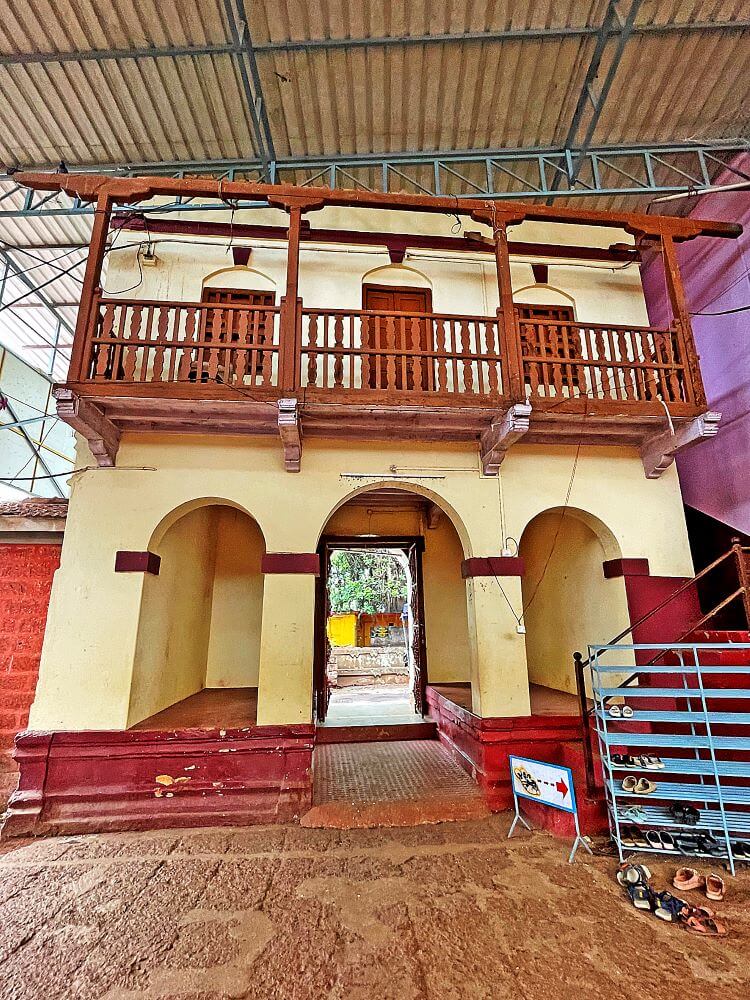
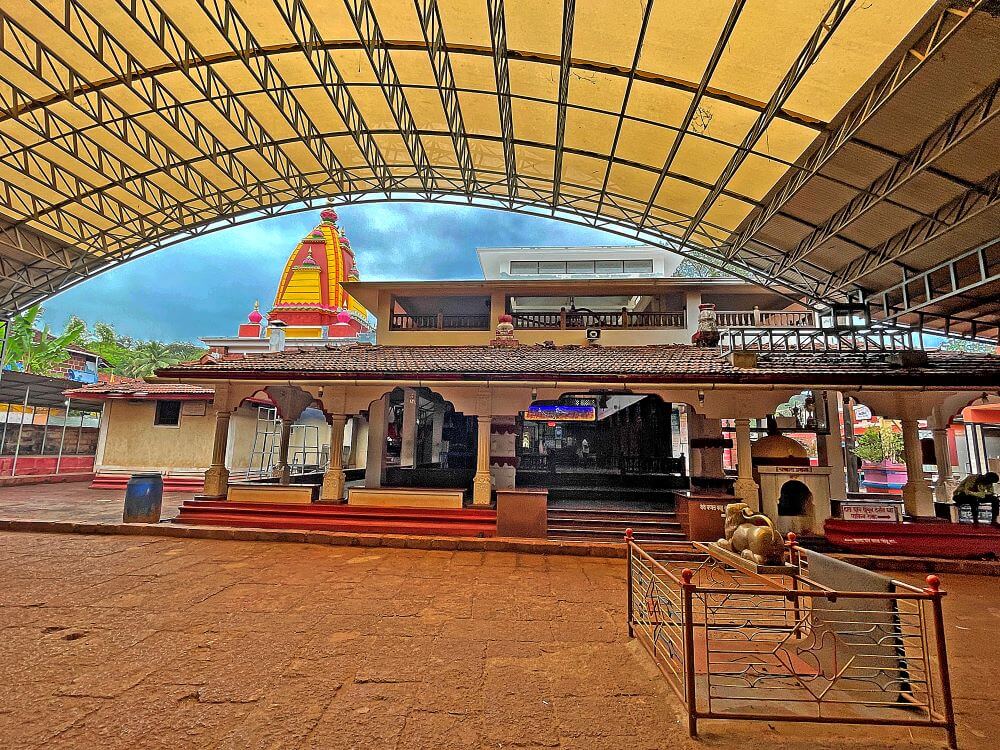
The Mahakali Temple is tiled with roof tiles, and its surroundings appear clean and beautiful. The temple complex is enclosed by a protective wall with a nagarkhana (drum house) at the entrance. Along with the Sri Mahakali Temple, the courtyard houses the panchayatana (group of five deities) consisting of Mahasaraswati, Mahalakshmi, Ravalnath , and Nagreshwar. This temple is considered especially significant because the three sisters—Mahakali, Mahasaraswati, and Mahalakshmi—are present together. Nagreshwar is considered the presiding prime deity here. There is a tradition of having the darshan of Nagreshwar first upon arriving at the temple. The Shiva linga in the Nagreshwar Temple is swayambhu (self-manifested), and behind the linga is the idol of Mother Parvati. In the northwest corner of the Nagreshwar Temple, there is an anthill as tall as the roof of the temple. It is said that the serpent king (Nagraj) resides in this anthill. This Nagraj is capable of divine manifestation, and he is worshipped to ward off any fear related to serpents. Every year on the day of Nagpanchami, the villagers worship the serpent here.
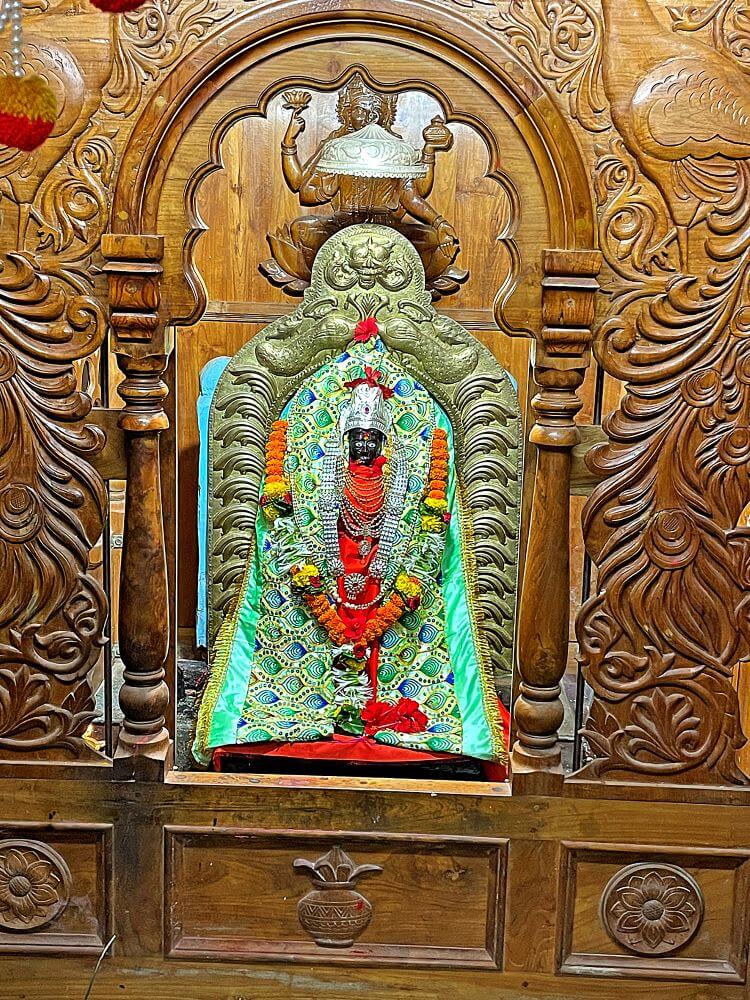
The second deity in this panchayatana is Shri Mahalakshmi. There is a tradition of having the darshan of Mahalakshmi after Sri Nagreshwar. It is said that the idol of Mahalakshmi was consecrated in the 11th century by Adi Shankaracharya. Adi Shankaracharya established Sri Mahalakshmi after refuting Jain philosophies, which is why Jain Brahmana, a deity of the Jains, is also present on the right side next to the Mahalakshmi idol. Standing two to two and a half feet tall, the idol of Mahalakshmi is carved from a single unbroken black stone. The four-armed (chaturbhuja) idol holds a conch (shankh) and a mace (gada) in her upper left and right hands, while holding a modak and a lotus in her lower right and left hands. Traditionally, any meetings regarding decisions about this temple complex are held within the Mahalakshmi Temple itself since ancient times. Shri Ravalnath is the third deity here, considered an avatar of Bhairava.
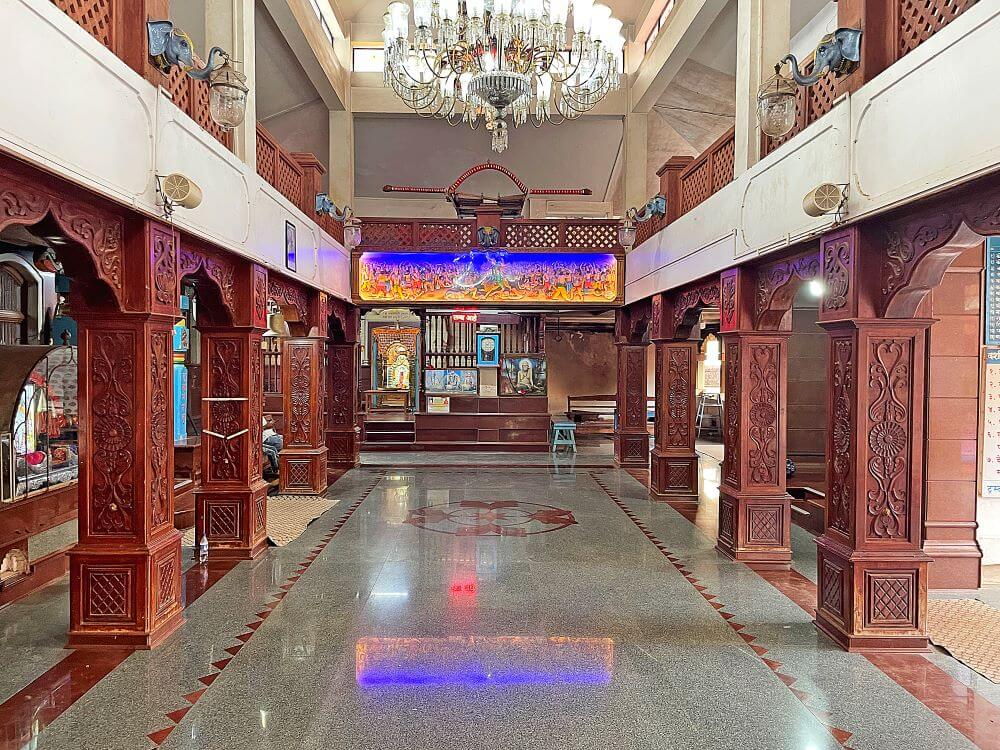
Shri Mahakali is the fourth and principal deity here, and the temple is famous after her name. The temple architecture comprises the sabhamandapa (assembly hall), antarala (vestibule), and garbhagriha (sanctum sanctorum). The sabhamandapa here is spacious, and a mezzanine balcony has been built on the upper side so that women can watch the programs during festivals and celebrations without any obstruction . The ceiling of the sabhamandapa features carvings of Dashavatara, and lotuses are carved on all four sides. Portraits of Chhatrapati Shivaji Maharaj and Ramadas Swami have been placed here in remembrance of their visits to this temple. The antarala and garbhagriha are situated at a slightly elevated level. On both sides of the entrance to the garbhagriha are two wooden guardian deities (dwarapalas). Additionally, an idol of Ganesha is carved into the pillar on the right side.
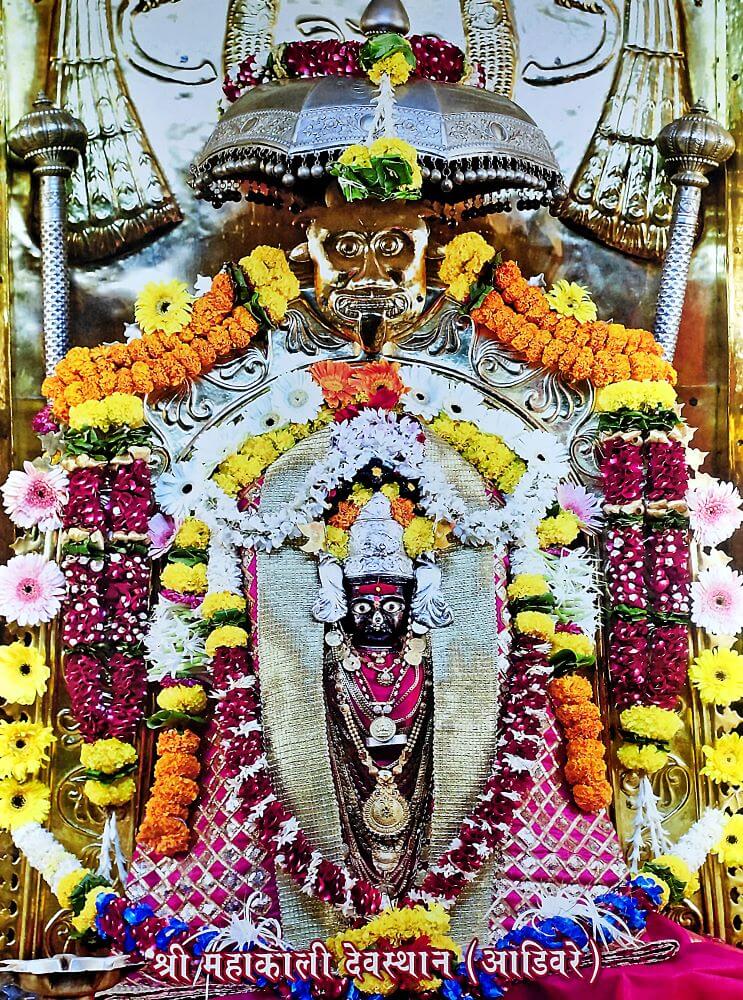
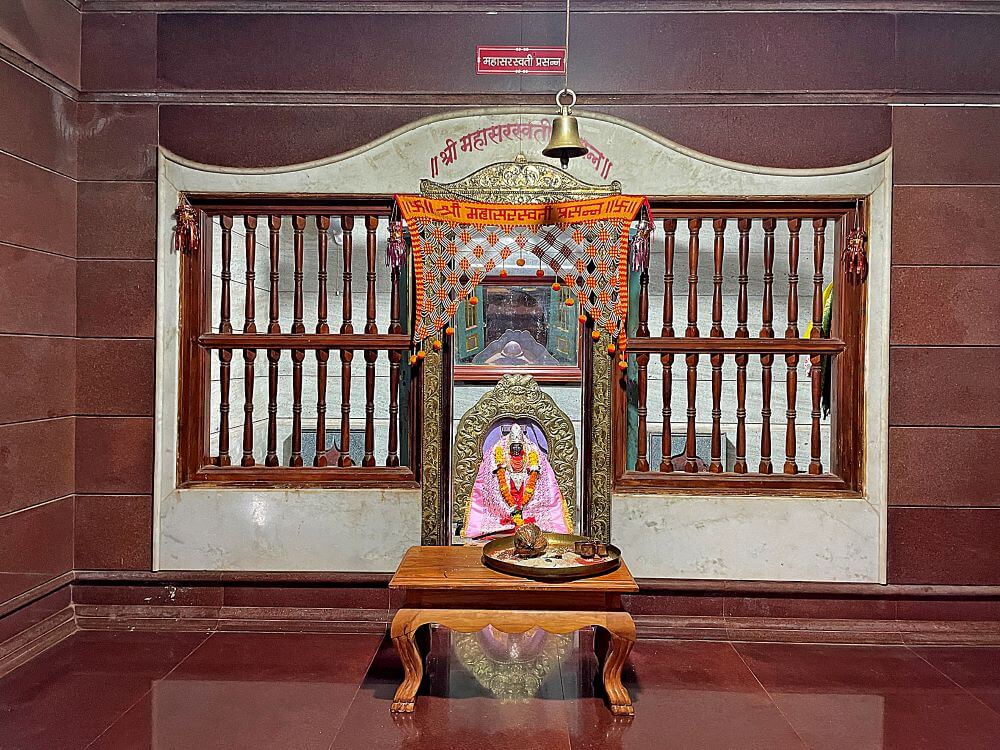
The idol of Mahakali in the garbhagriha holds special significance because it faces south (dakshinabhimukha). Carved from a single unbroken black stone, this idol is one and a half to two feet tall. She wears a five-headed serpent hood (panchamukhi shesha) on her head. Her upper left and right hands hold a damaru and a trishula (trident), while her lower right and left hands hold a sword (khadga) and a drinking vessel (panchapatra). To the left of Goddess Mahakali in the temple’s garbhagriha is Goddess Yogeshwari. It is said that Goddess Yogeshwari was also consecrated by Adi Shankaracharya, much like Mahalakshmi. She is also known here as Jugaidevi. The fifth deity in this panchayatana is Mahasaraswati, who faces north (uttarabhimukha). She is carved from black stone. This four-armed idol is depicted seated on a swan (hansa). Her upper left and right hands hold a book and a sword, while her lower right hand holds a drinking vessel and her lower left hand holds a serpent.
The Navratrotsav of Goddess Mahakali is celebrated from Ashwin Shukla Pratipada to Vijayadashami. A large fair is held here during this time. During this period, the temple is associated with much religious importance as well as numerous historical references. According to these, it is said that during the 1942 Quit India Movement, freedom fighters of the country sought the divine kaul of this Goddess and looted the British treasury. Additionally, during the Chinese aggression, the gold accumulated in the temple trust was donated to the Government of India as aid on behalf of the temple. The Goddess is adorned with various ornaments. Various religious and cultural rituals are performed. Dhooparati takes place at sunset. At night, Puranic discourses, kirtans, pravachans, and singing are held before the Goddess. Afterward, the procession of the deity is taken out in a decorated palanquin, during which the arati is performed at 13 different locations. Furthermore, on every full moon (purnima) and no-moon (amavasya) day, the idols of the Goddess are bathed with coconut milk and oil. For the convenience of devotees, a Bhakta Niwas (pilgrim guest house) with 24 well-appointed rooms has been built by the temple committee. (Bhakta Niwas Contact : 02353 226367)
Along with its religious significance, many historical references are also connected with this temple. According to these, it is said that during the 1942 Quit India Movement, freedom fighters of the country sought the kaul of this Goddess and looted the British treasury. In addition to this, during the war with China, the gold accumulated in the temple trust was given to the Government of India as assistance on behalf of the temple.
This sacred temple stands as a testament to deep spiritual devotion, ancient architectural grandeur, and rich local cultural traditions.
The sanctum sanctorum houses the divine idol consecrated according to ancient Vedic traditions, surrounded by serene courtyards and traditional temple architecture.
Navratri, Maha Shivratri, Annual Temple Jatra & Deepotsav
Compare and book flights, secure top-rated local hotels near the temple, hire reliable guides, and rent cars instantly.
Extend your pilgrimage by visiting other highly sacred temples located nearby.


Add ₹999 more to unlock FREE SHIPPING!
Your sacred cart is currently empty.
Shop Photo FramesFill in your delivery details below to place your order.
Add comment