
Add ₹999 more to unlock FREE SHIPPING!
Your sacred cart is currently empty.
Shop Photo FramesKonkan is as rich in nature as it is in its countless customs, traditions, and diverse temples. Although many temples here are quite simple and tiled, their history and the legends associated with them are unique. Various dynasties have ruled over Konkan from time to time. The temple architecture and sculptures from those eras can still be seen in many places in Konkan today. One such ancient and beautiful, distinctly Konkani temple in this series is the Nateshwar Temple at Nate in Rajapur Taluka.
Some records indicate that the Nateshwar Temple existed even before the year 1421. Although there is no royal decree (sanad) for this temple, there is an ancient record of a tax exemption of 14 rupees. The self-manifested (swayambhu) and awakened (jagrut) Nateshwar deity is the village deity (gram-daivat) of Nate and is renowned everywhere as a god who fulfills vows. Because of this, many devotees from Konkan as well as Goa come here for darshan. In the year 2001, the Shankaracharya of the Karveer Peeth visited this temple. This is one of the ancient and famous temples of Konkan. A unique feature here is that the wooden pillars of this temple and the beautiful carvings on them can still be seen in good condition even after 600 years.
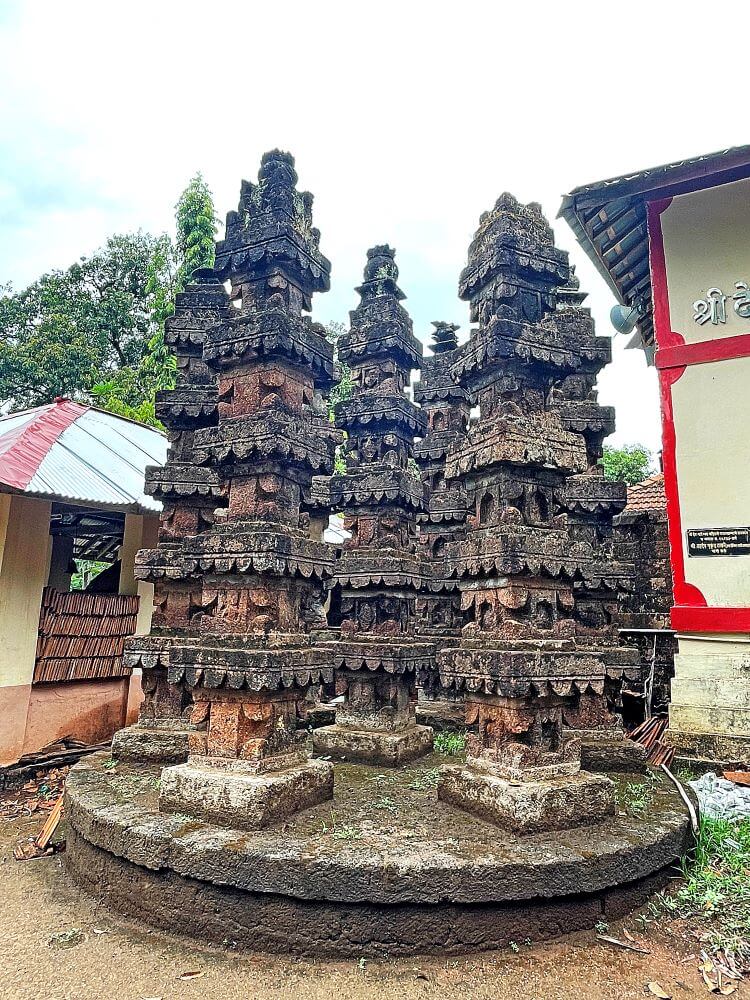
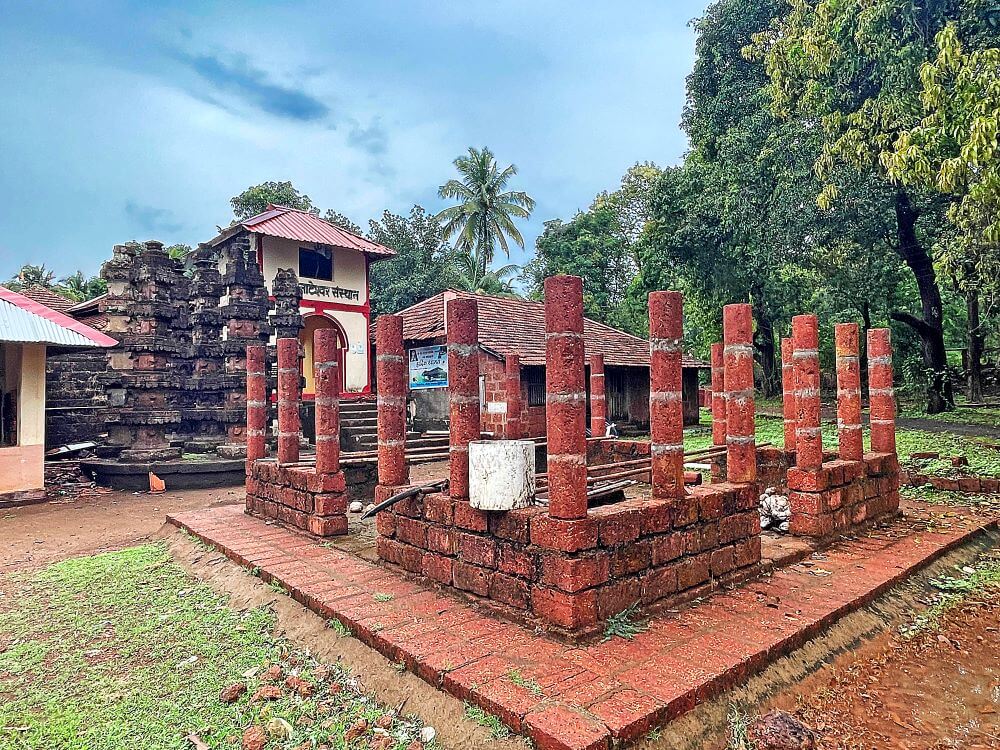
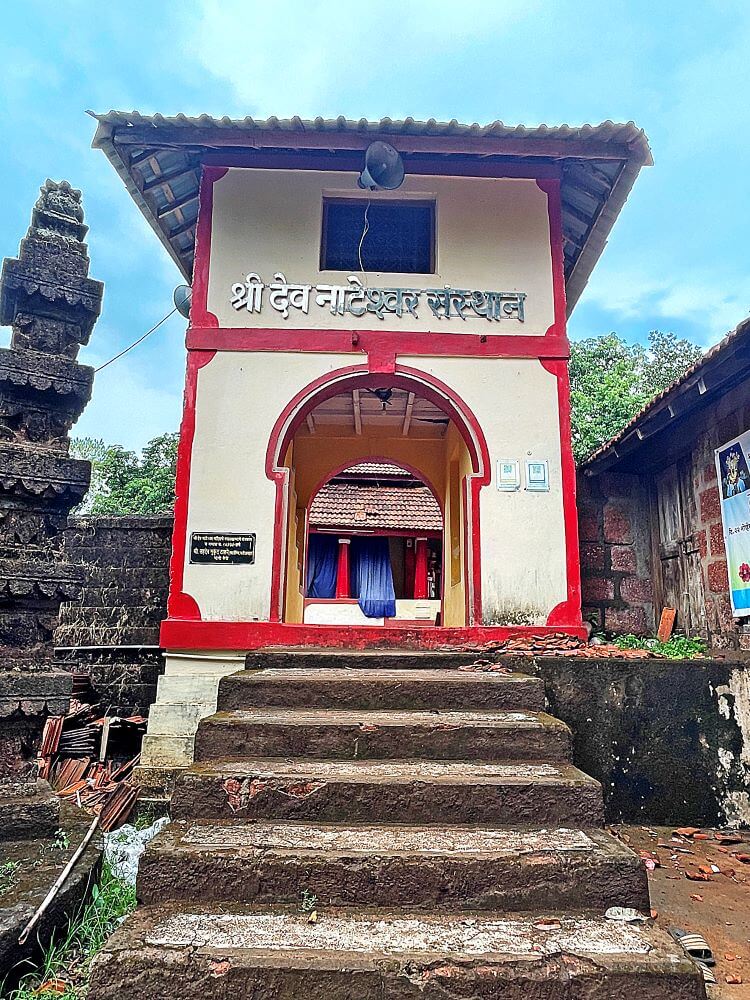
Located in the central area of the village, this temple is situated right by the road. The temple courtyard is at a height of five to six feet from the road. Near the entrance, there is a Maruti temple and next to it are seven lamp towers (deepmalas) made of laterite stone, all of the same height. From here, one can reach the entrance of the temple by climbing about ten steps. The entrance here is two-storied, with a nagarkhana (drum house) on the upper floor. There are stairs within the entrance itself to go to the upper floor. One enters the temple courtyard through an arch-like gateway. The temple is surrounded by a laterite stone fortification, and the entire courtyard is paved. It is noticeable that wood has been used extensively in the construction of the entire temple.
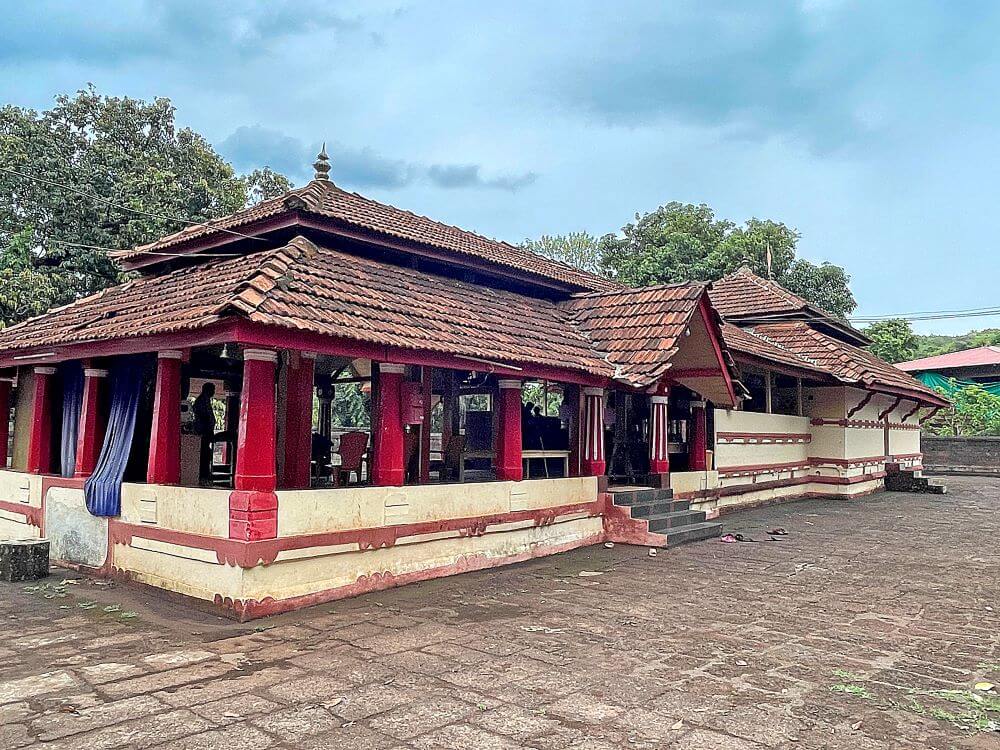
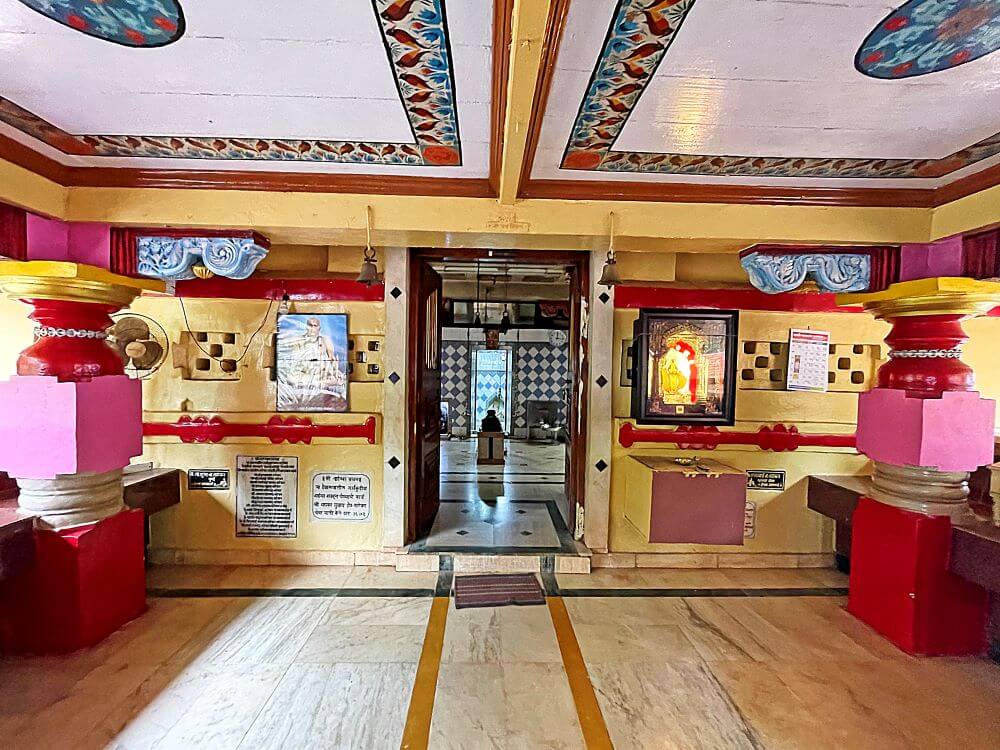
The structure of the temple consists of two assembly halls (sabhamandaps), an antarala (vestibule), and the sanctum sanctorum (garbhagriha). Upon entering the temple, in the assembly hall on the left, there are marble idols of Shri Ram, Lakshman, and Sita, and an idol of Hanuman nearby. These idols were installed here newly a few years ago. This assembly hall is of the half-hall (ardhamandap) type and has two-foot-high stone benches (kakshasanas) on the sides for devotees to sit. The assembly hall has 12 wooden pillars and is covered with tiles. The second assembly hall is on the right and is slightly elevated. This assembly hall has six large wooden pillars, which are square at the bottom, circular in the middle, and square at the top. The carvings on the beams above these pillars can still be clearly seen. Above them is a wooden ceiling. This assembly hall is also of the half-hall type and has two-foot-high stone benches on its sides as well.
In the vestibule, there are four large wooden pillars, and in front of the entrance to the sanctum, there is an idol of Nandi carved from a single stone. In the small porch outside the sanctum, there is an ancient idol of Ganesha made of black stone. On the lintel of the sanctum’s doorway, there is an idol of Ganesha, and below it is a Kirtimukh. Despite the prevalence of laterite stone throughout Konkan, the Ganesha idol here and the ancient Shiva Linga in the sanctum are made of black stone. The sanctum is small and has a domed ceiling. Above it is a square, cone-shaped spire (shikhara). Regarding the Shiva Linga here, there is a legend that a man with the surname Kalav had a cow that would not give milk at home. To find out why, the cowherd kept a watch on the cow. He noticed that the cow was releasing its milk at a spot in the forest. When he told the owner about this, they came and saw that this Shiva Linga had been discovered. Since then, the name Nateshwar became popular for this deity as the god of Nate village.
In this temple, a larger festival is celebrated on Tripurari Purnima than on Mahashivratri. This festival is celebrated for six days, from the tenth day (dashami) to the full moon (purnima). The festival concludes on the first day of the lunar fortnight (pratipada). The Mahashivratri festival here used to be a one-day event, famous in the surrounding five villages as the ‘Thakur’s Festival’. For the past few years, this festival is now celebrated for three days. Apart from the Nateshwar temple, there are temples of Shri Navalai Devi, Ganpati, Jugai, and Bharadin Devi in Nate.
This sacred temple stands as a testament to deep spiritual devotion, ancient architectural grandeur, and rich local cultural traditions.
The sanctum sanctorum houses the divine idol consecrated according to ancient Vedic traditions, surrounded by serene courtyards and traditional temple architecture.

Navratri, Maha Shivratri, Annual Temple Jatra & Deepotsav
Compare and book flights, secure top-rated local hotels near the temple, hire reliable guides, and rent cars instantly.
Extend your pilgrimage by visiting other highly sacred temples located nearby.


Add ₹999 more to unlock FREE SHIPPING!
Your sacred cart is currently empty.
Shop Photo FramesFill in your delivery details below to place your order.
Add comment