
Add ₹999 more to unlock FREE SHIPPING!
Your sacred cart is currently empty.
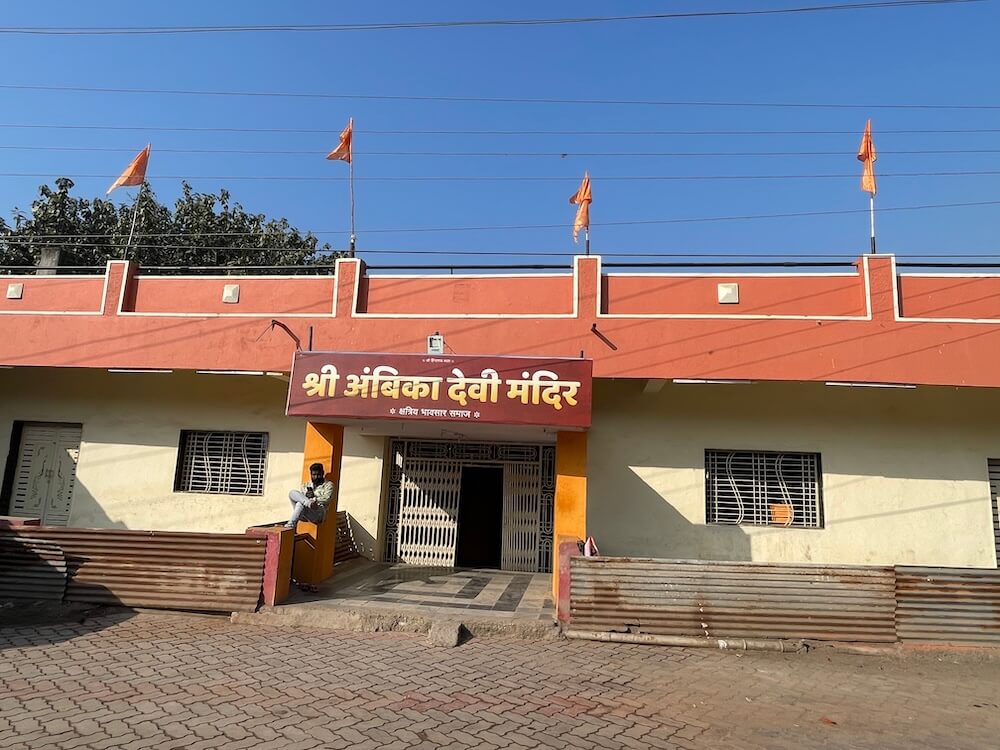
Shop Photo FramesIn Gangakhed city, situated on the banks of the Godavari River in Parbhani district, there is a renowned temple of Shri Ambika Devi belonging to the Kshatriya Bhavsar community. This temple, nestled near the ghats of the Godavari River, is revered as a pivotal center for the social and religious identity of the Bhavsar community. Historically, this sacred site is also recognized as a Shaktipeeth associated with Saint Janabai. This temple was established approximately four hundred and fifty years ago. The entire development of this temple and its precincts has been accomplished by the Kshatriya Bhavsar community, also known as the Rangari community. With the noble aim of preserving their traditional deity, the community united to construct this sacred edifice. Today, Gangakhed city is revered and known by the name ‘Dakshin Kashi’.
Parbhani district, renowned as ‘Prabhavati Nagari’ in ancient times, is now known as ‘Santnagari’ (City of Saints). This entire region is blessed with a profound historical and spiritual heritage. Saints and great personalities such as Visoba Khechar, Sant Namdev, Bhaskarbhatt Borikar, Ranganath Swami Mogarikar, Sai Baba of Shirdi, Nivrutti Buwa Thakur, Tukaram Maharaj (Yelegavkar), Yoganand Saraswati Maharaj alias Ganda Maharaj, Santkavi Yoganand Swami Maharaj, Shri Krishnaji Maharaj, Sakharam Maharaj, and Shukanand Maharaj, all graced this sacred land. Sant Janabai is one of these revered figures. Sant Janabai, a supreme devotee of Sant Namdev, was born in the thirteenth century into a family residing in Rajendra Peth, within this very village of Gangakhed.
This city is revered as the sacred birthplace of Saint Janabai, and its mention graces numerous scriptures. Furthermore, its significance is beautifully enshrined in the abhangas of Saint Namdev and in the ancient literature of the revered Warkari Sampradaya. According to historical records, this city was formerly a prominent commercial and religious center. As per the records in the Parbhani District Gazetteer, when the Marathwada region was under the rule of the Nizam of Hyderabad, Gangakhed was the jagir of the Kundalkar family. The Kundalkar jagirdars had made significant contributions to the administrative structure of this city and the construction of its ancient edifices. From the contemporary British and Nizam’s revenue records, it was evident that this city was a major administrative center. During this period, many large wadas, administrative buildings, and tax collection centers were erected in the city. References to the active participation of the local citizens in the Hyderabad Liberation Struggle are available in the Maharashtra Government’s documents pertaining to the freedom movement. The influence of contemporary Maratha and local architecture is evident in the construction of the historical Balaji Temple here, the jagirdars’ wadas, and other ancient edifices.
The Ambika Devi Temple, situated on the sacred banks of the Godavari River in Gangakhed, stands as a profound testament to the historical existence and enduring struggles of the Kshatriya Bhavsar community. This revered community, traditionally associated with the ancient arts of textile manufacturing and dyeing, traces its origins primarily to the northwestern regions of Bharat, specifically the hallowed lands of Rajasthan and Gujarat. This community originally belonged to the Kshatriya Varna. According to ancient Puranic traditions, during the campaign of Parashurama, the ancestors of this community, to protect themselves, laid down their weapons and sought the divine protection of Hinglaj Mata and Ambika Mata. From this profound faith that the Goddess bestowed upon them divine protection, they established Ambika Devi as their central deity and consecrated temples dedicated to Her throughout the nation. The sacred architecture of this temple in Gangakhed stands as a magnificent testament to this devotion.
During Parashurama’s era, to conceal their original identity, they adopted the profession of dyeing and textile printing; yet, due to their original varna, the word ‘Kshatriya’ remained in their name. British officer and anthropologist R. E. Enthoven has made a detailed record of the origin of the Bhavsar community and their profession of dyeing in his book ‘The Tribes and Castes of Bombay’. Subsequently, in search of livelihood, this community migrated on a large scale from Rajasthan and Gujarat to various parts of Maharashtra, Madhya Pradesh, and South India. Upon arriving in Maharashtra, this community continued its traditional profession of dyeing. In those times, these artisans were highly skilled in the art of preparing fast dyes from plants, fruits, and minerals. In the book ‘Castes and Tribes of H.E.H. The Nizam’s Dominions’ by Syed Siraj-ul-Hasan, a scholar and administrative officer from the era of Hyderabad State, there is a description of the way of life and the colouring work of the Bhavsar community in Marathwada, and particularly in the Gangakhed region.
According to these historical records, this community held a monopoly in dyeing and embellishing fabrics using natural colors. During that era, these artisans undertook the crucial task of preparing special garments for royal families, army tents, and flags. Numerous references to the skilled and trusted work entrusted to Rangari and Bhavsar artisans are available in the contemporary documents of the Maratha Empire and the Peshwa Daftar. Authoritative evidence of the Bhavsar community’s historical migration and honest professionalism is available in the old ‘Gazetteer’ of the ‘Bombay Presidency’, compiled by James Campbell. In this official document, they are mentioned as a hardworking, peace-loving, and honest professional community.
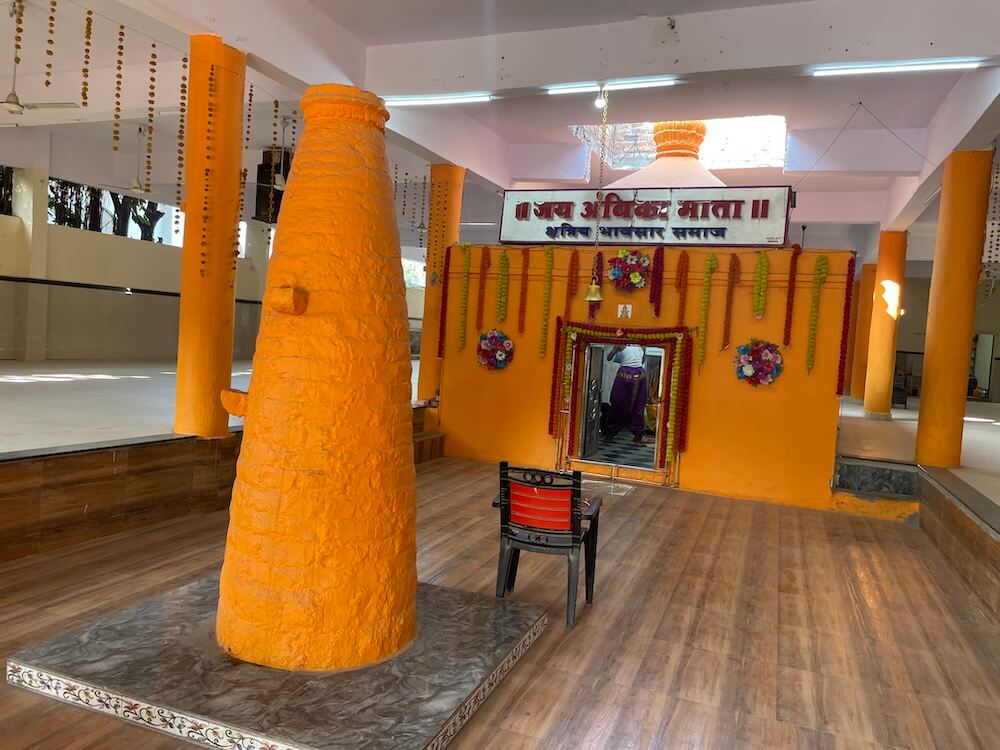
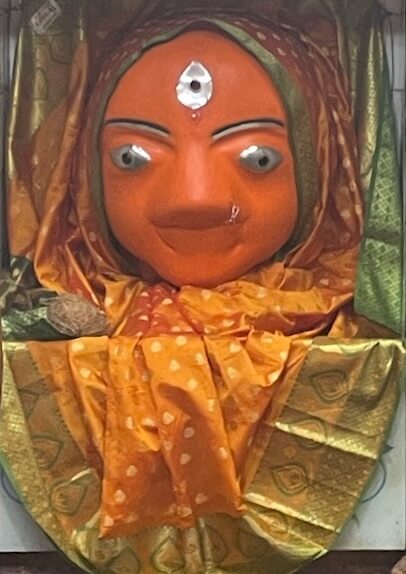
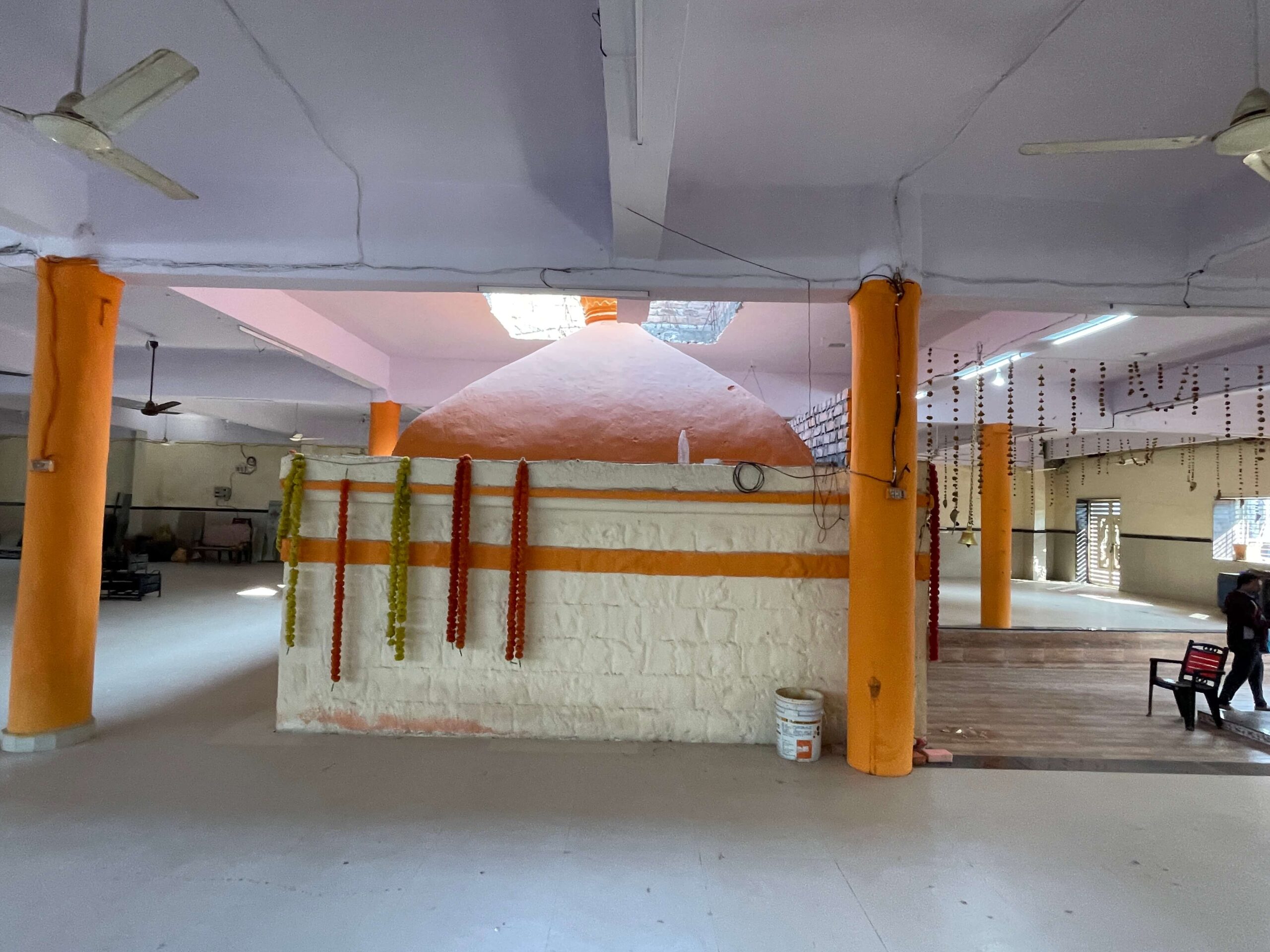
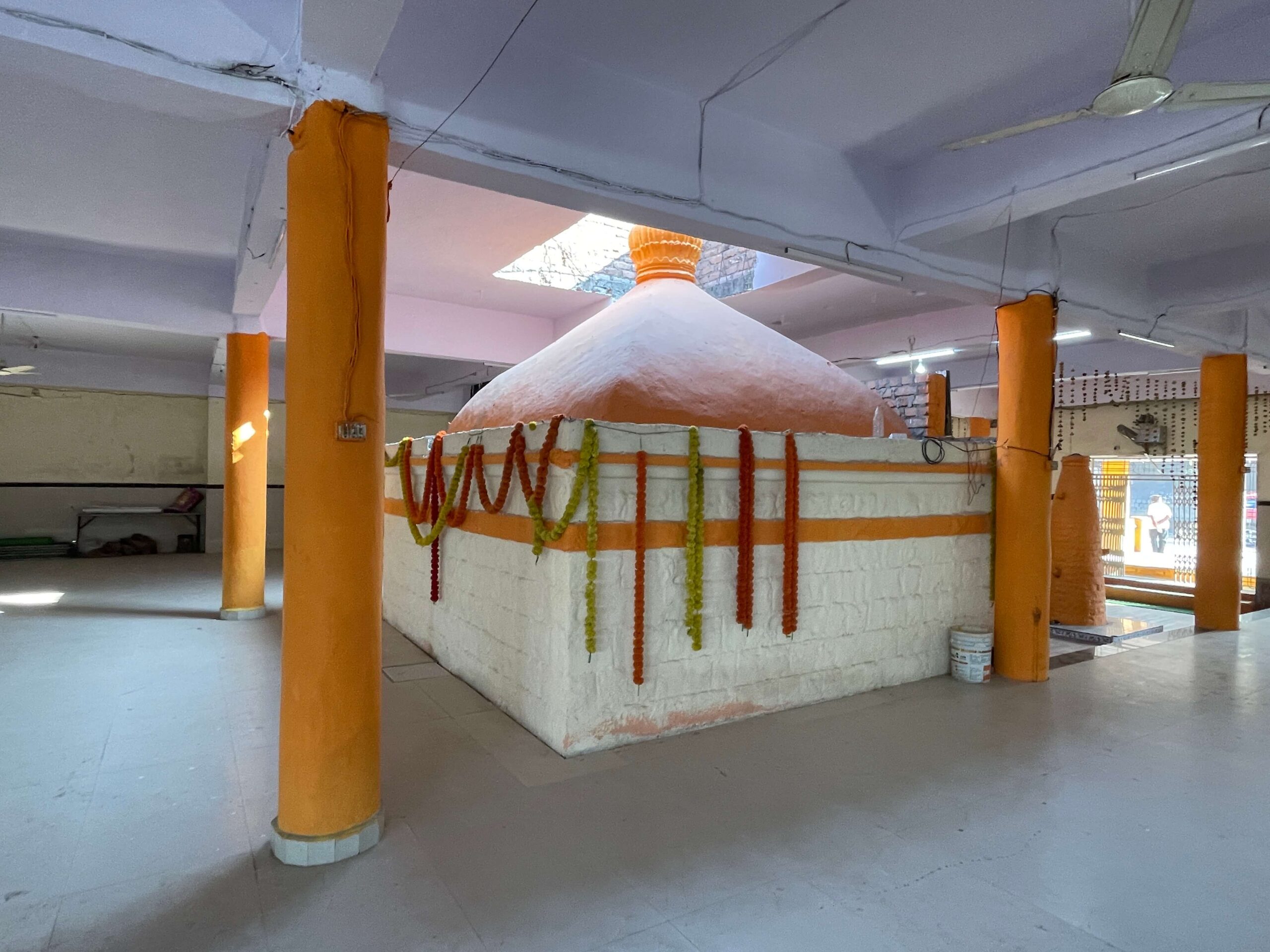
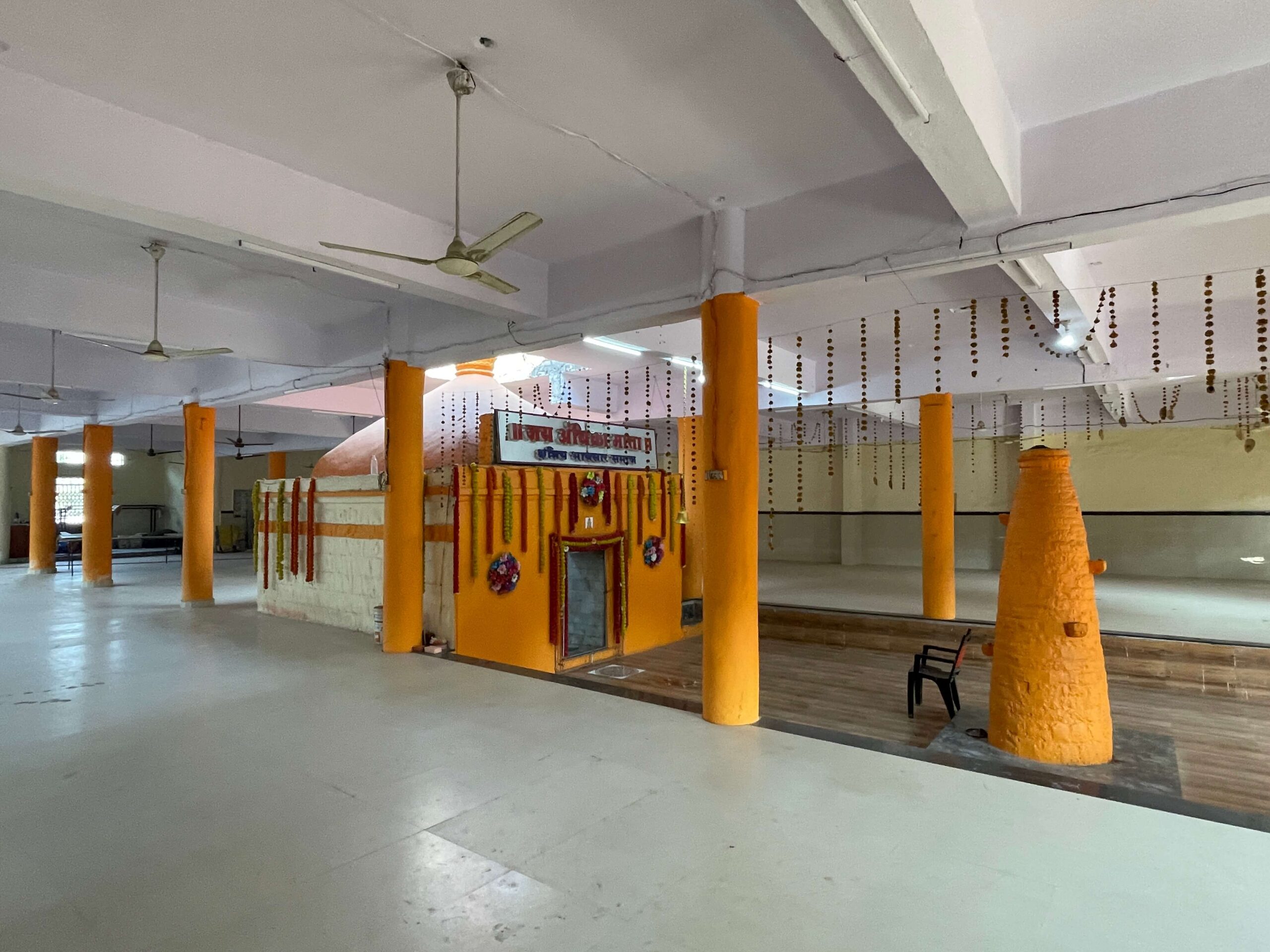
In the construction of the Ambika Devi Temple in Gangakhed, the influence of ancient local architecture is discernible. Located in a bustling part of the city, the temple complex is spacious. Through the entrance situated alongside the road, one enters the temple’s expansive Sabhamandap (assembly hall). In the center of this Sabhamandap stands the ancient stone-built temple of Ambika Devi. In the Sabhamandap, in front of the main temple, there is a stone Deepmala (lamp tower) on a platform. This Deepmala is locally known as ‘Tikmal’. This Deepmala, crafted from black stone, adds to the ancient and historical glory of the temple. In the Garbhagriha (sanctum sanctorum) of the temple, which is the original ancient shrine, on a Vajra-peetha, resides a vermillion-anointed idol of Ambika Devi in the form of Tandala. This idol has eyebrows, eyes, nose, and mouth carved upon it. Above this temple, there is a stone Shikhara (spire) that is square at the base and tapers upwards. The large Sabhamandap surrounding the temple is utilized by the community for their meetings and religious ceremonies.
The historic Balaji Temple and Ambika Devi Temple in Gangakhed share a significant connection. On the auspicious day of Vijayadashami, a grand procession of Lord Balaji is taken out through the village in a magnificent 30-foot-tall teak wood chariot. Thousands of devotees from various parts of Vidarbha and Marathwada participate in this sacred Rath Yatra. This procession returns to the temple, traversing through the city via Shani Mandir, Ambedkar Nagar, Dilkash Chowk, and Motha Maruti Mandir. During this journey, the chariot is purposefully halted in front of the Ambika Devi Temple. All of Lord Balaji’s Homas and religious rituals are performed after pausing right in front of this revered Goddess. Only after the Aarti of the Goddess is performed at this spot and due reverence is offered to Her, does Lord Balaji’s chariot proceed further. This sacred tradition has been observed here for many years.
Throughout the year, various religious festivals are celebrated in the temple with utmost devotion and discipline. The Navratri festival, observed during the auspicious month of Ashwin, is the grandest celebration held here. Throughout these nine sacred days, daily devotional worship (Puja), sacred ablutions (Abhishek), and the lamp offering ceremony (Aarti) are regularly performed for the Divine Mother. Following the sacred ritual of Ghatasthapana, special devotional programs dedicated to the Goddess are conducted for all nine days. During this auspicious period, the Divine Mother is exquisitely adorned with beautiful garments and precious ornaments. For all nine days, esteemed individuals (Mankari) are specially appointed to perform the sacred Aarti of the Goddess. On the auspicious day of Ashtami during Navratri, lamps are lit upon the ancient Deepmal (lamp tower) and the large torch (Tembha) that crowns it. The radiant glow of these lamps illuminates the entire temple premises, creating a divine ambiance. The festival culminates on the day of Dussehra with the traditional Seemollanghan (crossing of boundaries) ceremony of the Goddess. On this sacred day, a grand Bhandara (community feast) and Mahaprasad (sacred food offering) are arranged for the devotees in the temple. Furthermore, other significant festivals such as Chaitra Navratri, Gudi Padwa, Diwali, and Kojagiri Pournima are also celebrated with great fervor in the temple. Devotees are welcome to have Darshan (sacred viewing) of the Divine Mother in this temple daily, from six o’clock in the morning until eight o’clock in the evening.
This sacred temple stands as a testament to deep spiritual devotion, ancient architectural grandeur, and rich local cultural traditions.
The sanctum sanctorum houses the divine idol consecrated according to ancient Vedic traditions, surrounded by serene courtyards and traditional temple architecture.
Navratri, Maha Shivratri, Annual Temple Jatra & Deepotsav
Compare and book flights, secure top-rated local hotels near the temple, hire reliable guides, and rent cars instantly.
Extend your pilgrimage by visiting other highly sacred temples located nearby.


Add ₹999 more to unlock FREE SHIPPING!
Your sacred cart is currently empty.
Shop Photo FramesFill in your delivery details below to place your order.
Add comment