
Add ₹999 more to unlock FREE SHIPPING!
Your sacred cart is currently empty.
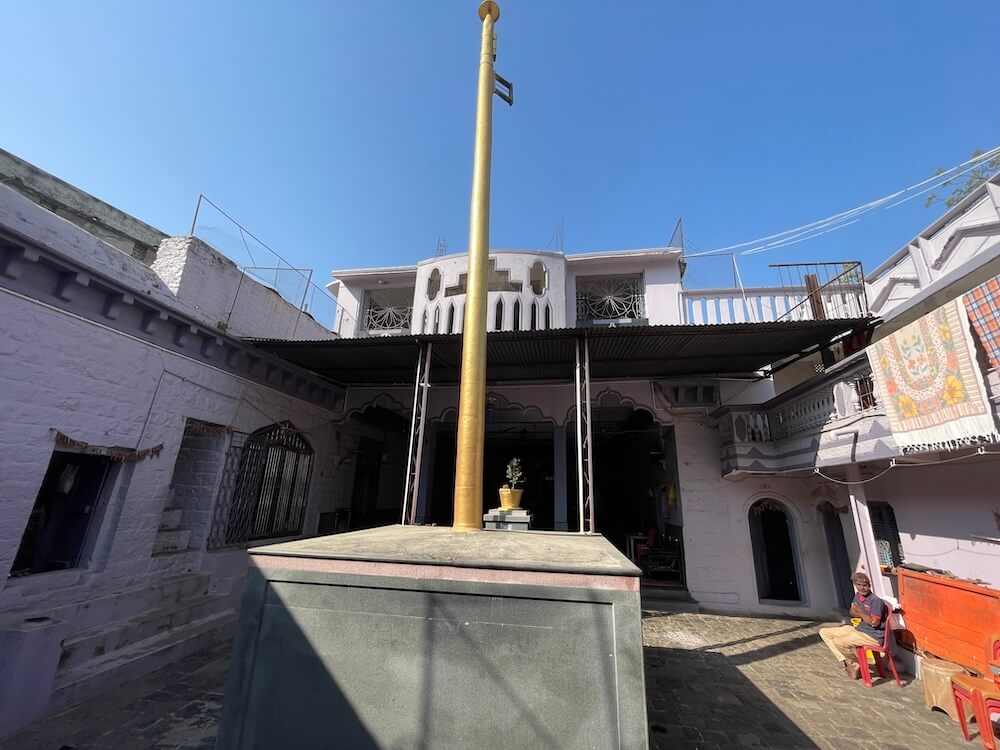
Shop Photo FramesThe village of Gangakhed, situated on the southern bank of the Godavari River in Parbhani district, is renowned as ‘Dakshin Kashi’. It is at this very spot, on the riverbank, that the ancient temple of Prabhu Shri Venkatesh Balaji stands. This holy shrine, known as ‘Prati Balaji’ in Marathwada, is celebrated as the first Balaji temple in Maharashtra. Here, the Godavari River flows southwards, and this geographical feature further enhances the sanctity of this region. In the ancient texts of the Tirumala Tirupati Devasthanam, this temple is referred to by the name ‘Khetakpur’. Devotees believe that a tall Garudakhamb (pillar with an image of Garuda) in front of the temple’s sabhamandap (assembly hall) respectfully bows slightly towards the deity’s idol every third day.
In the latter half of the eighteenth century, Anandaray Swami Maharaj, a devout bhakta of Prabhu Balaji, constructed this temple. He used to undertake a pilgrimage on foot to Tirupati for darshan every year. When old age made it impossible for him to travel there, he resolved to build a temple at this location. It is a popular belief that the temple was established according to a divine vision he received. Anandaray Swami himself was an accomplished painter and sculptor. He spent his entire life within the temple premises.
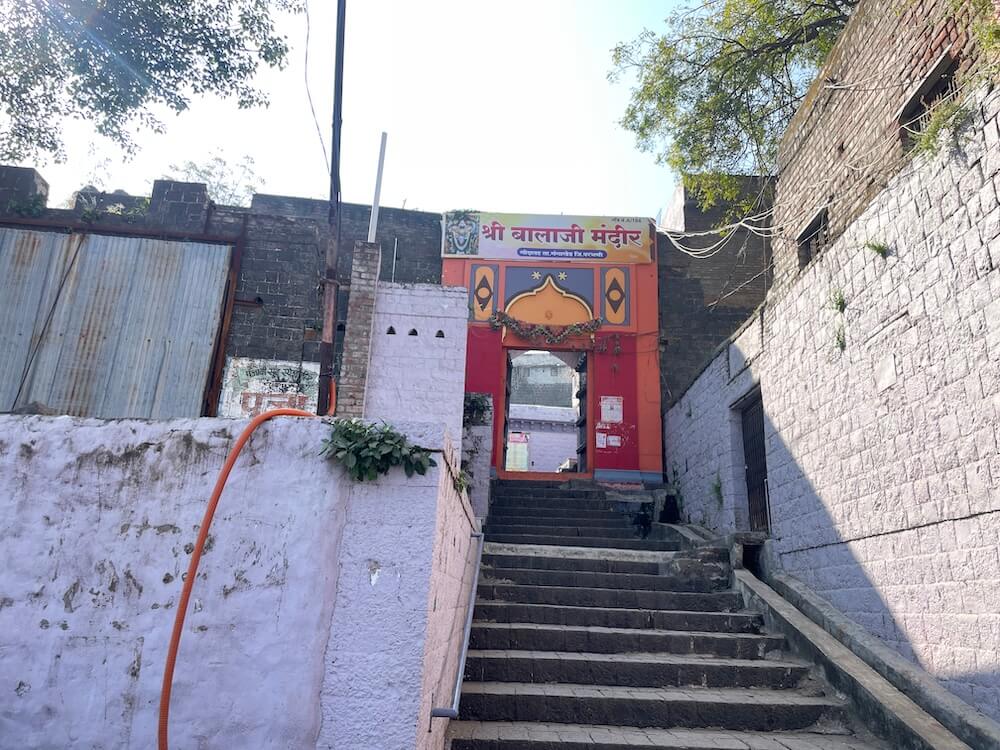
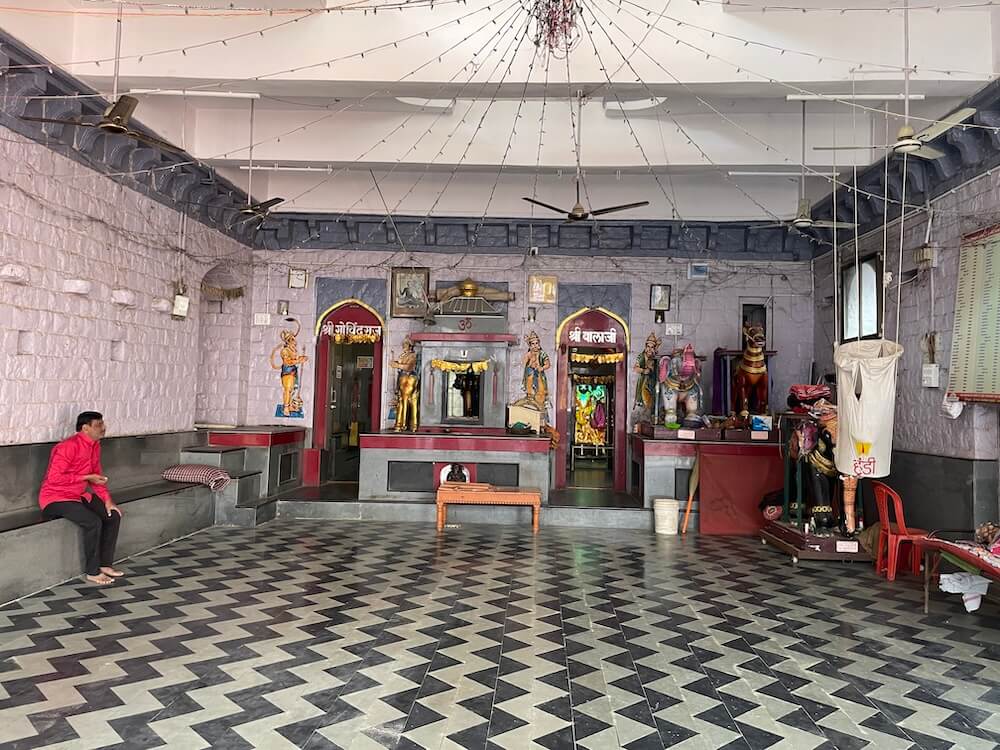
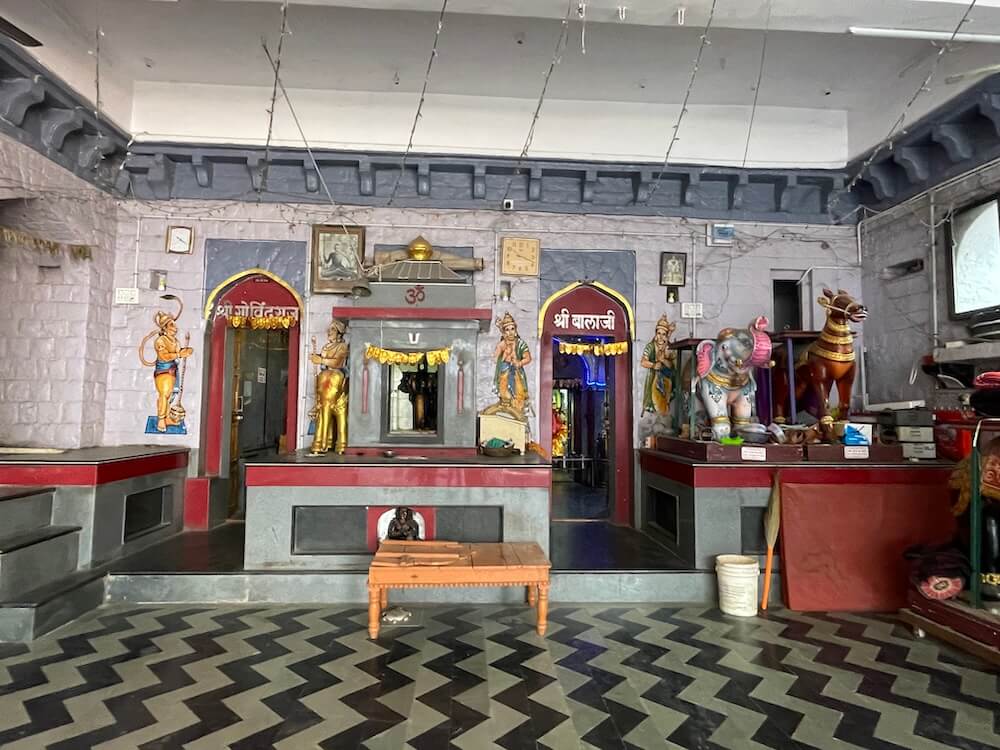
This temple is situated on a high jagati, or plinth. To reach the main temple, one must ascend twenty stone steps. Upon entering through the main gateway, one finds a spacious courtyard paved with stone. At the very beginning of this courtyard, in a small shrine, resides an idol of Hanuman. In front of the temple’s sabhamandap, there is a tall Garudakhamb covered with brass sheets. The original structure of the temple is two-storied. This edifice was constructed using stone and earth in the Maratha architectural style. The temple’s structure comprises a sabhamandap and two sanctum sanctorums.
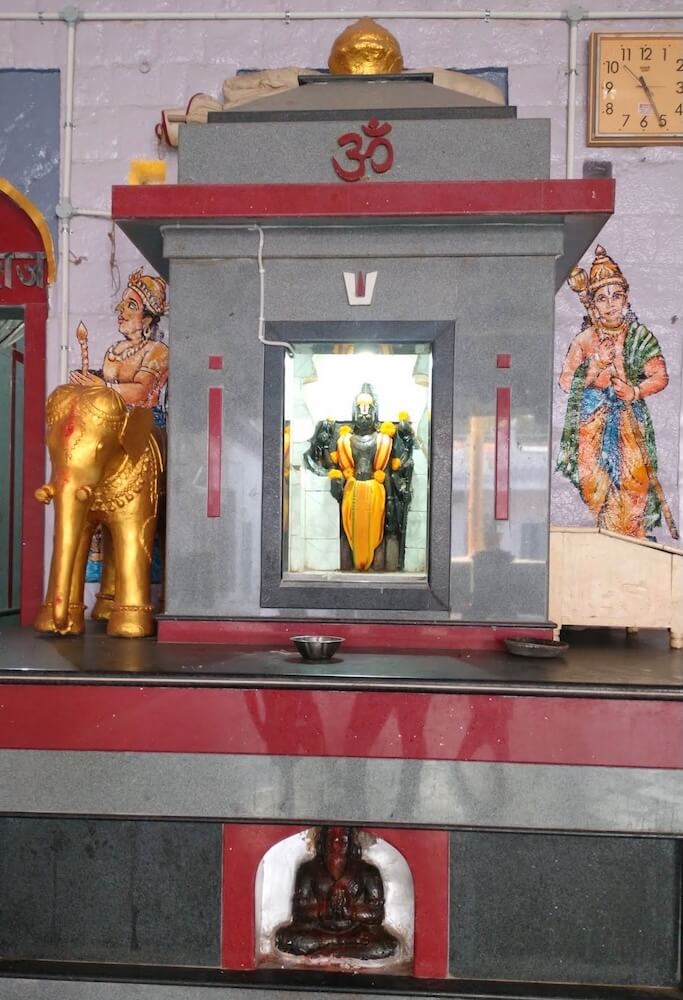
In the temple’s sabhamandap, there is an oil painting of the renowned saint Vasudevanand Saraswati, also known as Tembe Swami. He took sannyasa diksha (vows of renunciation) on the banks of the Godavari in this very region. This historical connection is associated with the temple. From the sabhamandap, there is a stone staircase leading to the upper floor. Upon entering the upper floor, one first beholds a vermillion-smeared idol of Ganapati. A few steps from here, in a sanctum sanctorum, is the abode of Renuka Mata. Here, there is a large vermillion-smeared ‘tandala’ (a symbolic representation of the deity) of the Goddess, with eyes, nose, and lips carved upon it. The Goddess wears a golden nose ring and a large kumkum bindi on her forehead. In a wooden shrine on a plinth situated between the two sanctum sanctorums, a one-faced idol of Dattatreya is enshrined. It is customary here to first have darshan of this idol before proceeding to have darshan of Balaji. On this plinth, in the center, there is an idol of Vamana avatar, and on one side, an exquisitely carved elephant sculpture.
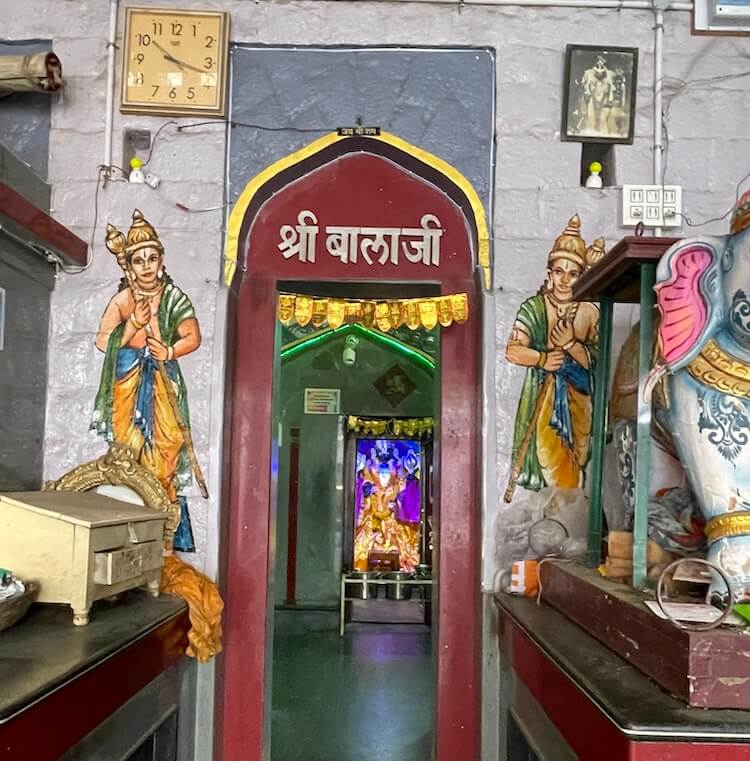
In the main sanctum sanctorum to the right of Dattatreya’s plinth, a four-armed idol of Prabhu Balaji is enshrined within a grand makhar (archway). The deity’s upper two hands hold a conch and a chakra. The deity’s lower right hand bestows fearlessness upon devotees. It is said that this idol is made of sand. Behind the idol is a silver prabhaval (halo) adorned with delicate artistry. In the second sanctum sanctorum to the left of Dattatreya’s plinth, there is an idol of Sheshashayi Vishnu. At the feet of this idol, Lakshmi Mata is seated. On the main entrance of this sanctum sanctorum, paintings of various deities bowing to Balaji are depicted. The temple walls feature six devakoshthakas (niches for deities), in which idols of Garudadev, Vitthal-Rakhumai, and other deities are installed.
Here, a grand Dussehra festival is celebrated every year from Ashwin Shuddha Pratipada to Kojagiri Pournima. During this festival, the Chaudhary, Shete, Lavhane, Mahajan, Pathak, Dalal, and Tamkhane families of the town hold places of honor. A total of ३२ families from the Bara Balutedar (twelve traditional service providers) are given a ‘manacha vida’ (betel leaf of honor) and entrusted with joint responsibility for various tasks during the festival. During the festival, Balaji is adorned daily with various garments and ornaments. Devotees offer abhishek and naivedya in large numbers during this period. Advance registration with the trustees is required for these rituals.
During the Dussehra festival, a procession of Balaji is taken out daily in various vehicles. The festival begins with Ghatasthapana on Ashwin Shuddha Pratipada. On the first day, the Lord circumambulates the village in a vehicle with a flag; on the second day, on a snake; on the third day, on a peacock; on the fourth day, on a tiger; and on the fifth day, on a ‘Tond Halya’ elephant. On the fifth day evening, a procession also takes place in a palanquin. On the sixth day, an Ambari elephant; on the seventh day, a sun vehicle in the morning and a moon vehicle in the evening; and on the eighth day, a Maruti vehicle carries the procession. On the ninth day, Balaji arrives on a Garuda vehicle.
On the day of Vijayadashami, a circumambulation takes place within the temple premises in a २५-foot-high wooden chariot in the morning. Thereafter, at ३ o’clock in the afternoon, a procession of Balaji is taken out through the village in a ३०-foot-high teak wood chariot. Thousands of devotees from various parts of Vidarbha and Marathwada participate in this rath yatra, chanting “Venkata Ramana Govinda”.
This procession returns to the temple via Shani Mandir, Ambedkar Nagar, Dilkash Chowk, and Mota Maruti Mandir in the town. In the evening, Ravan Dahan takes place on the banks of the Godavari. The festival then concludes with Deepotsav (festival of lights) on Kojagiri Pournima. Devotees can have darshan here daily from six o’clock in the morning until half past eight in the evening.
This sacred temple stands as a testament to deep spiritual devotion, ancient architectural grandeur, and rich local cultural traditions.
The sanctum sanctorum houses the divine idol consecrated according to ancient Vedic traditions, surrounded by serene courtyards and traditional temple architecture.
Navratri, Maha Shivratri, Annual Temple Jatra & Deepotsav
Compare and book flights, secure top-rated local hotels near the temple, hire reliable guides, and rent cars instantly.
Extend your pilgrimage by visiting other highly sacred temples located nearby.


Add ₹999 more to unlock FREE SHIPPING!
Your sacred cart is currently empty.
Shop Photo FramesFill in your delivery details below to place your order.
Add comment