
Add ₹999 more to unlock FREE SHIPPING!
Your sacred cart is currently empty.
Shop Photo FramesThe twelfth century is known as an era of spiritual awakening in Hinduism. During this era, Saint Dnyaneshwar first initiated a revolution in Maharashtra against discrimination based on varna (caste hierarchy), caste, and gender. Prior to this, in the South, Mahatma Basaveshwara rejected discrimination, the Vedas, and ritualistic customs. He propagated education, humanity, and equality. Many generous patrons donated the wealth needed for this noble cause, among whom Danamma Devi played a vital role. She engaged in various forms of noble charity, including Annadana (offering food), Dravyadana (monetary help), and Jnanadana (imparting knowledge). The ancient temple located in Umrani, the birthplace of Danamma Devi, is widely renowned.
Danamma Devi is revered as a ‘Mahan Sharani’ (great saintly devotee) in the Lingayat tradition. Her story tells that she was born in the village of Umrani to a couple named Anantaraya and Shirasamma. Her birth name was Lingamma. She was married to Sangamnath, a brave and devout Shiva-devotee chieftain from the village of Shunga. Both of them chose Guddapur as their realm of duty (Karmabhoomi). Danamma received Shiva Deeksha (spiritual initiation) from Siddhayogi Siddharameshwar of Solapur. Later, participating in Basaveshwara’s ‘Anubhava Mantapa’, she performed daily Ishtalinga worship. Danamma’s valor shone brightly during the historic event known as the Kalyan Revolution. She fought fiercely against the emperor’s army alongside her husband and led the Sharani forces. Following this, she traveled across India with her husband, spreading the sacred tenets of Lord Basaveshwara. Due to her intense spiritual practice, an aura of miraculous tales grew around Danamma Devi.
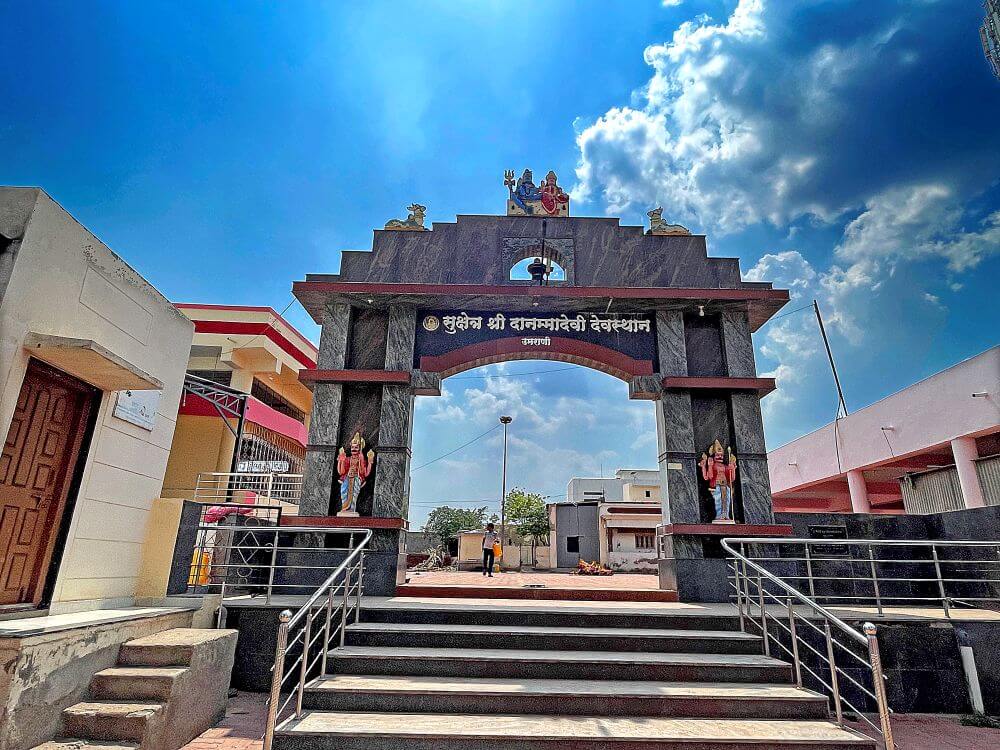
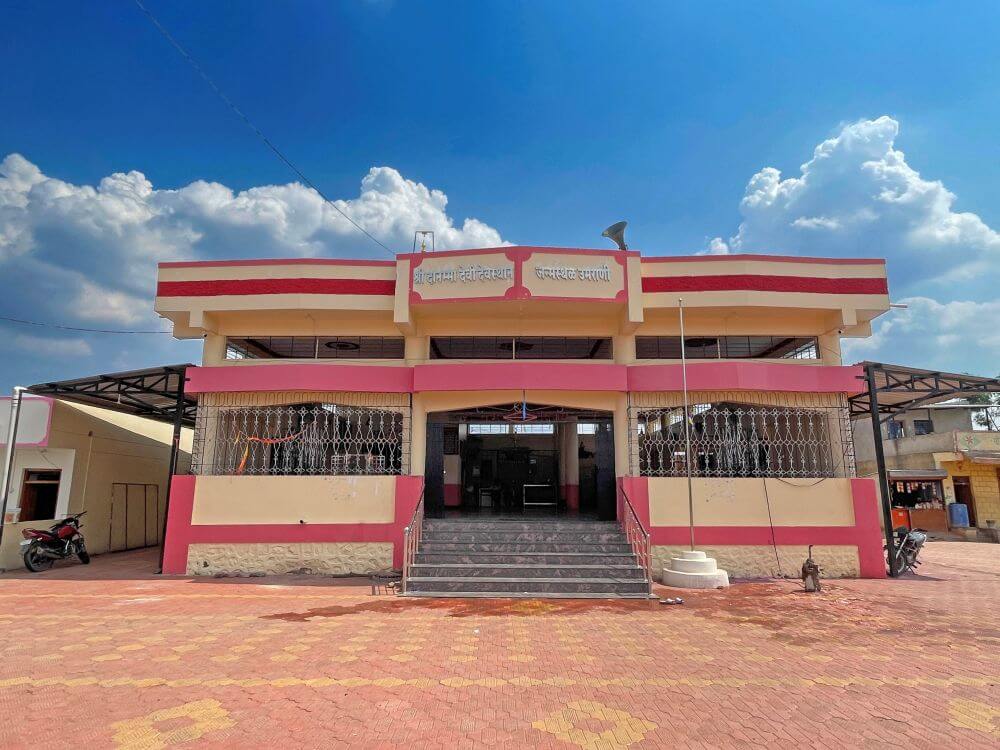
After Danamma Devi attained ‘Lingaikya’ (salvation/nirvana) at Guddapur in the twelfth century, a grand temple was constructed there. It is said that a few years later, a temple was also built in her birthplace, Umrani. In recent times, this temple has been renovated. Situated right in the heart of Umrani village, the temple features an entrance gate nearly thirty feet high. On either side, large pillars host pedestals with four-armed Dwarapalas (door guardians) sculpted upon them. In three of their hands, the Dwarapalas hold the Shankha (conch), Chakra (discus), and Danda (mace), while the fourth hand is held in the Ashirvadamudra (blessing gesture). The two pillars are connected by a semi-circular arch, surmounted by a balcony (Sajja). In a niche on the balcony’s railing rests a sacred Shivling (Shivpindi). The railing has ascending steps on both sides, featuring Shiva-Parvati seated on a Vajrapeetha in the center, flanked by Nandi sculptures on either side.
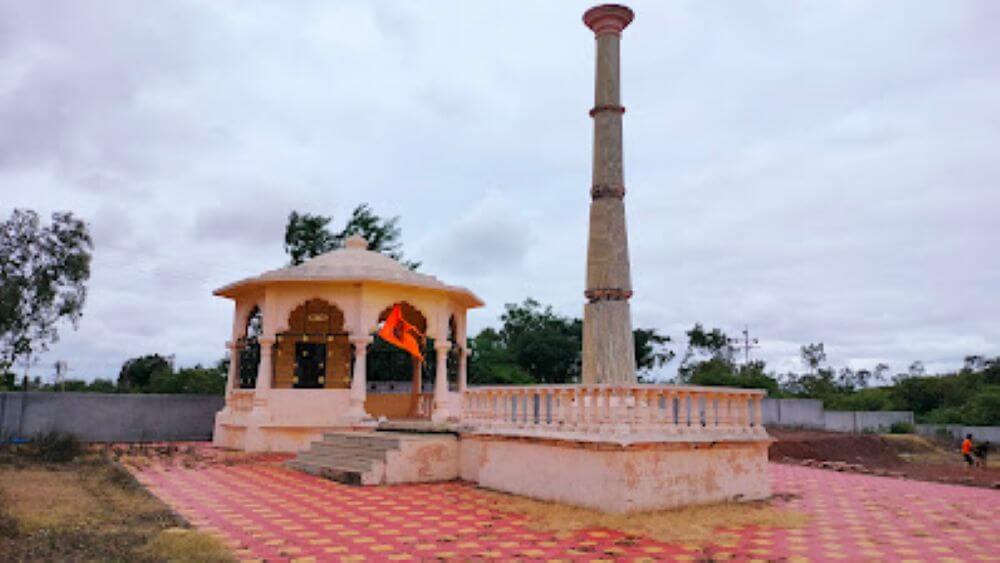
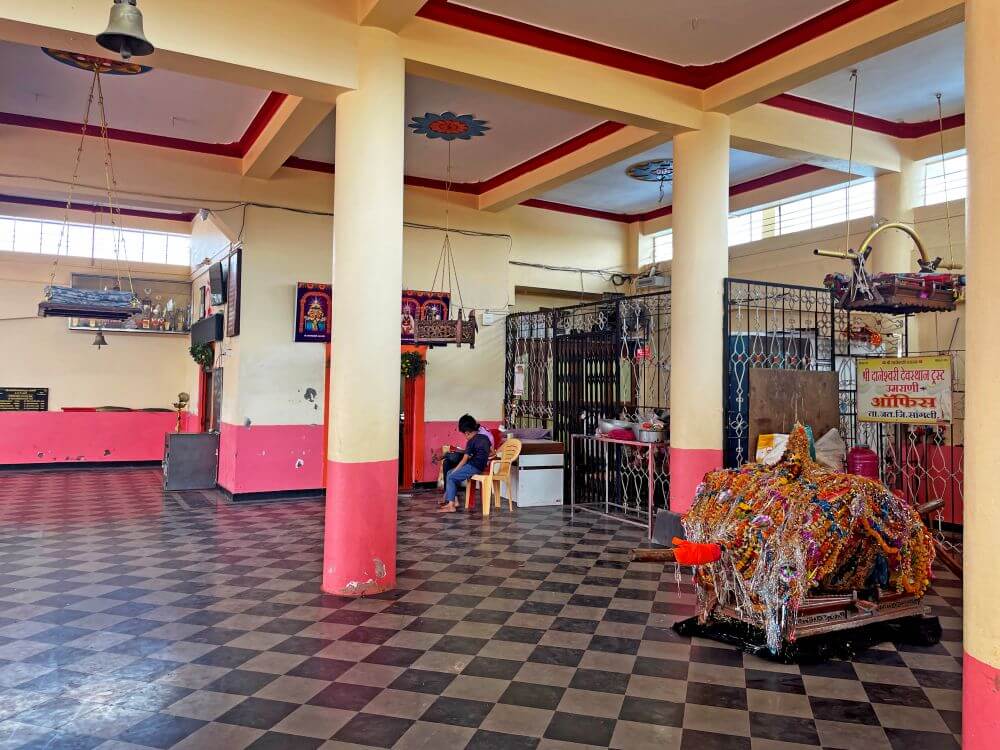
The temple courtyard is paved with paver blocks. To the left side of the courtyard stands the shrine of Danamma Devi. The temple architecture consists of a Sabhamandapa (assembly hall), Antarala (antechamber), and Garbhagriha (sanctum sanctorum). Being elevated above the courtyard, there are seven steps leading to the main entrance of the Sabhamandapa. To the right of the steps stands a Dhwajasthambha (flagstaff) . The assembly hall has two additional entrances on the right and left sides. This hall is enclosed and features windows for light and ventilation. Within the assembly hall, 14 circular pillars are embedded along the outer walls, and two pillars stand in the center to the left of the sanctum. Beams rest upon these pillars, supporting the roof. The ceiling features elegant circular carvings. Brass bells and votive cradles (offered for fulfilled vows) hang from the ceiling. On the left side of the assembly hall lies the Antarala. The doorframes of the Antarala entrance are decorated with vertical fluted patterns. In the center of the Antarala, a black stone idol of Nandi sits on a raised platform.
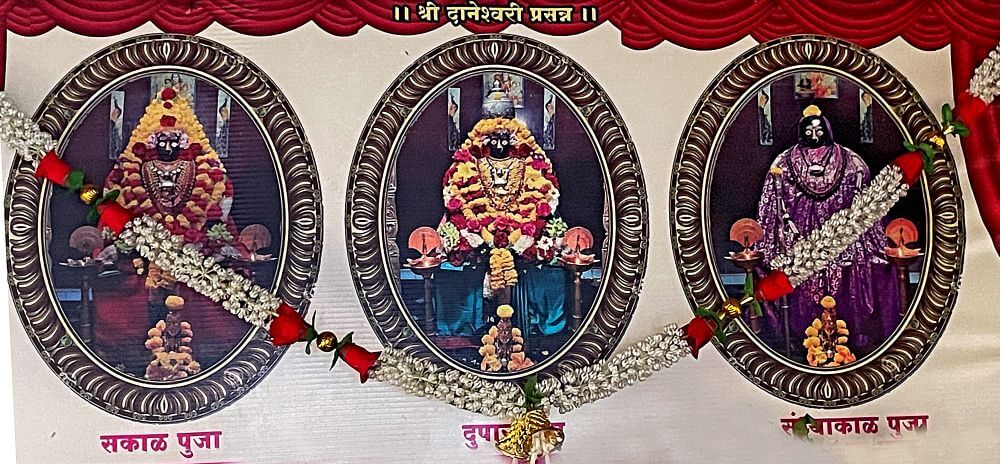
Ahead lies the entrance to the Garbhagriha. In front of the entrance, the brass Padukas (sacred footprints) of the Devi are placed on a table. The wooden doorframes of the entrance are carved with beautiful floral and leaf motifs. Inside the sanctum, seated on a Vajrapeetha, is the black stone idol of Danamma Devi. The eyes of this idol are crafted in silver. The deity is adorned with fine garments and precious ornaments. Everyday, the Shringar (ritual adornment) of the idol is performed portraying her in three forms: as a young girl (Kanya) in the morning, a young woman (Taruni) in the afternoon, and an elderly matriarch (Vridha) in the evening. To exit from the Antarala, there is another door on the right side. On this side, in an alcove of the assembly hall, stands a black stone idol of Akka Mahadevi leaning against the back of Nandi on a Vajrapeetha.
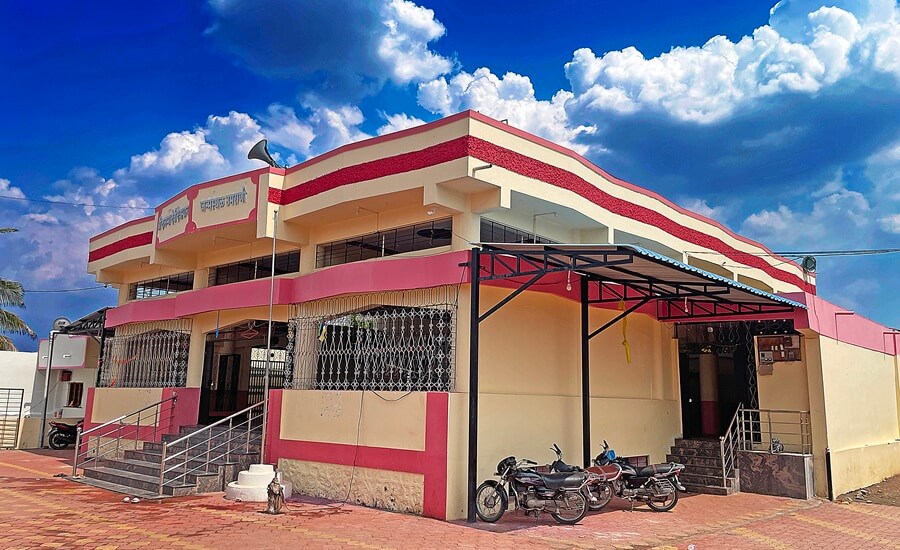
A protective parapet runs along all four sides of the temple roof, and an intricately carved Shikhara (spire) surmounts the roof above the sanctum. At the top of the spire sits an Amalaka, crowned with a Kalasha and a sacred flag. The various buildings in the temple complex serve as a Bhakta Niwas (pilgrim guest house), Dharamshala, Annachhatra (free meal center), and for other noble activities. Mahashivratri, Shravani Somvar, Shravan Amavasya, and Kartik Amavasya are the primary festival days celebrated here. On these holy occasions, programs such as Bhajans, Kirtans, musical performances, and Mahaprasad distribution are organized at the temple. A Palakhi (palanquin) procession of the Devi is held. Thousands of devotees from Maharashtra, Karnataka, Andhra Pradesh, and other states arrive to seek the divine blessings of the goddess. The temple witnesses larger crowds of pilgrims on Thursdays and Sundays.
Close to the temple of Danamma Devi—who fought valiantly against the army of the Kalachuri King Bijjala—stands the memorial of another heroic warrior. That warrior was the Commander-in-Chief (Sarsenapati) of Swarajya, Prataprao Gujar. In 1673, prior to the coronation of Chhatrapati Shivaji Maharaj, the Adilshahi general Abdul Karim Bahlol Khan invaded Swarajya. A battle ensued between Commander-in-Chief Prataprao Gujar and Bahlol Khan at Umrani. Displaying legendary valor, Prataprao defeated Bahlol Khan in that battle. However, as Bahlol Khan surrendered, Prataprao let him go. Displeased by this decision, Chhatrapati Shivaji Maharaj reprimanded him. Deeply pained by the reprimand, Prataprao launched a fresh assault on Bahlol Khan with only a handful of soldiers. In that fierce battle fought at the Nesari pass, Prataprao attained martyrdom. It is on this inspiring event that the revered poet Kusumagraj composed the famous poem ‘Vedat Marathe Veer Daudle Sat’ (In frenzy, seven Maratha heroes rode forth).
This sacred temple stands as a testament to deep spiritual devotion, ancient architectural grandeur, and rich local cultural traditions.
The sanctum sanctorum houses the divine idol consecrated according to ancient Vedic traditions, surrounded by serene courtyards and traditional temple architecture.
Navratri, Maha Shivratri, Annual Temple Jatra & Deepotsav
Compare and book flights, secure top-rated local hotels near the temple, hire reliable guides, and rent cars instantly.
Extend your pilgrimage by visiting other highly sacred temples located nearby.


Add ₹999 more to unlock FREE SHIPPING!
Your sacred cart is currently empty.
Shop Photo FramesFill in your delivery details below to place your order.
Add comment