
Add ₹999 more to unlock FREE SHIPPING!
Your sacred cart is currently empty.
Shop Photo FramesThe village of Dhopeshwar is nestled in the Rajapur Taluka, surrounded by lush green hills on all four sides, with the Mrudani River flowing through them. The Shri Dev Dhutpapeshwar Mandir in this village is one of the renowned holy sites in Ratnagiri District. This Deity is widely known as Dhutpapeshwar, the One who washes away the sins of devotees who seek refuge and purifies them. This Mandir boasts a history spanning over ९०० years, with its mention found in a copper plate inscription from the Chalukya period, dated शक १०९४ (१०९४ CE). According to this inscription, King Zanj, who ruled in Chaul, Raigad District, constructed twelve Shiva Mandirs, and Dhutpapeshwar is one of them.
The legend of the Mandir recounts that a poor Brahmin named Niloba Bhat resided in this area. He was constantly immersed in devotion to Bhagwan Shankar. Every year, he would undertake a pilgrimage to Kashi for darshan of Kashi Vishweshwar and a holy dip in the Ganga. He owned a cow, which he would send to graze in the forest with a cowherd. Niloba depended on her milk; however, she suddenly stopped giving milk, leading to Niloba’s starvation. Upon inquiring with the cowherd, he too had no idea why the cow had ceased giving milk. Finally, both of them kept watch over the cow, and they observed her letting down her milk under a tree. Seeing this, the enraged cowherd struck the nearby rock with his axe. When Niloba examined the rock closely, he saw a broken Shivling. Startled by the sound of the rock breaking, the cow fled and fell into a nearby deep pool, where she died. Feeling responsible for the broken Shivling and the cow’s demise, Niloba, as an act of penance, followed the cow into the same pool, sacrificing his body to cleanse his sins. From that day onwards, this sacred place became known as Dhutpapeshwar, and the pool here became famous as Kotitirth.
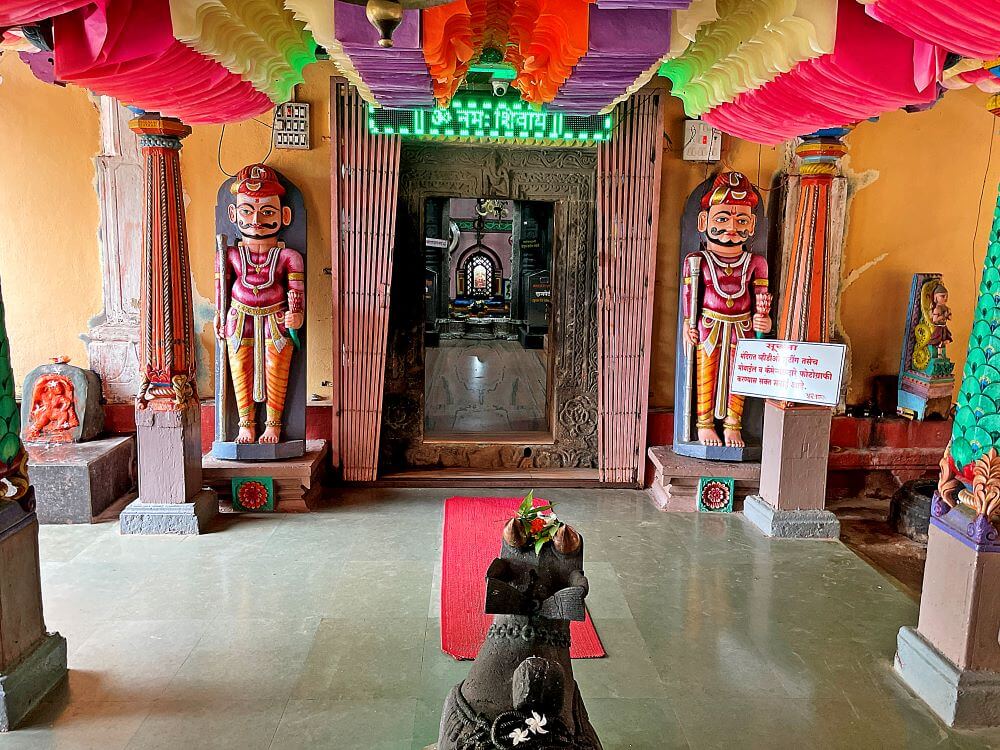
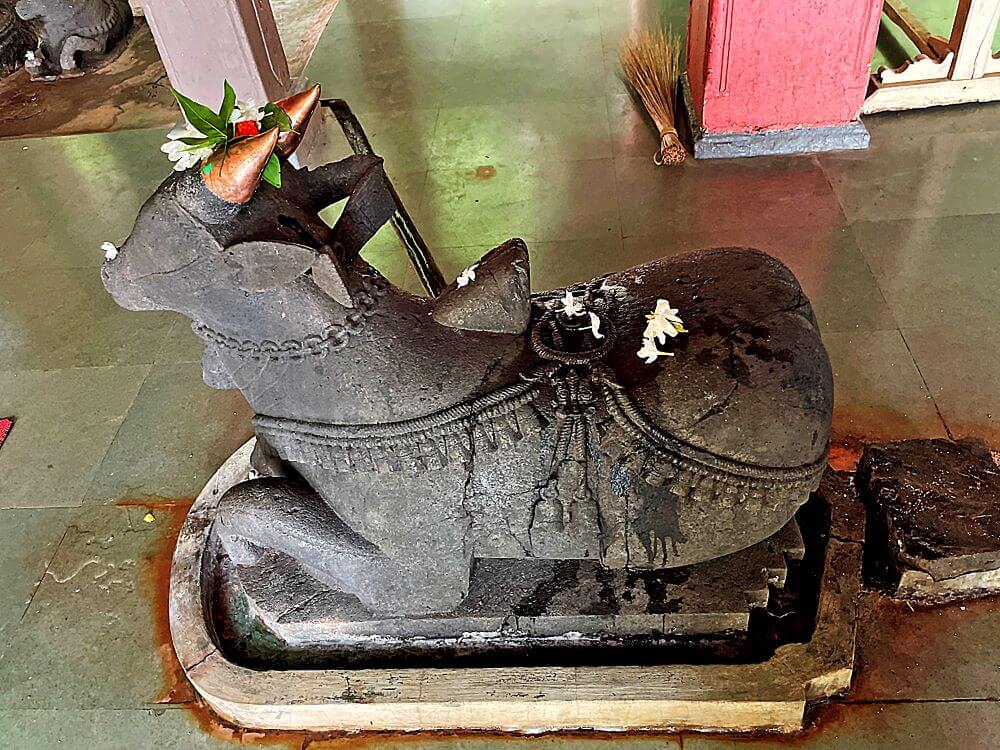
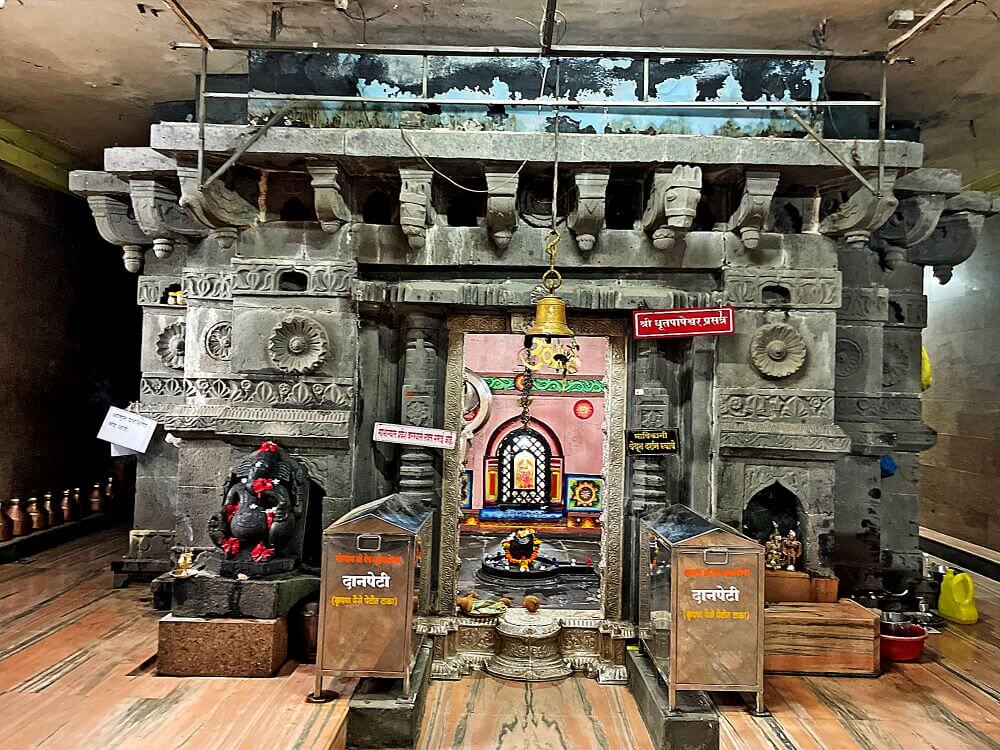
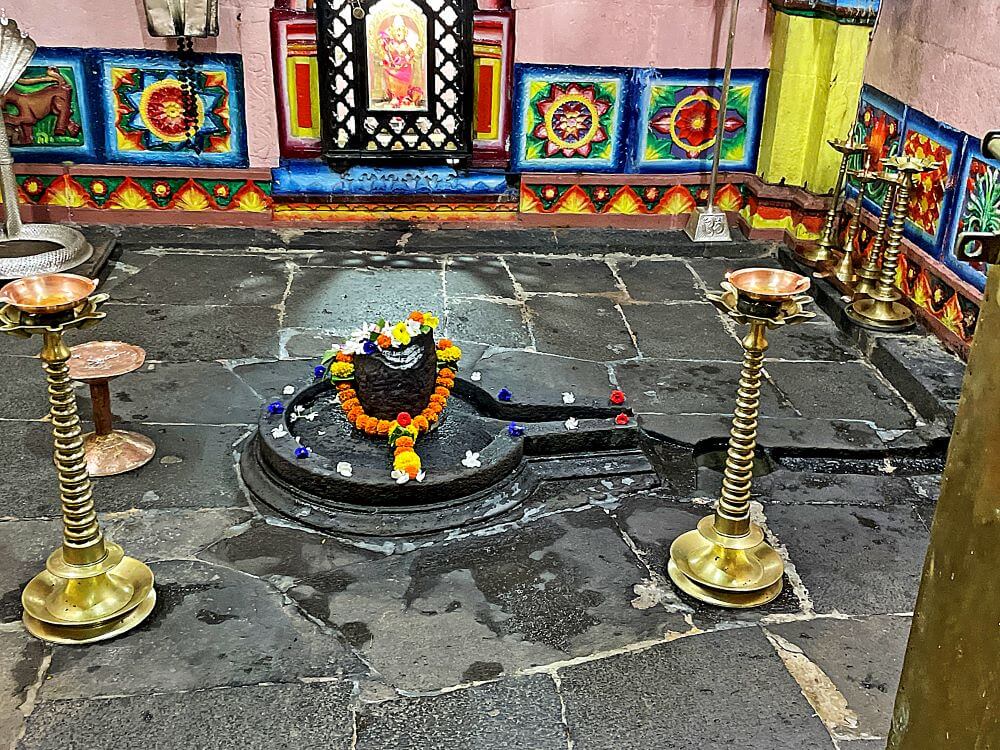
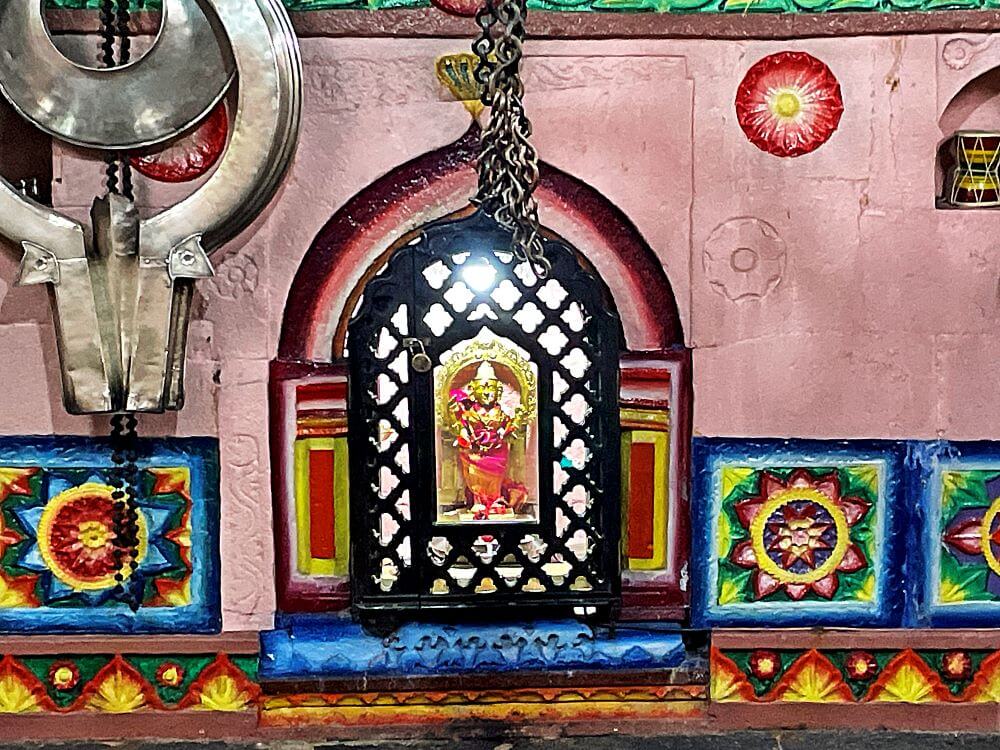
The Dhutpapeshwar Mandir is situated approximately ५ kilometers from Rajapur town. There is a narrow path through Dhopeshwar village leading to this Mandir. This path goes directly to the main entrance of the Mandir. Upon entering through the gateway, one finds Mandirs dedicated to Veerabhadra on the left and Kalabhairava on the right. In front of them are दीपमाळा (lamp towers), and the main Mandir has a large sabhamandap (assembly hall). To the left of the sabhamandap is a room for offerings (naivedya) and a dharmashala (pilgrim’s rest house). Nandi is seated in the sabhamandap. Here, there are also idols of the Navagrahas, Maruti, Ganapati, and Vishnu. The sanctum sanctorum houses a self-manifested Shivling made of black stone, which still appears broken today. Adjacent to the sanctum sanctorum is the abode of Devi Parvati.
Behind the Mandir is a stone Mandir of Kameshwar (the protector). When there is no rain, the sanctum of Kameshwar Mandir fills with water. It is believed that if animals like cows or buffaloes are not giving milk or are ill, the sacred ash (angara) from this Deity brings healing. Adjacent to the Mandir, where the waters of the Mrudani River cascade down from the black rock, a deep pool has formed, famous as Kotitirth. Beside this Kotitirth, there is a large brass cow and a Shivpindi near the pool. Since no one has yet been able to reach the bottom of this pool, the mystery of what lies there remains. It is said that when Gagangiri Maharaj used to visit here, he would sit in this pool for hours, meditating. A small bridge has been built over the river next to the Dhutpapeshwar Mandir, allowing access to the Datt Mandir on the other side of the river. Further along the riverbed, there are other holy spots such as Agnitirth, Brahmatirth, Saraswatitirth, and Vedtirth.
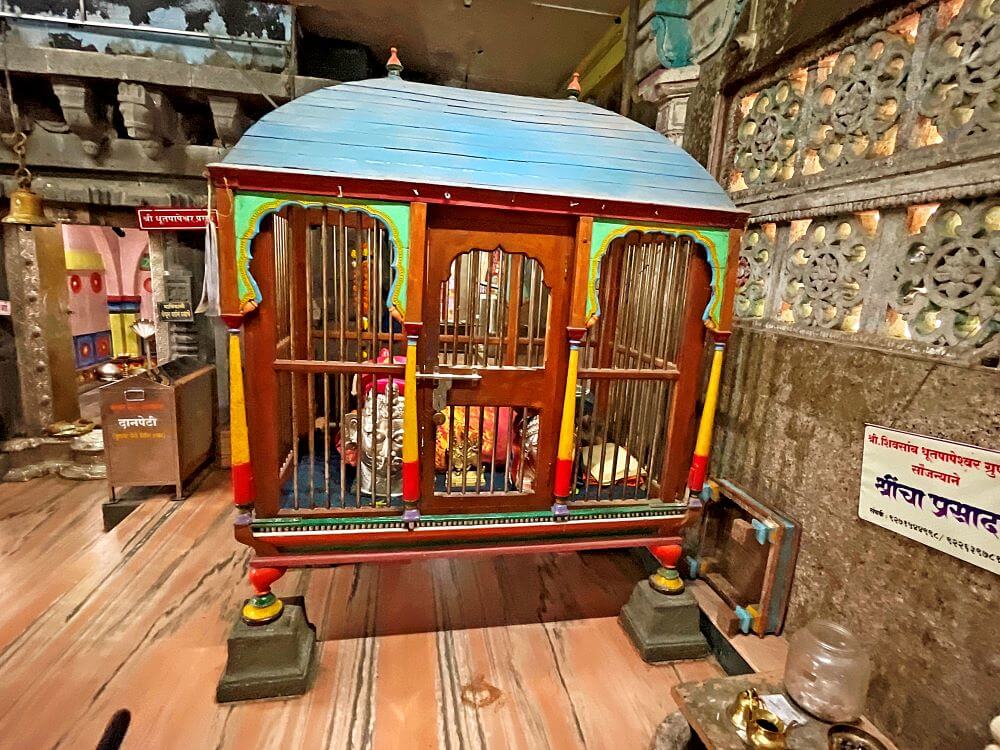
The Mahashivratri festival is celebrated here for seven days, from Magh Vadya १० to Phalgun Shuddha १. This is the most important festival of the Mandir. Lakhs of devotees participate in the fair held on this occasion. On Vijayadashami, the Shimollanghan ceremony takes place. On this day, the Deity’s palanquin is carried to the ceremonial flag. At the same time, the palanquin of Lakshminarayana from Gujar Ali in Rajapur also arrives there. Many devotees come to participate in this Harihar Bhet (meeting of Hari and Hara) ceremony. A seven-day Maghi festival is also celebrated in the Mandir. Punyashlok Ahilyadevi Holkar had arranged for the worship and rituals here during the months of Shravan and Magh, which continue to this day.
Festivals are celebrated here on Ram Navami, Hanuman Jayanti, Shravani Somvar, Dussehra, Diwali, Margashirsha month, and Holi. During festival periods, the Mandir observes Mahanivedya (grand offering), puja, Mantrapushpa, Rudrabhishek, pradakshina (circumambulation), and Maha-arati. Every day, Mahanivedya is offered at noon and night. At night, a grand puja, arati, and Mantrapushpa rituals are performed after adorning the Deity with clothes and placing a mask. After the last Maha-arati every night, a game of Saripat (dice) is set up for Bhagwan Shankar and Devi Parvati. Then, the door of the sanctum sanctorum is closed. It is said that when the door is opened for the morning arati the next day, the dice are found scattered. Devotees believe that Bhagwan Shankar and Devi Parvati come there and play Saripat.
This sacred temple stands as a testament to deep spiritual devotion, ancient architectural grandeur, and rich local cultural traditions.
The sanctum sanctorum houses the divine idol consecrated according to ancient Vedic traditions, surrounded by serene courtyards and traditional temple architecture.
Navratri, Maha Shivratri, Annual Temple Jatra & Deepotsav
Compare and book flights, secure top-rated local hotels near the temple, hire reliable guides, and rent cars instantly.
Extend your pilgrimage by visiting other highly sacred temples located nearby.


Add ₹999 more to unlock FREE SHIPPING!
Your sacred cart is currently empty.
Shop Photo FramesFill in your delivery details below to place your order.
Add comment