
Add ₹999 more to unlock FREE SHIPPING!
Your sacred cart is currently empty.
Shop Photo FramesThe town of Rajapur in the Konkan region has held historical and religious significance since ancient times. Dating back to the Yadava era of Devgiri, Rajapur was a renowned trading hub. The ‘Rajapur Ganga’, which appears approximately once every three years, is famous throughout the country. Additionally, sacred sites such as the Dhutpapeshwar Temple, the submerged Mallikarjun Temple, and the Kanakaditya Temple are places of deep faith for millions of devotees. Another prominent temple in this series is the Swayambhu (self-manifested) and Jagrut (awakened) Shankareshwar Temple located in Pendkhale.
Generally, the names of Shiva temples are derived from the name of the village or by adding ‘Ishwar’ to the name of the person who built the temple; however, the unique feature of the Pendkhale temple is that it is named ‘Shankareshwar’—a combination of Shankar and Ishwar. Another distinct feature of this temple is that when water is poured over the Shiva Linga from the Abhishek vessel in the sanctum sanctorum, a sound known as ‘Simhanad’ (the roar of a lion or Shiva’s resonance) is heard, similar to the phenomenon at the Sangnateshwar Temple in Raypatan. The six-day annual fair held at this ancient temple from Magh Vadya Dashami to Amavasya is considered one of the largest in the district. According to historical records, during the British era, this temple received an annual grant of two rupees from the Chhatrapati of Satara. To this day, the Government of Maharashtra continues to provide this annual fund to the temple.
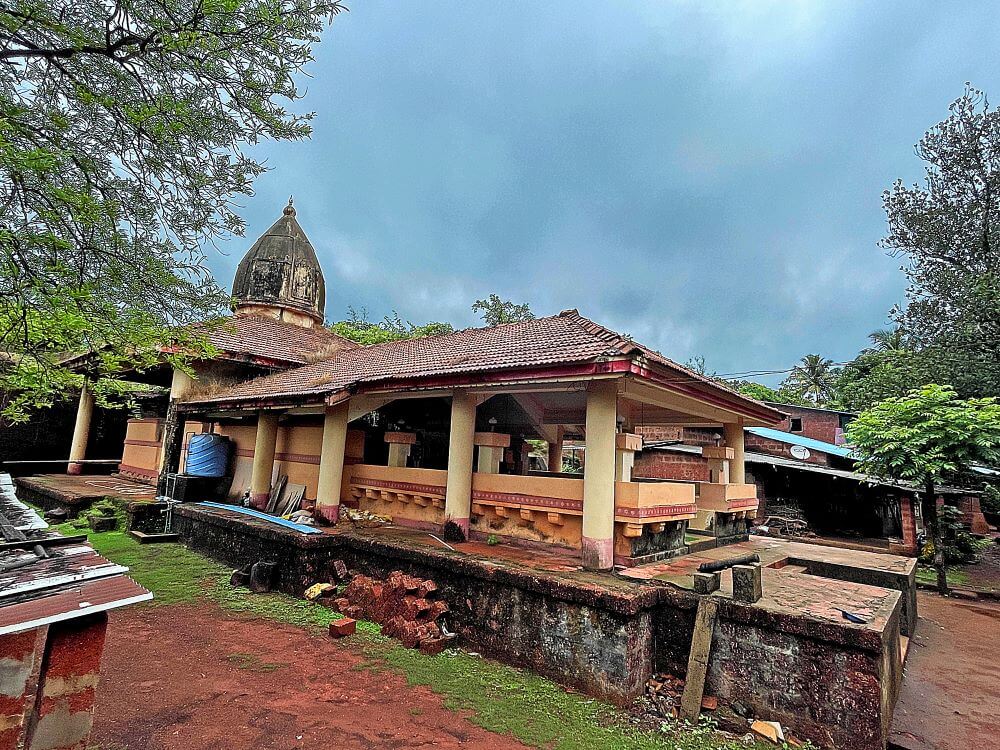
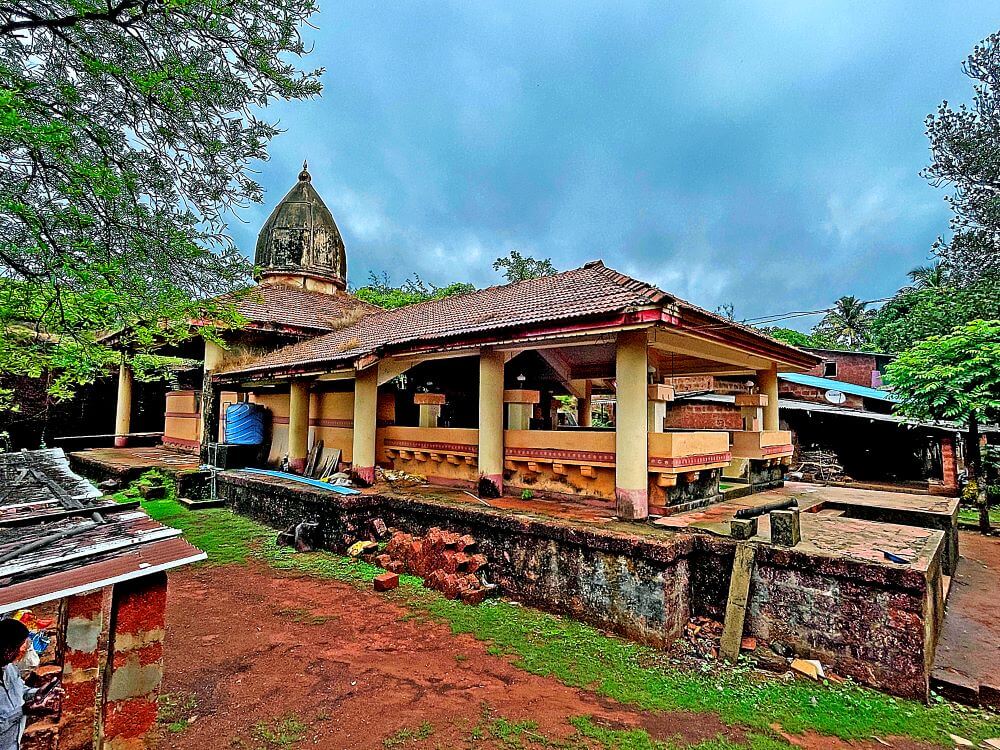
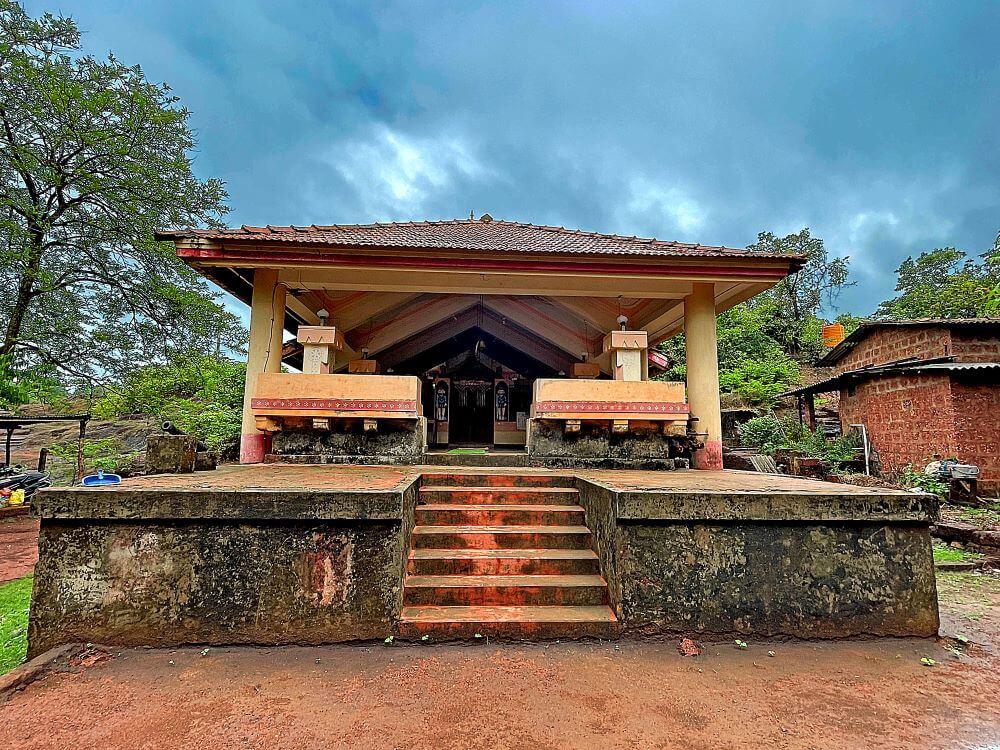
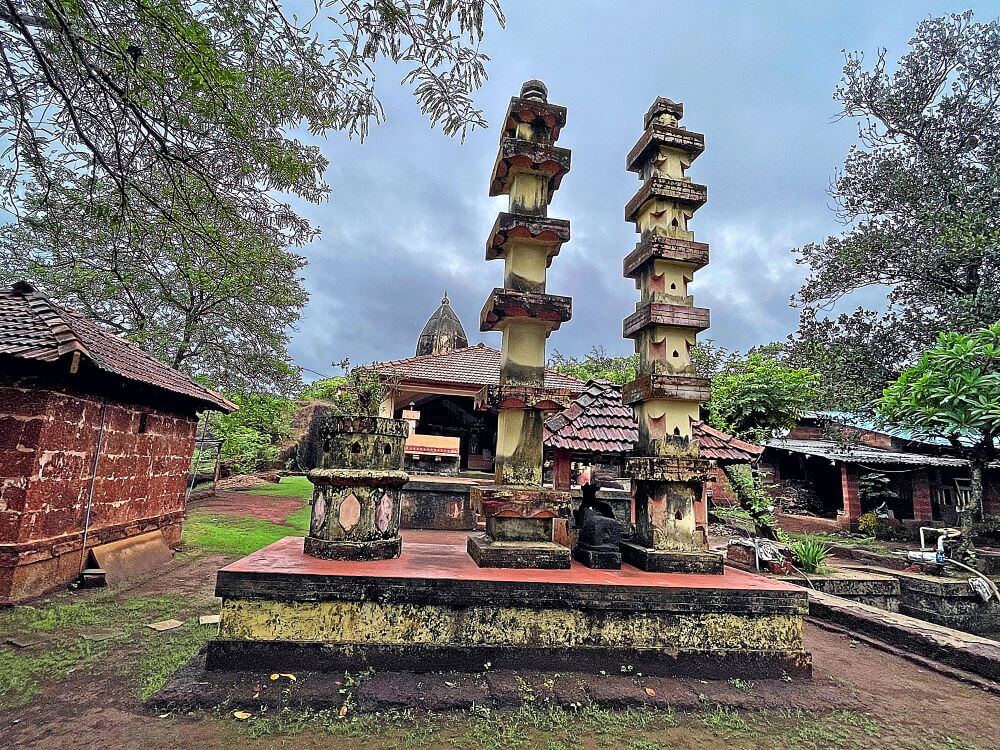
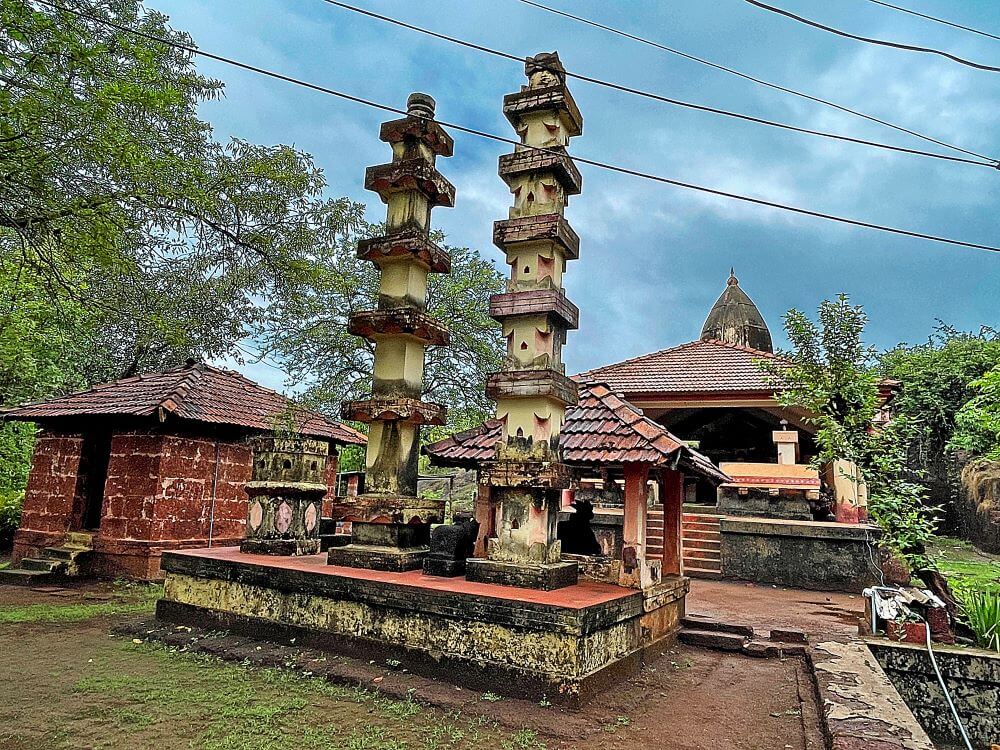
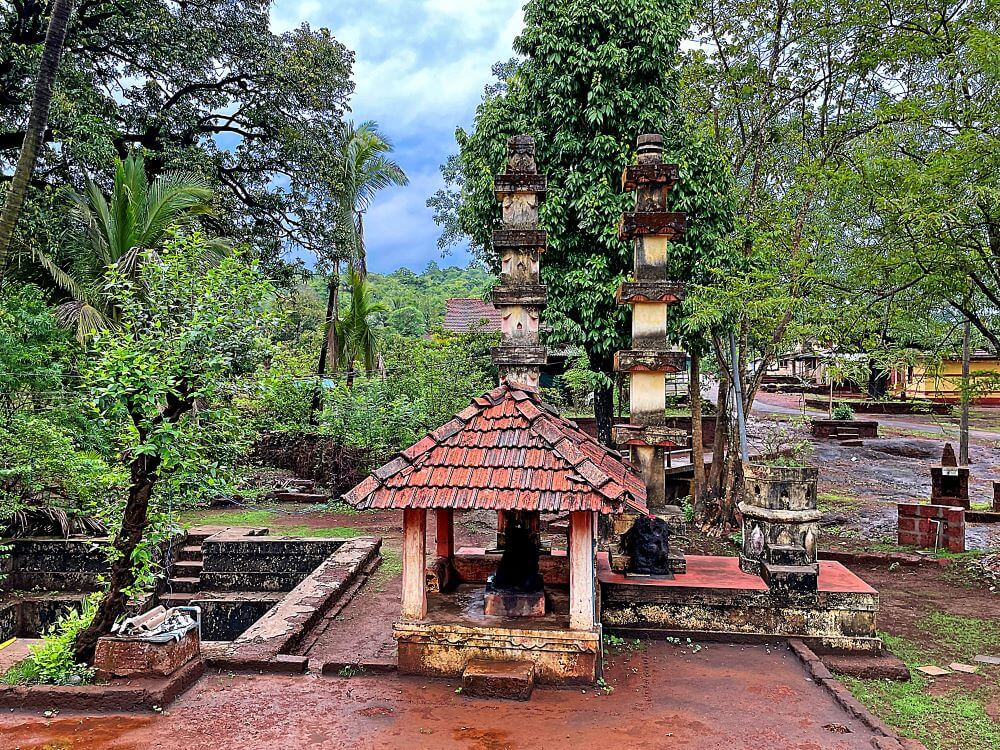
Located two kilometers from Rajapur in the village of Pendkhale, this is a large, traditional Konkani-style temple with tiled roofs. In front of the temple, on a raised platform, stand two tall lamp towers (Deepmala) made of laterite stone, each with six tiers. Beside these towers on the platform is a Tulsi Vrindavan, with an idol of Nandi in the center. An ancient idol of Ganapati is carved into the base of one of these lamp towers. Further ahead, facing the temple entrance, is a small tiled pavilion housing a Nandi idol carved from a single piece of black stone. The Shankareshwar Temple stands on a five-foot-high plinth, allowing for a full circumambulation (Pradakshina) of the temple. The structure consists of a Sabha Mandap (assembly hall), Antarala (vestibule), and Garbhagriha (sanctum sanctorum). One enters the Sabha Mandap after climbing seven steps. This hall is open-structured, with stone seating along the sides for devotees.
The entrance to the Antarala features paintings of guardians on both sides. The Garbhagriha is constructed leaving space for a circumambulation path. Near the entrance of the Garbhagriha, there are idols of Ganapati on the right and Durga Mata on the left. An image of the Sun is carved on the lintel of the door frame. Typically, the lintel of a Shiva temple’s sanctum features an image of Shiva or Ganesha, making this a unique aspect. Additionally, there are sculptures of hooded cobras on the three beams above the door frame.
Inside the Garbhagriha, the Swayambhu Shiva Linga, carved from a single piece of black stone, is situated near the ground level. A mark resembling an axe is visible on the Linga. The legend of this Linga states that a cow used to go to a mound 20 to 25 feet behind the temple and release her milk there daily. Upon excavation, this Linga was discovered. After the cow’s death, for many years, water was poured over the Linga through her horns as an offering. According to another legend, a local resident named Dayaram Lingayat, while visiting the Sangnateshwar Temple in Raypatan as a child, heard the Simhanad and asked his father why such a sound did not occur in their own temple. Unable to provide a satisfactory answer, Dayaram became determined. He took a vow to offer one thousand Bel leaves while chanting the Shiva Sahasranama. As he began offering the leaves, water was dripping from the Abhishek vessel onto the Shiva Linga; upon offering the twenty-first leaf, the Simhanad began to resonate. Since then, the Simhanad has been heard in the sanctum of this temple. There are three types of Abhishek vessels used here: one with a single stream, eleven streams, and a hundred streams.
Within the temple premises, there is also a Lakshmi-Vishnu temple, which houses idols of Ganapati with Riddhi-Siddhi, as well as Vishnu and Lakshmi. Lakshmi is depicted with four arms, holding a vessel and a pot in her upper hands, and a drinking cup in both lower hands. Adjacent to the temple is a small pond that contains water throughout all twelve months. Additionally, a sword dating back to the era of Chhatrapati Shivaji Maharaj is said to be preserved here. A grand fair is held for six days during Shivratri, during which the deities are adorned with masks and traditional ornaments.
This sacred temple stands as a testament to deep spiritual devotion, ancient architectural grandeur, and rich local cultural traditions.
The sanctum sanctorum houses the divine idol consecrated according to ancient Vedic traditions, surrounded by serene courtyards and traditional temple architecture.
Navratri, Maha Shivratri, Annual Temple Jatra & Deepotsav
Compare and book flights, secure top-rated local hotels near the temple, hire reliable guides, and rent cars instantly.
Extend your pilgrimage by visiting other highly sacred temples located nearby.


Add ₹999 more to unlock FREE SHIPPING!
Your sacred cart is currently empty.
Shop Photo FramesFill in your delivery details below to place your order.
Add comment