
Add ₹999 more to unlock FREE SHIPPING!
Your sacred cart is currently empty.
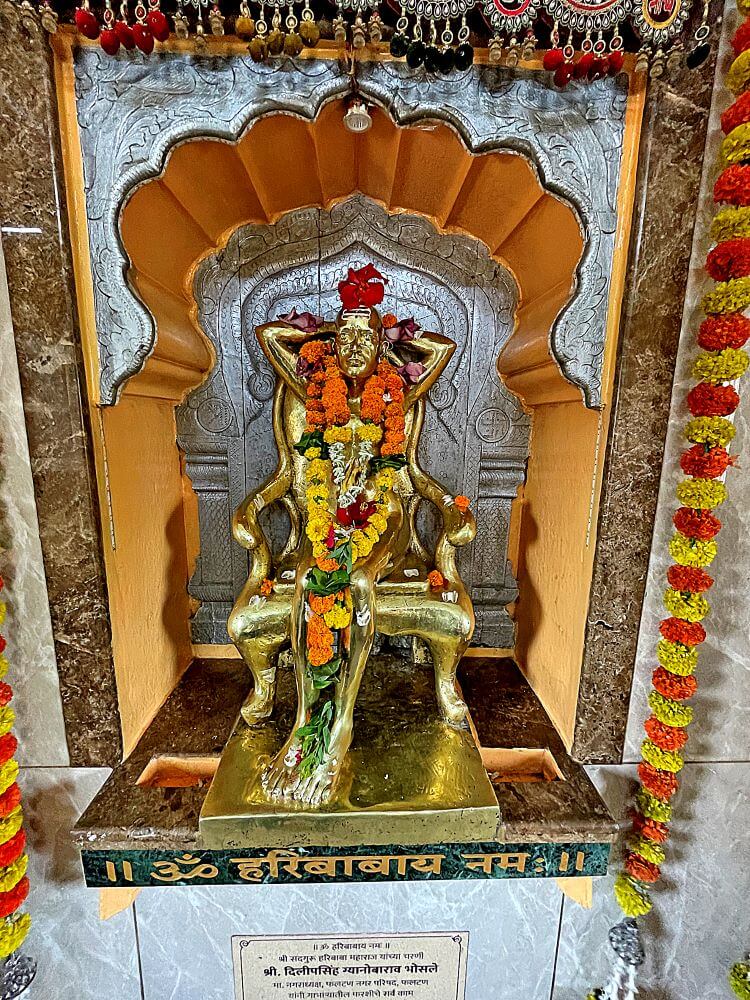
Shop Photo FramesJust as great souls like Swami Samarth in Akkalkot, Gajanan Maharaj in Shegaon, and Sai Baba in Shirdi manifested, in the same way, on the holy land of Phaltan, on the day of Ashwin Shuddha Dwadashi, Shake 1797, that is, in the year 1875 AD, Saint Shri Haribaba blessed the people of Phaltan with his presence at the local Maruti temple. Haribaba, who preached, “Perform every task with a pure heart,” has many disciples and followers. The Samadhi temple of Haribaba is located in the Malthan area of Phaltan and is a place of faith for millions of devotees.
According to the accounts of Shri Haribaba’s life, one day news spread through the village that a Mahatma had appeared at the local Maruti temple. Driven by curiosity and a desire for his darshan, people began to gather in the temple premises. However, the villagers were amazed to see that even as evening approached, the Mahatma remained motionless in the same Siddhasana posture he had assumed in the morning. In the evening, Mudhojiraje Naik-Nimbalkar, the ruler of the Phaltan Sansthan, arrived for his daily darshan of Maruti and caught sight of the Mahatma. He sought his blessings and requested him to visit the palace. Respecting the King’s request, the Mahatma set out for the palace, where the King served him a sumptuous meal with great devotion. Upon inquiring about the Mahatma, Mudhojiraje learned that before appearing in Phaltan, he had been seen by people in the nearby village of Pandare. Prior to that, he had also resided in Natepute, Pandharpur, and Shikhar Shingnapur. People knew him by the name Haribaba.
When Haribaba manifested at the Phaltan region, he was 40 years of age. Haribaba’s mind Finding no solace in the palace, he returned to the Maruti temple. People would often witness the divine pastimes (leelas) of Haribaba, who wore renunciation as his only ornament—sometimes standing in the middle of the road at midnight singing bhajans, at times gathering stones to sit upon, or lying down on scorching sand, completely absorbed in the devotion of Lord Vitthal. Haribaba was proficient in various languages, including Marathi. Consequently, he would also sing bhajans in Telugu and Kannada. Yet, such was the emotion in his singing that even those who did not understand the language would become completely immersed in it. His bhajans would always conclude with the resonant chant, ‘Pundalik Varada Hari Vitthal…’
Haribaba would sometimes come to the temple, have darshan of the Lord, and then depart. Sometimes he would stay to listen to the ongoing kirtan or pravachan, while at other times he would fall asleep right there. At times he appeared calm, and at other times he seemed fierce. As Haribaba wandered through the village, his actions would often Losses were occurring. To prevent this, Mudhoji Raje had appointed servants to follow Haribaba; however, within a few days, realizing that this was not feasible, the Raje abandoned that plan.
It is said that patients suffering from incurable diseases, for whom physicians and doctors had given up hope, would become healthy with just one glance from Haribaba. He would suddenly appear like Lord Dattatreya in front of the homes of those in distress, offer them a remedy, and immediately vanish from sight. Because of this, Haribaba had become as vital as life-breath to the people here. After many such years had passed, in his old age, Haribaba resided in Malthan near Phaltan. Due to his body becoming weary, his wanderings had ceased. Haribaba lived in a room at the Dharmashala, where devotees would constantly perform bhajans. Following Haribaba’s instructions, the devotees had begun celebrating the festival by conducting religious programs on the day of Ratha Saptami. In the second year, after the Ratha Saptami program concluded, a servant was massaging Baba’s feet, but at that very moment, Baba’s feet turned cold. Upon calling the physician, as soon as it was learned that Baba had left His mortal coil, the bhajans here turned into cries of lamentation.
The Mahatma who explained the philosophy of life in such simple and easy language would no longer be met, and therefore, everyone was unable to contain their grief. Mudhojiraje Bhonsle himself came here to pay his respects to Haribaba’s mortal remains. Following his instructions, Parvatrao Nimbalkar immediately had a Samadhi built between the Trijateshwar and Pundalik temples in Malthan. Thereafter, Haribaba’s Puja and Aarti were performed. Amidst the resounding sounds of drums, cymbals, conch shells, trumpets, bells, and gongs, Haribaba’s procession was brought to the Samadhi site in a flower-decked palanquin. A magnificent seat had been prepared inside the Samadhi, upon which Haribaba was placed. After all the rituals were completed, the Samadhi was sealed at 4:30 PM on Magh Shuddha Ekadashi, Shake 1820, i.e., 1898 AD. At that moment, the entire area echoed with the chants of “Sadguru Haribaba Maharaj Ki Jai…”
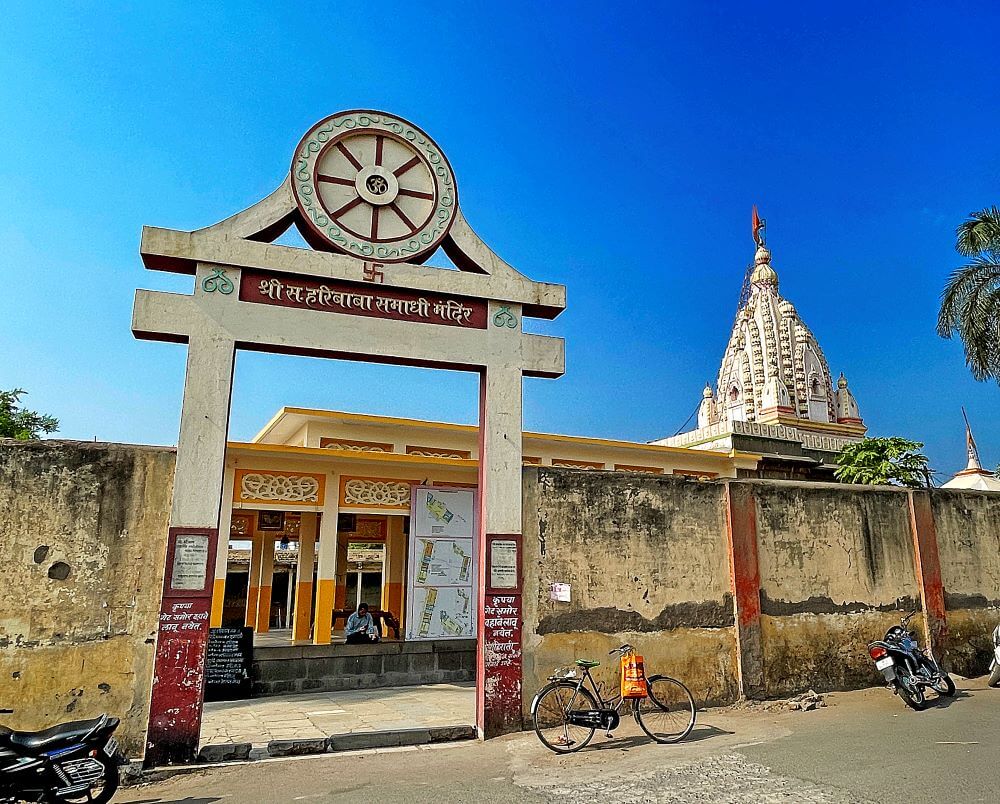
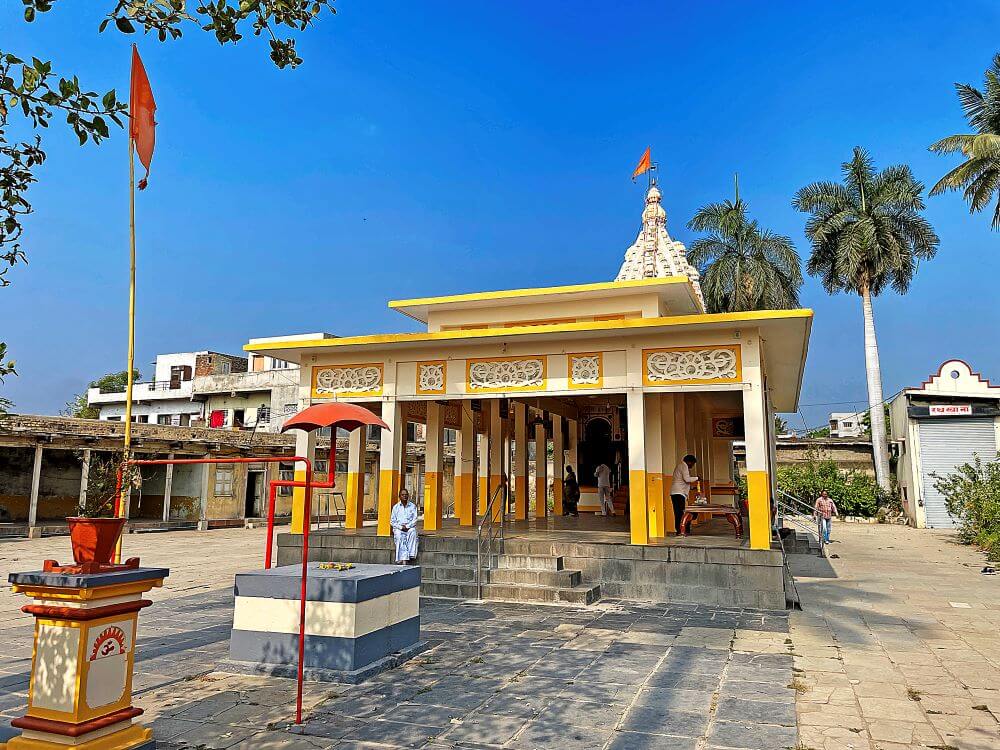
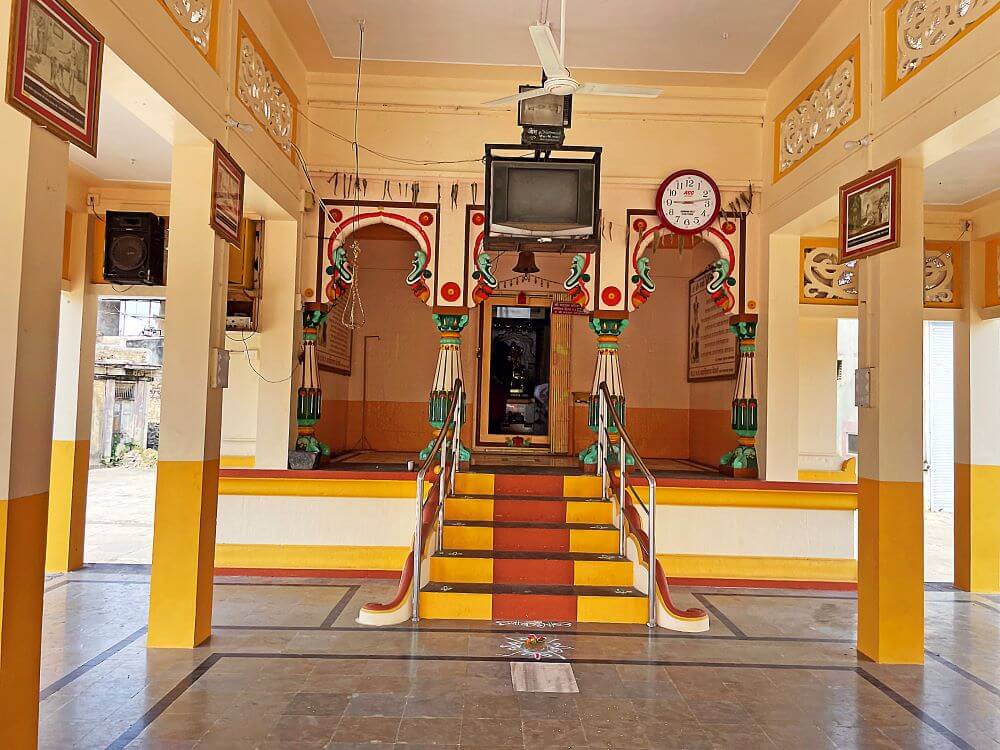
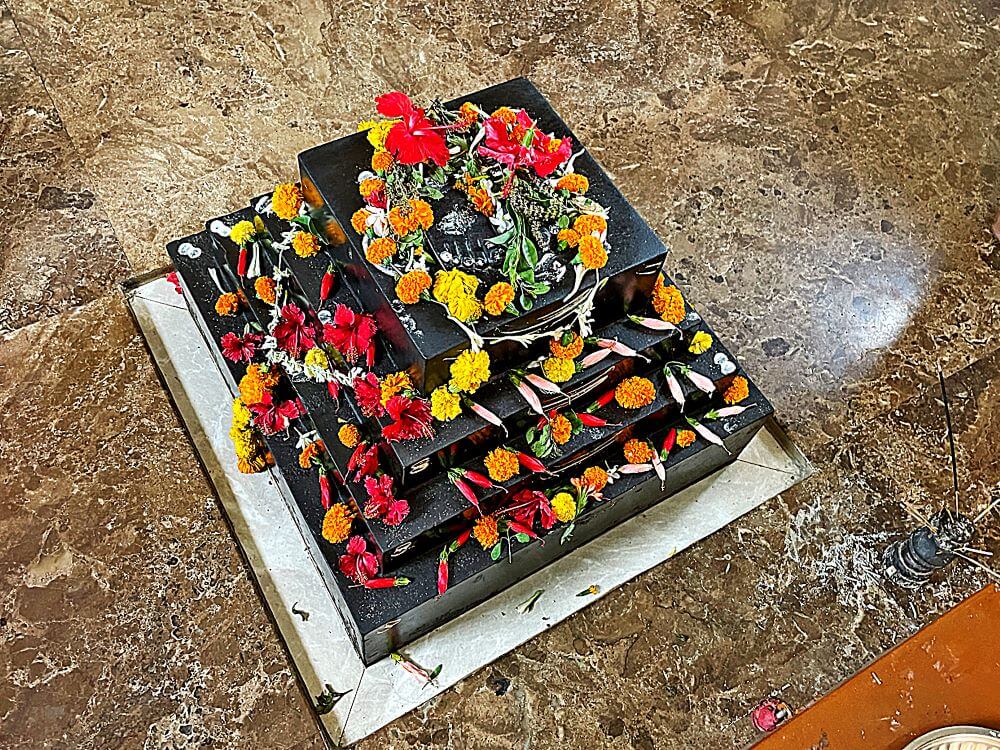
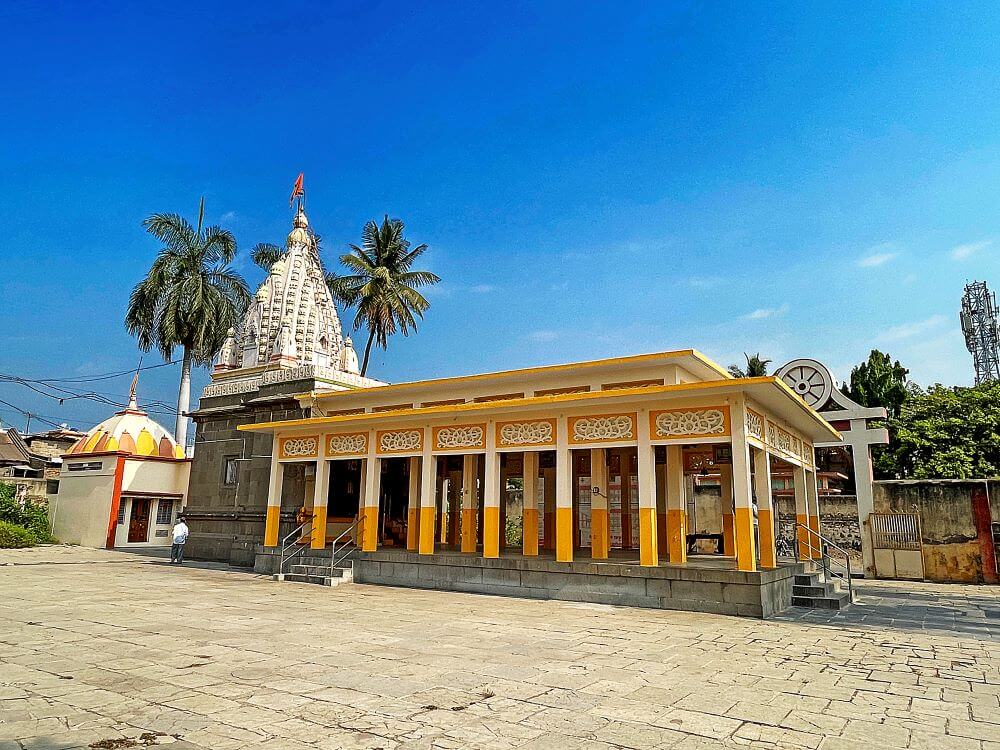
The Sant Haribaba Samadhi Temple is situated on the banks of the Banganga River. The temple is enclosed by fortifications on all sides, and one enters the temple courtyard through its main entrance. The temple faces east and is structured with a Sabha Mandap (assembly hall), a Darshan Mandap (viewing hall), and a Garbhagriha (sanctum sanctorum). The Sabha Mandap is open-style, and each of its wooden pillars features pictorial information depicting significant events from the life of Haribaba. The pillars in the Darshan Mandap are intricately carved and connected to one another by arches at the top. Inside the Garbhagriha lies the stone Samadhi of Haribaba, upon which his Padukas (footprints) are carved.
The premises of the Haribaba Samadhi Mandir are expansive, and a dharamshala is available here for the convenience of devotees. Behind the main temple lies the Shila Mandir. During his stay in Phaltan, he would sit on this stone for hours, singing bhajans. This is the only stone sanctified by the holy touch of Haribaba. The festival commemorating the Maharaja’s Punyatithi is celebrated here with great enthusiasm from Magh Shuddha Panchami (Vasant Panchami) to Magh Shuddha Dwadashi. Additionally, the Maharaja’s Pragat Din festival is celebrated on Ashwin Shuddha Dwadashi.
This sacred temple stands as a testament to deep spiritual devotion, ancient architectural grandeur, and rich local cultural traditions.
The sanctum sanctorum houses the divine idol consecrated according to ancient Vedic traditions, surrounded by serene courtyards and traditional temple architecture.
Navratri, Maha Shivratri, Annual Temple Jatra & Deepotsav
Compare and book flights, secure top-rated local hotels near the temple, hire reliable guides, and rent cars instantly.
Extend your pilgrimage by visiting other highly sacred temples located nearby.


Add ₹999 more to unlock FREE SHIPPING!
Your sacred cart is currently empty.
Shop Photo FramesFill in your delivery details below to place your order.
Add comment