
Add ₹999 more to unlock FREE SHIPPING!
Your sacred cart is currently empty.
Shop Photo FramesThe Jawaleshwar Temple in Jawala, located in the Jamkhed taluka of Ahilyanagar district, is famous for its Rath Yatra (chariot procession). Among the major Ashadhi Yatras celebrated across the state, the Jawaleshwar Rath Yatra holds a significant place. This festival is celebrated over five days, from Ashadhi Ekadashi to Guru Purnima. Ongoing for nearly 200 years, this Yatra is also renowned for the jugalbandi (musical and dance duel) of traditional dancers. As the presiding deity of the villagers, this awakened (jagrut) shrine is a place of deep faith for lakhs of devotees.
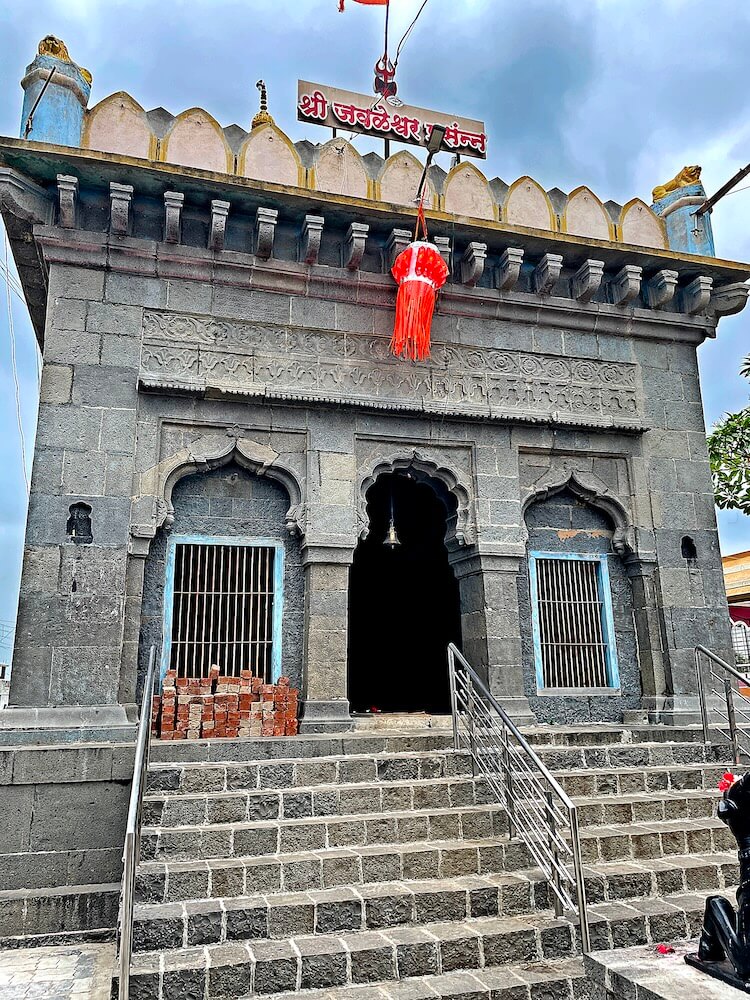
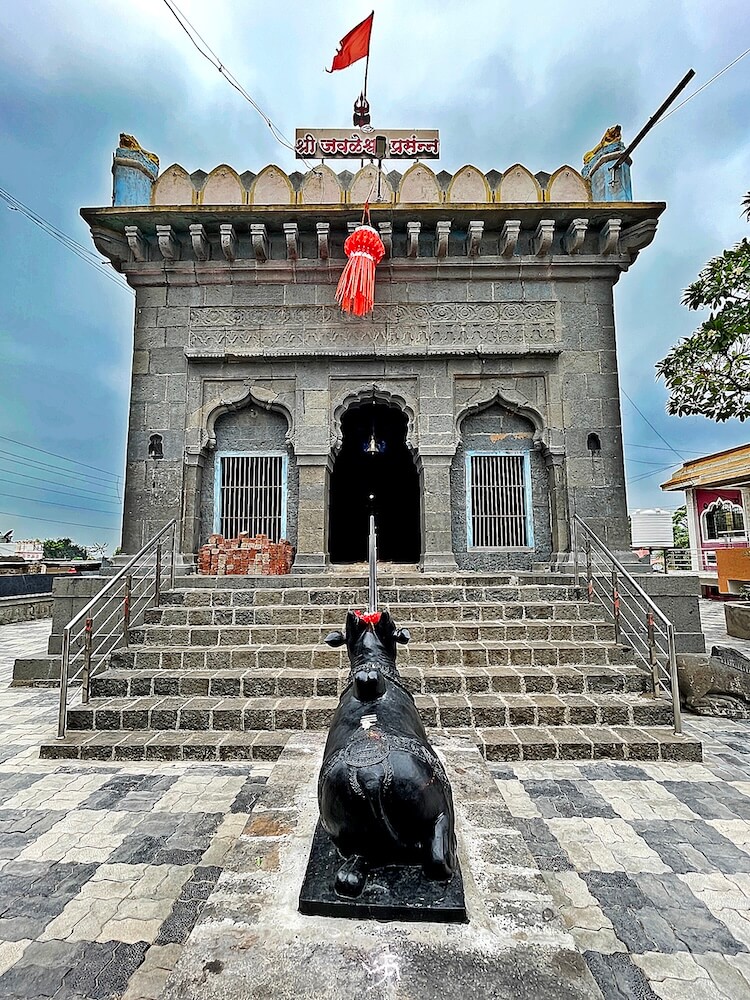
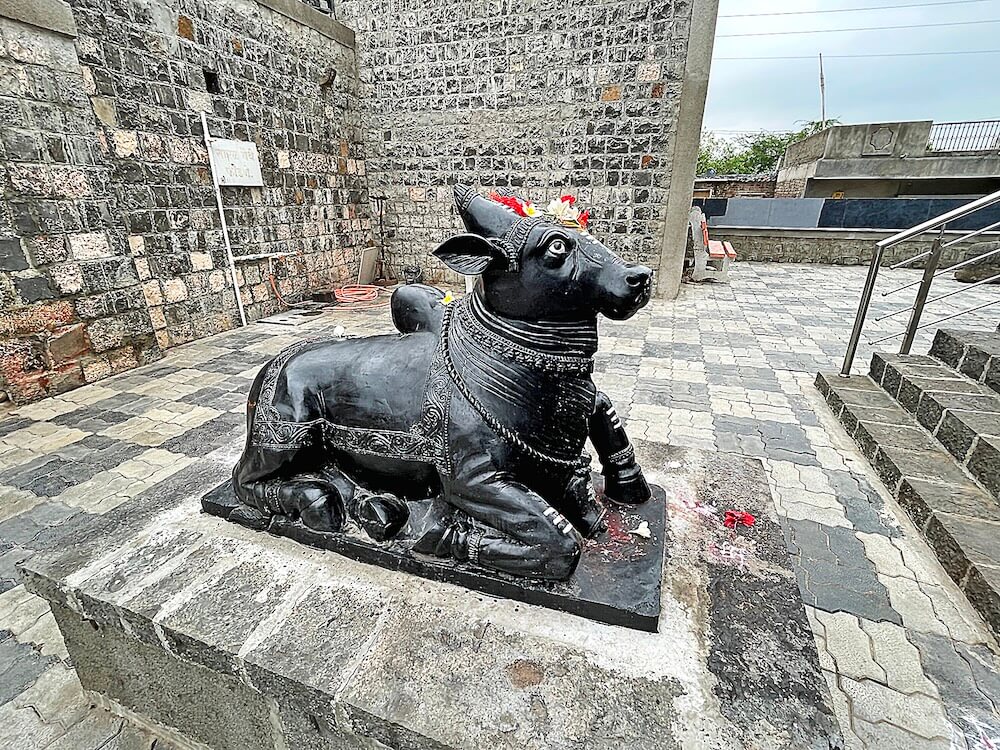
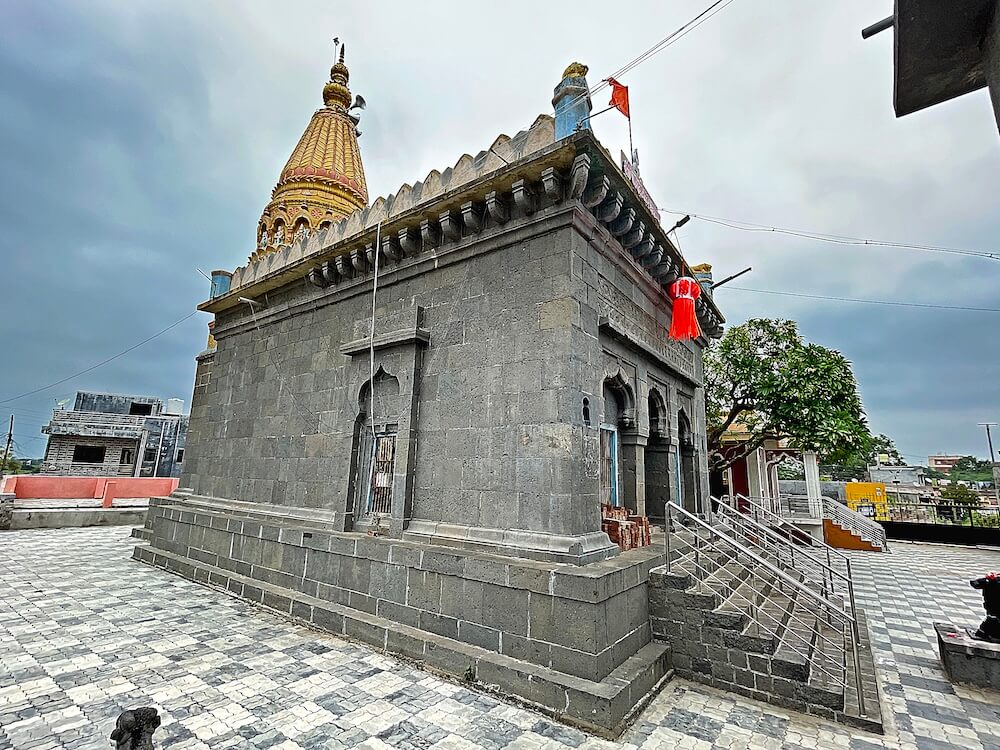
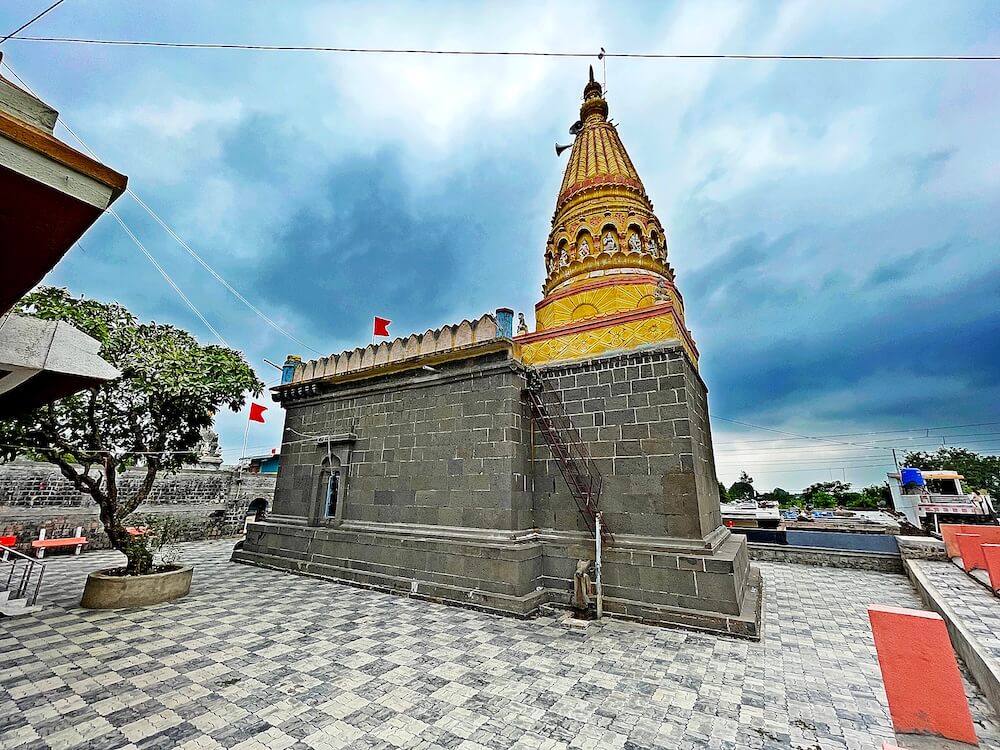
Situated in the heart of Jawala village, the ancient Jawaleshwar Temple is built in the Hemadpanti style. Records indicate that the temple was renovated in 1791 by Punyashlok Ahilyadevi Holkar. The stone structure of the temple is square in shape. Although the entire temple complex is enclosed by a fortification wall, the Nandi Mandapa stands outside it. This Nandi Mandapa, standing on a plinth supported by four pillars, has a unique design. In this 20 to 25-foot-high pavilion sits an intricately carved Nandi, and the spire (kalash) is adorned with sculptures of Lord Ganesha and various other deities. The Jawaleshwar Temple is located at a slightly higher elevation than the Nandi Mandapa.
After entering through a small gate in the fortification, one finds another black stone Nandi on a plinth in front of the temple. The temple premises are spacious, and the paved ground combined with ornamental plants makes the area clean, peaceful, and beautiful. The Jawaleshwar Temple stands on a jagati (foundation) about six to seven feet above the ground. One enters the Sabha Mandapa (assembly hall) through the temple entrance after climbing seven to eight steps. The temple is structured with a Sabha Mandapa, Antarala (vestibule), and Garbhagriha (sanctum sanctorum). In the Antarala, on both sides of the entrance to the Garbhagriha, are statues of Lord Ganesha and Bhairavnath.
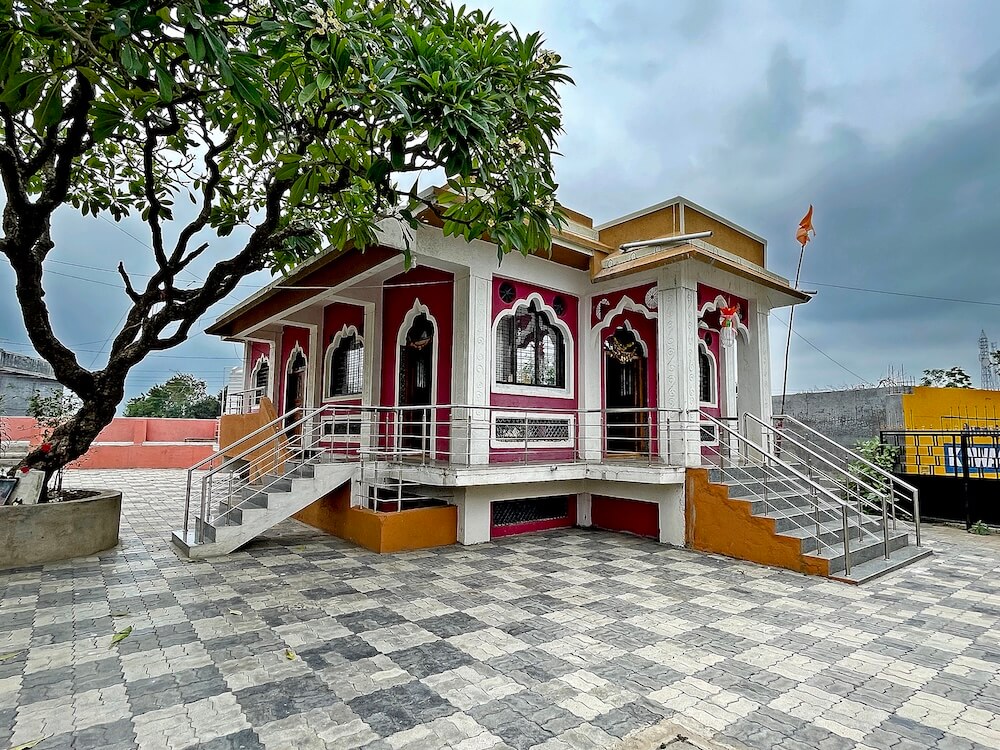
The Garbhagriha houses an ancient Shiva Linga, and on the wall opposite the Linga, there is a large niche containing an idol of Mahadeva. (In ancient temples of Mahadeva, an idol of Mother Parvati is usually found in this space.) To the right of this temple is a newly constructed Rama Temple. The sanctum of this temple contains marble idols of Shri Rama, Lakshmana, and Sita. There is a meditation hall on the ground floor of this temple, which many devotees use for reading scriptures and performing parayana (devotional recitations).
Until recently, the Jawaleshwar Temple did not have a shikhara (spire). It is said that because of this, the villagers of Jawala and the surrounding areas did not build two-story houses. Due to the absence of a shikhara on the temple, villagers faced difficulties when attempting to build a second floor on their homes, or the construction would collapse after a few days. In 1996, the villagers raised funds to construct the shikhara on the temple and installed the kalash with due rituals. Since then, many two, three, and four-story buildings have been erected in Jawala.
There are five swayambhu (self-manifested) Shiva Lingas in Jawala village: Jawaleshwar, Baleshwar, Kaleshwar, Nandkeshwar, and Beleshwar. According to a legend, all five Lingas date back to the time of Shri Rama and were installed by Him during His stay at Sautada, near Jamkhed.
The five-day Yatra festival from Ashadhi Ekadashi to Guru Purnima is very famous. During this time, the Jawaleshwar Temple is decorated with attractive lighting. On the morning of Guru Purnima, the crown of Jawaleshwar is installed in the chariot after performing an Aarti. The honor of performing the Aarti belongs to the Patil and Kulkarni families of the village. At this time, devotees offer naivedya and hang garlands of coconuts on the chariot. The number of coconuts offered on the chariot in a single day reaches 10,000 to 15,000.
Around one o’clock in the afternoon, the grand chariot procession begins amidst chants of ‘Har Har Mahadev’. The chariot currently used for the deity’s procession was built about 150 years ago from teak wood by Yedu Pandharinath Survase, a carpenter from the same village. This chariot is still in good condition today. Its wheels were replaced in 2022 as they had worn out. During the procession, a large rope is tied to the front and back of the chariot to help it take turns. It takes 200 to 250 people to pull this chariot. The honor of tying the rope to the chariot on the day of the Yatra belongs to the Mate family, while the honor of sitting in the chariot belongs to the Survase family. The entire route taken by the chariot (known here as the ‘Rath Marg’) has been concretized using state government funds. The chariot procession returns to the Jawaleshwar Temple around 1:00 to 1:30 AM. At this time, the dancers and musical troupes from all the village mandals gather in the temple courtyard. Around 1:30 AM, all these dancers perform the Aarti of the deity, followed by a vibrant jugalbandi of their dances.
This temple, a place of faith for lakhs of devotees, has been included in the ‘C’ category of pilgrimage sites by the state government. Consequently, the temple receives periodic funding through the Regional Tourism Development Scheme of the Maharashtra State Tourism Department.
This sacred temple stands as a testament to deep spiritual devotion, ancient architectural grandeur, and rich local cultural traditions.
The sanctum sanctorum houses the divine idol consecrated according to ancient Vedic traditions, surrounded by serene courtyards and traditional temple architecture.
Navratri, Maha Shivratri, Annual Temple Jatra & Deepotsav
Compare and book flights, secure top-rated local hotels near the temple, hire reliable guides, and rent cars instantly.
Extend your pilgrimage by visiting other highly sacred temples located nearby.


Add ₹999 more to unlock FREE SHIPPING!
Your sacred cart is currently empty.
Shop Photo FramesFill in your delivery details below to place your order.
Add comment