
Add ₹999 more to unlock FREE SHIPPING!
Your sacred cart is currently empty.
Shop Photo FramesThe fame of Jagdamba Devi as the presiding deity of Jintur taluka is widespread. Nestled at the foothills of hills and on the banks of a large lake, this beautiful temple is considered a significant place of faith for the local citizens. This main temple of the ‘Shri Devisahib Sansthan’ is located in the village of Bhogaon Devi in Jintur taluka of Parbhani district, Maharashtra. After crossing the main road, the main temple is visible at a distance of one and a half kilometers from Bhogaon village. Thousands of devotees from Parbhani and neighboring districts come here for darshan. Due to the fame of the Goddess in fulfilling vows, devotees arrive in large numbers to make and fulfill their offerings.
Parbhani district has been blessed with a rich historical and religious heritage since ancient times. According to oral tradition, this shrine is considered a major sub-seat (upapitha) of the main Tulja Bhavani Devi of Shri Kshetra Tuljapur. The Jagdamba Devi temple at Bhogaon possesses an extremely ancient mythological heritage dating back to the Treta Yuga. When Lord Ramachandra was in his fourteen-year exile, he had come to the dense forests of Bhogaon. After the demon king Ravana abducted Mother Sita, Lord Shri Ram wandered through Nashik and the surrounding areas in search of her. Lord Shri Ram was deeply distressed while searching for Mother Sita. To ensure the success of his mission, a sage-like maharshi advised him to install the Adi Shakti Jagdamba Mata at Bhogaon. Following the maharshi’s advice, Lord Shri Ram himself consecrated the idol of Jagdamba Mata with his own hands. Due to this legend from the Ramayana era, the temple has attained unique spiritual significance. Devotees worship her as the Goddess who destroys evil tendencies and protects her devotees in times of crisis. Jagdamba Mata is held in high reverence within the surrounding five villages as a Goddess who fulfills all the wishes of her devotees.
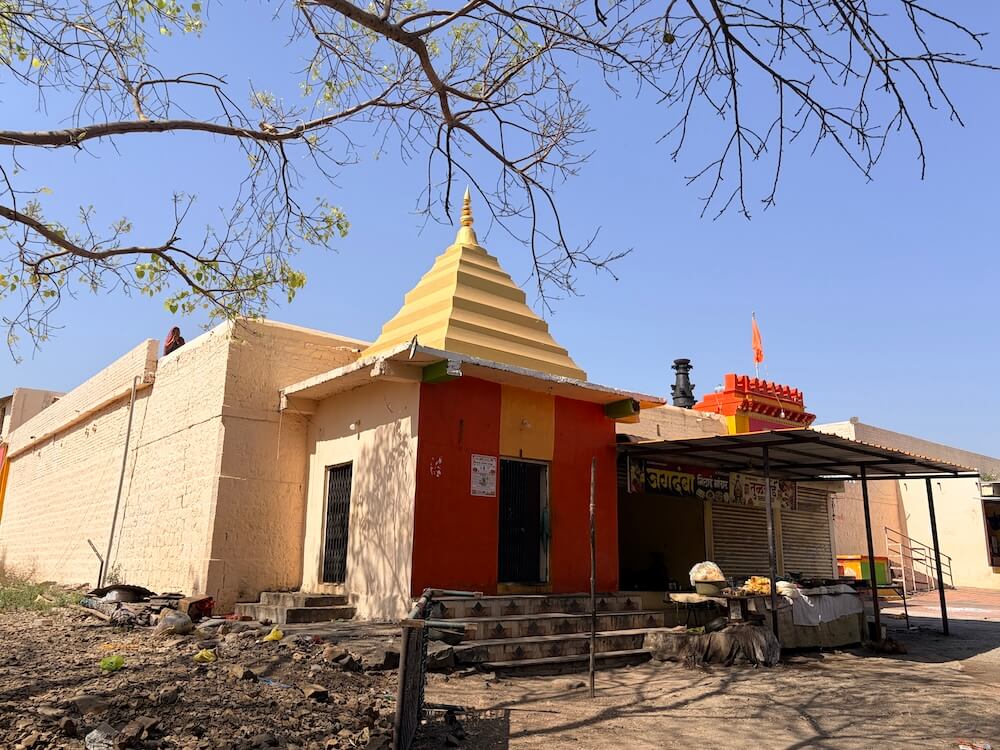
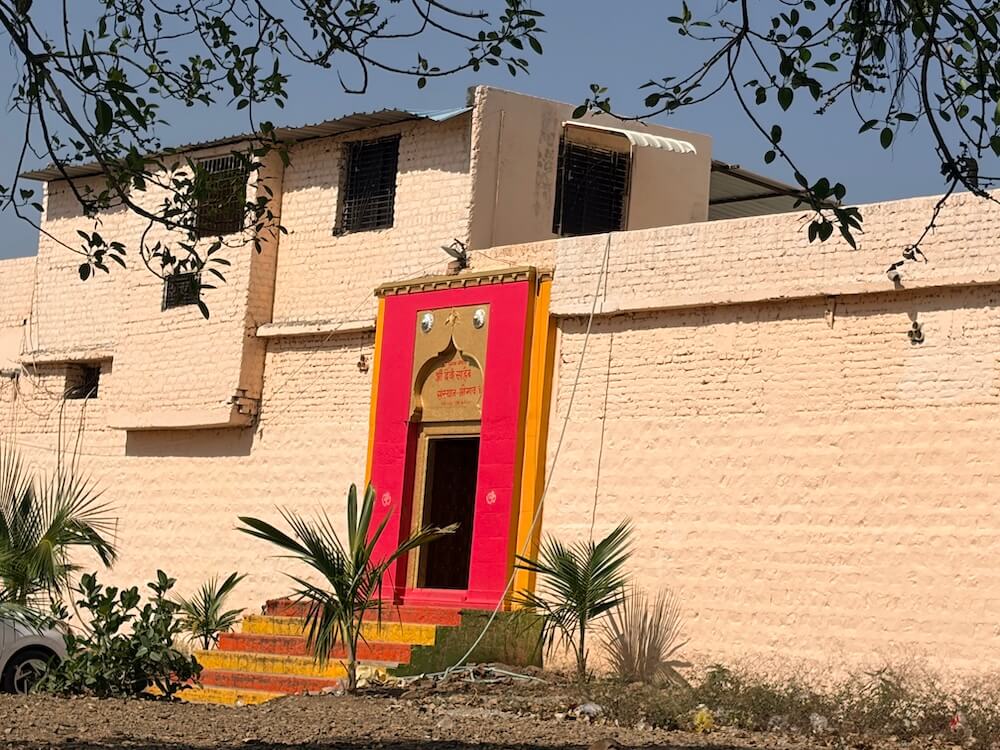
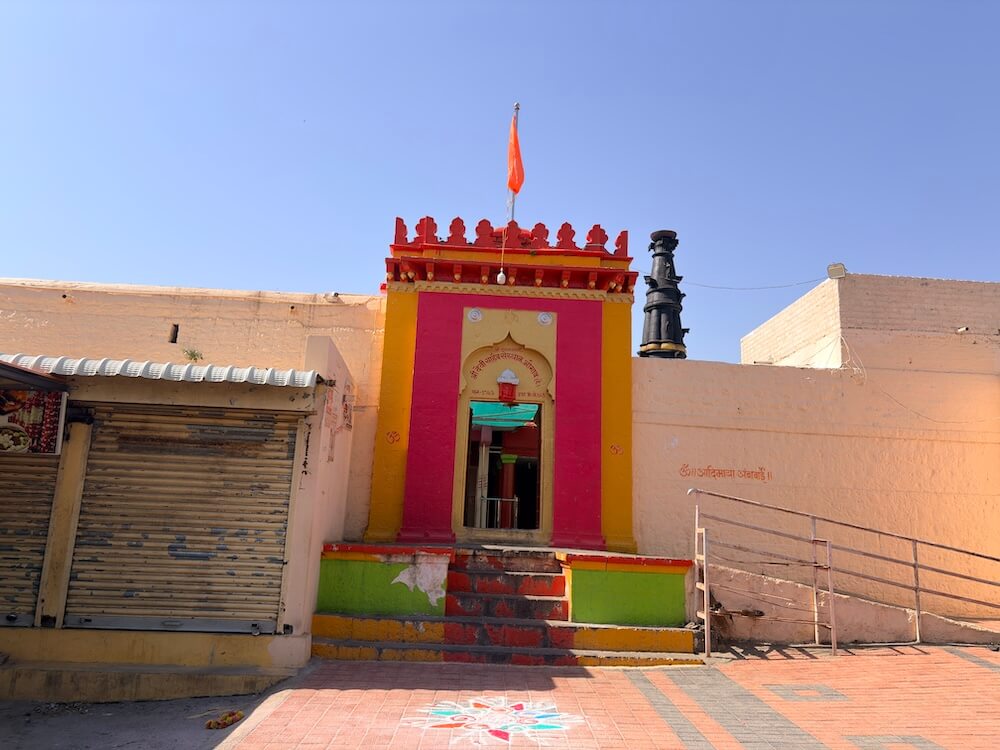
The responsibility of managing the temple and performing rituals has been held by the More-Deshmukh family since historical times. According to the records of the temple committee, the main stone temple stands on a total area of 23 gunthas. With a long history spanning hundreds of years, this temple stands as a testament to the architecture of the olden days. One enters the temple courtyard through the gateway in the surrounding wall. In front of the main temple stands a stone lamp pillar (deepstambha) about 25 feet high. This pillar is an excellent example of the historical Maratha architectural style prevalent in Maharashtra and North Karnataka. Its structure is sturdy at the base and gradually tapers towards the top. The entire pillar is erected on a large square stone platform.
The upper part of the platform is connected by a thick circular ring. Above this ring, on all four sides of the pillar, there is beautiful carving of Kirtimukhas and animal figures. The central part of the pillar is octagonal. It is divided into different levels by horizontal carved bands. On the corners and center of each level, characteristic stone niches have been made for placing oil lamps.
On the front side of the pillar, there is a carved shrine (devkosthak). Inside it, an idol of a deity is carved. This idol is considered the guardian deity of the temple. The topmost part of the pillar tapers to a point where a small kalash is designed.
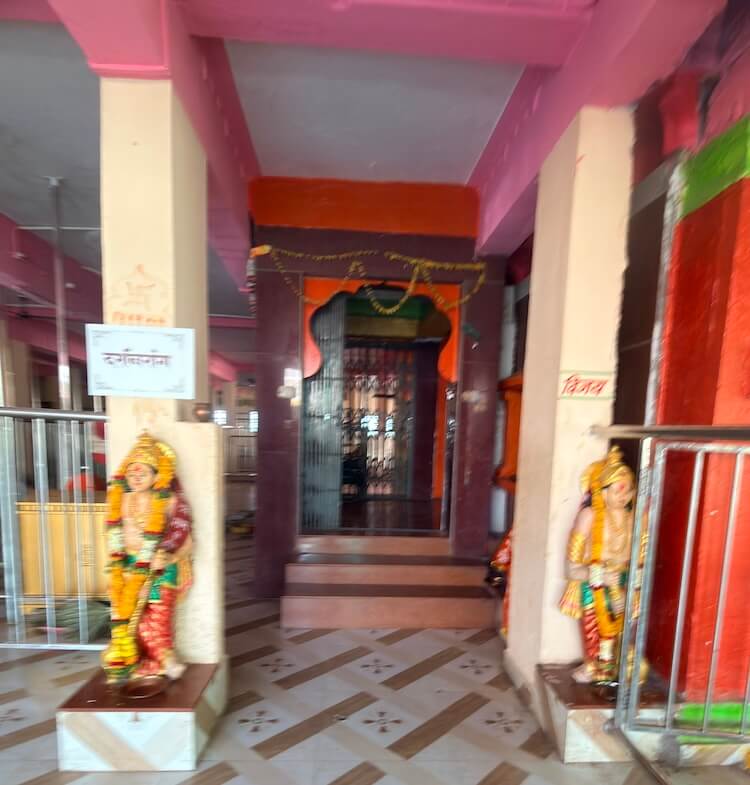
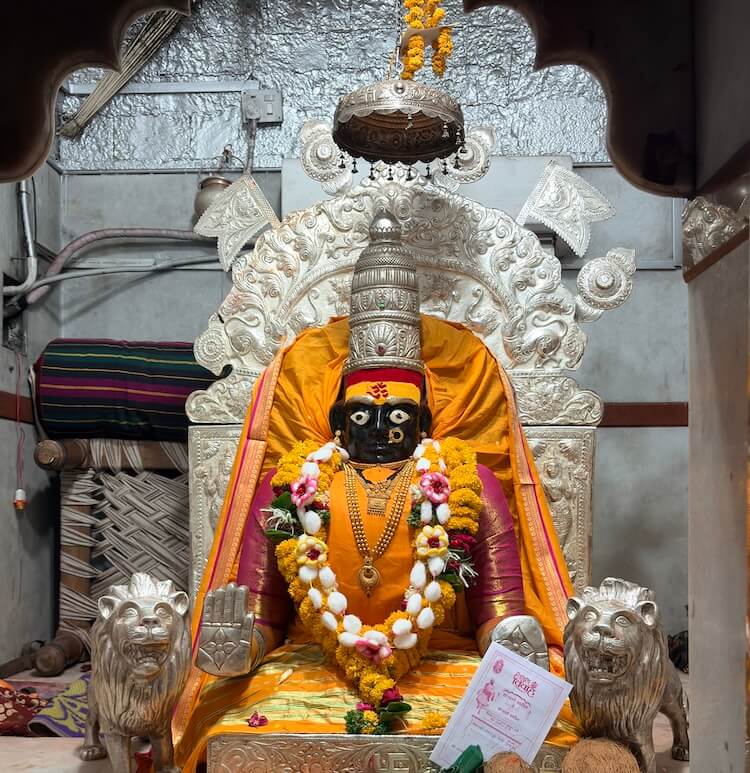
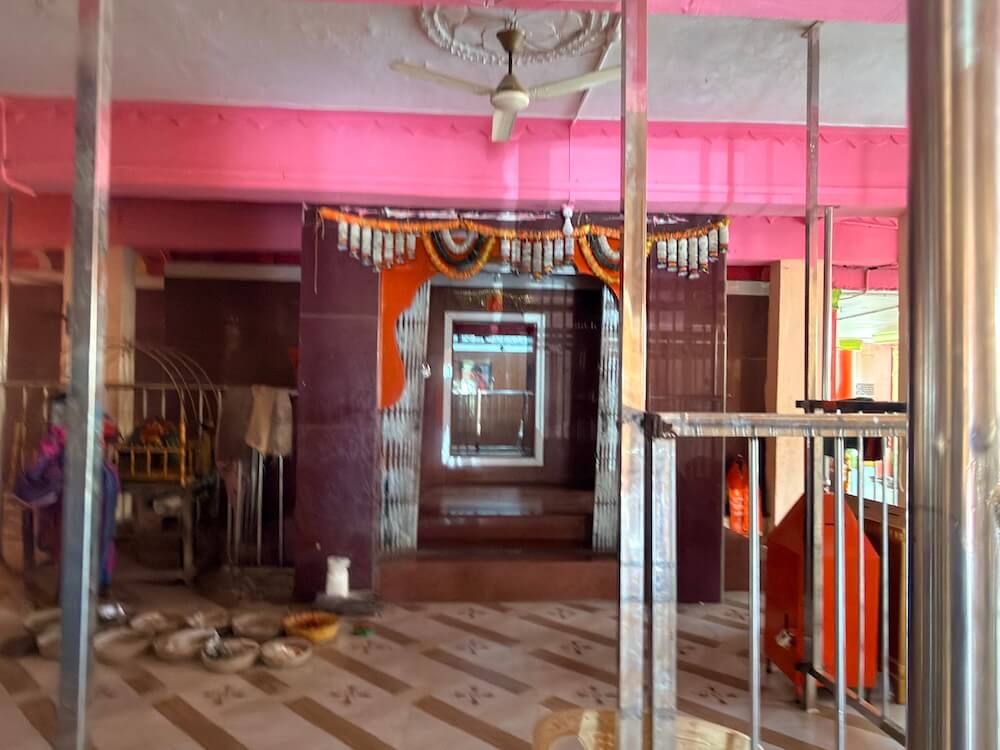
The main temple structure consists of a mandap, a sabhamandap, and a garbhagriha (sanctum sanctorum). In the semi-open mandap, separate pathways and safety railings have been installed for the queues of devotees coming for the Goddess’s darshan. At the entrance of the sabhamandap, there are sculptures of gatekeepers (dwarapalas) on both sides. The three to four-foot-tall idol of Jagdamba Devi, installed in the garbhagriha, is carved in black stone. The face of the Goddess, carved in a seated posture, bears an extremely serene expression. This idol of the Goddess is installed on a pure silver throne weighing 25 kilograms. Outside the main temple, a second smaller temple of Kharjulya Devi has been built. In the main courtyard of the temple, devotees can see a temple of South-facing Hanuman.
The Sharadiya Navratri festival begins on the first day (pratipada) of the month of Ashwin with the installation of the ghat (ghatsthapana). Various religious programs are organized in the temple premises throughout the nine days of Navratri. During the festival, daily Kakada Aarti and regular worship are performed in the temple. To please the Goddess, Abhishek rituals and recitation of Sukta Sahasranama are conducted. Every morning, Laghurudra Abhishek and Shringar of the Goddess are performed. On the day of Ashtami, as a vigil (jagar) for the Goddess, young girls (kumarikas) are worshipped. On the night of Ashtami, a Homa-Havan ritual is performed in the main temple at midnight. On the day of Navami, a pumpkin is offered as a final oblation (purnahuti). On the evening of Navami, a grand palanquin procession of the Goddess is taken around the entire village. The Navratri festival concludes after the Simollanghan ceremony on the day of Vijayadashami. A large fair is held in the temple premises during the Navratri festival. During the fair, thousands of devotees from all over Marathwada and surrounding areas come here for darshan. During the festival, excellent arrangements for free food (annachhatra) are made by the temple trust for all devotees. For the travel of pilgrims, special ST bus services are operated directly from the Jintur ST depot to the temple.
A large lake stretches out near the temple. In the middle of the lake, a small island can be seen. The village of Bhogaon is considered a drought-prone village in the Jintur taluka. The rainfall here is extremely low, and conditions of severe drought occur frequently. Due to the land in this village being rocky and of poor quality, farming on the available 20 to 25 percent of the land is considered extremely difficult. To solve the water crisis, the villagers desilted the lake located near the Devi temple. As the water level in this lake improved, the fallow agricultural land became fertile once again. To protect their crops from the menace of wild animals, farmers turned their attention to turmeric cultivation. In just 5 to 6 years, the area under turmeric cultivation in the village increased to a staggering 450 hectares. Furthermore, to develop the temple premises, a large tourism project is being established by the local villagers and the temple trust on 70 acres of land owned by the temple. The ‘One Child, 30 Trees’ scheme is being implemented here. Under this initiative, hundreds of fruit trees have been planted through voluntary labor (shramdaan). Due to this tree plantation campaign, the entire temple premises have become lush and green. For devotees seeking darshan, the temple remains open from early morning until late at night.
This sacred temple stands as a testament to deep spiritual devotion, ancient architectural grandeur, and rich local cultural traditions.
The sanctum sanctorum houses the divine idol consecrated according to ancient Vedic traditions, surrounded by serene courtyards and traditional temple architecture.
Navratri, Maha Shivratri, Annual Temple Jatra & Deepotsav
Compare and book flights, secure top-rated local hotels near the temple, hire reliable guides, and rent cars instantly.
Extend your pilgrimage by visiting other highly sacred temples located nearby.


Add ₹999 more to unlock FREE SHIPPING!
Your sacred cart is currently empty.
Shop Photo FramesFill in your delivery details below to place your order.
Add comment