
Add ₹999 more to unlock FREE SHIPPING!
Your sacred cart is currently empty.
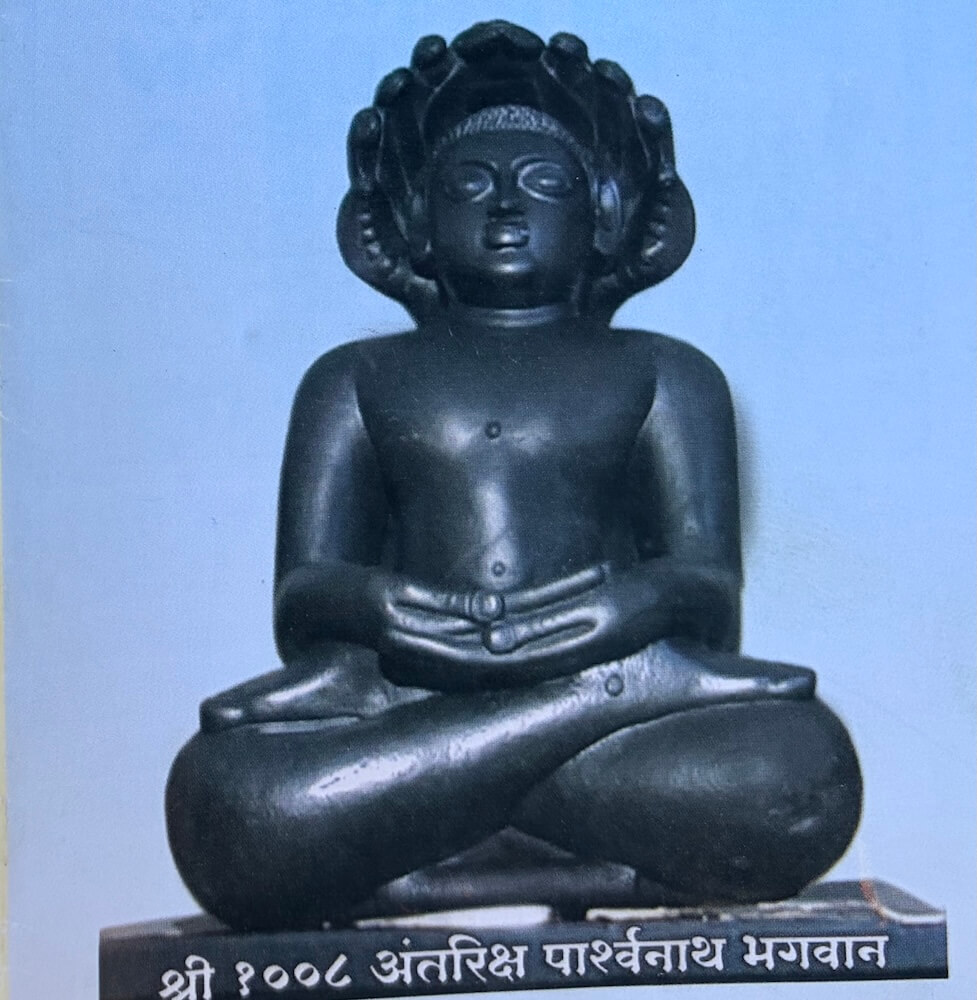
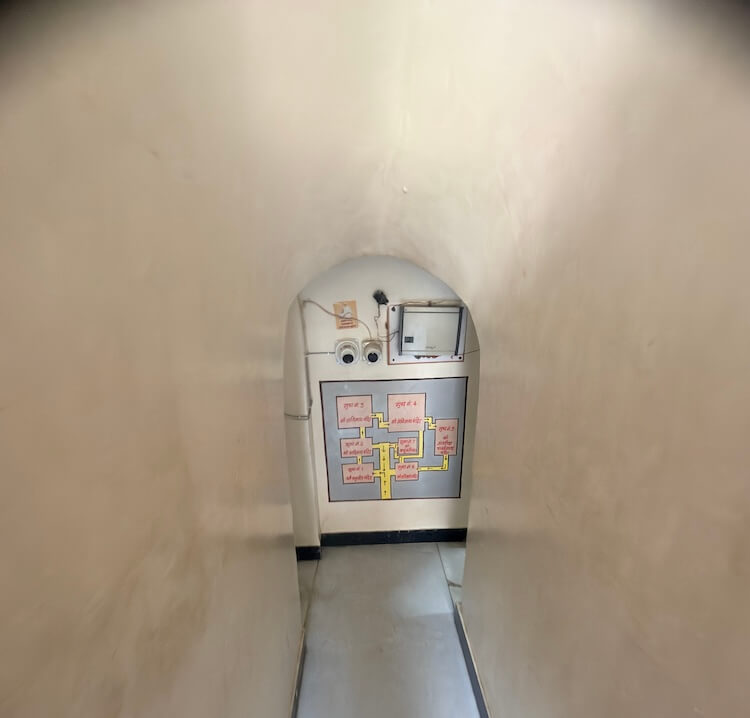
Shop Photo FramesShri Digambar Jain Atishay Nemgiri Sansthan at Jintur is a renowned pilgrimage site among Jain Tirthas. This holy site is enshrined in the subterranean belly of a small, circular hill in the Ajanta mountain range. In the seven caves on Nemgiri mountain here, one can have the divine darshan of ancient idols of seven Jain Tirthankaras. The primary attractions here are the 7-foot tall, 15-ton idol of Bhagwan Neminath, and the floating idol of Antariksh Parshvanath, which stands 6 feet tall and weighs 9 tons. To behold the idols in these caves, one must navigate through three different cave passages that intersect like a complex labyrinth. Nearby on Chandragiri mountain stands the Chaubisi Temple. A sacred site for Jains, countless devotees and tourists visit this holy place not only from Maharashtra, but also from states like Rajasthan, Gujarat, Madhya Pradesh, Karnataka, as well as from abroad. It is believed that if one enters these sacred caves wearing footwear, honeybees swarm after them.
In ancient times, two Jain rulers named Yamraj and Nemiraj ruled here. At that time, Jintur was known as ‘Jinpur’. It was also known by names like ‘Jainpur’ or ‘Jinntur’. It is said that over time, the name corrupted into the currently prevailing name ‘Jintur’. During that era, there were 14 Jain temples here. However, during foreign invasions, both kings were killed, and the invaders desecrated the temples and hundreds of Jain idols here. Devotees risked their lives to protect some of these idols. These idols have been preserved in the Mahavir Jain Temple in the city. Legend has it that about 450 years ago, a person named Veer Sanghvi, who came here with his family, had a divine vision; upon excavating the site, these idols were discovered. It is believed that he consecrated and re-installed these idols in the year 1611. At the base of the idol of Neminath here, there is an inscription. It reads: “Shri Shake 1532 Shravan Shuddh 12, created by Shri Baddherwal caste resident of Shri Nandgaon, Shri Jasusanghvi, wife Kondai, son Veersanghvi, wife Valvi Sanghvi, son Nemasanghvi. Neminath Nemgiri.” The twelfth and thirteenth generations of Veer Sanghvi’s lineage manage the affairs of this holy site today. This sanctuary is located about 3 km north of Jintur city, surrounded by dense greenery on all four sides. It is said that in earlier times, wild beasts roamed freely in this region and rested in the caves during the evening. The Abadhabi River flows between the two hills of Nemgiri and Chandragiri.
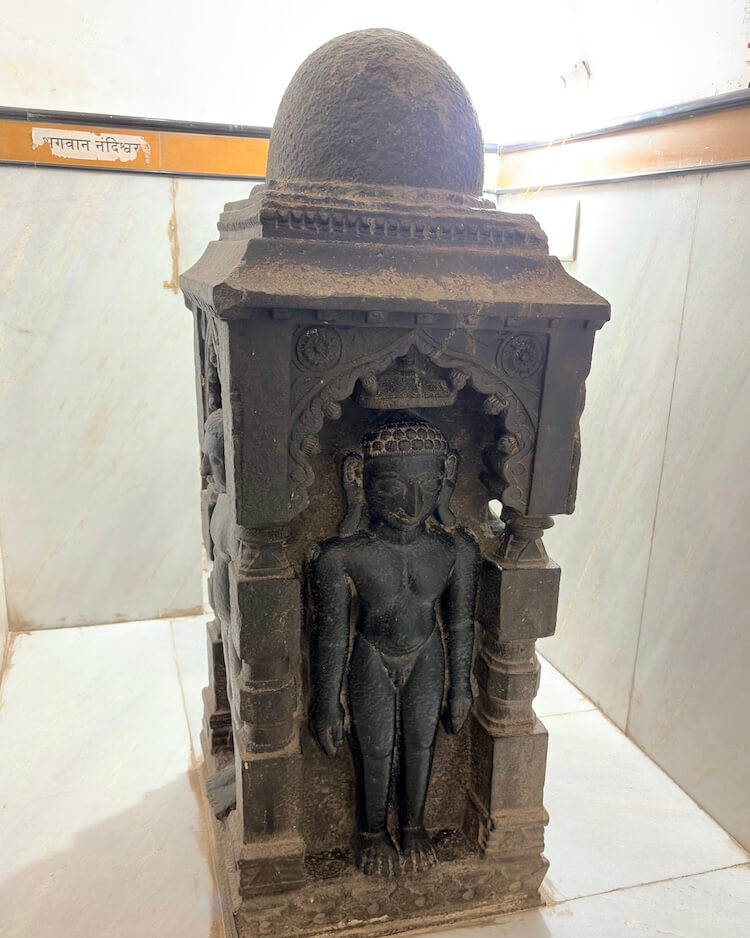
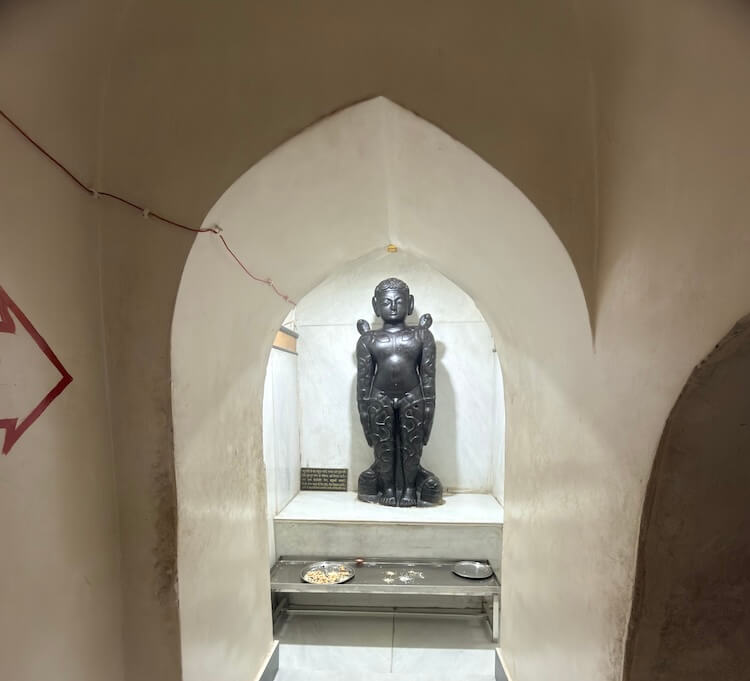
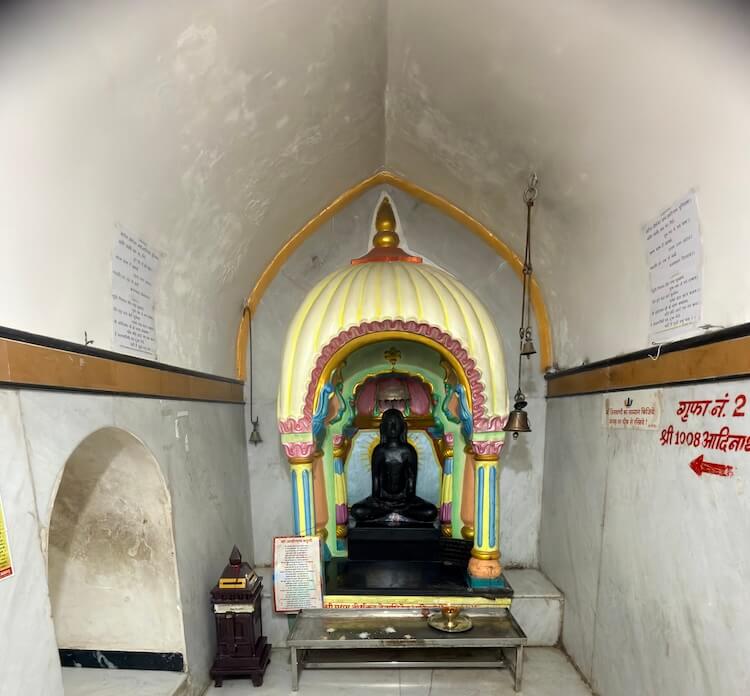
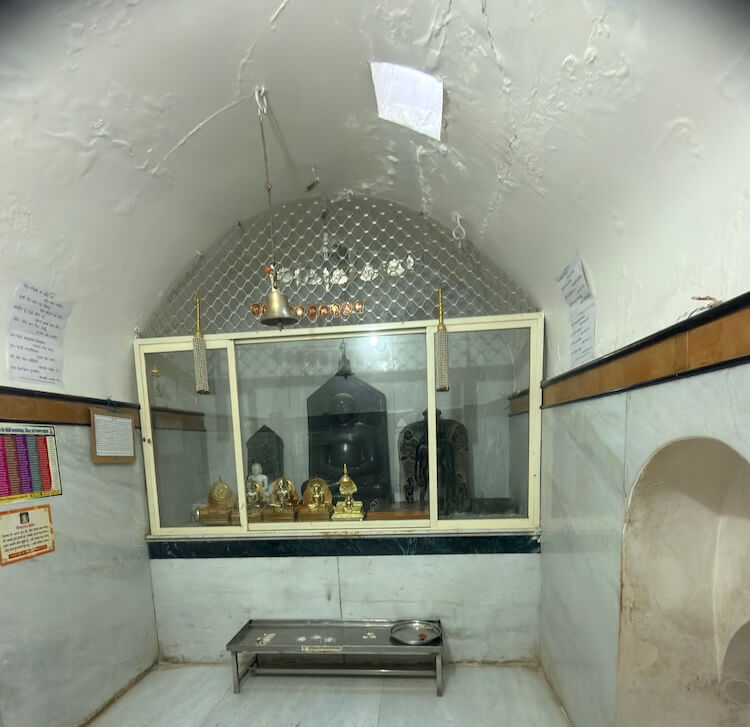
This site is located a short distance from the archway of the town. The sanctuary has a beautiful entrance gate surrounded by a rampart, flanked on both sides by statues of door-keepers (Dwarapalas). Upon entering through this main entrance, one beholds the grand Mahimastambha (pillar of glory) in the courtyard, a hallmark seen in front of all Jain temples. Religious programs are conducted on various occasions in the assembly halls situated in the courtyard. In the niche-like shrines on both sides of the main entrance, there are idols of Goddess Padmavati (on the left) and Dharanendra Yaksha (on the right). Entering further through this entrance, the caves lie twenty feet below. In the first cave here, there is a stone idol of the 24th Jain Tirthankara, Bhagwan Mahavir. A special feature of this cave is the lotus-feet (Padmakamal) of Acharya Bhadrabahu and Acharya Shantisagar. There are also a few metal idols here. In the second cave, there is a stone idol of the first Jain Tirthankara, Bhagwan Adinath. To reach the third cave, one has to descend a few steps. Here, a 6-foot tall idol of Bhagwan Shantinath Swami in Padmasana posture is enshrined. The hands of this idol are joined. At the base of this idol, figures of two men and two women who re-installed the idol are carved. In the fourth cave, there is a serene idol of Bhagwan Neminath carved in black stone in a seated Padmasana and Digambara (sky-clad) posture. The height of this idol is seven feet and its weight is 15 tons. This idol rests on a platform that is four feet high and seven feet long. The cave itself is approximately 17 feet long, 16 feet wide, and 16 feet high. It is said that on certain days of the year, the rays of the sun directly fall upon the feet of this idol. Sculptures of lions are carved on both sides near the idol. This idol is regarded as a symbol of self-purification and the path to liberation (Moksha). On the front side of the platform below the idol, figures of the person who consecrated it, along with his parents, two brothers, and their wives, are carved along with their names.
In the fifth cave, the stone idol of Bhagwan Antariksh Parshvanath is enshrined. The length of this cave is 17 feet and the width is 12 feet. The 6-foot tall idol of Bhagwan Antariksh Parshvanath, weighing 9 tons, rests on a platform two feet high. Depicted in a meditative pose with joined hands, a nine-hooded serpent is carved above the idol, coiling around its body. This idol appears to hover four finger-breadths above the ground without any support.
To enter the sixth cave, one has to climb a few steps and bend low. Here stands a 4.5-foot tall idol of Bhagwan Nandeshwar. One must also stoop low to enter the seventh cave. Here is a grand idol of Bhagwan Bahubali. Immersed in deep penance, the idol features creeper vines growing up to the neck, serpents resting on the shoulders, and a hole bored in the thigh by a beetle.
To the north of Chandragiri mountain lies the Chandragiri hill. Formerly, an ancient temple of Rajulmata of the Digambar Jains stood here. Between the Nemgiri and Chandragiri hills rest the sacred footwear (Padukas) of the revered Charan Rishidharak Muni Maharaj. A few feet beside them is a well. There are about 250 steps to climb up Chandragiri hill, lined with lush trees on both sides.
In the sanctum sanctorum (Garbhagriha) of the temple on Chandragiri hill, there are three main idols in the center. It is said that through these idols, one gets the divine vision of all twenty-four Jain Tirthankaras. To the left of these idols is a pure white stone idol of Bhagwan Chandraprabhu, while to the right is a beautiful idol of Bhagwan Mahavir. An echo reverberates within this sanctum sanctorum. The idol of Bhagwan Chandraprabhu here was originally sculpted from black stone; after it was damaged, a new idol was consecrated and installed in its place.
A Bhakta Niwas (pilgrim guest house) has been constructed to accommodate devotees coming from afar to visit Nemgiri Sansthan. Facilities for Prasadalaya (dining hall) are also available here. Furthermore, 170 cows (Gomatas) are lovingly served in the Gaushala located within the premises.
Darshan is available here from 5:30 AM to 8:30 PM. A grand festival is celebrated here every year on Bhadrapada Vadya Panchami. On the day of Shravan Shuddha Shashthi, Bhagwan Neminath Jayanti (Neminath Janma Kalyanak) is celebrated here. On the day of Shravan Shukla Saptami, various programs are organized on the occasion of Parshvanath Moksha Kalyanak (Moksha Utsav).
This sacred temple stands as a testament to deep spiritual devotion, ancient architectural grandeur, and rich local cultural traditions.
The sanctum sanctorum houses the divine idol consecrated according to ancient Vedic traditions, surrounded by serene courtyards and traditional temple architecture.
Navratri, Maha Shivratri, Annual Temple Jatra & Deepotsav
Compare and book flights, secure top-rated local hotels near the temple, hire reliable guides, and rent cars instantly.
Extend your pilgrimage by visiting other highly sacred temples located nearby.


Add ₹999 more to unlock FREE SHIPPING!
Your sacred cart is currently empty.
Shop Photo FramesFill in your delivery details below to place your order.
Add comment