
Add ₹999 more to unlock FREE SHIPPING!
Your sacred cart is currently empty.
Shop Photo FramesThe shrine of Renuka Mata on Mahur Gad in Nanded district, which is one of the three and a half Shakti Peethas of Maharashtra, holds an unwavering place in the hearts of devotees. Renuka Mata, a form of Goddess Jagdamba, is the Kulswamini (family deity) of many families in Maharashtra. It is the desire of every devotee to visit Mahur Gad and seek the Goddess’s blessings, but it is not always possible for everyone to travel there frequently. Keeping the faith and convenience of devotees in mind, temples of the Goddess have been built in various places across the state, which are known as ‘Prati Mahur’ (replicas of Mahur). The Renuka Mata temple, situated on a hilltop in Dongargaon in the Hadgaon taluka of Nanded district, is considered one of the prominent and awakened (Jagrut) shrines among them.
Renuka Devi is Bhudevi (Goddess of the Earth), and the word ‘Renuka’ means the Earth made of dust. According to mythological legends, Renuka is the wife of Sage Jamadagni. The ‘Renuka Mahatmya’ scripture narrates her life story: in ancient times, a king named Renu, also known as Prasenjit of the Ikshvaku dynasty, ruled over the Kanyakubja country. When he performed the Kanyakameshti Yajna, a daughter was born from the sacrificial fire. She was named Kamali in her cradle. As the daughter of King Renu, she came to be called Renuka. After she grew up, King Renu arranged her Swayamvara at the Bhagirathi region, where she chose Sage Jamadagni as her husband. The couple had five sons: Rumanvat, Sushena, Vasu, Vishwavasu, and Ramabhadra, also known as Parashurama.
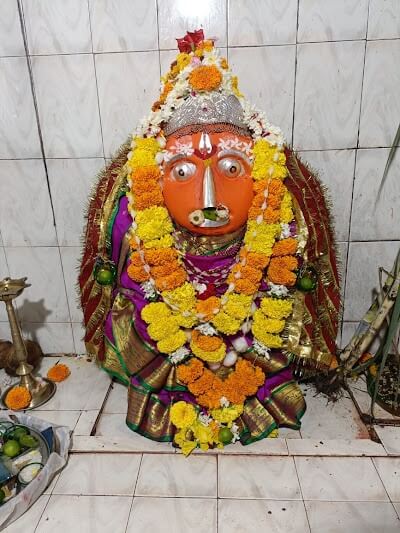
Renuka used to bring water from the Tungabhadra river in an earthen pot for her husband’s daily worship. One day, while watching Chitraratha Gandharva playing in the waters of the Tungabhadra, Renuka’s mind was momentarily distracted. Upon realizing this through his divine insight, Jamadagni ordered each of his sons to behead her. The first four sons refused to commit matricide, but Parashurama immediately obeyed his father’s command. The severed head of his mother fell into a tanner’s water tank. Pleased by his obedience, Jamadagni asked him to seek a boon. Parashurama then asked for his mother to be brought back to life. Jamadagni replied that it was impossible because her head had fallen into an impure place, making it improper to reattach it to her body. However, he decreed that henceforth, people would worship her head, and her body would be revered as Bhudevi. Since then, the head of Renuka Devi is worshipped. At Mahur Gad, the original Peetha, the head of Renuka Devi emerged from the earth in the form of a ‘Tandala’ (a self-manifested stone in the shape of a head). The temple at Dongargaon also houses a similar Tandala-style idol of the Goddess.
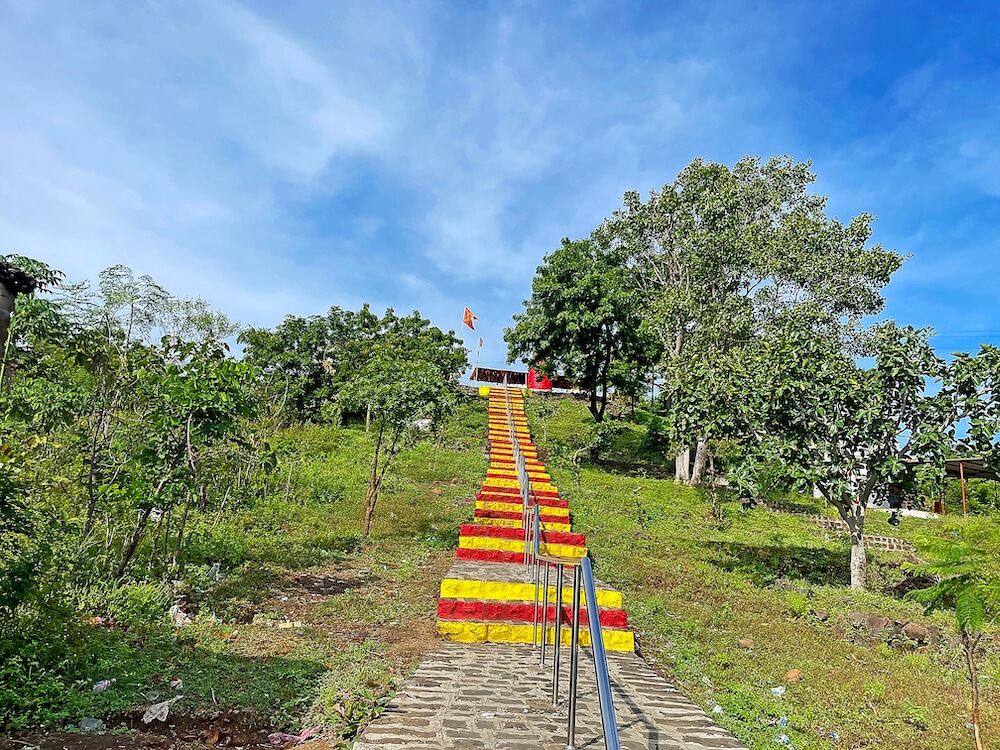
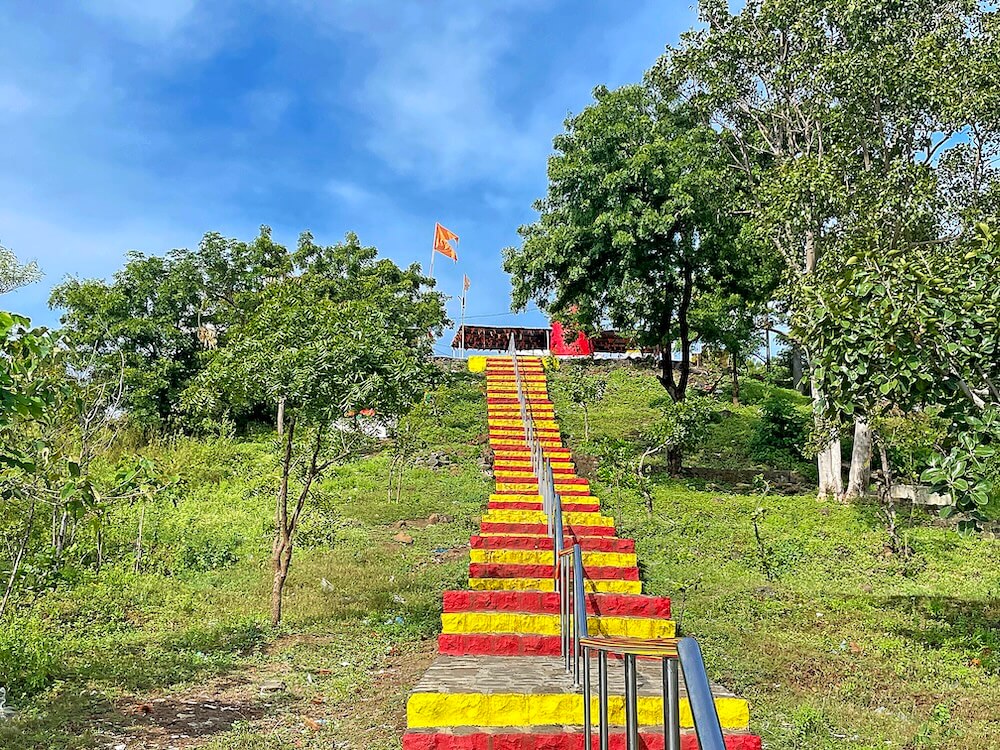
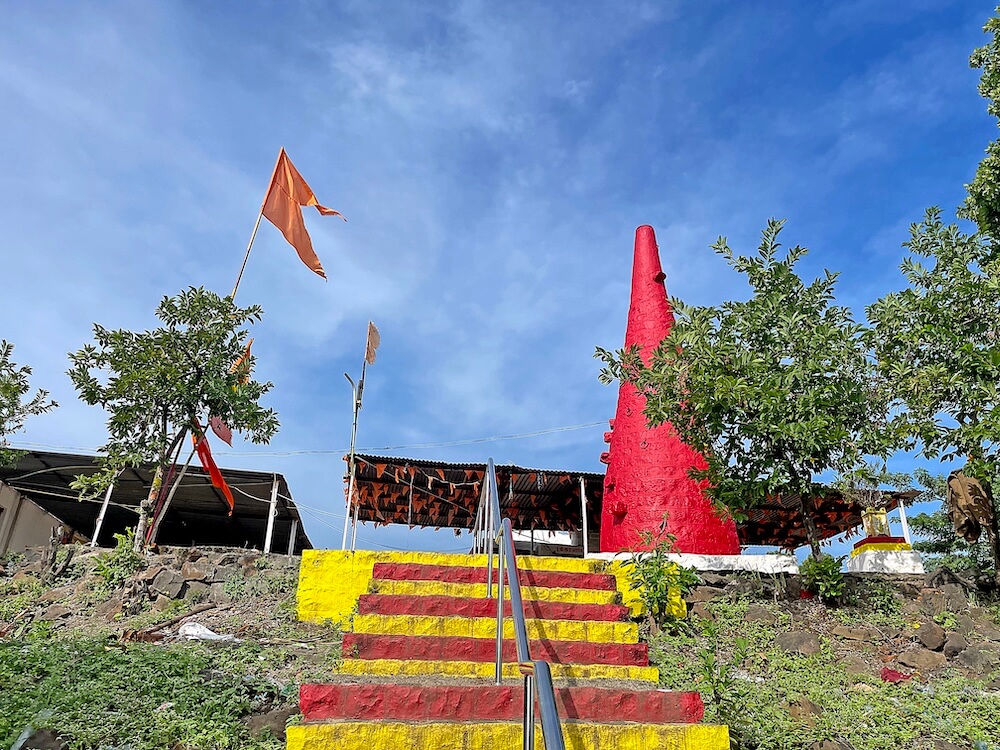
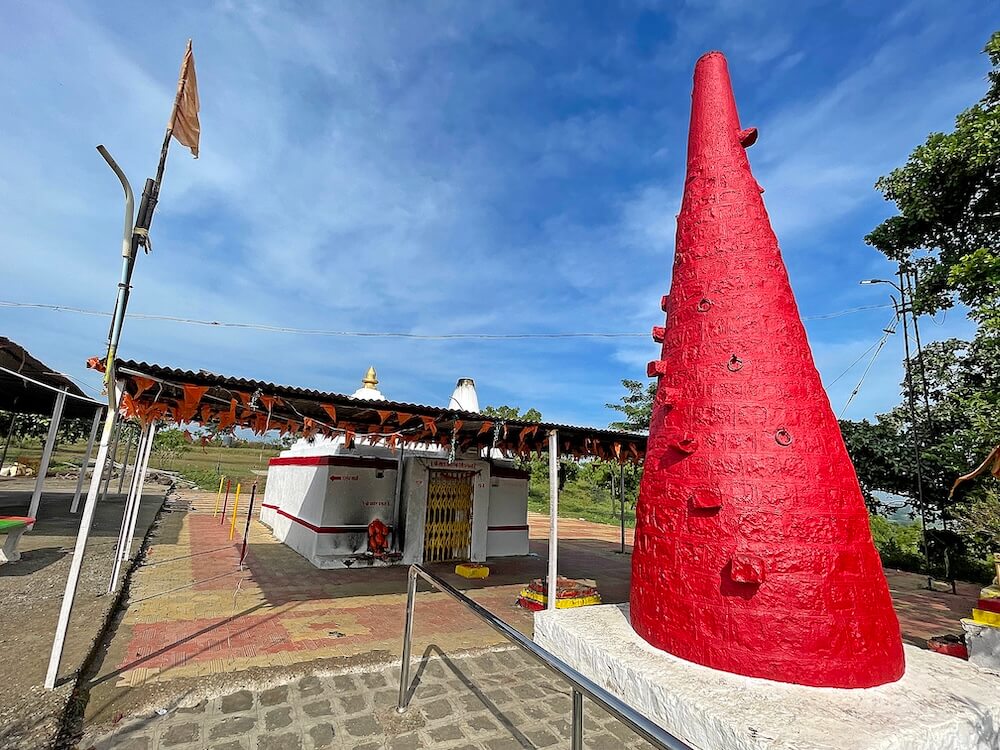
To reach the temple on the hilltop at Dongargaon, there are about sixty steps built of carved stone. A stainless steel safety railing runs from top to bottom in the middle of the stairs, creating two separate paths for ascending and descending. Painted in red and yellow oil colors, these steps look as if they are adorned with offerings of turmeric and vermilion. After climbing the stairs, one enters the temple courtyard, which is paved with paver blocks. In the courtyard, in front of the temple, stands a stone lamp pillar (Deepstambha) about thirty feet high. There is a covered pavilion (Rangamandap) with a tin roof supported by iron pillars in front of the temple, where seating arrangements are provided for devotees. According to the local priests, this temple, built in the Hemadpanti style of stone masonry, dates back to approximately the sixteenth century.
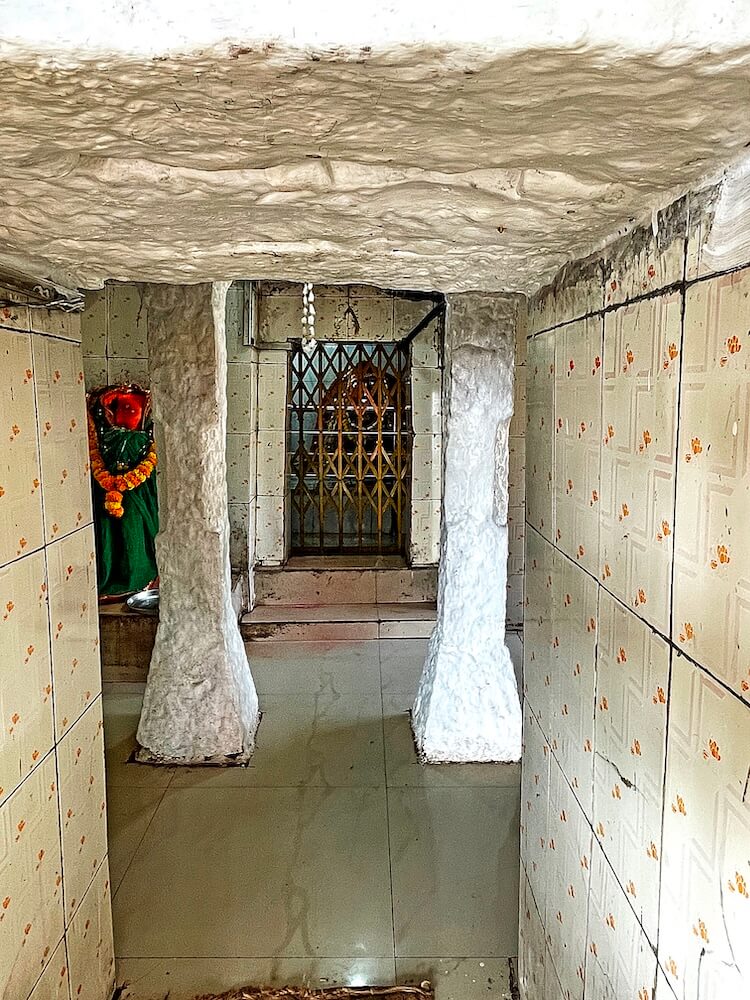
The temple consists of a Sabha Mandap (assembly hall) and a Garbhagriha (sanctum sanctorum). In front of the entrance to the Sabha Mandap, the footprints of the Goddess are carved on a square stone. To the left of the entrance, near the front wall, is a vermilion-smeared stone idol of Lord Ganesha. The Sabha Mandap has two ornate square pillars. There are idols of deities in the niches on the right and left walls of the Sabha Mandap. Since the Garbhagriha is at a higher level than the Sabha Mandap, there are two steps leading to its entrance. On the lintel above the entrance to the Garbhagriha, there is an idol of Lord Ganesha. Inside the Garbhagriha, against the back wall, is the self-manifested Tandala-style idol of Renuka Devi on the ground. In front of this idol are the stone Padukas (footprints) of the Goddess. The ceiling of the Garbhagriha features a twelve-sided carved stone dome with a lotus flower design in the center.
On the roof of the temple, near the entrance, there is a tall, tapering spire shaped like a lamp pillar. It appears unique as it lacks a finial (Kalash). The roof of the Garbhagriha has a pyramid-like spire with fourteen square steps tapering upwards, topped with an Amalaka and a Kalash. There is a Dharmashala (pilgrim rest house) building on the right side of the temple courtyard.
Chaitra Navaratri and Sharadiya Navaratri are the two main annual festivals celebrated here with great enthusiasm. During these times, thousands of devotees from the district come to seek the Goddess’s blessings and fulfill their vows. Throughout both Navaratri festivals, programs such as Bhajans and Kirtans are organized at the temple for all ten days.
This sacred temple stands as a testament to deep spiritual devotion, ancient architectural grandeur, and rich local cultural traditions.
The sanctum sanctorum houses the divine idol consecrated according to ancient Vedic traditions, surrounded by serene courtyards and traditional temple architecture.
Navratri, Maha Shivratri, Annual Temple Jatra & Deepotsav
Compare and book flights, secure top-rated local hotels near the temple, hire reliable guides, and rent cars instantly.
Extend your pilgrimage by visiting other highly sacred temples located nearby.


Add ₹999 more to unlock FREE SHIPPING!
Your sacred cart is currently empty.
Shop Photo FramesFill in your delivery details below to place your order.
Add comment