
Add ₹999 more to unlock FREE SHIPPING!
Your sacred cart is currently empty.
Shop Photo FramesThe Kedarnath Temple, one of the twelve Jyotirlingas in India, is situated in the Rudraprayag district of Uttarakhand state at an altitude of approximately 3,500 meters above sea level. After the Mahabharata war, when the five Pandavas set out to seek the darshan of Lord Shiva to cleanse themselves of the sins committed, they were blessed with the Panch Kedar darshan of Lord Shiva in various forms at five places: Kedarnath, Tungnath, Rudranath, Madhyamaheshwar, and Kalpeshwar. Renowned as the Dakshinpeeth (Southern Seat) of this very Kedarnath, a temple is situated on the Kedarguda hill in Hadgaon taluka. The Shivlinga here, which is submerged about five feet deep into the ground, is also revered as ‘Gupt Kedar’.
It is said that this stone temple built in the Hemadpanthi style of architecture is about 900 years ancient. According to legend, when Lord Mahadev left Kashi and went to Uttarakhand, He resided incognito at Guptkashi there. Thereafter, Lord Mahadev manifested Himself at five places. One of these is this sacred place of Kedarguda in the Dandakaranya region, known by the name of Gupt Kedar. Devotees firmly believe that sprinkling water from the Chakratirtha Kunda, situated in front of the temple, onto their fields brings abundance and prosperity to the crops.
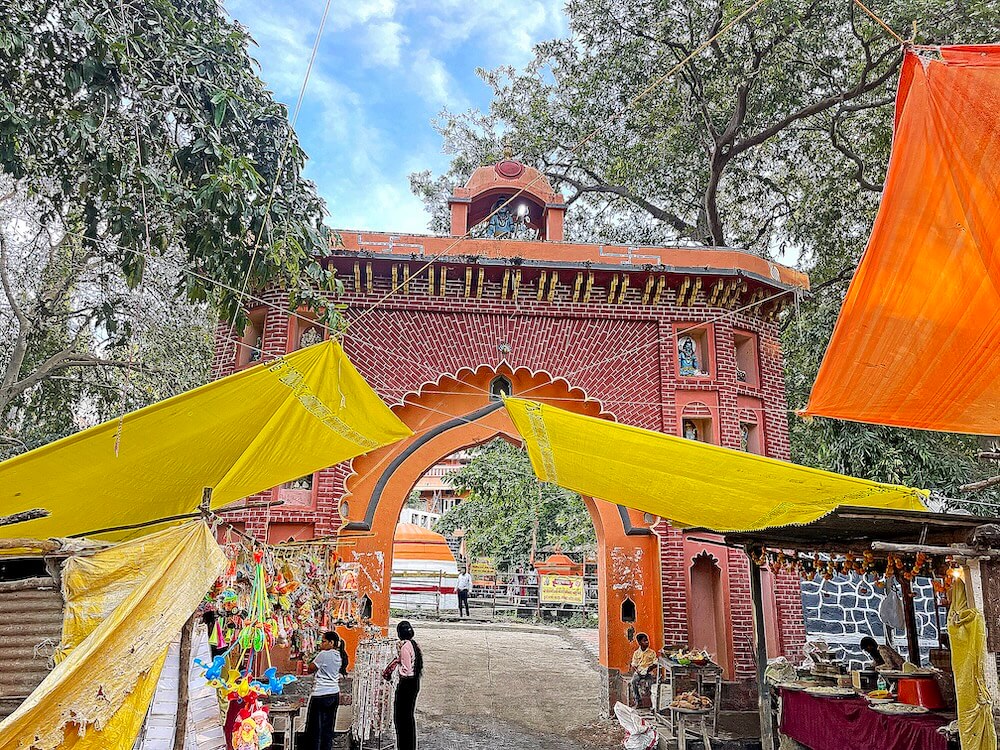
A well-paved asphalt road leads to the temple, and on both sides of the road in front of the entrance, there are shops selling Prasad and puja items. Spread over an expanse of about 32 acres, this temple is enclosed by a strong protective wall. There is a grand entrance gate within the outer wall. On both sides of the stone-built original entrance, there are square brick pillars. On these pillars, arranged in three tiers, are two niches (Devakoshthakas) in each tier containing divine idols. In the center of the balcony above the pillars, within a canopy (Meghadambari), stands an idol of Lord Mahadev. Above the canopy is a domed spire (shikhara) topped with a Kalash. On both sides of the entrance wall, there are deep-koshthakas (niches for lamps), and an arched canopy adorns the entrance.
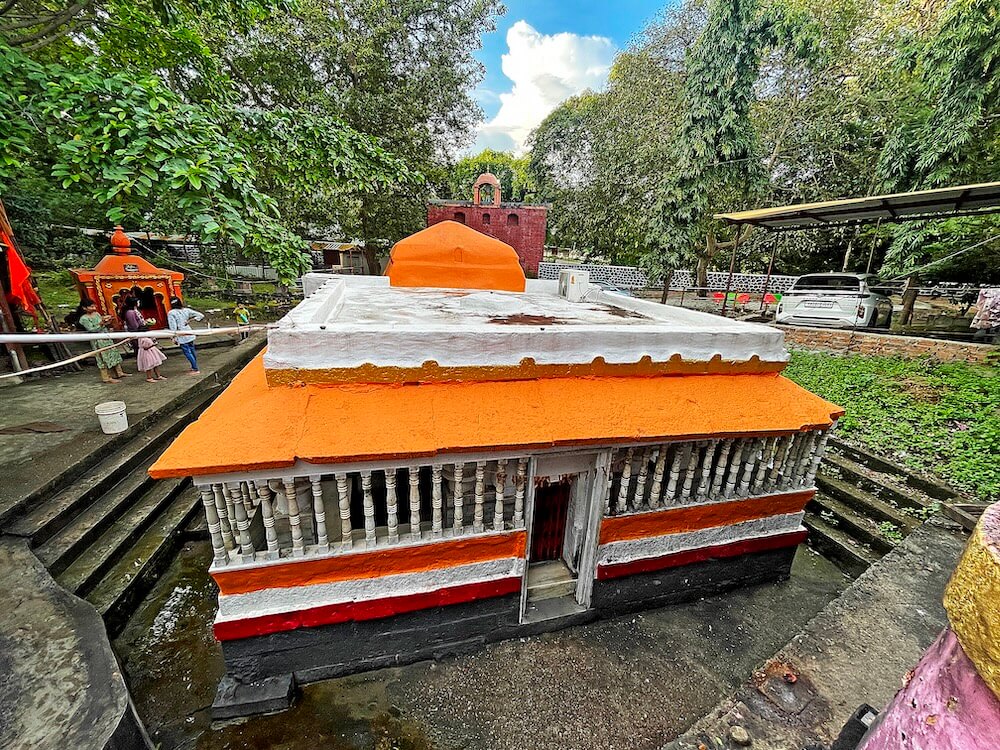
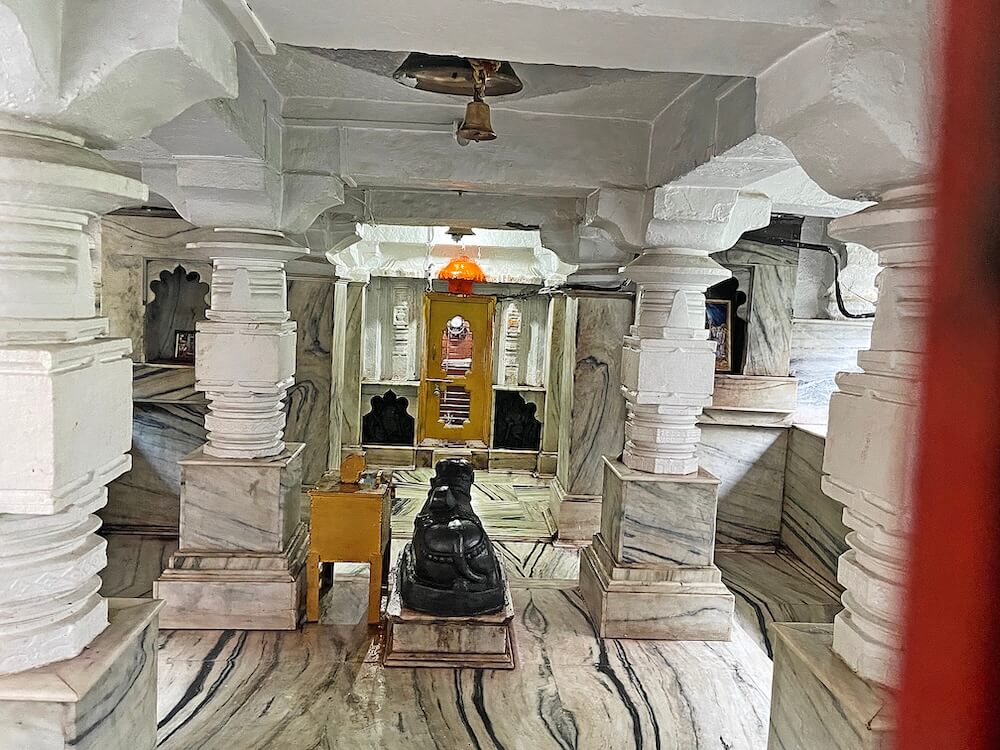
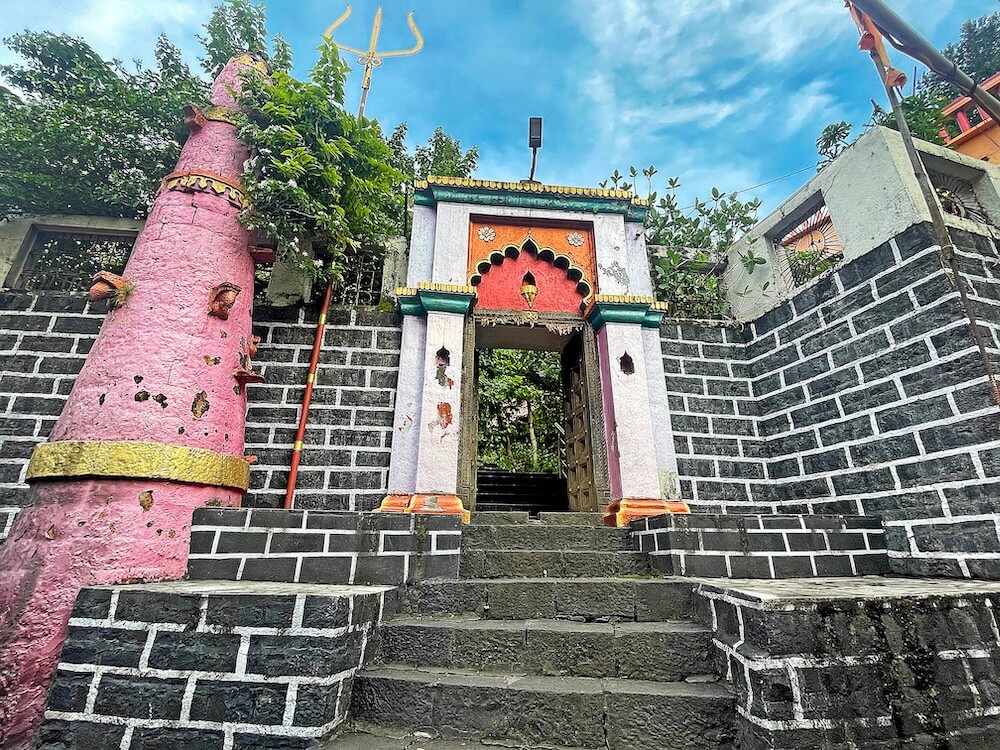
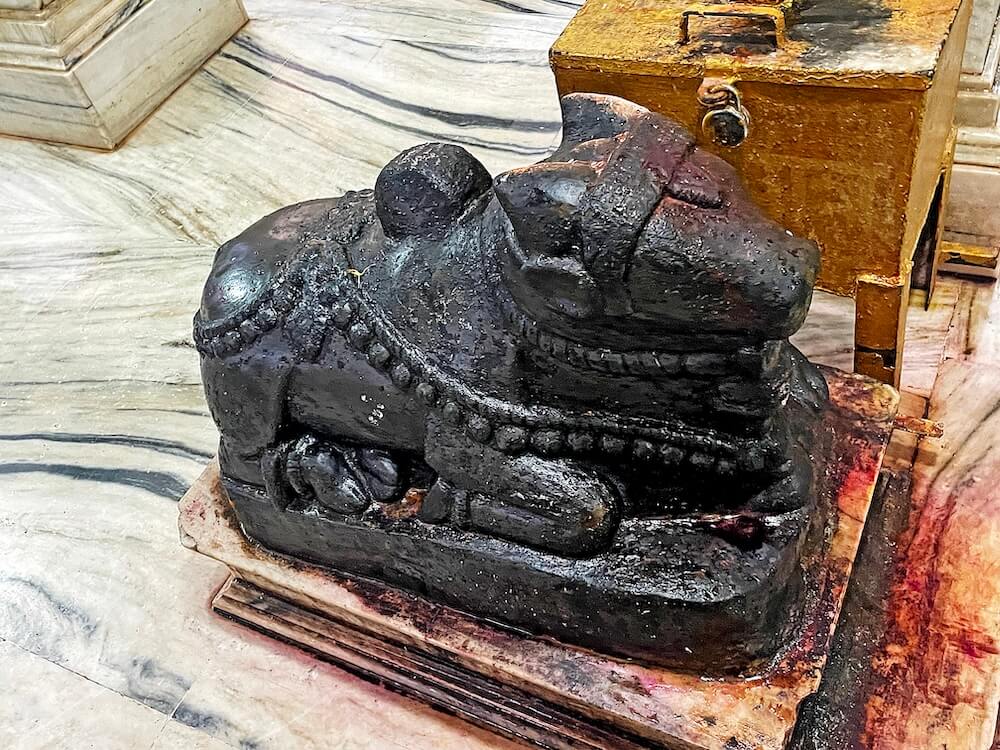
There are two more entrances in the temple’s outer fortification. In the courtyard, near the entrance on the right side, stands a three-tiered circular Deepmaal (lamp tower). The tiers of the Deepmaal are separated by circular rings. To reach the temple, which is located in a sunken area of the courtyard, one has to descend about seven steps surrounding the temple structure. Ahead lies the entrance to the hall (Sabhamandap). There are two steps in front of the entrance. The semi-open Sabhamandap features four rows of four carved pillars each. The bases of the pillars are square, and the shafts are in various geometric shapes such as square, hexagonal, octagonal, and circular. At the top are circular moldings and brackets, supporting the beams, over which rests the ceiling. The canopy is hexagonal, and a brass bell hangs from the ceiling. Leaving space for the circumambulation path (pradakshina marga), elevated stone seating ledges (Kakshasanas) are provided in the Sabhamandap for devotees to sit. The outer pillars are positioned within these Kakshasanas. Small marble balusters reaching up to the beams are installed upon the Kakshasanas. The floor, the Kakshasanas, and the lower three feet of the pillars in the Sabhamandap are clad in marble flooring. In the center of the Sabhamandap, atop a Vajrapeeth, stands a black stone idol of Nandi. To the left and right of Nandi are exit doors leading out from the hall. On the wall of the Sabhamandap facing the vestibule (Antarala), there are niches containing idols of deities. Ahead lies the Antarala. In the Antarala, on both sides of the sanctum (Garbhagriha) entrance, are niches adorned with four-armed Pratihari (Dwarpala) sculptures sculpted in black stone. The Dwarpalas hold a conch (Shankha), discus (Chakra), and mace (Gada) in three hands, while one hand is in a blessing posture. Crowns on their heads and attire on their bodies are intricately carved. At the feet of the Dwarpalas, sculptures of Shakti are depicted on both sides.
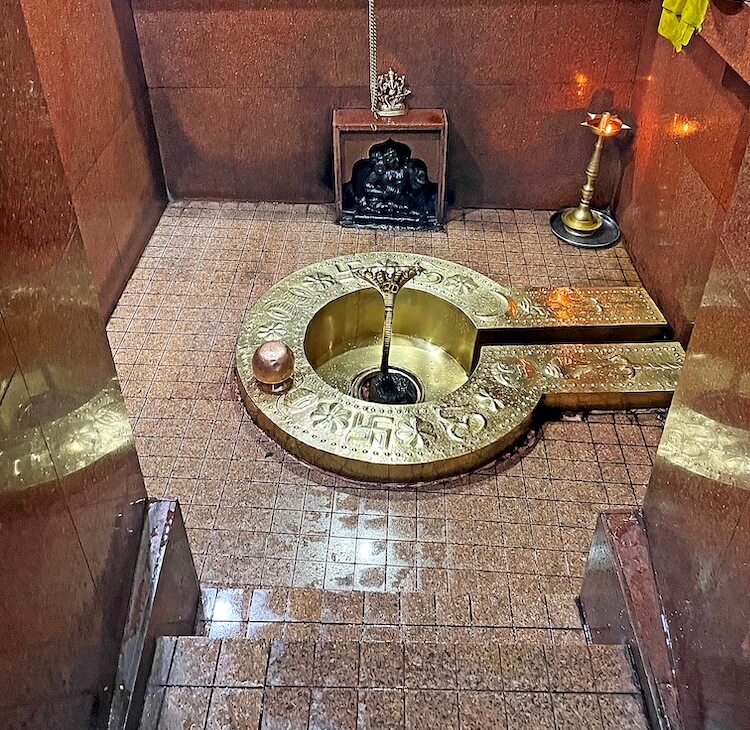
The doorframes of the Garbhagriha feature vertical line carvings, and an idol of Lord Ganesha is adorned at the center of the lintel (Lalatabimba). The Garbhagriha is lower than the Antarala, requiring one to step down two stairs to enter. Inside the Garbhagriha lies the Shivlinga on the ground. The brass Shalunka of the Shivlinga is at ground level, while the stone Linga itself extends about five feet deep into the earth. A brass serpent canopy shields the Shivlinga. An uninterrupted stream of water flows over this Shivlinga. The floor, walls, and ceiling of the Garbhagriha are finished with marble tiles.
In the temple complex, there are various medicinal plants, trees, and ancient samadhis. The complex also houses a Goddess Durga temple, a Maruti (Hanuman) temple, and several small shrines containing Shivlingas. There is a large circular stone in the courtyard. Devotees believe that lifting it onto one’s shoulder and circumambulating the temple fulfills one’s wishes. In the courtyard lies the fresh-water Chakratirtha Kunda with stone walls. Devotees believe that applying this water to their fields prevents diseases in crops and yields a bountiful harvest. Protective netting surrounds the Kunda. The temple complex includes residences for priests and mahants, a Bhakta Niwas (pilgrim rest house), and an Annachhatra (free meal hall). Every day from 9:00 AM to 2:00 PM, Mahaprasad is served to the devotees.
Mahashivratri is celebrated as the main annual festival at the temple with great fervor. On this auspicious occasion, thousands of devotees from across the state visit to seek the Lord’s darshan and fulfill their vows. A grand fair is held at the temple on the day of Falgun Vadya Pratipada. During both annual festivals, various religious programs are organized. The day begins with the Laghu Rudrabhishekam of the Lord, followed by bhajans, kirtans, devotional music, and distribution of Mahaprasad throughout the day. Devotees can have darshan of Kedarnath Mahadev at this temple daily from 5:30 AM to 5:30 PM.
This sacred temple stands as a testament to deep spiritual devotion, ancient architectural grandeur, and rich local cultural traditions.
The sanctum sanctorum houses the divine idol consecrated according to ancient Vedic traditions, surrounded by serene courtyards and traditional temple architecture.
Navratri, Maha Shivratri, Annual Temple Jatra & Deepotsav
Compare and book flights, secure top-rated local hotels near the temple, hire reliable guides, and rent cars instantly.
Extend your pilgrimage by visiting other highly sacred temples located nearby.


Add ₹999 more to unlock FREE SHIPPING!
Your sacred cart is currently empty.
Shop Photo FramesFill in your delivery details below to place your order.
Add comment