
Add ₹999 more to unlock FREE SHIPPING!
Your sacred cart is currently empty.
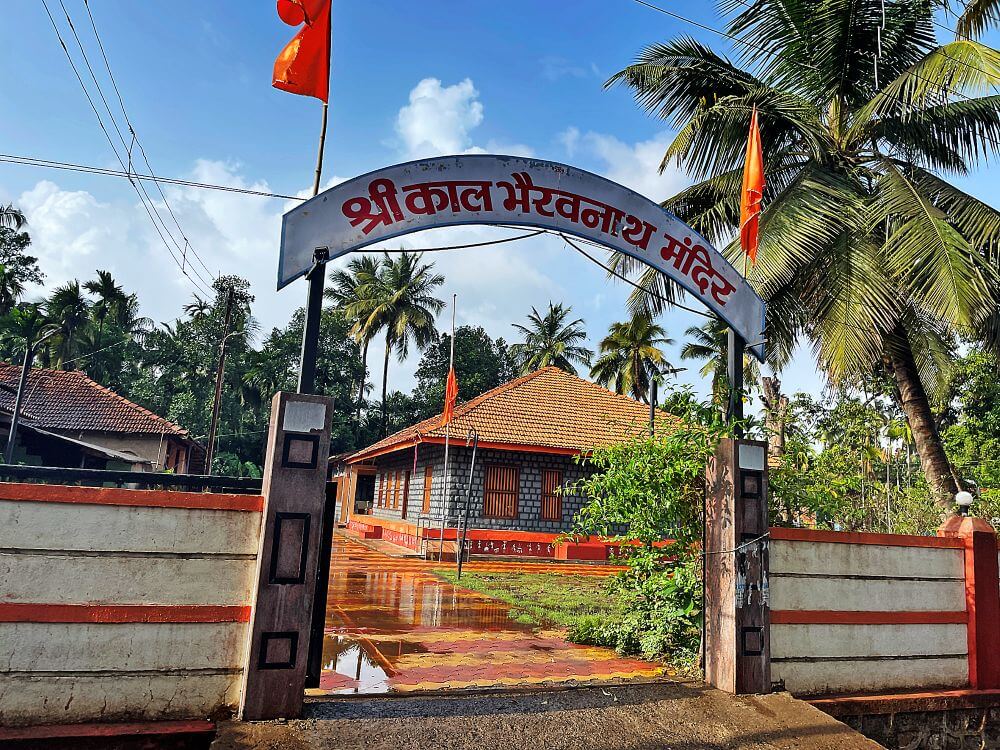
Shop Photo FramesBhairava is the fierce and formidable form of Lord Shiva. The southern face of the five-faced Shiva is also known as Bhairava. He is also considered one of the principal Ganas (attendants) of Shiva. According to the Shaiva Agamas, there are eight classes of Bhairavas, totaling sixty-four in number. The leaders of these eight classes are known as the Ashtabhairavas. Kalbhairava is one of these Ashtabhairavas. He is referred to as the ‘Kotwal’ (Guardian) of Kashi. Devotees believe that the Kalbhairavnath Temple in Shrivardhan is a seat of this very Guardian of Kashi. Consequently, it is the firm belief of devotees that vows made to Kashi can be fulfilled here as well.
The mythological legend regarding the origin of Kalbhairava states that once, a great conflict arose between Brahma and Vishnu over who was supreme. At that moment, Lord Shiva manifested from a Shiva Linga and mediated the dispute. During this, Lord Brahma insulted Shiva. From the fire of Shiva’s wrath, the dark-complexioned Bhairava was born. He severed Brahma’s fifth head, which had dared to blaspheme Shiva. However, this act burdened him with the sin of Brahma-hatya (killing a creator). Despite visiting all the holy pilgrimage sites, the sin could not be absolved until he finally attained liberation from it in Kashi. Since then, Kalbhairava has resided in Kashi. The ‘Bharatiya Sanskriti Kosha’ provides the prayer mantra for Kalbhairava as: “Kapalamalikakantam jvalapavakalochanam | Kapaladharamatyugram kalaye Kalbhairavam ||” This means: I worship the fierce Kalbhairava, who is adorned with a garland of skulls, whose eyes emit flames of fire, and who holds a skull in his hand. This gives us an idea of Kalbhairava’s form.
Regarding the Kalbhairava of Shrivardhan, a legend is told that there is a temple of Kalbhairava in Harihareshwar. The fame of this Kalbhairava had spread far and wide, eventually reaching the ears of the principal Kalbhairava, the Guardian of Kashi. With the intention of personally witnessing the work of the Harihareshwar Kalbhairava, the Kalbhairava of Kashi set out, intending to meet him and then return to Kashi. Upon hearing this news, the Harihareshwar Kalbhairava stood facing north to welcome the Kalbhairava of Kashi. However, the Kalbhairava of Kashi only reached Shrivardhan when the morning rooster crowed. Consequently, the Kalbhairava of Kashi settled in Shrivardhan itself, and the Harihareshwar Kalbhairava, who had turned north to welcome him, remains standing facing north. Thus, devotees believe that the Kalbhairava here is indeed the one from Kashi.
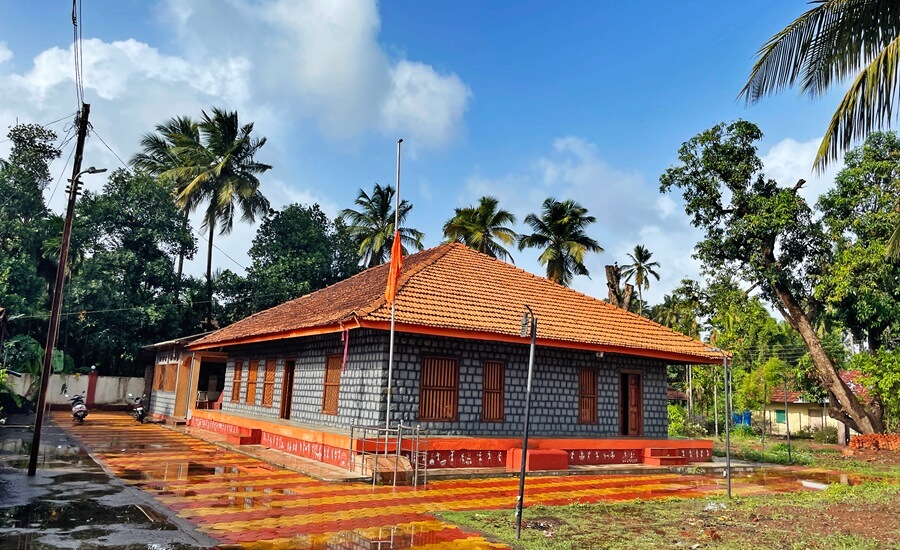
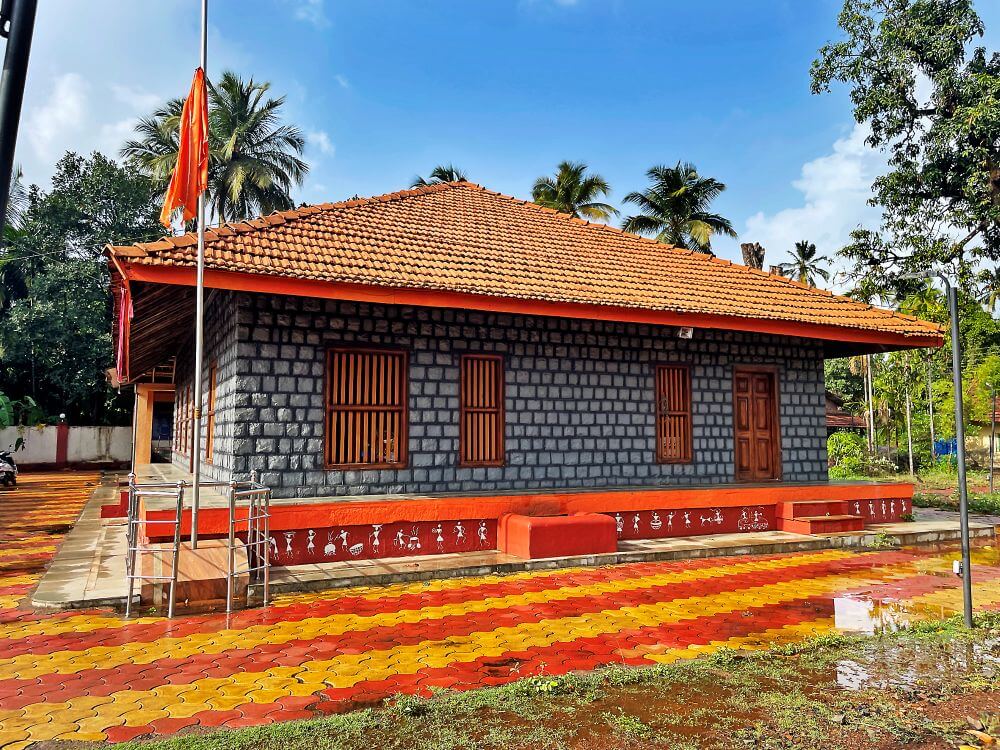
The south-facing Kalbhairava temple in Shrivardhan is surrounded by a spacious courtyard on all four sides. The temple is ancient, but since its exact history is unknown, it is said to date back to the Pandava era. The temple is built in the Konkani architectural style, featuring stone masonry and a sloping tiled roof. It stands in the center of a grand plinth. The Warli paintings on the plinth further enhance the beauty of the temple.
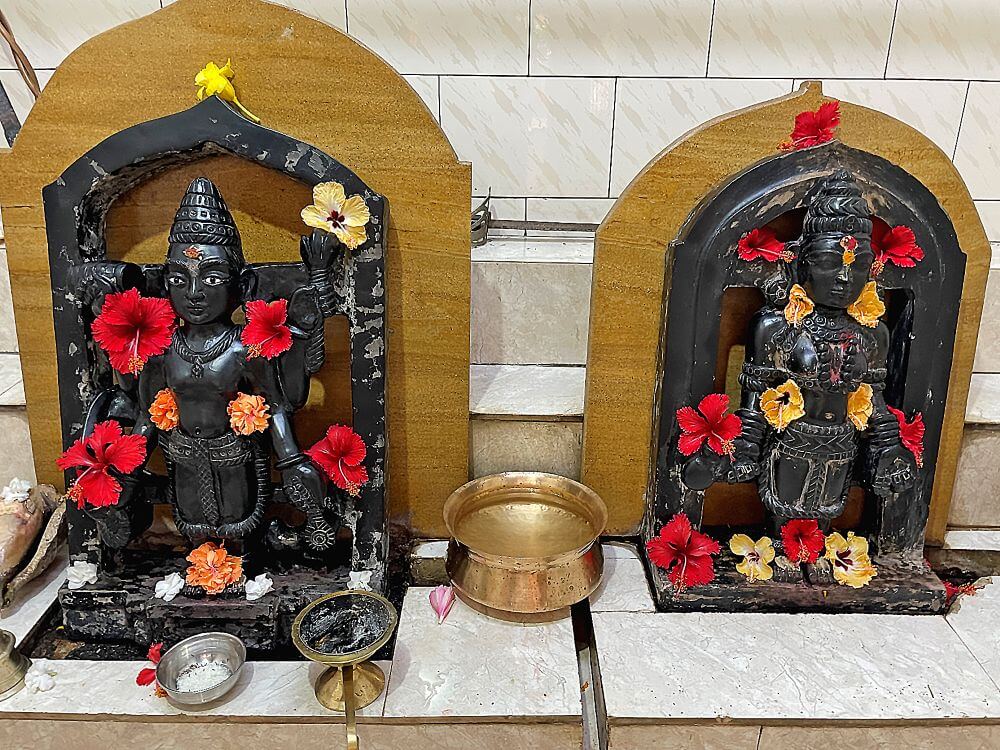
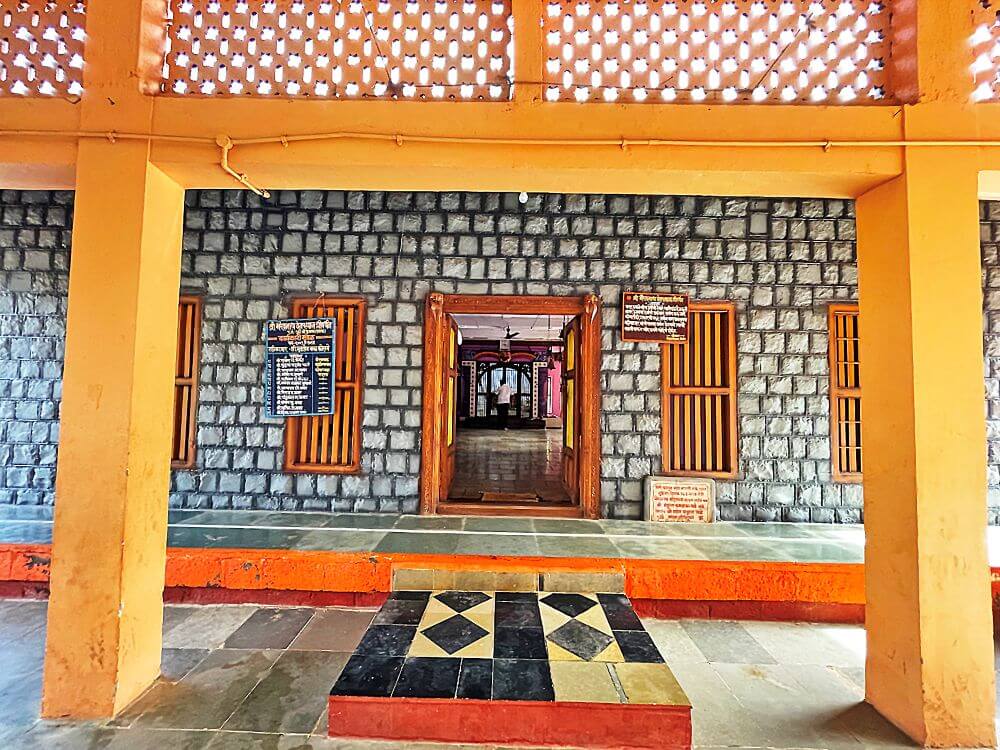
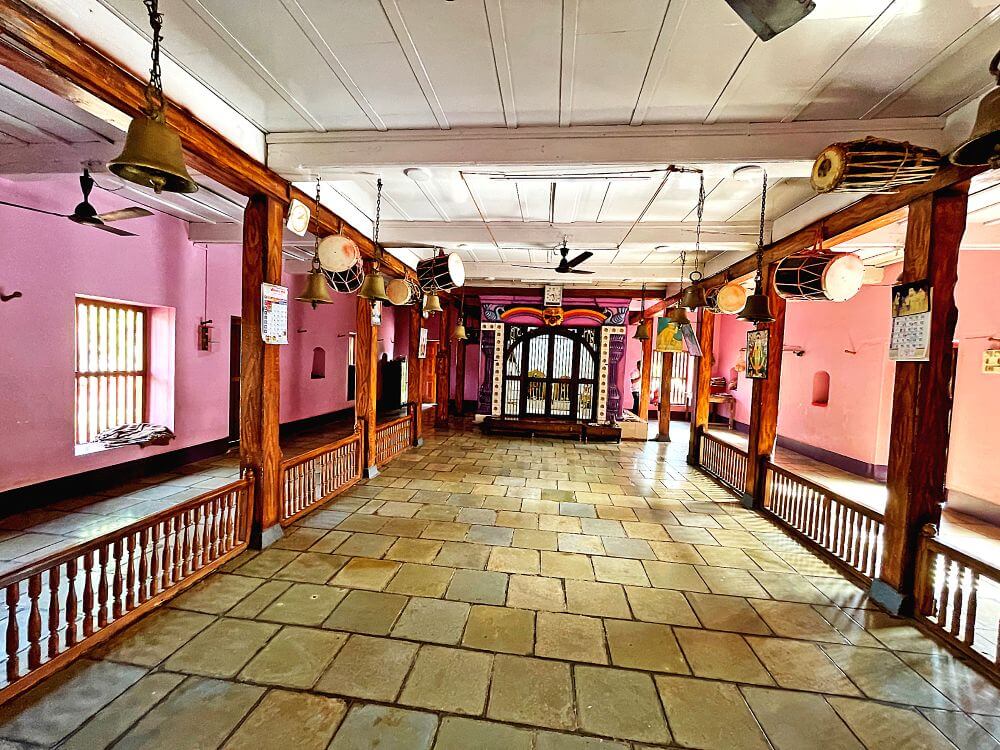
The temple structure consists of a front assembly hall (Darshani Sabhamandap), a main assembly hall (Mukhya Sabhamandap), and the sanctum sanctorum (Garbhagriha). The front assembly hall is semi-open and has seating benches for devotees. A lamp pillar (Deepstambha) stands in the middle of this hall, known as the Tripura Stambha. During the festival of Tripurari Purnima, hundreds of lamps are lit here, bathing the temple in light. Thousands of devotees from Shrivardhan attend the Tulsi Vivah held here on this same day. The main assembly hall is enclosed, with large, numerous windows that ensure ample light and ventilation. The interior features wooden decorations and houses several large bells. Above the door of the sanctum sanctorum is a Kirtimukha. Inside the sanctum are the idols of Kalbhairavnath and Jogeshwari Mata. On one side of these idols stands Veerabhadra, and on the other, the Kshetrapal. There is sufficient space in the sanctum for circumambulation (Pradakshina). Along the circumambulation path, there are shrines for the guardians of Kalbhairava.
On the full moon day of Paush (Paush Purnima), which is the day of Shakambhari Mata—a gentle form of the primordial energy Jagadamba—the palanquin of Kalbhairava is taken out in a procession. This is referred to as “Dev Pardhila Nighale” (The Deity sets out for a hunt). This is one of the most important festivals at the temple. On this day, the palanquin is carried in a procession to a traditionally designated spot. A mark is left there, and the palanquin returns. Later, on Magh Purnima, they go to that spot to “bring back the deity,” meaning to retrieve the mark. On that occasion, offerings of non-vegetarian food and liquor are made, and the palanquin returns to the temple along the same route, receiving Aartis from the villagers and officials. There is a tradition of offering non-vegetarian food and liquor to the deity Kalbhairava. On the day of his festival, villagers who have moved away for work or business make it a point to return.
This sacred temple stands as a testament to deep spiritual devotion, ancient architectural grandeur, and rich local cultural traditions.
The sanctum sanctorum houses the divine idol consecrated according to ancient Vedic traditions, surrounded by serene courtyards and traditional temple architecture.
Navratri, Maha Shivratri, Annual Temple Jatra & Deepotsav
Compare and book flights, secure top-rated local hotels near the temple, hire reliable guides, and rent cars instantly.
Extend your pilgrimage by visiting other highly sacred temples located nearby.


Add ₹999 more to unlock FREE SHIPPING!
Your sacred cart is currently empty.
Shop Photo FramesFill in your delivery details below to place your order.
Add comment