
Add ₹999 more to unlock FREE SHIPPING!
Your sacred cart is currently empty.
Shop Photo FramesSituated on the banks of the Karha River in the Baramati taluka of Pune district, the ancient Kalbhairavnath Temple stands as a testament to the historical glory of Loni Bhapkar village. This 12th-century Yadava-era temple is considered a sacred place of worship for many devotees in the Pune district. Kalbhairav, the fierce manifestation of Lord Shiva—where ‘Kal’ means time and ‘Bhairav’ means the formidable protector—represents this profound concept. Thousands of devotees visit this temple every year to seek the blessings of Kalbhairav, who is regarded as the guardian of the village. A grand five-day fair is held here every year on Chaitra Vadya Ashtami. The main attractions of this fair include the auspicious wedding ceremony of Kalbhairavnath and Goddess Jogeshwari, along with the Palkhi Chhabina procession.
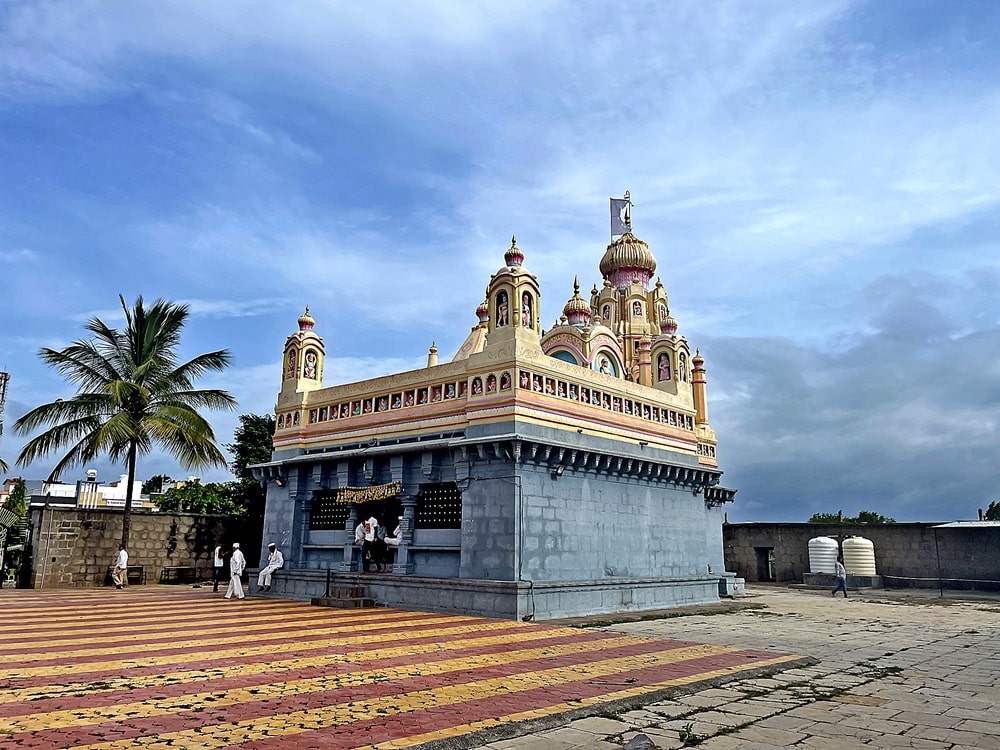
The historical journey of this temple is primarily divided into two periods. The original foundation of the temple was laid during the Yadava rule in the 12th and 13th centuries. As the Yadava kings were ardent devotees of Shiva, they commissioned many temples in the Hemadpanti and Bhumija architectural styles in this region. Over time, during the expansion of the Maratha Empire in the 18th century, the temple was revitalized. This village was granted as an Inam (gift) to Sonaji Gurkhoji Bhapkar, a loyal commander of Chhatrapati Shahu Maharaj and the Peshwas. Sardar Sonaji Bhapkar, who attained martyrdom after displaying unparalleled bravery in the Battle of Panipat in 1761, undertook a major renovation of this temple out of devotion to his family deity. During this restoration, the old Yadava-era stone structure was secured from the outside with Maratha-style stone fortifications, and a brick shikhara (spire) was added to the original temple.
Kalbhairav is considered the most fierce yet protective form of Lord Shiva. According to Puranic legends, when a dispute over supremacy arose between Brahma and Vishnu, Lord Shiva manifested Kalbhairav from his own radiance. Known as the Kotwal (guardian) of Kashi, this Kalbhairav site at Loni Bhapkar is considered a ‘Jagrut’ (awakened) place of power. According to legend, Sardar Bhapkar received a divine vision of Kalbhairav himself and sought the deity’s blessings before heading to the battlefield.
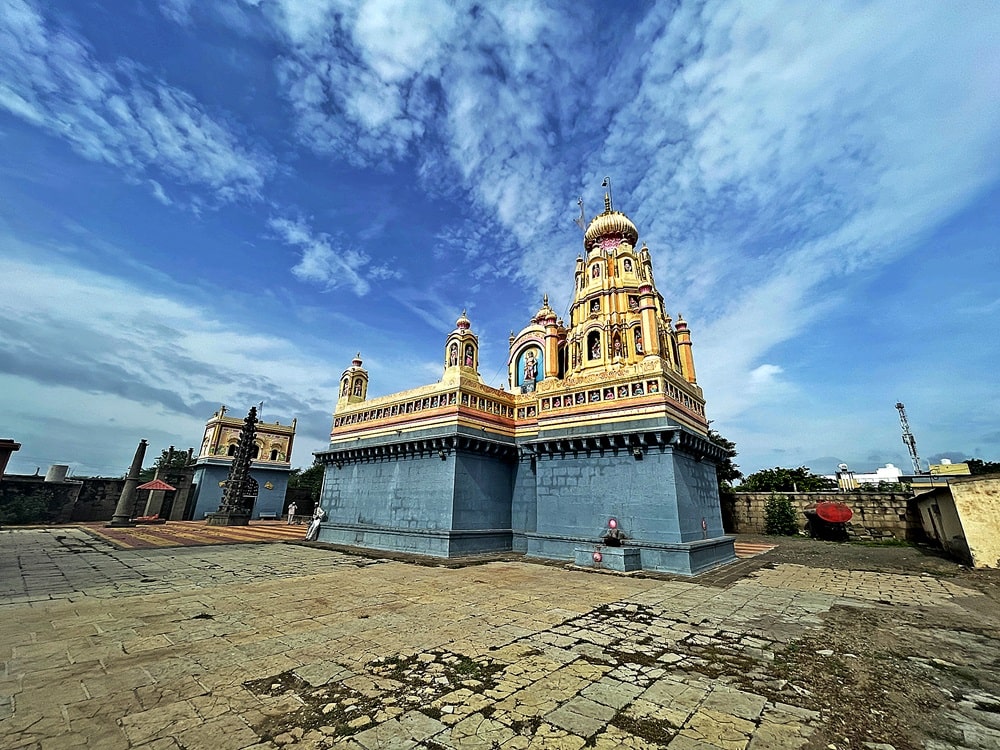
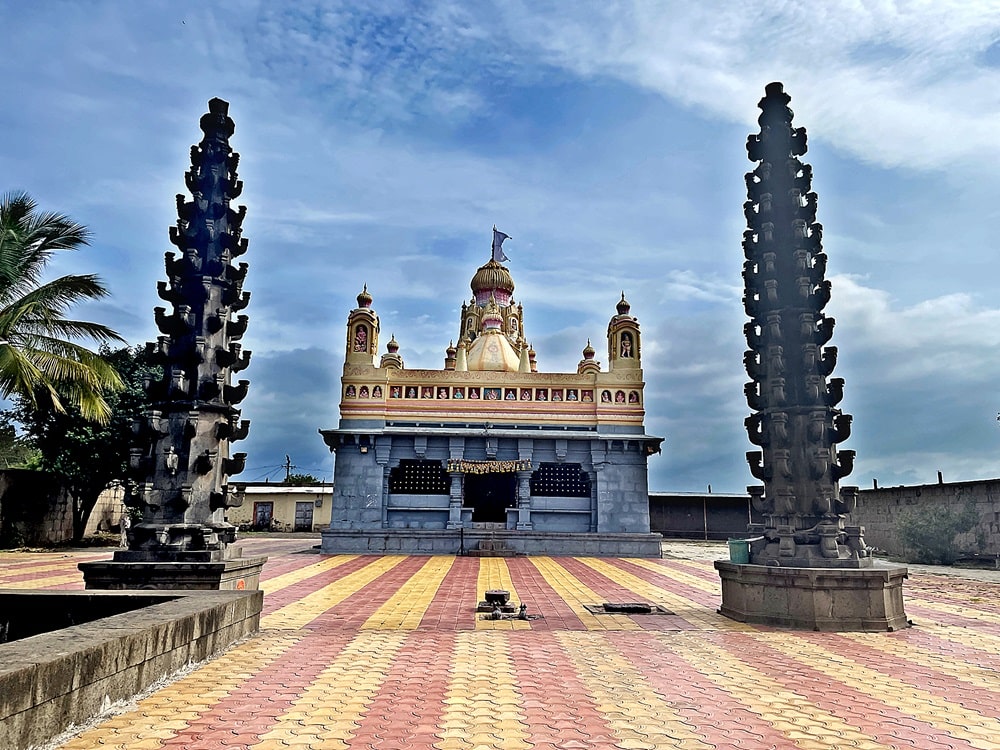
Loni Bhapkar is located 9 kilometers away from the Morgaon Ganpati Temple, one of the Ashtavinayakas. Upon reaching the main square of the village, the temple’s tall spire and stone fortifications catch one’s eye from a distance. The outer premises of the temple have the appearance of an impregnable fort. The fortification has entrance gates on the east, south, and north sides. The main east-facing entrance leads into the spacious courtyard of the temple. Near this entrance, on both sides, are sculptures of the mighty ‘Sharabha’ creature, depicted holding elephants under its feet. There is a Nagarkhana (drum house) above the western main gate, where faint remnants of old Maratha-era paintings can still be seen on the walls. Upon entering through this main gate, one sees a large Panchadhatu (five-metal) bell on the right. This bell was brought from a church by Chimaji Appa after defeating the Portuguese in the Vasai campaign of 1739 and was donated to the village by Sardar Bhapkar. It is still preserved here today. In the courtyard, in front of the temple, stand two tall and elegant stone Deepmalas (lamp towers). In the same premises, there is a stone-stepped Pushkarini (sacred pond).
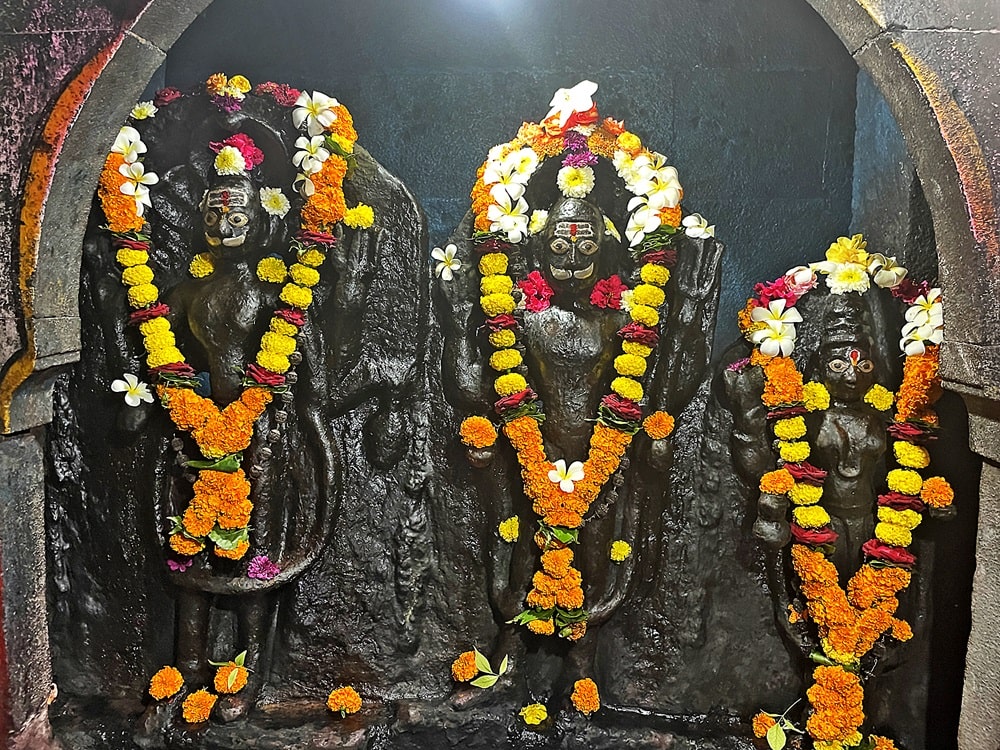
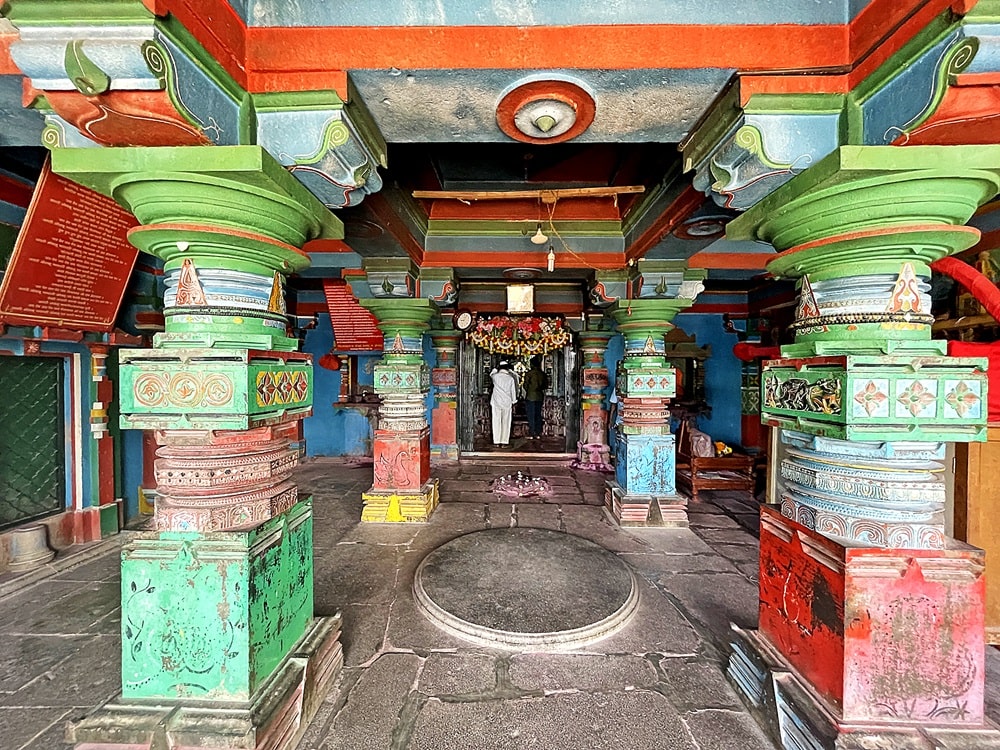
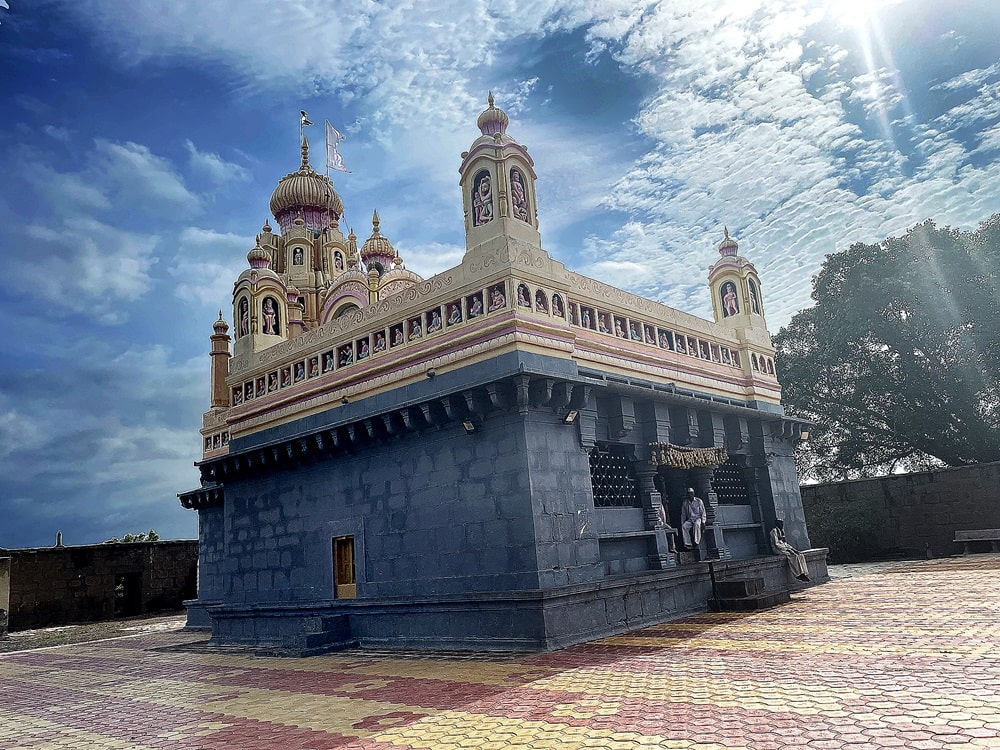
The main construction of the temple is divided into two major levels. The foundation of the temple and the lower part of the outer walls of the sanctum sanctorum are crafted in stone. The construction of the shikhara is done using lime and bricks. The temple, situated on a high jagati (platform), has pillar branches on both sides of the entrance. Near the ceiling above the entrance, there is a row of small niches. In the center of these is Ganpati, and to his left and right, in 18 niches, are statues of various deities, Ganas, and sages. This entrance leads into the Sabhamandap (assembly hall) of the temple. In the center of the Sabhamandap, between four pillars, is a circular Rangashila (dance floor). These pillars are intricately carved with scenes of hunters chasing wild boars, musicians playing the mridangam, and dancing Apsaras. The walls here feature skillfully carved designs of Nagas, Gandabherunda, the thousand-petaled lotus, and various serpentine patterns. The sanctum sanctorum of the temple is square, and its entrance is five-branched, with various sculptures carved onto these branches. Inside the sanctum, the black stone idols of Kalbhairavnath and Jogeshwari are seated on a Vajrapitha. Records indicate that these idols were installed by Sardar Bhapkar himself.
On the temple’s shikhara, various deities have been sculpted using brick and lime. The roof features Indo-Islamic style minarets at all four corners. There are three shikharas in total, one each over the Sabhamandap, the Antarala, and the Garbhagriha. The main shikhara over the sanctum has many niches. At the very top is a grand Amalaka, topped with a Kalash.
A grand five-day fair of Kalbhairavnath is held here on Chaitra Vadya Ashtami. On the first day of the fair, the ceremony of giving the deity a sacred bath and applying turmeric takes place. On the second day, the wedding ceremony of Kalbhairavnath and Goddess Jogeshwari is celebrated with great pomp. At this time, the ‘Manacha Kathya’ (ceremonial poles) arrive amidst the sound of Sanai and Chaughada. On the third and fourth days, the ‘Chhabina’ festival is organized, and the deity is taken in a procession through the entire village in a decorated palanquin. On the last day of the fair, a grand wrestling match is held, where many renowned wrestlers from Maharashtra showcase their skills. Along with this major fair, the festival of Nath Janmashtami is also celebrated with great enthusiasm in the month of Shravan. On this occasion, a seven-day Akhand Harinam Saptah is organized in the temple, featuring Dnyaneshwari recitations and Kirtan programs.
This sacred temple stands as a testament to deep spiritual devotion, ancient architectural grandeur, and rich local cultural traditions.
The sanctum sanctorum houses the divine idol consecrated according to ancient Vedic traditions, surrounded by serene courtyards and traditional temple architecture.
Navratri, Maha Shivratri, Annual Temple Jatra & Deepotsav
Compare and book flights, secure top-rated local hotels near the temple, hire reliable guides, and rent cars instantly.
Extend your pilgrimage by visiting other highly sacred temples located nearby.


Add ₹999 more to unlock FREE SHIPPING!
Your sacred cart is currently empty.
Shop Photo FramesFill in your delivery details below to place your order.
Add comment