
Add ₹999 more to unlock FREE SHIPPING!
Your sacred cart is currently empty.
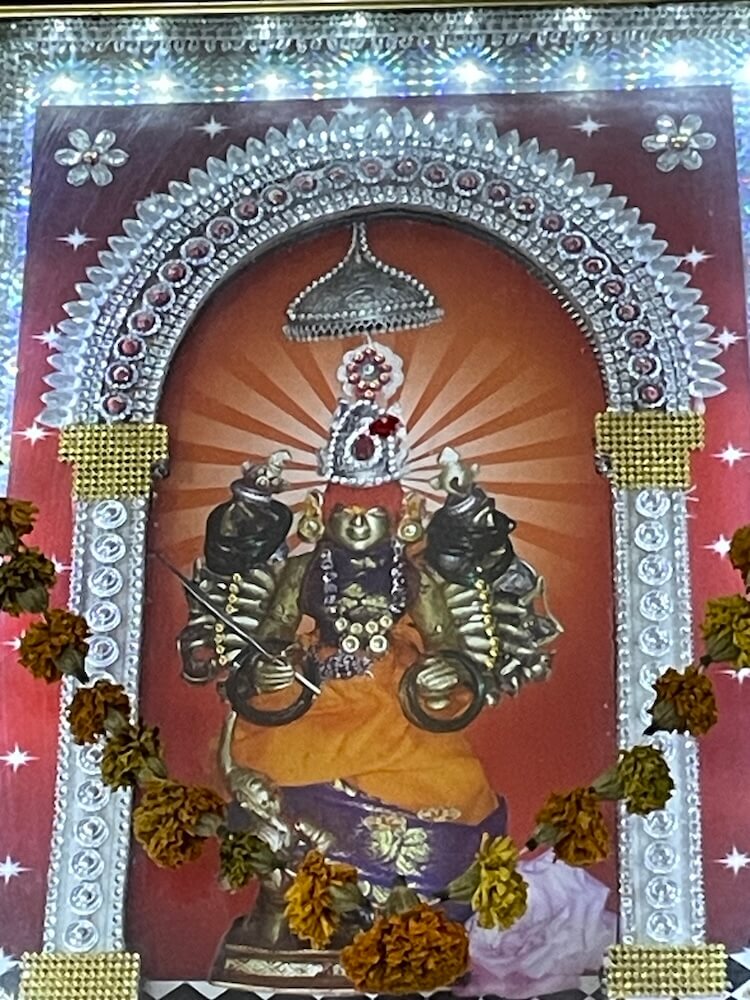
Shop Photo FramesThe Kamaksha Devi temple, situated within the fort (gadhi) of Kingaon Raja, which belonged to Raja Lakhujirao Jadhav—the father of Rajmata Jijau—is highly renowned. A popular legend states that about three hundred and fifty years ago, descendants of the royal Jadhav family discovered the idol of the Goddess inside a sack of grain. She is the presiding deity (Gram-Daivat) of this village. A grand five-day festival is celebrated here on the occasion of Gudi Padwa, featuring the performance of various divine characters (songs). The right to portray these characters is auctioned, and the family of the highest bidder earns this honor. Devotees gather in large numbers to witness this event.
‘Kamaksha’ means ‘one with loving eyes’ or ‘one whose very glance has the power to fulfill all desires.’ This form of the Goddess is described in the Devi Bhagavata Purana. Kamaksha Devi is considered a symbol of Adi Maya Shakti; she recognizes the heartfelt wishes of her devotees and blesses them. This name has a direct connection to the famous ‘Kamakhya’ Peetha in Guwahati, Assam. Since the Goddess at Kingaon Raja arrived from Guwahati, she is worshipped as Kamaksha Devi.
Raja Lakhujirao Jadhav had received a mansabdari of ten thousand, along with the watan of 28 mahals and 52 chavdis from Murtaza Nizam Shah. Kingaon was an important village in his estate. Lakhujirao had four sons: Dattaji, Achaloji, Bahadurji, and Raghuji. He bestowed the jagirs of Deulgaon to Dattaji, Mehunaraaja to Achaloji, Kingaon to Bahadurji, and Adgaon to Raghuji. These villages are situated approximately 13 km in the four cardinal directions from Sindkhed Raja. Because the kings resided in these villages, the word ‘Raja’ was added to their names.
According to historical records, on July 25, 1629, Nizam Shah summoned Lakhujirao to Devgiri Fort (Daulatabad) for urgent consultations. Lakhujirao appeared in the court along with his sons Achaloji and Raghuji, and his grandson Yashwantrao. However, this was a treacherous plot by the Sultan. As they entered the court, they were suddenly attacked. In the middle of the court, before the Sultan’s eyes, this pillar of Maratha history and his heirs were brutally murdered. This massacre caused irreparable loss to the Jadhav family. After the sacrifice of Raja Lakhujirao and his sons, his brother Raja Jagdevrao (Bhutji) Jadhav took over the administration of Sindkhed Raja and the surrounding region. At that time, the Kingaon Raja area was also under his supervision. A famine had struck the region, and to prevent the citizens from suffering due to a lack of food and water, Raja Jagdevrao had ordered grain from Guwahati in the state of Assam. The panchaloha (five-metal) idol of the Goddess arrived in one of the sacks of rice from that shipment. Since then, the Goddess has resided in the local fort. Villagers and devotees believe that this place is highly spiritually awakened (jagrut). It is the firm belief of the devotees that this Goddess answers prayers and rushes to the aid of those who call upon her. This fort was built in Kingaon during the time of Lakhujirao. Currently, the fort is in ruins, with only earthen ramparts and three bastions remaining. It is said that the fort previously spanned about half an acre and had four bastions. Members of Lakhujirao’s family lived in the three palaces within this fort. Today, 49 families of Lakhujirao’s descendants are settled in various parts, while only thirteen families reside in Kingaon Raja.
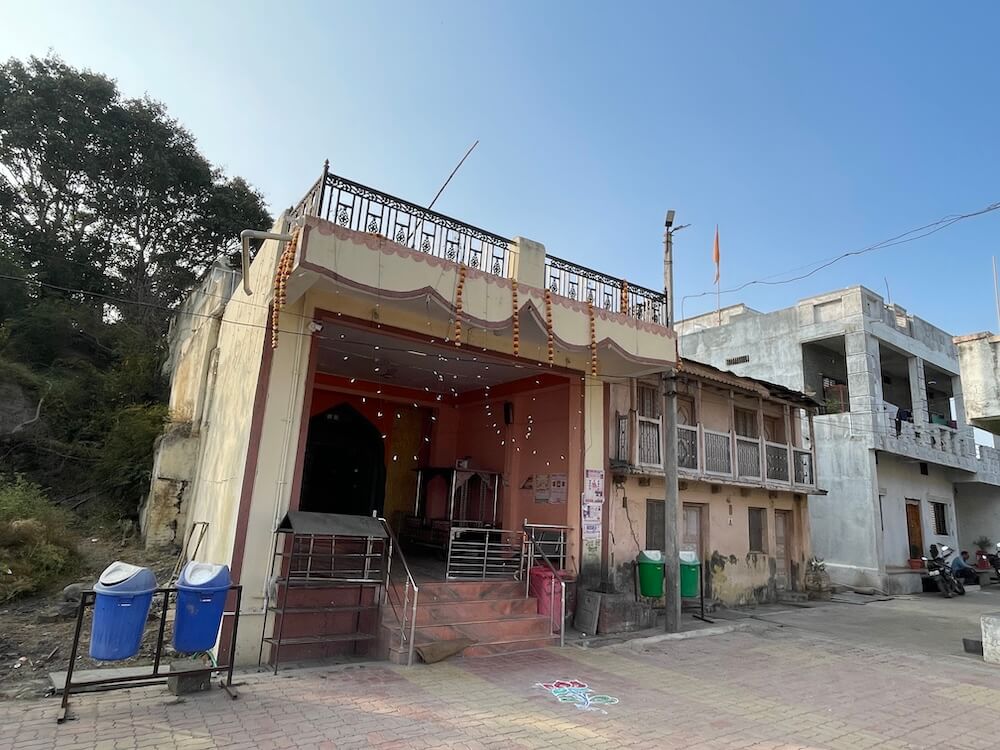
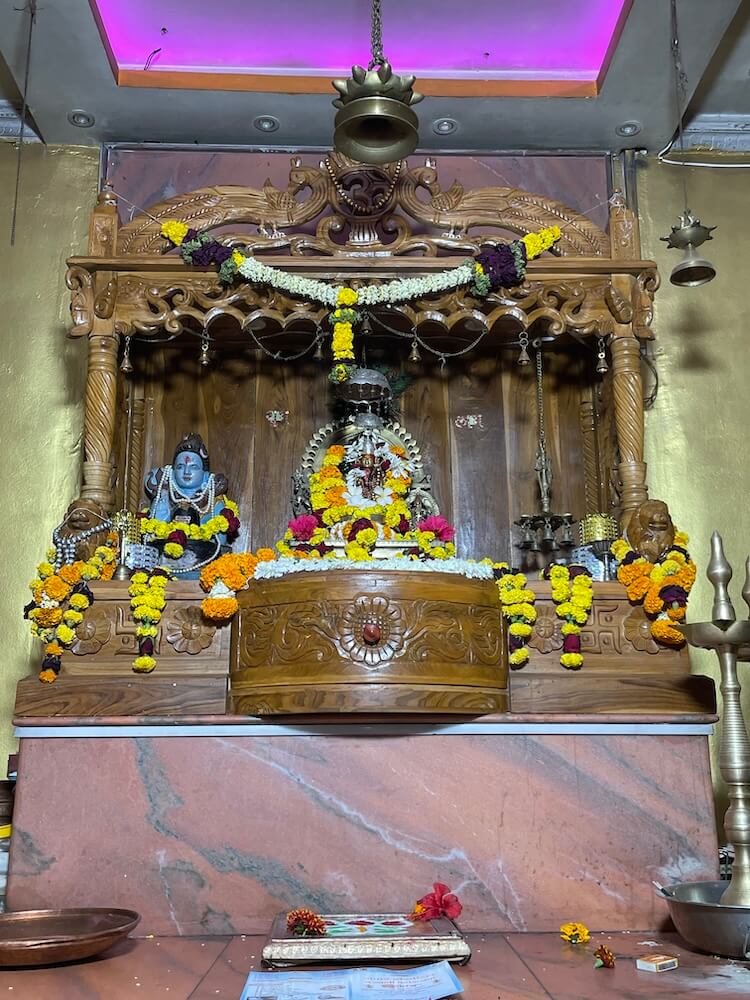
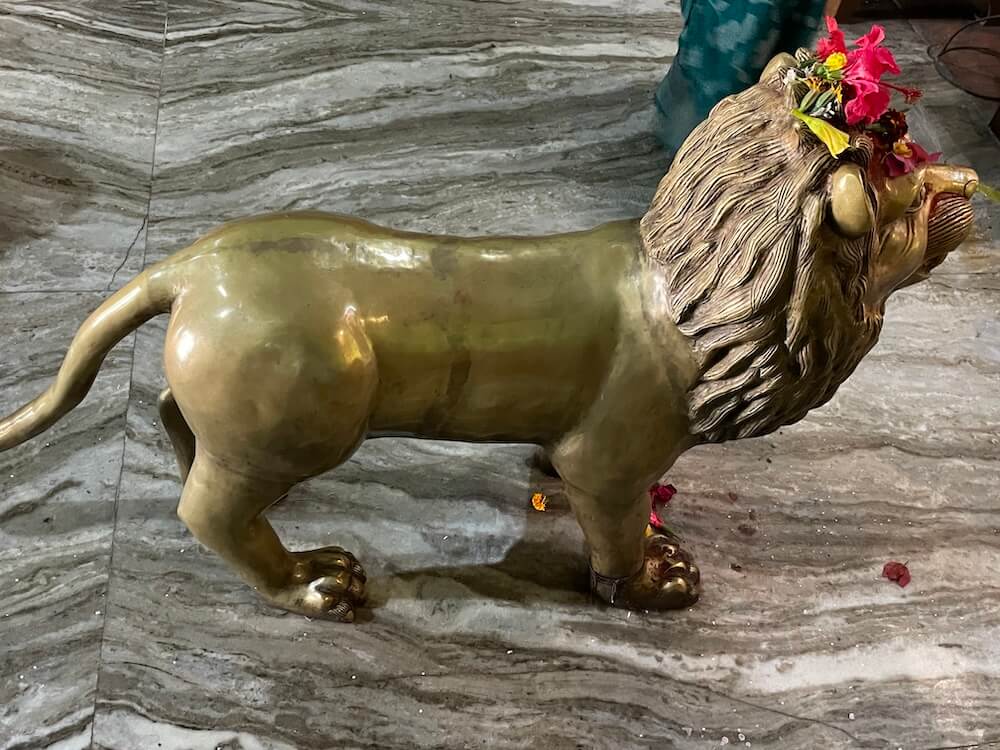
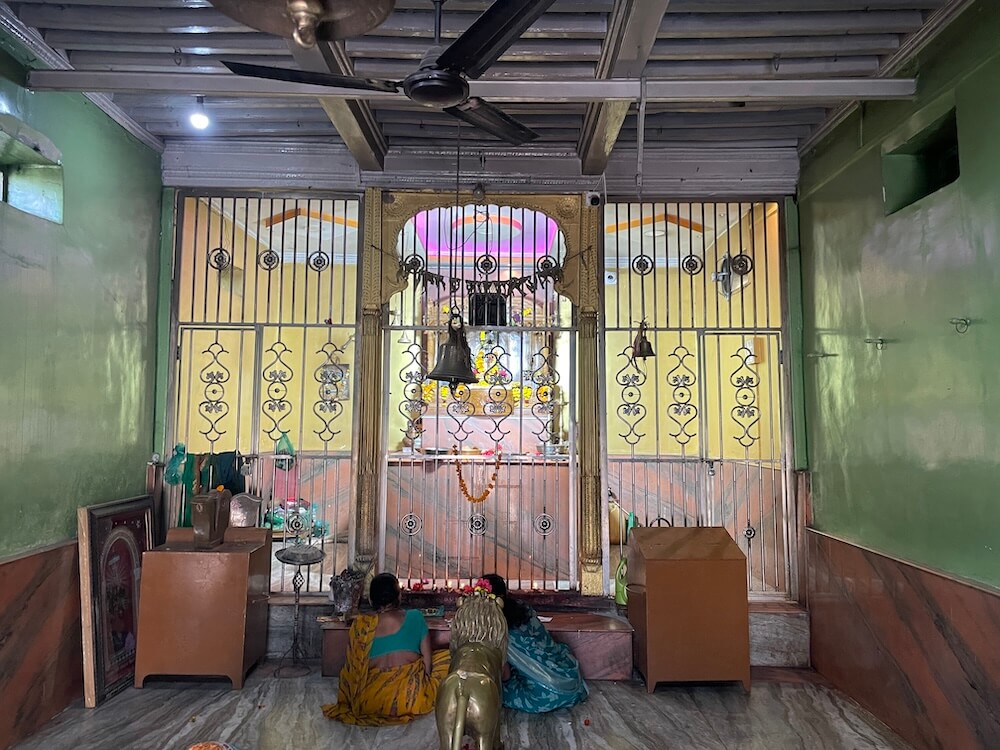
Previously, there was a simple two-section shrine in the form of a private prayer room within the fort. In 1976, after the fort became dilapidated and began to collapse, the Goddess was installed at her current location within the fort premises. The temple is located inside the Dindi gate of the fort. Recently, the temple underwent renovation. There is a small mandap outside the entrance. The temple consists of the stone arched entrance of the Dindi gate and a sabhamandap (assembly hall). Previously, there was a nagarkhana (drum house) above this Dindi gate. The sabhamandap has a wooden ceiling, and in front of the sanctum sanctorum stands a panchaloha idol of a lion, the vehicle of the Goddess. In the sanctum, the panchaloha idol of the Goddess is installed on a high pedestal inside a wooden shrine within a glass case. There are stairs to reach the upper part of the temple. The temple premises house the masks and figures used for the characters performed during the Gudi Padwa festival. These masks are made using paper and bamboo sticks.
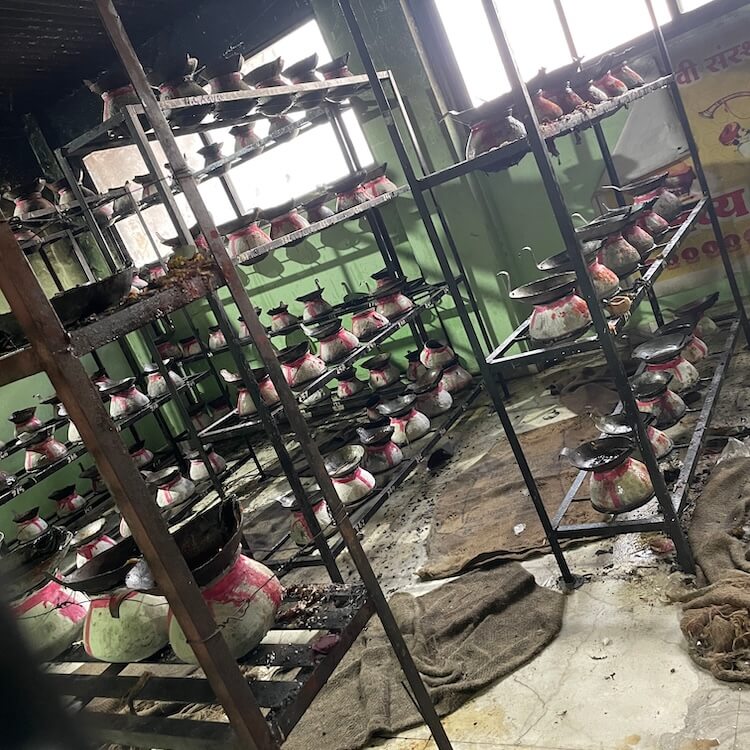
Gudi Padwa is the main festival here, lasting for five days. On the day of Gudi Padwa, devotees stay awake all night, dancing while portraying various divine characters. A procession of these characters is taken through the village. Those who have made a vow to portray the Goddess win the honor through an auction. The individuals who receive this honor must observe a strict five-day fast. Hundreds of devotees attend to watch the performance. Regardless of where the residents of this village are for work or business, they make it a point to be present for this festival. Wrestling matches also take place during this time. A nine-day festival is held here during Sharadiya Navratri. This program has been held continuously for the past 75 years. During this time, food is served to devotees from morning until night. It is a tradition for devotees to light an eternal lamp (akhand diya) here to fulfill their vows during Navratri. These lamps are lit in a specific section of the temple. Various religious programs are organized during this period.
This sacred temple stands as a testament to deep spiritual devotion, ancient architectural grandeur, and rich local cultural traditions.
The sanctum sanctorum houses the divine idol consecrated according to ancient Vedic traditions, surrounded by serene courtyards and traditional temple architecture.
Navratri, Maha Shivratri, Annual Temple Jatra & Deepotsav
Compare and book flights, secure top-rated local hotels near the temple, hire reliable guides, and rent cars instantly.
Extend your pilgrimage by visiting other highly sacred temples located nearby.


Add ₹999 more to unlock FREE SHIPPING!
Your sacred cart is currently empty.
Shop Photo FramesFill in your delivery details below to place your order.
Add comment